

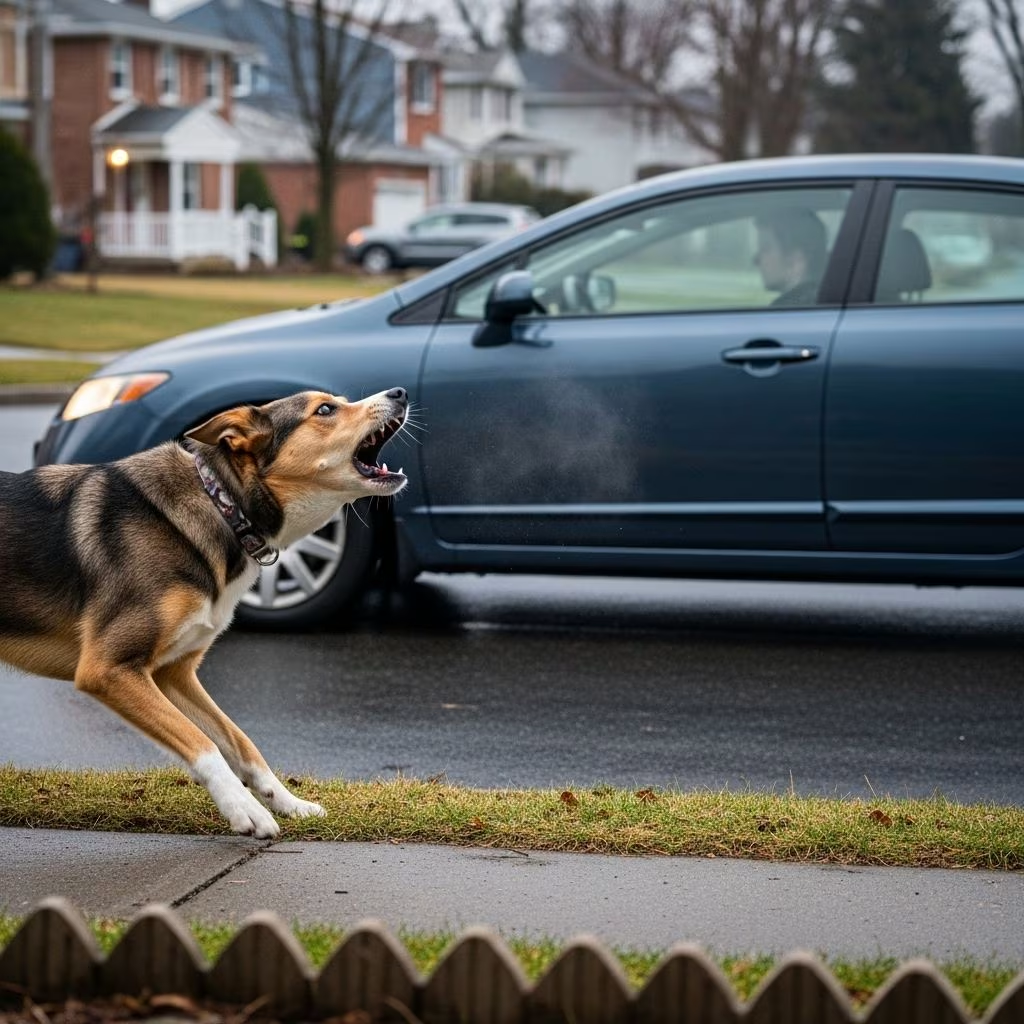
Dogs barking at cars is a common behavior that frustrates many pet owners, especially in urban or suburban environments where vehicles pass frequently. This instinctive reaction stems from a dog’s natural tendencies to alert, protect territory, or react to fast-moving stimuli. Understanding the root causes—such as excitement, fear, boredom, or territorial instincts—allows owners to address it effectively without punishment, which can worsen anxiety.
By observing your dog’s body language, bark pitch, and context, you can decode the message. High-pitched, repetitive barks often signal excitement or frustration, while lower, intense ones indicate alertness or fear. Effective solutions involve management, enrichment, desensitization, and positive reinforcement training to redirect focus and build calm responses.
Reasons Why Dogs Bark at Cars
Dogs perceive cars as intruders invading their space, triggering various emotional responses. Fast-moving vehicles mimic prey or threats in their ancestral instincts, prompting vocal alarms. Here are the primary reasons:
- Territorial Barking: Dogs view their yard or street as territory. Passing cars represent intruders, prompting protective barking to warn them off. This is common in breeds like shepherds or terriers bred for guarding.
- Excitement or Play Drive: The speed and motion of cars excite chase-prone dogs, like herding breeds. They bark in arousal, body wiggling or lunging forward.
- Fear or Anxiety: Unfamiliar or loud vehicles can scare dogs, leading to defensive barking. Signs include tucked tails, trembling, or pacing.
- Boredom or Frustration: Understimulated dogs bark at cars for entertainment or attention when left alone too long without exercise or toys.
- Alert Barking: Cars signal potential change, like visitors. Dogs bark to notify owners, acting as natural watchdogs.
Context matters: A dog barking only at specific cars (e.g., buses) might fear their size or noise, while consistent reactivity suggests habituation.
How to Tell What Type of Bark It Is
Bark characteristics reveal emotions. Pay attention to pitch, rhythm, duration, and body language for accurate diagnosis.
| Bark Type | Sound Description | Body Language | Likely Cause |
|---|---|---|---|
| Excited | High-pitched, rapid, yappy | Wagging tail, bouncing, play bow | Play drive or overstimulation |
| Fearful | High/whiny, frantic, sometimes howling | Tucked tail, ears back, lip-licking, trembling | |
| Territorial/Alert | Deep, repetitive “ruff-ruff”, intense | Stiff posture, raised hackles, forward stare | |
| Demand/Frustrated | Sharp, insistent, escalating | Pawing, jumping, focused staring | |
| Bored | Monotonous, drawn-out, irregular | Pacing, yawning, disengaged |
Combine audio cues with visuals: A wagging tail suggests fun, while stiffness signals threat. Video your dog during episodes to analyze patterns.
Why You Shouldn’t Punish Car Barking
Punishing barking—yelling, shock collars, or physical corrections—backfires. Dogs interpret owner yelling as joining the chorus, escalating arousal. Punishment increases stress, fear, and relationship damage without addressing causes.
- It reinforces attention-seeking: Any reaction rewards the behavior.
- Fear-based methods create anxiety, leading to worse reactivity.
- Positive reinforcement builds trust and lasting calm.
Instead, ignore unwanted barks and reward silence. Experts emphasize prevention and redirection over suppression.
Solutions to Stop Car Barking
Comprehensive strategies combine prevention, training, and lifestyle changes. Consistency is key; expect an “extinction burst” where barking intensifies before improving.
Management Techniques
Modify the environment to reduce triggers:
- Block views: Use privacy film on fences/windows or bring dog indoors during peak traffic.
- Leash control: Walk on a short leash, increasing distance from roads.
- Exercise first: Tire them out before exposure to lower reactivity.
Enrichment and Exercise
Boredom fuels barking. Provide daily mental/physical outlets:
- 1-2 hours walks, fetch, or agility.
- Puzzle toys, sniff games, training sessions.
- Rotate toys to prevent habituation.
Adequate stimulation reduces frustration barking by 70% in many cases, per behaviorists.
Desensitization and Counter-Conditioning (DS/CC)
Gradually expose dogs to cars at sub-threshold distance (where they notice but don’t react). Pair with high-value treats:
- Start far: 50+ feet from road. Treat for calm looks at cars.
- Close distance slowly over weeks as relaxation builds.
- Use commands like “look at me” or “sit” for focus.
This rewires cars from threat to positive cue. Progress takes 2-6 weeks.
Training Commands
Teach alternatives:
- Quiet: Say nothing during bark; wait for 3-second pause, treat and praise.
- Place: Send to mat/bed away from trigger, reward stays.
- Watch Me: Lure with treat to eye contact, practice amid distractions.
Practice daily in low-stakes settings first.
Professional Help
If barking persists or includes aggression, consult certified trainers (CPDT) or behaviorists (IAABC). Rule out medical issues like pain or hearing loss.
Preventing Car Barking in Puppies
Socialize early (8-16 weeks): Expose to car traffic from safe distances with positive associations. Use baby gates for controlled viewing. Consistent routines prevent habits from forming.
Breed Considerations
Some breeds bark more: Herders (Border Collies) chase motion; guardians (German Shepherds) protect; hounds vocalize instinctively. Tailor training to genetics while individualizing.
Frequently Asked Questions (FAQs)
Is it normal for dogs to bark at cars?
Yes, it’s a natural instinct but can become problematic if excessive. Most dogs outgrow mild cases with training.
How long does training take to stop car barking?
2-8 weeks with daily practice. Patience through extinction bursts is crucial.
What if my dog barks aggressively at cars?
Seek professional help immediately. Combine muzzle training for safety with DS/CC.
Can older dogs learn to stop barking at cars?
Absolutely. Senior dogs respond well to positive methods, though slower due to habits.
Does neutering reduce car barking?
It may lower territorial drive slightly but doesn’t solve learned behaviors. Training is primary.
This guide equips you to transform car barking from nuisance to manageable, fostering a calmer home. Track progress weekly and celebrate small wins.
References
- What Does It Mean When Your Dog Barks at You? — Adopt a Pet. 2023. https://www.adoptapet.com/blog/behavior-training/what-does-it-mean-when-your-dog-barks-at-you
- Why Is Your Dog Barking the Same Way Over and Over Again? — Kinship. 2023. https://www.kinship.com/dog-behavior/dog-barks-same-way
- How to Fix Your Dog’s Non-Stop Barking — Kinship. 2023. https://www.kinship.com/dog-behavior/stop-dog-barking
- How to Not Lose It When Your Dog Won’t Stop Barking — Kinship. 2023. https://www.kinship.com/dog-behavior/how-to-deal-with-constant-barking
- Dogs Barking and Babies Crying: The Effect of Environmental Noise — PMC (National Library of Medicine). 2024-01-15. https://pmc.ncbi.nlm.nih.gov/articles/PMC10849013/



