

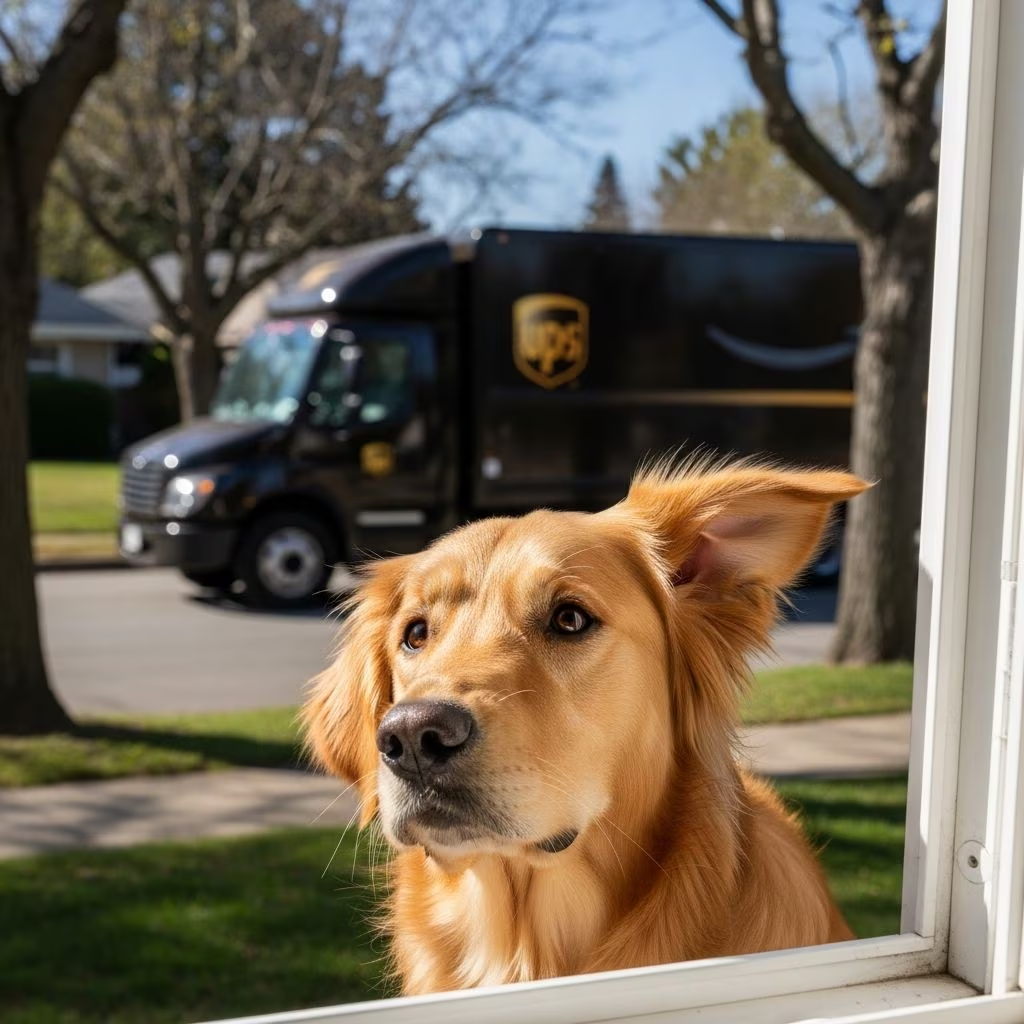
Dogs barking at trucks is a common yet frustrating behavior for many pet owners. Large vehicles rumbling by trigger intense vocalizations, often disrupting neighborhood harmony. This reaction stems from a dog’s natural instincts, heightened senses, and learned responses, as outlined in veterinary behavior studies. Understanding these motivations—territorial protection, fear, excitement, or attention-seeking—allows owners to address the root causes effectively.
Research from UC Davis School of Veterinary Medicine identifies key barking triggers like territorial defense, fear, and social facilitation, which align directly with reactions to moving trucks. Dogs perceive these vehicles as massive, noisy intruders invading their space, prompting alarm barks. This article breaks down the science, breed predispositions, and proven training methods to curb the habit.
Reasons Why Dogs Bark at Trucks
Dogs bark at trucks for multifaceted reasons rooted in their evolutionary biology and environment. Their acute hearing detects low-frequency rumbles from afar, while superior vision spots movement, activating protective responses before humans notice.
- Territorial Defense: Dogs view their yard as territory. Trucks, with their size and noise, mimic intruders. Barking asserts boundaries and warns off perceived threats.
- Fear or Alert Response: The limbic system, dubbed the ‘barking dog’ in neuroscience, triggers fight-or-flight to sudden noises and motions. Amygdala activation releases epinephrine, heightening arousal.
- Excitement or Play: Some dogs bark joyfully at fast-moving objects, mistaking trucks for chaseable prey.
- Learned Behavior: If barking coincides with trucks leaving (reinforcement), it persists. Owners unwittingly reward by responding.
- Sensory Overload: Trucks’ diesel scents, vibrations, and sounds overload canine senses, prompting communication barks.
Ethological studies confirm barking’s context-dependency, conveying emotional states like alarm to humans more than other dogs. Genetics influence intensity; herding breeds like Shelties bark more due to vigilance traits.
The Science Behind a Dog’s Bark
Barking evolved as a human-selected trait for communication. Unlike wolves, domestic dogs bark extensively across contexts—isolation, play, defense—with varied pitches signaling intent. High-pitched, rapid barks indicate excitement; low, slow ones signal threat.
Acoustic analysis shows trucks’ rumble (low frequency, rhythmic) mimics predator growls, eliciting instinctive responses. The limbic system’s role amplifies this: threat detection via amygdala prompts adrenal response, preparing the body for action. Chronic triggers like daily truck passes can lead to habituated stress, akin to PTSD in severe cases.
Body language provides clues: stiff posture, raised hackles indicate fear/aggression; loose, wiggly bodies suggest excitement. Observing these refines diagnosis.
Do All Dogs Bark at Trucks?
No, not all dogs react similarly. Breed genetics play a role—terriers and herders are bark-prone due to working histories. Environment matters too: urban dogs habituated to traffic bark less than rural ones encountering trucks sporadically.
| Breed Group | Barking Tendency | Reason |
|---|---|---|
| Herding (e.g., Shelties) | High | Vigilance instincts |
| Terriers | High | Prey drive |
| Guardian (e.g., Rottweilers) | Medium-High | Territorial protection |
| Companion (e.g., Bulldogs) | Low | Less reactive |
Individual temperament, socialization, and past experiences modulate responses. Puppies socialized around vehicles rarely develop the habit.
How to Stop Your Dog from Barking at Trucks
Effective management combines prevention, training, and addressing triggers. Consistency is key; barking ‘works’ if reinforced.
Management Strategies
- Block the View: Use privacy fences, window films, or crates during peak truck times to prevent sight triggers.
- Exercise and Enrichment: Tire dogs mentally/physically daily—walks, puzzles reduce frustration barking.
- Ignore Attention-Seeking: Turn away, avoid eye contact; reward quiet moments.
Training Techniques
Desensitization and counter-conditioning (DS/CC) are gold standards for fear-based barking.
- Desensitization: Introduce truck sounds at low volume (recordings/apps) while rewarding calm. Gradually increase intensity.
- Counter-Conditioning: Pair truck stimuli with high-value treats/toys, shifting association from threat to positive.
- ‘Quiet’ Command: Teach by saying ‘quiet’ during barks, rewarding silence. Use a leash cue or head collar for control.
- Positive Reinforcement: Praise/treat calm behavior proactively.
Avoid punishment—yelling mimics barking, escalating arousal. For severe cases, consult veterinary behaviorists to rule out anxiety disorders.
Training Tips for Truck-Barking Dogs
- Start sessions short (5-10 mins) in low-distraction areas.
- Use high-value rewards (chicken, cheese) for motivation.
- Track progress: Note bark frequency pre/post-training.
- Combine with recall training: Call dog indoors before barking escalates.
- Enroll in obedience classes for socialization.
Success rates soar with patience; most dogs improve in 2-4 weeks.
When to See a Vet or Trainer
Consult professionals if barking persists despite training, accompanies aggression, or includes symptoms like pacing, destructiveness (possible separation anxiety). Rule out medical issues: pain, cognitive dysfunction, or thyroid imbalances can manifest as vocalization. Certified trainers (CPDT-KA) or Diplomate veterinary behaviorists offer tailored plans.
Frequently Asked Questions (FAQs)
Q: Is barking at trucks normal?
A: Yes, it’s common due to territorial and fear instincts, but excessive barking warrants intervention.
Q: Why does my dog only bark at trucks, not cars?
A: Trucks’ larger size, louder rumble, and diesel smell amplify threat perception.
Q: Will my dog outgrow truck barking?
A: Unlikely without training; it often strengthens via reinforcement.
Q: Are bark collars effective?
A: They suppress symptoms but not causes; DS/CC is preferable for long-term fix.
Q: How long until training works?
A: 2-6 weeks with consistency; varies by dog.
Conclusion
Truck-barking reflects dogs’ vigilant nature but manageable with science-backed strategies. By decoding motivations and applying DS/CC, owners foster calmer pets. Patience yields peaceful coexistence with passing vehicles.
References
- The Barking Dog — UC Davis School of Veterinary Medicine. Accessed 2026. https://www.vetmed.ucdavis.edu/sites/g/files/dgvnsk491/files/inline-files/The_Barking_Dog.pdf
- Emotional Brain: The Limbic System & Barking Dog — The Behavior Hub. 2020-09-28. https://www.thebehaviorhub.com/blog/2020/9/28/emotional-brain-limbic-system-barking-dog
- 7 Reasons Why Your Dog is Barking at Nothing — Plant City Animal Hospital. Accessed 2026. https://plantcityanimalhospital.com/blog/why-your-dog-barks-at-nothing/
- Why Does My Dog Bark So Much (& What To Do About It!) — Pet Harmony Training. Accessed 2026. https://petharmonytraining.com/why-does-my-dog-bark-so-much-what-to-do-about-it/
- Barking in family dogs: an ethological approach — PubMed (Applied Animal Behaviour Science). 2009. https://pubmed.ncbi.nlm.nih.gov/19181546/



