

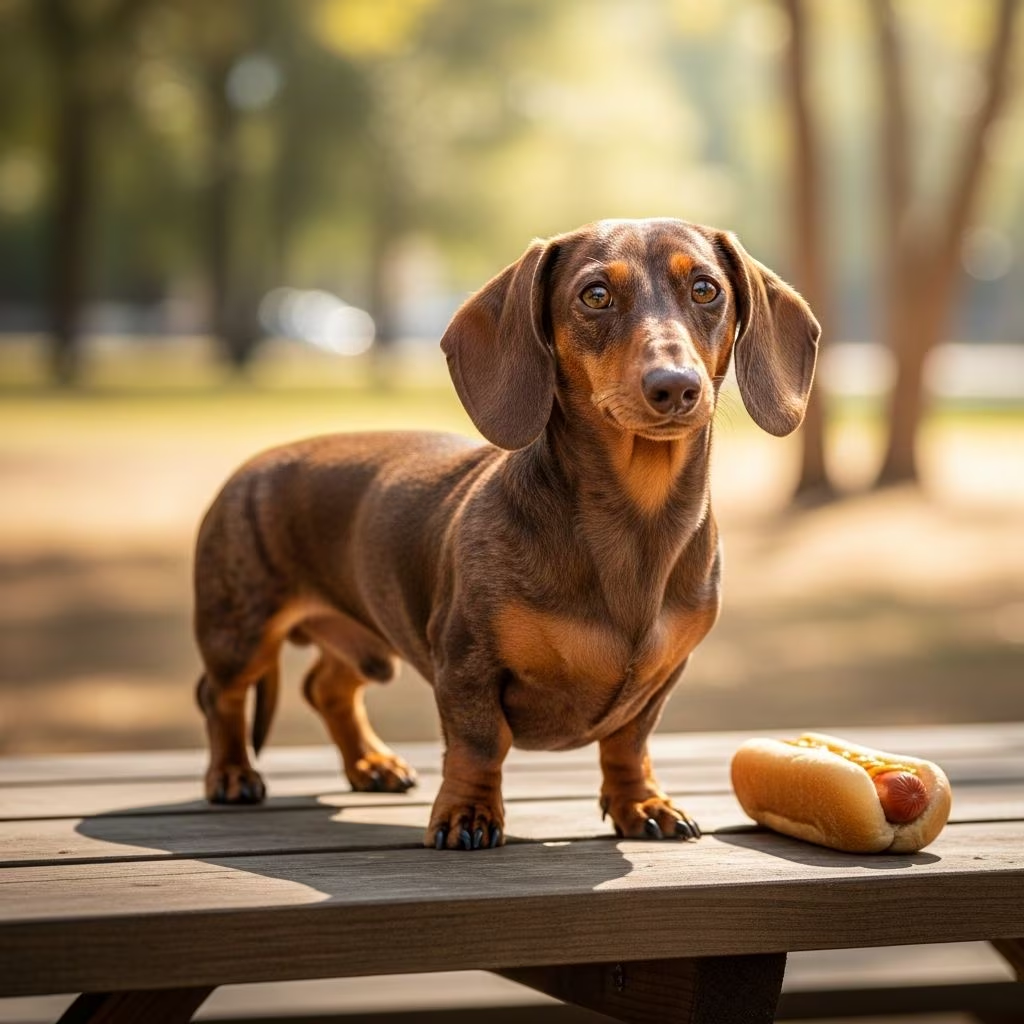
Dachshunds, with their unmistakably long bodies, stubby legs, and sausage-like shape, have long been compared to hot dogs. This playful nickname isn’t just a modern meme—it’s rooted in their distinctive physique, which was purposefully bred for a gritty purpose in Germany centuries ago. Often called “wiener dogs” or “sausage dogs,” these pint-sized powerhouses pack a bold personality into their compact frames. But why exactly do they resemble everyone’s favorite ballpark snack? The answer lies in their history as relentless badger hunters, where every physical trait served a survival function underground.
The Origins of the “Wiener Dog” Nickname
The resemblance between Dachshunds and hot dogs is no coincidence in popular culture. Their elongated torsos, measuring roughly twice as long as they are tall, combined with short, muscular legs, create a silhouette that’s eerily similar to a frankfurter in a bun. This visual parallel gained traction in the United States during the early 20th century, when German immigrants brought the breed across the Atlantic. Amid a surge in hot dog popularity at baseball games and street carts, the Dachshund’s shape became an irresistible comparison.
Fun fact: The term “Dachshund” itself translates to “badger dog” in German (“Dachs” meaning badger and “Hund” meaning dog), but Americans affectionately dubbed them “hot dog dogs” or simply “weiners.” This moniker stuck, leading to dachshund races at county fairs and even hot dog-themed merchandise. Today, social media amplifies the joke, with viral videos of Dachshunds dressed as hot dogs racking up millions of views. Yet beneath the humor lies a breed engineered for efficiency in the hunt.
Bred for the Hunt: The Badger Dog’s Unique Build
Dachshunds were developed in Germany as early as the Middle Ages, though they took consistent shape by the late 17th century. German foresters and hunters selectively bred them to track and flush out badgers—fierce, burrowing animals with sharp claws and powerful jaws. The breed’s body type was no accident: short, powerful legs allowed them to dig furiously through tight tunnels, while a long, flexible spine and elongated ribcage enabled them to wriggle into narrow burrows where larger dogs couldn’t follow.
- Short Legs: Perfect for digging and navigating low-ceilinged dens without getting stuck.
- Long Body: Provided leverage to corner prey face-to-face, as there was no room to turn around underground.
- Deep Chest: Housed a powerful heart and lungs for sustained exertion in oxygen-poor tunnels.
- Strong Jaws and Teeth: Oversized for their size to battle badgers head-on, with a prominent brow ridge for eye protection.
Early Dachshunds were larger than today’s standards, weighing up to 40 pounds, and came in straight- or crook-legged varieties. They hunted not just badgers but also rabbits, foxes, and even wounded deer. Packs could tackle wild boar, showcasing their “courageous to the point of rashness” temperament, as described by the American Kennel Club (AKC).
Dachshund Varieties: Smooth, Long, and Wirehaired
Not all Dachshunds are identical; they come in three coat types, each with subtle differences in appearance and history. The smooth-coated variety is believed to be the original, likely descending from pointers, hounds, and terriers. Their sleek, shiny fur required minimal grooming, ideal for hunters.
| Variety | Appearance | Historical Development | Personality Traits |
|---|---|---|---|
| Smooth (Short-haired) | Sleek, glossy coat; most “hot dog” like | Original type from 17th century Germany | Bold, energetic, classic hunter |
| Longhaired | Silky, wavy coat on body, shorter on face | Gentler, more affectionate | |
| Wirehaired | Rough, wiry coat; beard and bushy eyebrows | Crossed with terriers in 1800s for brush hunting | Tougher, more independent |
By 1879, Germany established the first breed standard, emphasizing hunting prowess over aesthetics. Longhaired standards followed in 1882, prioritizing Spaniel-like coats. Wirehairs, with their terrier infusion, excelled in thorny underbrush.
From Hunting Hero to Beloved Pet
As industrialization reduced the need for working dogs, Dachshunds transitioned to companionship. By the late 19th century, they gained fame in dog shows and as pets for nobility. Kaiser Wilhelm II owned notorious Dachshunds Wadl and Hexl, described as “biting, snarling little brutes.” Their cheeky independence persisted from hunting days.
World War I brought challenges: anti-German sentiment in the U.S. and U.K. led owners to call them “badger dogs” to avoid persecution. Kennels closed, but post-war resurgence saw miniatures emerge. Concerned hunters bred smaller versions (under 11 pounds) for rabbits and sandy burrows, sometimes crossing with toys—though pure selective breeding prevailed.
Today, Dachshunds rank high in AKC registrations (6th in 2024), prized for their vivacious spirit. They’re bold yet clownish, making excellent family pets when socialized early.
Health Considerations for the Sausage-Shaped Breed
The Dachshunds’ hot dog physique predisposes them to issues like intervertebral disc disease (IVDD), where spinal discs herniate due to their elongated back. Up to 25% of Dachshunds face this, per veterinary studies. Prevention includes weight management, ramps over stairs, and no jumping.
- Avoid obesity: Their love of food amplifies back strain.
- Supervised exercise: Swimming is ideal for low-impact fitness.
- Genetic screening: Responsible breeders test for IVDD.
Other concerns: patellar luxation, heart disease, and eye issues like progressive retinal atrophy. Lifespan averages 12-16 years with proper care.
Fun Facts About Dachshunds and Hot Dogs
- Dachshunds have been hot dog mascots since the 1900s, inspiring events like the Wiener Dog Nationals.
- They’re one of the oldest hound breeds, with depictions in 16th-century art.
- Miniature Dachshunds were bred in the 1920s for smaller game, heightening their sausage resemblance.
- Famous owners include John F. Kennedy, whose MacDuff lived in the White House.
- Their curved tails helped hunters pull them from burrows—a practical “handle”!
Frequently Asked Questions (FAQs)
Q: Why do Dachshunds have such short legs?
A: Short legs were bred for digging into badger burrows and maneuvering in tight spaces underground.
Q: Are all Dachshunds the same size?
A: No—standards weigh 16-32 lbs; miniatures under 11 lbs; some tweener sizes exist.
Q: Do Dachshunds make good family pets?
A: Yes, with early socialization; they’re lively and loyal but can be stubborn and vocal.
Q: How can I prevent back problems in my Dachshund?
A: Maintain ideal weight, use ramps, avoid high jumps, and provide gentle exercise like walking.
Q: What’s the difference between smooth and wirehaired Dachshunds?
A: Smooths have sleek coats; wirehairs are rougher with terrier influences for rugged terrain.
Caring for Your Wiener Dog Today
Modern Dachshund ownership emphasizes their heritage: provide puzzle toys for their clever minds, short daily walks for energy release, and plenty of affection. Grooming varies by coat—smooths need minimal brushing, wirehairs regular plucking. Training requires patience due to their hound independence, but positive reinforcement works wonders.
Whether racing at dachshund derbies or lounging as lap dogs, these hot dog lookalikes continue to steal hearts. Their shape may invite jokes, but it’s a testament to masterful breeding for purpose—proving small packages can hold big adventures.
References
- Owning a Dachshund – History, Breed Traits & Health Concerns — Years.com. 2023. https://www.years.com/blogs/guides/owning-a-dachshund
- Dachshund Breed History — Dachshund Club of America. 2022-02. https://www.dachshundclubofamerica.org/wp-content/uploads/2022/02/Breed-History.pdf
- Dachshund History: The Badger Dog’s Fascinating Past — American Kennel Club (AKC). 2023. https://www.akc.org/expert-advice/dog-breeds/dachshund-history-badger-dog-breed/
- The Fascinating History of Dachshunds: A Tale of Small Breed Dogs — Hollywood Feed. 2023. https://hfu.hollywoodfeed.com/the-fascinating-history-of-dachshunds-a-tale-of-small-breed-dogs/
- Dachshund — Wikipedia (informed by AKC data). 2024. https://en.wikipedia.org/wiki/Dachshund



