

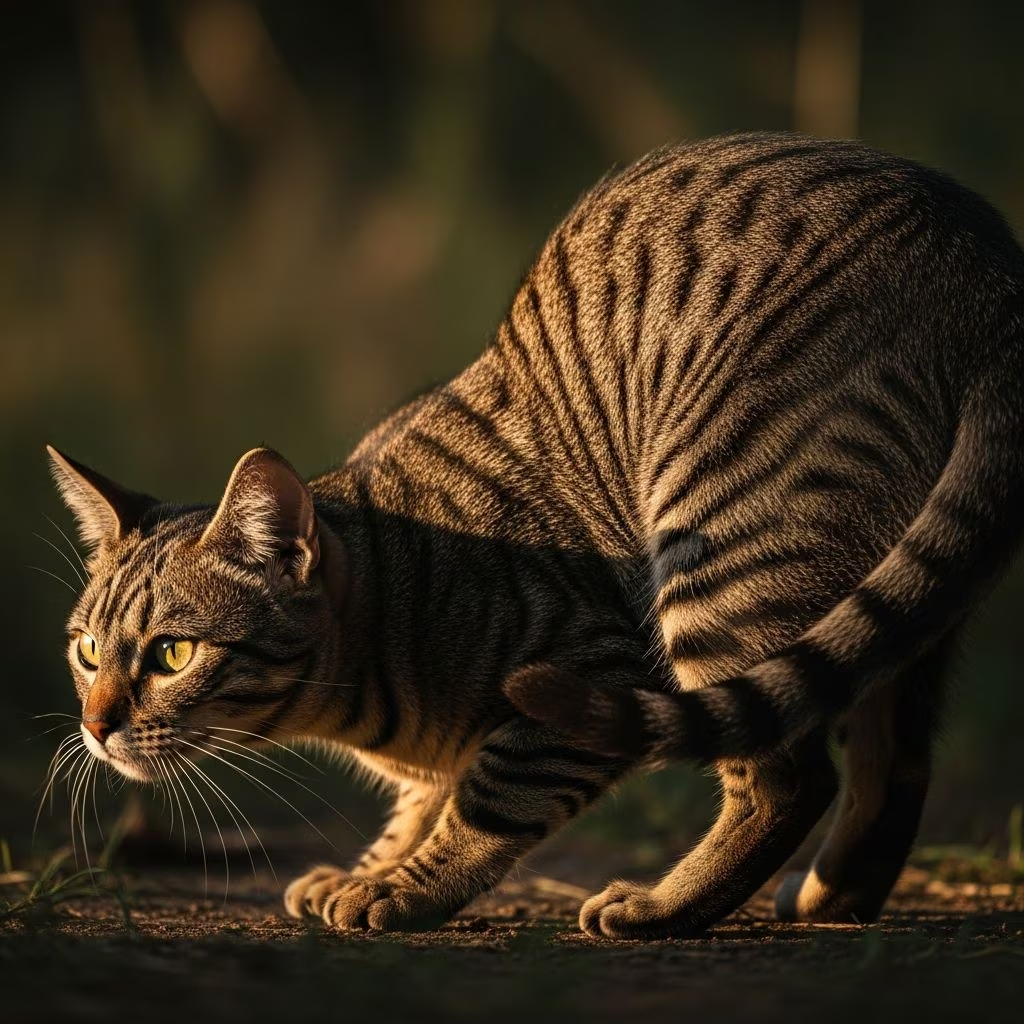
One of the most endearing sights for cat owners is watching their feline friend crouch low, eyes locked on a toy, and wiggle their hindquarters before launching into a pounce. This **butt wiggle** isn’t just cute—it’s a complex behavior rooted in a cat’s evolutionary hunting instincts. Whether stalking a feather wand or a laser dot, cats exhibit this ritualistic motion to prepare for the perfect leap. But what drives it? Experts point to muscle activation, balance checks, traction testing, and even practice swings, all honed over millennia as ambush predators.
In this article, we’ll dive deep into the theories explaining this behavior, its role in play and hunting, developmental aspects in kittens, and how to encourage it safely at home. Understanding the **cat butt wiggle** helps owners appreciate their pet’s wild heritage while enriching playtime.
What Causes the Butt Wiggle in a Cat That’s About To Pounce?
While peer-reviewed studies on cat butt wiggling are scarce, veterinary behaviorists and feline experts agree it’s a multifaceted preparation for pouncing. Cats don’t alternate hind legs like in walking; they push off simultaneously for explosive power, demanding precise coordination. The wiggle—rapid side-to-side swaying of the hips—serves practical purposes, blending biomechanics with instinct.
Common signs preceding the wiggle include pointed ears, forward whiskers, low creeping, and intense focus, signaling hunting mode. This behavior releases dopamine, making play as rewarding as real hunts.
1. Cats Wiggle for Stability and Traction
The leading theory: cats wiggle to test ground stability and grip before leaping. Unlike walking, pouncing requires both hind legs to launch together, risking slips on unstable surfaces. By shifting weight rapidly, cats dig claws in, ensuring traction and balance.
- Test solidness: Confirms the surface can support the forceful push-off without collapsing.
- Grip enhancement: Claws extend and grip, vital on slick floors like hardwood where slips occur.
- Balance calibration: Adjusts center of gravity to prevent injury or missed prey.
On carpet or grass, this is instinctive; indoor cats adapt to varied home floors.
2. Cats Wiggle to Prepare Muscles (Post-Activation Potentiation)
Wiggling acts as a warm-up, engaging hind leg and core muscles via small contractions. This **Post-Activation Potentiation (PAP)** primes motor neurons for explosive power, similar to athletes’ dynamic stretches.
Studies on big cats like mountain lions show limited aerobic capacity for sustained high-energy bursts, making pre-pounce prep essential. The wiggle provides a micro-workout, stretching muscles for better reach and speed.
- Stretches glutes, quads, and hamstrings for optimal contraction.
- Increases blood flow, reducing strain risk.
- Mimics real hunt prep, boosting accuracy.
3. Cats Wiggle to Plan and Fine-Tune Aim
Like a golfer’s practice swing, wiggling lets cats gauge distance, trajectory, and angle. Weight shifts provide sensory feedback via muscle spindles, relaying data to the brain for precise adjustments.
Cats calculate leap physics subconsciously: wiggle refines body position for pinpoint accuracy, crucial for ambush predators with one-shot hunts.
- Visual locking: Eyes fixate while body micro-adjusts.
- Sensory recalibration: Nerves confirm leg-brain sync.
- Practice motion: Simulates pounce for better real execution, akin to sports science findings.
4. Other Theories: Fun, Instinct, and Excitement
Some experts suggest wiggling is partly pleasurable—dopamine from anticipation makes it ‘fun.’ It may also build tension or signal excitement, with chirps common pre-pounce. Though less scientific, these align with cats’ playful nature.
How the Butt Wiggle Fits Into Feline Hunting Instincts
Cats are obligate carnivores evolved as solitary ambush hunters. The stalk-wiggle-pounce sequence mirrors wild prey capture: creep, prepare, explode. Domestic play preserves this, keeping instincts sharp despite full bellies.
In the wild, failure means hunger; at home, it’s toy conquest. Recognizing this helps owners provide enriching toys mimicking prey movement.
When Do Kittens Start Wiggling and Pouncing?
Kittens practice as early as **6-7 weeks**, mimicking mom or littermates. Play-hunting hones skills: by 12 weeks, proficient wigglers emerge. This developmental play builds coordination, preventing adult clumsiness.
| Age | Milestone |
|---|---|
| 3-4 weeks | Stumbling chases begin |
| 6-7 weeks | Butt wiggle debuts |
| 8-12 weeks | Refined pounces, social play |
| 3-6 months | Adult-like hunting sequences |
Encourage with safe toys; avoid overstimulating young kittens.
Is the Cat Butt Wiggle Always Playful?
Mostly yes, but context matters. During friendly play, it’s preparation; if paired with dilated pupils, hissing, or swatting, it signals overstimulation—back off. Rarely aggressive, but monitor body language.
Why Do Some Cats Wiggle More Than Others?
Breeds like Bengals or Abyssinians (high-energy hunters) wiggle frequently; lazy Persians less so. Age, health, and environment influence: active cats on interactive toys show more. Spayed/neutered cats retain instincts fully.
How to Encourage Safe Butt Wiggling and Pouncing
Channel instincts healthily:
- Interactive toys: Wand toys, laser pointers for stalking.
- Hide treats: Simulates foraging hunts.
- Play sessions: 15 mins twice daily, end before fatigue.
- Safety first: No strings loose; supervise.
- Enrichment: Cat trees, tunnels for vertical pounces.
Avoid hands as toys to prevent scratches; rotate toys for novelty.
Frequently Asked Questions (FAQs)
What does the butt wiggle mean before a pounce?
It means preparation: muscles warming, balance checking, traction testing for the leap.
Do all cats wiggle before pouncing?
Most do, but frequency varies by personality, breed, and play style. Some are subtler.
Is cat butt wiggling a sign of happiness?
Yes, often tied to joyful hunting play, releasing feel-good dopamine.
Why do cats chirp while wiggling?
Excitement vocalization, mimicking wild prey sounds to excite the hunt.
Can you train a cat to stop wiggling?
Not advisable—it’s instinctual. Redirect energy positively instead.
Conclusion: Embracing the Cat Butt Wiggle
The humble butt wiggle reveals cats’ primal prowess: a blend of physics, instinct, and joy. Next pounce, marvel at this evolutionary marvel. Provide outlets, and your cat thrives.
References
- Why Do Cats Wiggle Before They Pounce? — PetMD. 2023. https://www.petmd.com/cat/behavior/why-do-cats-wiggle-before-they-pounce
- Why do cats wiggle before they pounce? — Cat in the Box LLC. 2023. https://thecatisinthebox.com/blogs/kitty-contemplations/why-do-cats-wiggle-before-they-pounce
- Cat Butt Wiggle: Why Do Cats Shake Their Butt Before They Pounce — Village Vets Plymouth. 2024. https://plymouth.thevillagevets.com/blog/cat-butt-wiggle/
- Cat Butt Wiggle — World of Animals Veterinary Hospital. 2023. https://wofainc.com/blog/cat-butt-wiggle/
- Why Your Cat Wiggles Before Pouncing — YouTube (Transcript). 2023. https://www.youtube.com/watch?v=EKUwyUVIe-g



