

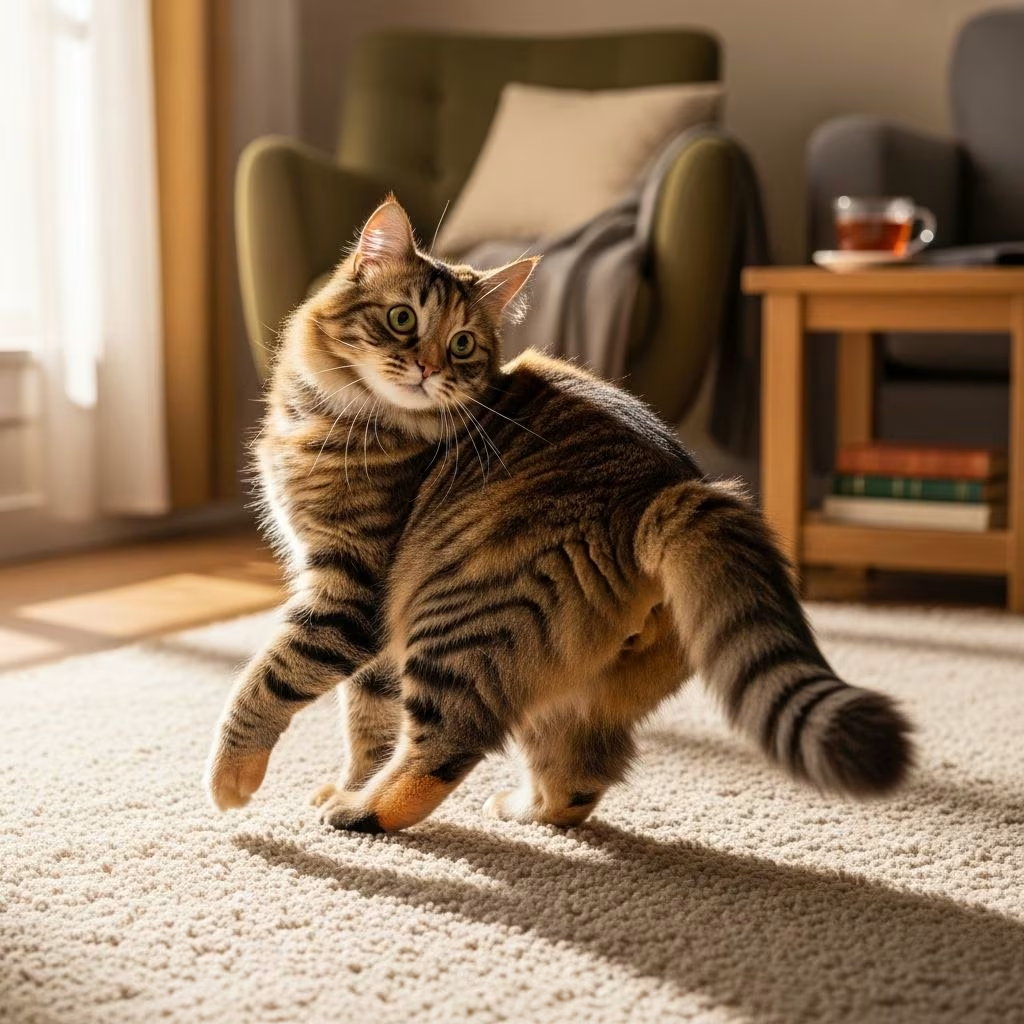
Cats exhibit many quirky behaviors, but few are as consistently observed as the ritual of walking in circles before settling down for a nap. This peculiar habit, often lasting 30 seconds to a couple of minutes, has intrigued cat owners for generations. Far from random, this circling is rooted in evolutionary instincts, sensory checks, and environmental adaptations that ensure safety and comfort.
Understanding this behavior not only sheds light on your cat’s wild heritage but also helps distinguish normal patterns from potential health issues. In this comprehensive guide, we’ll delve into the primary theories, environmental influences, sensory roles, health red flags, and practical tips for cat owners, drawing from veterinary insights and animal behavior studies.
Theories Behind Cats Walking in Circles Before Lying Down
The circling ritual stems from multiple instinctual drives inherited from wild ancestors like African wildcats. These theories explain why even pampered house cats continue this practice despite cozy beds and predator-free homes.
Instinctual Safety Check from Wild Ancestors
In the wild, cats faced constant threats from predators and parasites. Circling allowed them to scan for dangers, trample down grass or debris to create a secure nest, and flush out insects or small critters hiding in potential bedding. This behavior persists in domestic cats as a hardwired survival mechanism.
By turning in circles, cats orient themselves with wind direction to detect scents carried on the breeze, ensuring no threats approach from behind. Modern cats replicate this on carpets or blankets, patting down fabrics as if taming tall savanna grass.
Territory Marking with Scent Glands
Cats possess scent glands in their paw pads, filled with sweat glands that release pheromones. Walking in circles deposits these unique scents, claiming the spot as their own and deterring rivals or intruders. This olfactory marking provides a sense of ownership and security, making the area feel like ‘home base’ for rest.
This is especially evident in multi-cat households, where circling intensifies around shared spaces, reinforcing boundaries without confrontation.
Comfort and Nesting Preparation
Cats are fastidious about their sleeping spots. Circling helps test the surface’s texture, temperature, and evenness. On uneven ground or lumpy bedding, they pat and rearrange to create the perfect depression or ‘nest.’ This mimics wild cats flattening leaves or dirt for optimal comfort.
Domesticated cats often knead (or ‘make biscuits’) afterward, combining the rituals to customize their nap zone.
Temperature Regulation
Cats are sensitive to temperature fluctuations. In cold conditions, tight circling generates body heat and compacts bedding for insulation, allowing them to curl into a warm ball. Conversely, in warmer settings, circling lifts blankets or debris to expose cooler ground beneath, much like flipping a pillow.
Feral cats demonstrate this by uncovering cool earth; indoor cats adapt it to sofas or rugs.
Muscle Stretching and Relaxation
Before rest, circling serves as a mild exercise routine, stretching legs, back, and neck muscles loosened during the day. It transitions the cat from active hunting mode to relaxation, promoting better sleep quality.
How Cats Use Their Senses During Circling
Circling engages all of a cat’s acute senses, turning a simple routine into a multi-sensory assessment.
- Smell: Cats have over 200 million olfactory receptors. Circling sniffs for predator scents, toxins, or familiar markers, confirming safety.
- Touch: Paw pads detect subtle vibrations, textures, and temperatures, ensuring no sharp objects or instability.
- Vision: Excellent night vision and peripheral awareness allow 360-degree scans for movement or anomalies.
- Hearing: Acute ears pick up faint rustles from hidden pests during the patrol.
The Influence of Environment on Circling Behavior
Your home setup significantly modulates this instinct.
- Surface Type: Soft carpets or beds encourage more circling for sensory feedback; hard floors prompt quicker settling.
- Favorite Spots: Habitual sleep areas see ritualistic circling to reaffirm familiarity.
- Temperature: Cooler rooms amplify circling for warmth; hot spots lead to cooling maneuvers.
- New Environments: Stress from changes like moves increases circling as cats re-assess safety.
When Circling Might Indicate a Problem
While usually benign, excessive or altered circling warrants attention, particularly in seniors.
| Normal Circling | Concerning Circling |
|---|---|
| Brief (under 2 mins), ends in settling | Prolonged (5+ mins), repeated rising |
| Relaxed posture, playful energy | Stooped gait, hesitation, avoidance of lying |
| Occurs in usual spots | Sudden onset, disorientation, head tilting |
Joint Stiffness and Arthritis
Senior cats (10+ years) may circle excessively due to osteoarthritis, struggling to find a pain-free position. Signs include reluctance to fully lie down or frequent repositioning. Curled sleeping postures signal discomfort, per veterinary behaviorists.
Neurological or Vestibular Issues
Persistent, unbalanced circling (especially one direction) could indicate ear infections, vestibular disease, or cognitive dysfunction, mimicking disorientation.
Stress and Anxiety
New pets, moves, or illness trigger anxious pacing. Monitor for hiding, aggression, or appetite loss.
Parasites or Pain
Fleas, worms, or injuries cause irritated circling. Check skin and stool.
What Cat Owners Should Do
Most circling is harmless, but vigilance ensures health.
- Observe patterns: Track duration, frequency, and changes via journal.
- Optimize environment: Provide heated beds, orthopedic mats, and elevated perches.
- Vet check: Annual seniors exams; immediate for new symptoms.
- Stress reduction: Pheromone diffusers, routine consistency.
Frequently Asked Questions (FAQs)
Is it normal for my cat to circle before every nap?
Yes, it’s a standard instinct for safety and comfort in nearly all cats.
Why does my senior cat circle more now?
Aging joints or cognitive changes; vet evaluation recommended.
Does circling mean my cat is stressed?
Not usually, but excessive or new circling with other signs might.
How can I stop excessive circling?
Address underlying issues like pain or stress; provide better bedding.
Do all cats circle before lying down?
Most do, varying by individual and environment.
References
- Why Do Cats Walk in Circles Before Lying Down? Vet-Verified Facts — Catster. 2023-10-15. https://www.catster.com/cat-behavior/why-do-cats-walk-in-circles-before-lying-down/
- Why Do Cats Walk In Circles Before Lying Down? — YuMOVE. 2024-05-20. https://yumove.co.uk/blogs/cat-expert-advice/why-do-cats-walk-in-circles-before-lying-down
- Have a Cat Walking in Circles? Causes and Treatment — Chewy. 2023-08-12. https://www.chewy.com/education/cat/health-and-wellness/my-cat-has-started-walking-in-circles
- Why do cats and dogs spin around before they sit? — Ask Dr. Universe, Washington State University. 2021-01-22. https://askdruniverse.wsu.edu/2021/01/22/why-do-cats-and-dogs-spin-around-before-they-sit/
- Senior Cat Wellness: Why Do Cats Walk In Circles Before Lying Down? — YouTube (Veterinary Channel). 2022-06-02. https://www.youtube.com/watch?v=hPVCmBV6mao



