

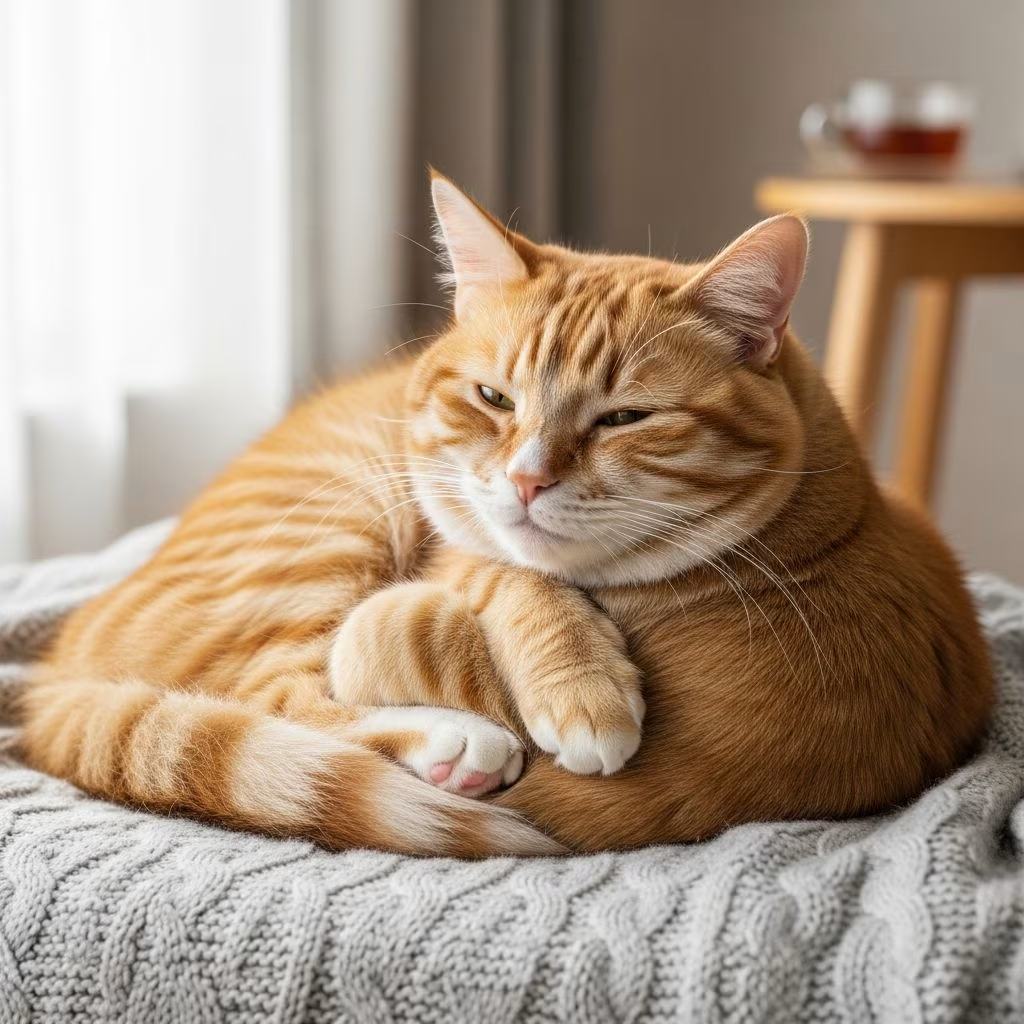
Have you ever caught your cat in the classic “loaf” position—paws neatly tucked underneath their body, resembling a fluffy loaf of bread? This endearing pose, often called loafing or the cat loaf, is one of the most recognizable and adorable feline behaviors. But what does it really mean? Is your cat simply relaxing, staying warm, or perhaps signaling something more? This article dives deep into the reasons behind why cats tuck their paws, decoding this instinctive behavior rooted in their wild ancestry and domestic comfort.
Cat owners worldwide adore spotting their pets in this compact, stealthy stance. Yet, despite its commonality, the paw-tucking habit sparks curiosity: Does every cat loaf? What variations exist? And when should you worry? By understanding the loaf, you’ll gain insights into your cat’s emotions, health, and needs. From comfort cues to potential red flags, we’ll cover it all.
Do all cats tuck their paws?
Not every cat is a dedicated loafer, though most engage in this behavior at some point. While the loaf is a staple for many felines, some prefer sprawling out with legs extended or belly exposed, showcasing their unique personalities. Kittens might loaf playfully, adults for rest, and seniors for joint comfort. Even wild big cats like lions and tigers exhibit similar tucked positions during downtime, highlighting its evolutionary roots.
If your cat rarely loaves, it doesn’t indicate a problem. High-energy cats, those in warm climates, or grumpy individuals might opt for other poses. Observe their overall body language—tail flicks, ear positions, and eye narrowing—to gauge contentment. Paw tucking is natural feline body language, versatile across ages and breeds, but individual preferences vary widely.
What does paw-tucking look like?
The quintessential cat loaf is unmistakable: front paws fully tucked under the chest, hind legs folded neatly beside or beneath the body, tail wrapped around or hidden, and no limbs protruding. This creates a compact, bread-like silhouette that’s both cute and functional.
Variations abound for feline flair:
- Partial loaf: One paw dangles lazily out, blending relaxation with readiness.
- Tight loaf: Everything precisely tucked, like a dinner roll—maximum compactness.
- Meatloaf: Elongated body with paws under, often seen in larger cats.
- Reverse loaf: Back paws tucked, front extended—a watchful twist.
Regardless of style, the loaf signals a balance of rest and vigilance, paws poised for quick action beneath the cozy facade.
Five common reasons why cats tuck their paws
Relaxation
The top reason cats loaf is pure comfort and relaxation. Tucking paws signals safety and trust in their environment, allowing muscles to unwind without full sleep vulnerability. It’s like a feline “standby mode”—restful yet alert. Accompanying signs include slow blinks, purring, and a loosely draped tail. Dr. Leslie Sinn, a veterinary behaviorist, notes that a true loaf lacks tension or rigidity, confirming ease.
Regulating body temperature
Cats are heat-seekers, and loafing conserves warmth efficiently. By minimizing exposed surface area, tucking paws traps body heat, especially paws with sensitive pads. You’ll see more loafing in winter, near cool floors, or for chilly breeds like Sphynx. This thermoregulation echoes wild cats huddling in cold savannas.
Reducing vulnerabilities
Instinct drives cats to protect vital areas. Loafing shields the belly and limbs from threats, reducing injury risk in uncertain settings. Domestic cats retain this wiring, loafing more in new homes or with visitors. It’s semi-defensive: relaxed but spring-ready.
Staying alert and ready to pounce
Far from napping, loafers stay vigilant. Tucked paws enable instant leaps for play, prey, or peril—like laser pointer chases. This positions muscles for explosive movement, blending zen with ninja preparedness.
Hiding an illness or injury
Though usually benign, persistent one-paw tucking or strained loaves can mask pain. Cats conceal weakness instinctively; loafing protects sore joints, injured limbs, or abdominal issues. Watch for limping, hiding, appetite loss, hunched posture, or tense expressions—these warrant a vet visit.
When to worry about paw tucking
Most loafing is harmless, but context matters. Concern arises if:
- One paw stays tucked consistently, with limping or swelling.
- Loafing pairs with lethargy, vomiting, or avoidance.
- Body language shows pain: dilated pupils, flattened ears, growling.
- Sudden changes in a senior cat, possibly arthritis or organ issues.
Gently inspect paws for cuts, thorns, or heat. Provide soft bedding and monitor. Consult a vet promptly for anomalies—early detection saves lives.
How to encourage healthy loafing
Promote positive loafing to boost your cat’s well-being:
- Cozy spots: Cat beds, blankets in sunny or heated areas.
- Safety first: Quiet, predator-free zones build trust.
- Warmth aids: Heated mats, window perches.
- Observe cues: Slow blinks and purrs confirm joy.
Avoid disturbing mid-loaf unless necessary; respect their peace.
It’s not just cats: similar behaviors in other animals
Loafing transcends cats. Rabbits tuck legs for security, birds perch with feet hidden under feathers for warmth, and dogs do a drooly “lord of the rings” pose. These convergently evolved for comfort, heat retention, and protection across species.
| Animal | Loaf Style | Purpose |
|---|---|---|
| Cats | Paws under body | Relaxation, warmth, alert |
| Rabbits | Legs folded under | Security, rest |
| Birds | Feet tucked in feathers | Warmth conservation |
| Dogs | Front paws tucked | Comfort, readiness |
Bottom line
The cat loaf is a window into feline feelings: trust, coziness, caution. Celebrate this charm while staying attuned to changes. Your loafing cat thrives in a safe, loving home.
Frequently Asked Questions (FAQs)
What is a cat loaf?
A “cat loaf” is when a cat tucks paws and limbs under its body, mimicking a bread loaf—pure feline adorableness.
Why do cats lie with their paws tucked?
For relaxation, warmth, protection, or alertness while resting.
What is it called when cats tuck their paws?
Loafing or the cat loaf position.
What does it mean when a cat sits like a loaf?
Typically calm and secure, yet ready to move.
What does it mean when cats curl their paws?
Often relaxation; contextually, possible discomfort.
Is it normal for cats to tuck their paws?
Yes, it’s a standard sign of comfort and safety.
Should I worry if my cat always tucks one paw?
Check for injury; vet if limping or other signs appear.
Why do cats loaf?
For comfort, heat retention, or vigilance.
References
- Why Do Cats Tuck Their Paws? — Dial A Vet. 2023-10-15. https://www.dialavet.com/blog/why-do-cats-tuck-their-paws
- Why Do Cats Tuck Their Paws? The Cat Loaf Explained — Kinship. 2024-05-20. https://www.kinship.com/cat-behavior/why-do-cats-tuck-their-paws
- Cat Loaf Mystery: Why Do Cats Tuck Their Paws? — Basepaws. 2023-11-10. https://basepaws.com/blog/cat-loaf-mystery-why-do-cats-tuck-their-paws
- Cat Loaf Pose: What is it & Why Do Cats Loaf? — Purina US. 2024-02-28. https://www.purina.com/articles/cat/behavior/understanding-cats/why-do-cats-loaf
- Why Do Cats Loaf? — PetMD. 2024-01-12. https://www.petmd.com/cat/behavior/why-do-cats-loaf



