

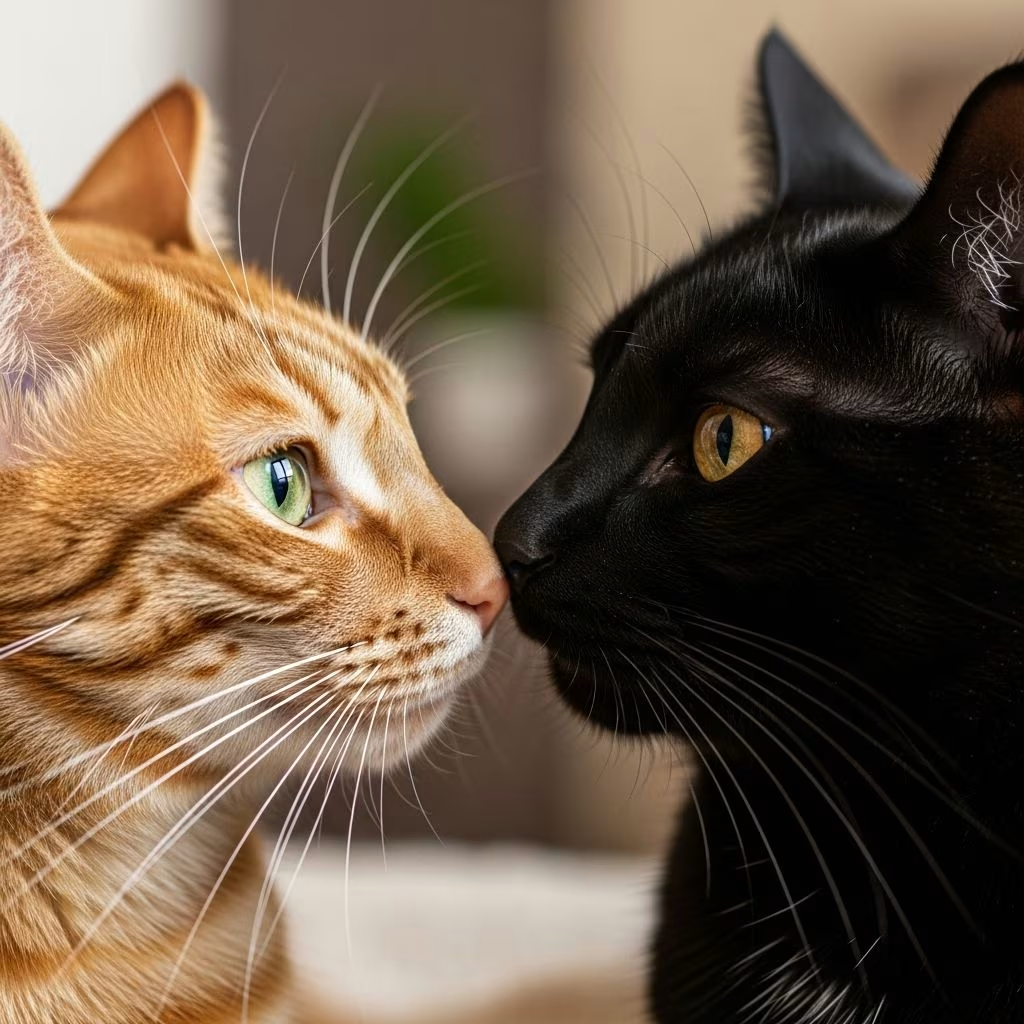
Why Do Cats Touch Noses? Vet-Verified Feline Behavior
If your cat has ever leaned in close and gently touched their nose to yours, you’ve witnessed one of the most endearing feline behaviors. This simple gesture carries profound meaning in the feline world. Understanding why cats touch noses reveals insights into their social structure, communication methods, and their genuine affection for the humans and animals in their lives. This behavior isn’t random or meaningless—it’s a carefully evolved form of communication rooted in feline biology and development.
The Evolutionary Background: Why Cats Use Nonverbal Communication
To understand nose touching, it’s essential to recognize that cats are solitary predators, unlike lions and other social big cats. This fundamental aspect of feline nature shapes everything about how they communicate and interact with their environment. Solitary predators cannot afford to be overly verbal because vocalizations can compromise their hunting success. A loud meow might alert potential prey, resulting in a missed meal. Therefore, cats have evolved to rely heavily on nonverbal communication cues.
Another critical factor in feline social behavior stems from the dangers of unnecessary conflict. Unlike lions, who live in prides and benefit from group protection, solitary cats must avoid fights at all costs. A severe injury can be fatal when a cat cannot rely on pride members for support and food. This evolutionary pressure has made cats masters of nonverbal communication, using subtle body language, scent signals, and gentle physical contact to navigate their world without triggering dangerous confrontations.
Nose touching emerged as one of these crucial nonverbal cues, allowing cats to communicate peaceful intentions while maintaining their independence and safety.
Understanding Cat Communication Methods
Cats possess an intricate system of communication that extends far beyond simple meows and hisses. Their methods include:
- Scent marking through glands located on their face, body, and paws
- Body language signals through tail position, ear orientation, and posture
- Vocalizations reserved for specific situations and familiar companions
- Physical contact, including nose touching and face rubbing
- Eye contact and slow blinks that signal trust and affection
Among these methods, nose touching represents one of the most intimate forms of feline communication, reserved exclusively for individuals a cat trusts completely.
What Does It Mean When Cats Touch Noses?
The Cat Greeting: Origins in Kittenhood
Cats learn the significance of nose touching from their very first moments of life. Mother cats greet their newborn kittens by touching their noses, even before the kittens’ eyes open at approximately 10 days of age. This initial interaction serves a critical purpose: it allows the mother to pass her scent to her offspring so they can recognize her through smell alone while their vision remains underdeveloped.
This early imprinting creates a lifelong association between nose touching and safety, comfort, and maternal bonding. As kittens grow and develop, they learn that nose touching is one of the primary ways felines acknowledge and greet one another. This behavior becomes hardwired into their social repertoire, serving as a fundamental greeting method throughout their lives.
Cats grow up knowing that touching noses is a method reserved for familiar faces—those they recognize and trust. When your cat touches their nose to yours, they are simply applying the same greeting they would offer to another trusted cat. They are not confused about your size or species; rather, they are communicating in the only language they truly understand.
How Cats Perceive Humans
From a feline perspective, humans present an unusual challenge. You are far larger than anything a cat would normally encounter in their natural world. In instinctual terms, a creature your size could pose a significant threat. However, through consistent positive experiences and genuine affection, your cat has learned that you are safe, gentle, and part of their social family or “colony.”
Remarkably, cats mentally scale down humans into “cat-sized versions” that fit into their understanding of the world. This cognitive adaptation allows them to treat humans as they would treat other cats, applying the same greeting rituals, including nose touching, face rubbing, and head butting. When your cat touches noses with you, they are essentially saying, “You’re one of us.”
Nose Touching as a Warning Signal
While nose touching is primarily a greeting reserved for trusted companions, it can occasionally occur between unfamiliar cats. In these rare instances, the behavior carries a different meaning. When unfamiliar cats approach each other cautiously and extend their noses without encroaching on each other’s territory, they are communicating a peaceful message: “I am willing to be peaceful as long as you are willing to do the same.”
This subtle form of negotiation allows stray and outdoor cats to coexist peacefully despite their solitary nature. The vulnerability inherent in this gesture—requiring both cats to come close enough to touch noses—reinforces the message that each party is offering a temporary truce. This behavior demonstrates the sophistication of feline social communication and their ability to avoid unnecessary conflict.
The Scent Exchange: Why the Nose Matters
The nose is far more than a facial feature in the feline world. Cats rely heavily on scent to recognize family members and establish social bonds. A cat’s sense of smell is exponentially more developed than a human’s, allowing them to detect and interpret scent information that humans cannot even perceive.
When cats touch noses, they exchange scent information that serves multiple purposes:
- Individual identification: recognizing specific cats and humans
- Social bonding: strengthening connections with trusted companions
- Territorial acknowledgment: understanding each other’s presence in shared spaces
- Health status assessment: gathering information about the other party’s wellbeing
Unlike face rubbing, which involves the many scent glands concentrated on a cat’s face and marks territory, nose touching is a gentler, more intimate exchange. It leaves the cat vulnerable because they must position themselves close to the other individual, making this gesture something cats offer sparingly and only to their most trusted companions.
A Sign of Trust, Love, and Belonging
When your cat reaches up to touch your nose with theirs, they are displaying something far more significant than mere curiosity. This gesture signals deep trust, affection, and a genuine sense of belonging. Cats do not expose their faces to just anyone; the face contains their most vulnerable sensory organs and is one of the most sensitive areas of their body.
By allowing you close enough for a nose touch, your feline friend is demonstrating complete security in your presence. They are communicating that they do not perceive you as a threat and that they consider you part of their safe inner circle. In cat communication, this level of tolerance represents the highest form of affection and trust.
The vulnerability required for nose touching cannot be overstated. A cat’s face is where they process the world through sight, smell, hearing, and touch. Allowing another being close enough to touch this vulnerable area requires exceptional trust and confidence in safety.
Distinguishing Between Nose Touching and Face Rubbing
While closely related, nose touching and face rubbing are distinct behaviors with different meanings and functions:
| Behavior | Meaning | Frequency | Scent Gland Involvement |
|---|---|---|---|
| Nose Touching | Greeting and recognition | Reserved for trusted individuals | Minimal; gentle contact |
| Face Rubbing | Greeting, bonding, and territorial claim | More frequent; shared behavior | Extensive; many face glands involved |
Face rubbing serves dual purposes: it is both a greeting and a way for your cat to claim ownership by marking you with their scent. This claim is not aggressive or possessive in nature; rather, it represents your cat sharing their scent and showing the world that you belong together as a bonded pair. Since cats have scent glands concentrated on their face, much of the rubbing behavior centers on the facial region.
Nose touching, by contrast, is a gentler interaction that requires both parties to remain still and close. It is an act of pure connection rather than territorial marking, making it an even more significant gesture of trust and affection.
What Your Cat’s Nose Touch Really Means
Your cat sees you as a trusted family member. In the feline world, friendly cats greet each other by rubbing faces, bumping heads, and touching noses. It’s their way of saying, “Hey, I know you. You’re safe.” When your cat initiates nose contact with you, they are not confused about your species; they are simply using the same greeting they would offer to another trusted cat.
This behavior indicates several important things about your relationship:
- Your cat trusts you completely and doesn’t perceive you as a threat
- You are considered part of their immediate social group
- Your cat feels safe and secure in your presence
- They recognize you as a consistent, reliable source of comfort
- Your cat is displaying genuine affection in their own language
Veterinary behaviorists confirm that this behavior is a legitimate sign of deep attachment and emotional connection. Your cat has made the conscious choice to be vulnerable with you, which in feline terms represents the highest expression of love and trust.
Important Guidelines: Never Force a Nose Touch
While nose touching is a wonderful sign of your cat’s affection, it’s crucial to understand that this behavior must always be initiated by your cat. Never attempt to force a nose touch or push your cat’s face toward yours against their will.
Attempting to force nose contact can backfire significantly. Your cat may perceive this action as aggressive, and they may respond with scratching or biting in self-defense. This could damage your relationship and teach your cat that close contact with your face is something to avoid.
Instead, allow your cat to approach you on their own terms. If they lean in for a nose touch, reciprocate gently. If they don’t initiate this behavior, respect their boundaries and express affection through other methods your individual cat prefers, such as gentle petting, play, or simply spending quiet time together.
Creating an Environment That Encourages Trust
If your cat doesn’t currently touch noses with you, there are ways to encourage the development of this behavior by building trust and security:
- Respect personal boundaries: Allow your cat to approach you rather than constantly pursuing them
- Offer slow blinks: This cat gesture signals trust and affection and often encourages reciprocal behavior
- Use positive reinforcement: Offer treats and praise when your cat approaches you, associating close contact with positive outcomes
- Create safe spaces: Provide quiet areas where your cat can retreat and feel secure
- Spend quality time together: Build connections through play, grooming, and quiet companionship
- Be consistent and gentle: Establish predictable routines that help your cat feel secure
Trust develops over time. Some cats are naturally more demonstrative with affection, while others are more reserved. Each cat has their own unique personality and comfort level with physical contact. By respecting your cat’s individual needs and preferences, you create the conditions under which genuine trust can flourish.
Frequently Asked Questions (FAQs)
Q: What if my cat doesn’t touch noses with me?
A: Not all cats express affection through nose touching. Some cats prefer other forms of contact, such as head bunts, slow blinks, or sitting nearby. Your cat may be showing love in their own unique way. Focus on the affection signals your individual cat does display rather than expecting a specific behavior.
Q: Is nose touching the same as a cat “booping” my nose?
A: Yes, nose booping is essentially the same behavior—a gentle touch where your cat’s nose meets yours. This playful term describes the sweet moment when cats initiate nose contact.
Q: My cat touches noses with some people but not others. Why?
A: Cats choose who they trust based on their interactions with different individuals. They may feel more secure with people who respect their boundaries, approach them gently, and don’t force unwanted contact. A person’s energy, gentleness, and consistency all influence whether a cat feels comfortable enough to touch noses with them.
Q: Can I teach my cat to touch noses with me?
A: While you cannot force this behavior, you can encourage it by building trust through positive interactions. Allow your cat to approach you, offer slow blinks, and reward close contact with treats and praise. Your cat will initiate nose touching when they feel genuinely safe and secure with you.
Q: What does it mean if my cat touches noses with another cat?
A: When cats touch noses with each other, they are exchanging scent information and greeting. If they are familiar cats, it indicates a friendly, trusting relationship. If they are unfamiliar cats, the nose touch may be a peaceful negotiation to avoid conflict.
Q: Is nose touching a sign that my cat is sick or has a problem?
A: No, nose touching is a normal, healthy behavior that indicates trust and affection. If your cat suddenly stops touching noses and shows other behavioral changes, it could indicate stress or health issues worth discussing with a veterinarian.
References
- Why Do Cats Touch Noses? Vet-Verified Feline Behavior — Catster. 2024. https://www.catster.com/cat-behavior/why-do-cats-touch-noses/
- Why Does My Cat Want To Touch Noses With Me? — iHeartCats. 2024. https://iheartcats.com/why-does-my-cat-want-to-touch-noses-with-me/
- Explaining 7 Bizarre Cat Behaviors — The Honest Kitchen. 2024. https://www.thehonestkitchen.com/blogs/pet-obsessed/explaining-7-cat-behaviors



