

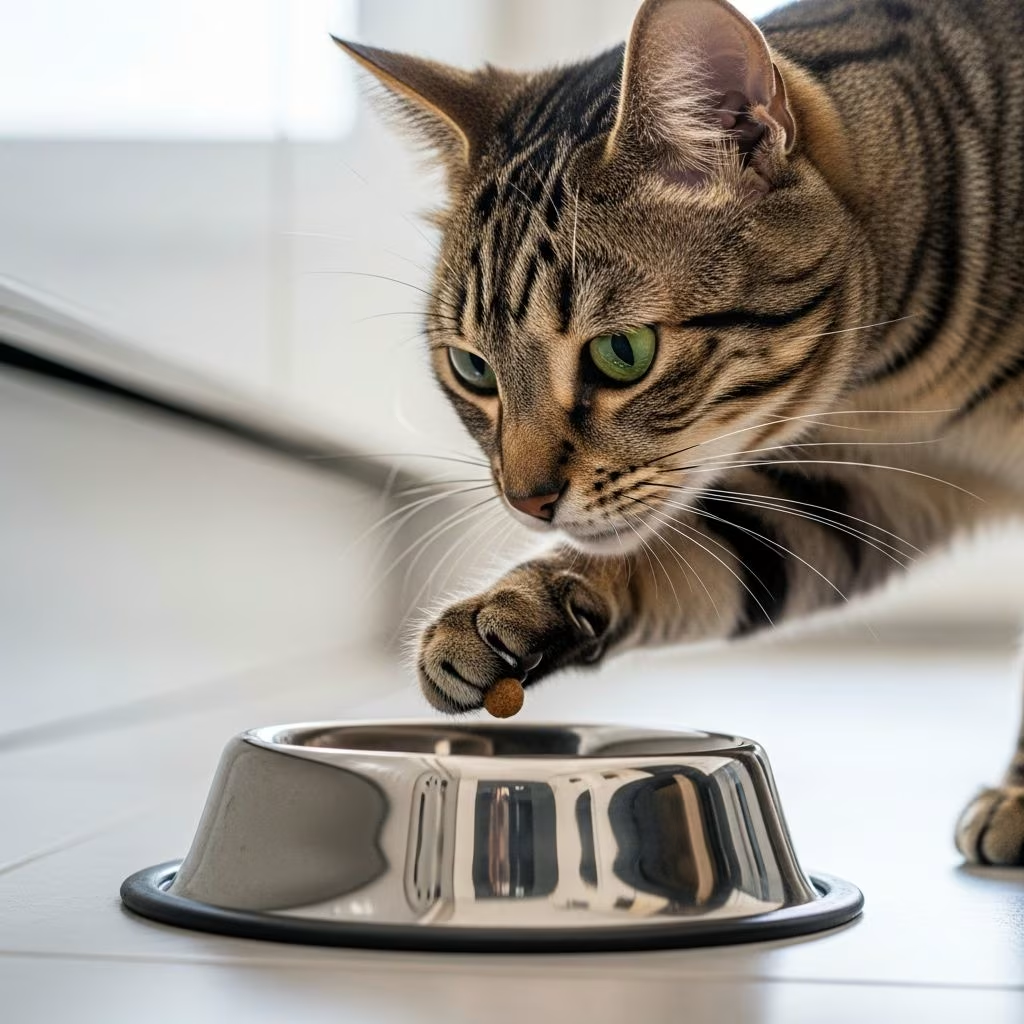
Cats often exhibit the peculiar behavior of taking kibble or wet food out of their bowls and eating it on the floor or nearby surfaces. This instinctual habit stems from their wild ancestry, where eating away from the central food source enhanced survival by reducing competition and hiding vulnerability. Modern domestic cats retain these traits, preferring to scatter food for a more natural foraging experience that mimics hunting small prey multiple times a day.
Understanding this behavior is crucial for cat owners aiming to support their pet’s mental and behavioral health. Cats are obligate carnivores evolved to consume numerous small meals, and bowl feeding disrupts this pattern, potentially leading to stress or obesity. Research highlights how meal feeding and foraging enrichment can strengthen the cat-owner bond while addressing issues like begging or aggression around food.
Instinctual Reasons Cats Remove Food from Bowls
Cats’ ancestors, such as the African wildcat, foraged for food in open environments, dragging kills to safer spots to eat undisturbed. Domestic cats inherit this ‘food carrying’ or ‘scatter feeding’ behavior, instinctively moving kibble away from the bowl to simulate securing prey. This reduces perceived threats from other animals or environmental stressors during meals.
- Foraging simulation: Scattering food allows cats to ‘hunt’ by pawing and retrieving pieces, providing mental stimulation absent in static bowls.
- Safety instinct: Eating away from the bowl minimizes exposure, echoing wild behaviors where central feeding areas were risky.
- Portion control mimicry: Cats naturally eat 10-20 small meals daily; removing food helps them pace intake naturally.
Studies confirm that cats on restricted diets or less palatable food display agitation like tail flicking or excessive grooming, indicating dissatisfaction with bowl feeding. Preferred foods elicit positive responses like lip-licking, suggesting owners choose high-quality, appealing kibble to reduce scattering.
Whisker Fatigue and Bowl Design Issues
One common trigger is whisker fatigue, where deep, narrow bowls press against sensitive whiskers, causing discomfort or overstimulation. Whiskers (vibrissae) act as environmental sensors; constant contact during eating leads to stress, prompting cats to dump food out for relief.
- Signs of whisker fatigue: Pawing at food, avoiding bowls, or rapid eating followed by scattering.
- Solutions: Switch to wide, shallow bowls or plates allowing whiskers to rest freely.
Bowl material and location matter too. Plastic bowls harbor bacteria and odors; ceramic or stainless steel are preferable. Elevated feeders suit some cats but exacerbate whisker issues in others. Place bowls in quiet, low-traffic areas to avoid anxiety from household activity.
Stress, Boredom, and Environmental Factors
Boredom or stress amplifies food manipulation. Indoor cats lacking enrichment may treat food scattering as entertainment. Anxiety from new pets, moves, or routine changes can manifest as abnormal eating, including pica or bowl avoidance.
Cats with early weaning histories or separation anxiety redirect stress to food behaviors. Rescued or feral-background cats may hoard food due to scarcity memories, nosing into others’ bowls or guarding resources aggressively.
- Affection eating: Some cats eat only with human presence for security, pacing between owner and bowl.
- Multi-cat dynamics: Competition leads to food stealing or relocation to safer spots.
Research links restricted feeding to increased affectionate begging or aggression, as cats solicit food through meowing or following owners. Environmental enrichment via food puzzles counters this, promoting natural behaviors and reducing obesity risks from free-feeding.
Health and Nutritional Considerations
Medical issues like dental pain, nausea, or nutritional deficiencies can cause bowl aversion. Hyperthyroidism or gastrointestinal problems may lead to rapid eating then scattering. Always consult a vet to rule out underlying conditions before assuming behavioral causes.
Obesity is prevalent; free-feeding contributes, but portion-controlled meal feeding with foraging tools prevents overeating. Cats on lower-calorie diets may scatter food to stretch meals, mimicking wild rationing.
| Feeding Method | Pros | Cons | Best For |
|---|---|---|---|
| Free-Feeding | Convenient for owners | Obesity risk, begging | Low-activity cats |
| Meal Feeding (2x/day) | Portion control, bonding | Begging, aggression | Weight management |
| Foraging/Puzzle Feeders | Mental stimulation, natural | Learning curve | Bored/anxious cats |
Solutions to Discourage Food Scattering
Transition to cat-friendly setups. Introduce puzzle feeders gradually, starting with simple toys dispensing kibble. These enrich environments, reduce stress, and use food as positive reinforcement in behavior therapy.
- Use anti-scatter mats or raised platforms.
- Mix wet and dry food for variety.
- Scheduled meals build routine, curbing begging.
For multi-cat homes, provide multiple stations to minimize competition. High-value treats in puzzles aid counterconditioning for anxious cats, releasing pleasure neurotransmitters like serotonin.
Food Puzzles and Enrichment for Better Feeding
Food puzzles are game-changers, turning meals into hunts. Options include balls, tunnels, and treat-dispensing toys. Studies show they decrease aggression and improve well-being by meeting foraging needs.
Start with 10-20% of daily kibble in puzzles, increasing as cats adapt. This prevents boredom-induced scattering and supports weight loss via extended eating times.
Frequently Asked Questions (FAQs)
Q: Is it harmful if my cat takes food out of the bowl?
A: Generally not, but it can lead to faster eating, choking risks, or mess. Monitor for underlying health issues and provide alternatives like wide bowls.
Q: Why does my cat only eat when I’m nearby?
A: This ‘affection eating’ indicates stress or insecurity. Ensure a calm feeding area and gradual independence training.
Q: How do I stop food obsession and begging?
A: Implement meal feeding, ignore begging, and use puzzles. Rule out medical causes like psychogenic eating disorders.
Q: Are puzzle feeders suitable for all cats?
A: Yes, with patience. Kittens and seniors may need simpler designs; they enhance mental health across ages.
Q: What if my multi-cat household fights over food?
A: Separate feeding stations, feed highest-ranking cat first, and monitor dynamics to prevent aggression.
Conclusion: Promoting Natural Feeding for Happy Cats
By addressing instincts, bowl issues, and enrichment needs, owners can minimize scattering while boosting feline well-being. Consistent strategies like puzzles and scheduled meals foster healthier, less stressed cats, aligning domestic life with evolutionary behaviors.
References
- Feeding Cats for Optimal Mental and Behavioral Well-Being — PMCID: PMC7415653. 2020-08-11. https://pmc.ncbi.nlm.nih.gov/articles/PMC7415653/
- Unusual Eating Habits in Cats — UC Davis Health Topics, School of Veterinary Medicine. 2023. https://healthtopics.vetmed.ucdavis.edu/health-topics/feline/unusual-eating-habits-cats
- Pica in Cats: What It Is, Symptoms, and Treatment — PetMD (Veterinary Partner). 2024-05-15. https://www.petmd.com/cat/conditions/behavioral/pica-cats
- Feeding a Cat Who Loves to Eat — VCA Animal Hospitals. 2023-10-20. https://vcahospitals.com/know-your-pet/feline-gluttons
- Affection Eaters — San Francisco SPCA. 2022. https://www.sfspca.org/resource/affection-eaters/



