

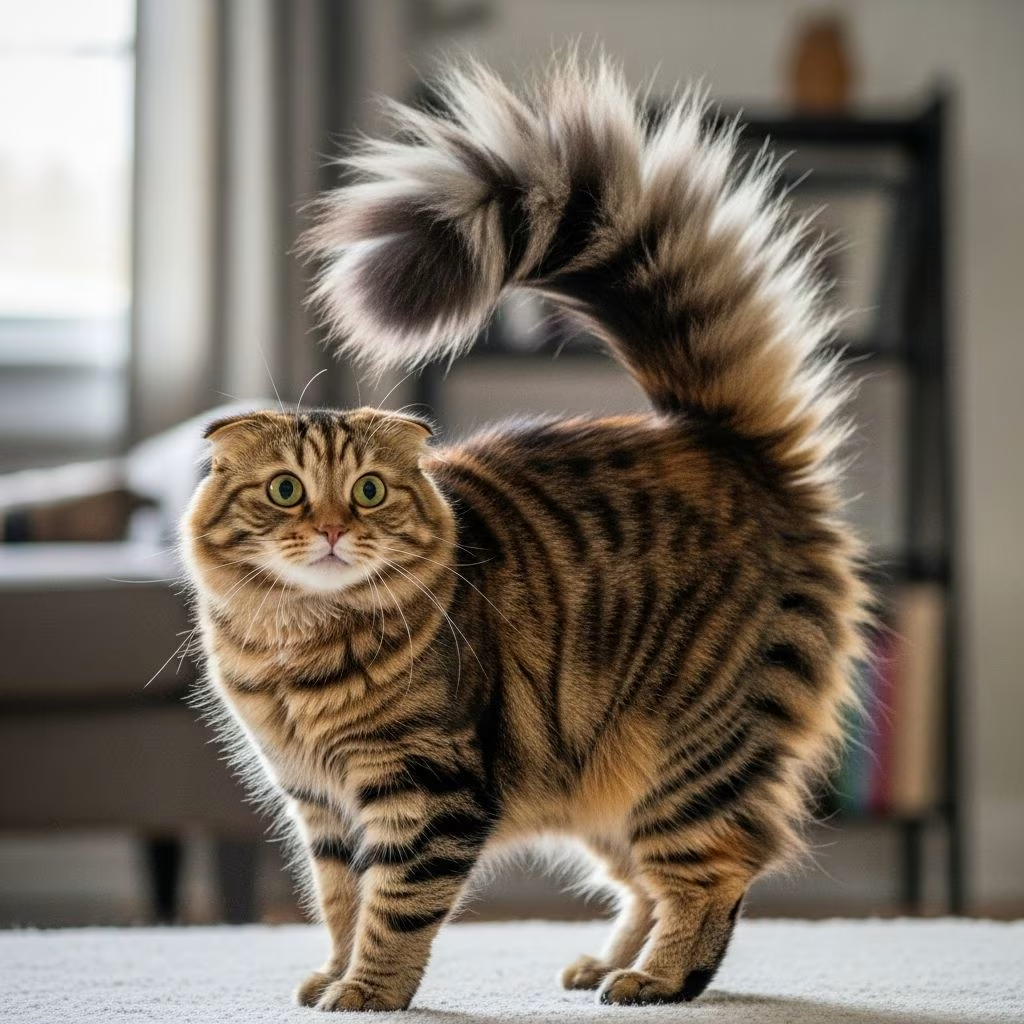
Why Do Cats’ Tails Puff Up? Understanding Piloerection
If you’ve ever seen a cat with a dramatically enlarged, spiky tail standing straight up like a bottle brush, you’ve witnessed one of the most iconic feline behaviors. This distinctive response is called piloerection, and it’s a completely natural, involuntary reaction that cats use to communicate with their environment and other animals. While puffing their tail is a normal behavior, it can sometimes indicate that something is causing your cat distress or excitement, making it important to understand what this gesture means.
What Is Piloerection?
Piloerection is the scientific term for when a cat’s fur stands on end. You might also hear it referred to as “raising their hackles.” Think of the stereotypical Halloween cat image, with the arched back and spiky fur—that’s piloerection in action. Cats accomplish this remarkable feat using the muscles that are attached to individual hair follicles. When these muscles contract, the hairs stand straight up, creating the illusion of a much larger, more imposing feline.
The mechanism behind piloerection is the same one that causes the hair on your arm or the back of your neck to stand on end when you experience a chill or feel a spooky sensation. It’s a physiological response that crosses species boundaries. Dogs, other mammals, and even humans experience this unique reaction when their sympathetic nervous system is activated.
The Involuntary Nature of Tail Puffing
You may be surprised to learn that piloerection is completely involuntary in cats. Your feline friend doesn’t have to make a conscious decision to puff up their tail—it’s an instinctive response triggered by various stimuli. This means that your cat isn’t deliberately trying to look dramatic; they’re responding to something their body has interpreted as significant enough to warrant this defensive display.
Additionally, cats don’t have to puff up all their fur at once. Different areas of the body can exhibit piloerection independently, while the rest of the fur stays smooth and flat. The tail is a particularly common puffing-up zone because it serves as an important tool for feline communication and self-defense.
What Causes a Cat’s Tail to Puff Up?
There are several reasons why your cat might display a puffed-up tail. Understanding these causes can help you better interpret your cat’s emotional state and respond appropriately to their needs.
Aggression or Defense
One of the primary reasons cats puff their tails is to appear larger and more intimidating to potential threats. These threats might include a stranger cat, a predator, or even a person they’re afraid of. Cats would much prefer to avoid physical conflict altogether because fighting puts them at risk of serious injury. By displaying big, intense warning signs—like a massively puffed tail—they hope to scare off their adversary before any confrontation actually occurs. This bluffing strategy has evolved to be quite effective in the feline world.
Fear or Survival Instinct
Most aggression in cats is actually a response to fear. Your cat may be afraid of another animal or person, worried about their safety or resources, or find themselves in a situation they perceive as dangerous. When triggered by this fear response, cats often display several defensive behaviors simultaneously: a puffed-up tail, hissing, growling, or even lunging. These instinctual behaviors work together to create a formidable appearance designed to protect the cat from perceived harm.
Surprise or Startle Response
A surprised or startled cat will often puff up their tail in the immediate moment following the surprising event. You’ll observe this behavior when one cat suddenly jumps out from around a corner to pounce on another, or when you accidentally drop something in the kitchen that makes a loud, unexpected noise. The puff-up is an instinctual response that occurs when your cat doesn’t immediately understand what happened, but their body essentially says, “let’s get bigger just in case we need to scare something off”.
Playful Behavior
Interestingly, cats also puff up their tails during play, particularly with kittens, though adult cats do this too. One of the reasons cats engage in playful behavior is to practice and flex their hunting and defensive muscles—essentially getting good practice for survival in a fun, lower-stakes environment. When a cat is in a playful “fight to the death” with their favorite toy, they naturally display the same instinctual piloerection that they would during a real confrontation.
Environmental Changes and Triggers
Various things in a cat’s environment can trigger tail puffing. Consider what might produce the feelings or situations we’ve already discussed: If there are things in the environment causing your cat to feel nervous, fearful, defensive, or surprised, the fur on their tail may stand up. Additionally, piloerection can play a role in temperature regulation by trapping a layer of air close to the skin as insulation. A cat may puff up when they’re cold, using this mechanism to maintain body heat.
Physical discomfort also triggers tail puffing. Something like skin allergies could cause the hair on the tail to stand on end when it’s bothersome to your cat. If you notice your cat frequently puffing their tail in response to skin irritation, consulting with a veterinarian is advisable.
The Physiological Mechanism Behind Puffing
Understanding the actual mechanics of how cats puff their tails provides fascinating insight into their physiology. A cat’s tail puffs when muscles in the skin contract in response to hormone signals from the stress or “fight or flight” system, also known as the sympathetic nervous system. These contractions occur around the hair follicles, causing the fur to stand perpendicular to the skin. While the tail is the most noticeable area of puffing, the hairs on a cat’s back will occasionally puff up along with the tail as part of the same response.
Individual Differences in Puffing Response
Interestingly, not all cats exhibit piloerection with the same frequency or intensity. Some cats seem naturally unflappable, rarely puffing up even in genuinely startling situations, while others seem predisposed to dramatic displays at the slightest provocation. This variation depends largely on individual personality, environmental factors, and a cat’s inherent temperament.
Frequently Asked Questions About Cat Tail Puffing
Q: Is a puffed-up tail always a sign of fear in cats?
A: No, a puffed tail is not necessarily a sign of fear. Cats puff up their tails and fur for many reasons, including being surprised, feeling the need to defend themselves, maintaining body temperature by providing insulation, and even expressing excitement or playfulness.
Q: Can a cat’s tail puff up due to excitement or playfulness?
A: Yes, absolutely. A cat’s tail can become puffy when they’re excited and playful. Play is naturally full of surprises that can lead to tail puffing, as can playfully practicing their defensive moves. The physical exertion and emotional excitement of play trigger the same physiological responses as threat-related situations.
Q: Are certain cat breeds more prone to having their tails puff up?
A: While some breeds may puff their tails more than others due to coat length and density, the frequency of tail puffing depends more on the individual cat’s environment and personality. A skittish or anxious cat may experience piloerection more often than a super confident, laid-back cat. If there’s a lot of noise and activity in the home, you may notice more puffy tails. A playful kitten practicing their hunting and defensive skills will get puffed up more often than a mellow adult cat.
Q: What if my cat doesn’t have a tail?
A: If you have a tailless cat breed, such as a Manx cat, they won’t be able to communicate through tail puffing. However, there are plenty of other cat behaviors you can observe to understand how your furry friend is feeling, including ear position, body posture, vocalizations, and overall body language.
Q: When should I be concerned about my cat’s puffed-up tail?
A: An occasional puffed tail is normal behavior and nothing to worry about. However, if your cat is frequently puffing their tail in situations that don’t seem obviously threatening, or if this behavior is accompanied by other signs of stress or anxiety, it may indicate underlying anxiety that warrants a conversation with your veterinarian.
Understanding Your Cat’s Body Language
To fully interpret what a puffed-up tail means, it’s essential to consider the broader context and other body language signals your cat is displaying. A puffed tail accompanied by an arched back, flattened ears, and hissing indicates a defensive posture born from fear or aggression. The same puffed tail accompanied by a relaxed body, play bows, and gentle vocalizations indicates playfulness and excitement.
Learning to read your cat’s complete body language—not just their tail—will give you the most accurate understanding of what they’re trying to communicate and how they’re truly feeling. This communication system has evolved over thousands of years to help cats interact effectively with their environment and other creatures.
Conclusion
A puffed-up tail is a fascinating and completely natural cat behavior driven by involuntary physiological responses to various stimuli. Whether your cat is experiencing fear, surprise, excitement, playfulness, or environmental stress, their tail tells a story about their emotional and physical state. By understanding the reasons behind piloerection and learning to interpret your cat’s complete body language, you can become a more attentive and responsive cat parent who better understands their feline companion’s needs and feelings.
References
- Why Do Cats’ Tails Puff Up? Causes and What to Do — Kinship. 2024. https://www.kinship.com/cat-behavior/why-do-cats-tails-puff-up
- What Does It Mean When a Cat Puffs Up Their Tail? — Trusted House Sitters. 2024. https://www.trustedhousesitters.com/blog/pets/why-do-cats-puff-up-their-tails/
- Why Is My Cat’s Tail All Puffed Up? — Mental Floss. 2017. https://www.mentalfloss.com/article/524452/what-makes-cats-tail-puff-when-its-scared



