

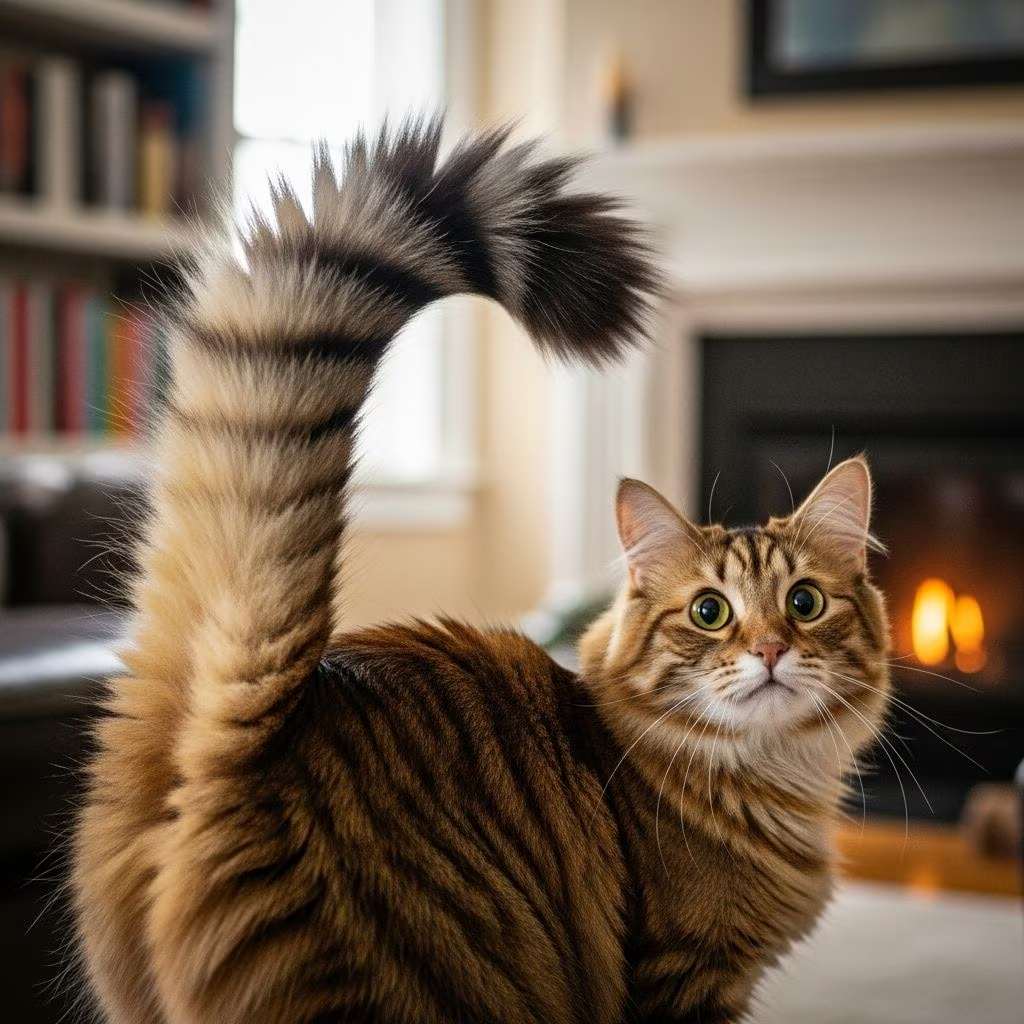
The sight of a cat with a suddenly puffed-up tail is both striking and common among feline owners. This phenomenon, known as **piloerection**, occurs when the tiny muscles at the base of each hair follicle contract, causing the fur to stand on end. Cats often puff their tails to appear larger and more intimidating, a survival instinct inherited from their wild ancestors. While it can signal distress, it’s not always negative—playfulness or even cold temperatures can trigger it. Understanding this behavior helps owners interpret their cat’s emotions and respond appropriately.
What Is Piloerection in Cats?
**Piloerection**, or the standing up of fur, is an involuntary physiological response mediated by the sympathetic nervous system. It involves the contraction of arrector pili muscles attached to hair follicles, trapping air near the skin for insulation or creating a larger silhouette. In cats, this is most visible on the tail, back, or neck, often called ‘raising hackles.’ Unlike voluntary movements, cats cannot control it consciously—it’s triggered by adrenaline surges from emotions or stimuli.
This response is evolutionarily conserved across mammals, including humans (think goosebumps). For cats, the tail is a key communication tool; puffing it amplifies signals during high-arousal states. Observing accompanying cues like ear position, vocalizations, or posture provides context.
Why Do Cats Puff Up Their Tails? Common Causes
Cats puff their tails for several reasons, primarily linked to emotional or environmental triggers. Here’s a breakdown of the most frequent causes:
- Fear or Threat Response: The primary reason is fear, where cats puff to look bigger against perceived dangers like strangers, dogs, or loud noises.
- Aggression or Defense: In confrontations, puffing signals ‘back off’ to avoid fights, paired with hissing or growling.
- Surprise or Startle: Sudden events, like a door slamming, provoke an instant puff as the cat assesses threats.
- Playfulness and Excitement: During play, especially hunting simulations, tails puff to mimic real predatory intensity.
- Environmental or Physical Factors: Cold weather, pain, allergies, or changes like new pets can induce puffing.
Aggression or Defense: Puffed Tail as a Warning
When a cat feels aggressive or defensive, a puffed tail serves as a visual deterrent. Cats prefer intimidation over combat to minimize injury risks. You’ll notice sideway stance, arched back, dilated pupils, and flattened ears alongside the puffed tail. This ‘Halloween cat’ pose aims to scare off rivals, whether another cat, dog, or unfamiliar human.
Inter-cat territorial disputes often feature this display. Owners might see it during introductions of new pets. Respect the space—do not approach or touch, as escalation to swats or bites is possible. Gradually desensitize with positive associations like treats from a distance.
Fear or Survival Instinct: Defensive Piloerection
Most puffed tails stem from fear, a primal survival mechanism. Cats puff to amplify size when cornered or overwhelmed, often crouching low with tucked tail base, hissing, or fleeing. Common triggers include veterinary visits, thunderstorms, or household chaos.
Fear-aggression blends these; a terrified cat may attack preemptively. Chronic puffing suggests ongoing anxiety from overcrowding or neglect. Create safe zones with hiding spots, pheromone diffusers, and consistent routines to alleviate. Veterinary checks rule out pain mimicking fear.
Surprise or Startle Response: The Instant Puff
A quick tail puff often follows surprises, like a toy pouncing or dropped object. It’s the fight-or-flight kick-in before rational assessment. Kittens exhibit this most dramatically during ambushes by littermates, honing reflexes.
In adults, it fades rapidly if no threat materializes. Minimize household startles by announcing movements near resting cats and securing loud appliances. This response underscores cats’ sensitivity to novel stimuli.
Playful Behavior: Puffing During Fun
Surprisingly, puffed tails appear in play, especially intense sessions mimicking hunts. Excitement surges mimic defensive states, puffing the tail as the cat ‘practices’ pouncing. Kittens do this frequently; adults less so but still during feather wand chases.
Distinguish play from aggression by relaxed ears, forward whiskers, and lack of growling. Encourage with rotating toys to prevent overstimulation, where play turns testy. Scheduled sessions tire them happily.
Environmental Changes and Other Triggers
Beyond emotions, environments provoke puffing. New furniture, visitors, or rearrangements unsettle territorial instincts. Loud vacuums or fireworks amplify.
Cold prompts piloerection for warmth—fur traps insulating air, vital for thin-coated or outdoor cats. Medical issues like allergies cause itching-induced standing fur; arthritis or injuries make tails hypersensitive.
Table: Tail Puffing Triggers and Accompanying Signs
| Trigger | Body Language Cues | Owner Action |
|---|---|---|
| Fear/Aggression | Arched back, hissing, flattened ears | Give space, remove threat |
| Play/Excitement | Relaxed body, chasing toys | Engage safely, monitor energy |
| Surprise | Quick freeze, then relax | Reduce sudden noises |
| Cold/Pain | Trembling, lethargy, scratching | Warm environment, vet check |
What Should You Do When Your Cat’s Tail Puffs Up?
Response depends on context. For fear/aggression, retreat and eliminate stressors. Offer high perches for security. Play puffs warrant continuation if mutual. Persistent or isolated puffing? Vet visit for health screens—hyperthyroidism or dermatitis possible.
Enrich environments: scratching posts, window perches, puzzle feeders reduce anxiety. Multispecies homes benefit from separate resources. Professional behaviorists help chronic cases.
Are Certain Cats More Prone to Tail Puffing?
Personality trumps breed—skittish cats puff more than bold ones. Siamese or Bengals, being vocal/energetic, may display during play. Shelter cats with trauma histories react strongly to changes. Early socialization mitigates. Kittens outgrow frequent puffing as confidence builds.
Frequently Asked Questions (FAQs)
Is a puffed-up tail always a sign of fear in cats?
No, while fear is common, puffing occurs in play, surprise, aggression, or cold. Context via full body language clarifies.
Can a cat’s tail puff up due to excitement or playfulness?
Yes, excitement during play triggers puffs, simulating hunt adrenaline.
Why do cats puff their tails when angry?
To appear larger and intimidate, deterring fights.
What if my cat puffs its tail frequently?
Check for stress, pain, or environment. Consult vet if persistent.
Do tailless cats puff up?
No tails means no puffing, but they use ears, whiskers for signals.
Is tail puffing normal in kittens?
Very—it’s play and learning.
References
- Why Do Cats’ Tails Puff Up? Causes and What to Do — Kinship. 2023. https://www.kinship.com/cat-behavior/why-do-cats-tails-puff-up
- What Does It Mean When a Cat Puffs Up Their Tail? — TrustedHousesitters. 2023. https://www.trustedhousesitters.com/blog/pets/why-do-cats-puff-up-their-tails/
- Why Cats Puff Their Tails — Two Crazy Cat Ladies. 2023. https://twocrazycatladies.com/cat-behavior/why-cats-puff-their-tails/
- Vet Explains Why Cats Puff Up Their Tails — YouTube (Veterinary Channel). 2023. https://www.youtube.com/watch?v=QuIorunf1yA
- Why Is That Cat’s Tail Puffing? From Fear Response to Final Sympathetic Discharge — VetGirl on the Run (Veterinary Blog). 2023. https://vetgirlontherun.com/why-is-that-cats-tail-puffing-from-fear-response-to-final-sympathetic-discharge-vetgirl-veterinary-continuing-education-blog/
- What Does It Mean When a Cat Puffs up Their Tail? — Cats.com. 2023. https://cats.com/what-does-it-mean-when-a-cat-puffs-up-their-tail
- The Tail of the Tale: Why Your Cat’s Tail Wags, Lashes, and Thumps — Rutherford Veterinary Hospital. 2023. https://rutherfordvet.com/cat-tails/



