
Why Do Cats’ Tails Puff Up? Causes and What to Do
Discover why your cat's tail puffs up and what their body language reveals about their emotions and needs.
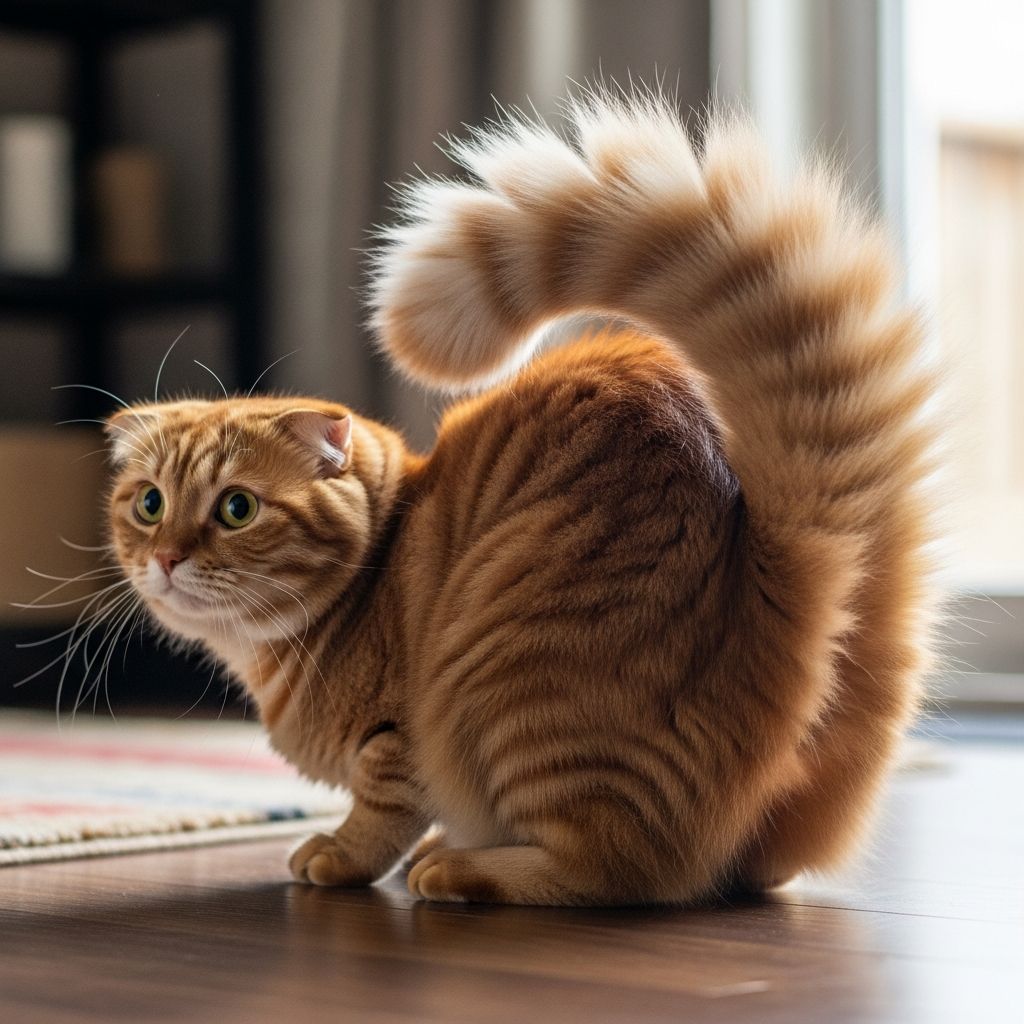
Why Do Cats’ Tails Puff Up? Understanding Piloerection
If you’ve ever seen a cat with an arched back and spiky fur resembling the iconic Halloween cat image, you’ve witnessed piloerection in action. This distinctive feline behavior, where a cat’s fur stands on end, is a natural response that serves multiple purposes in your cat’s communication and survival toolkit. Understanding why your cat’s tail puffs up is essential for interpreting their emotional state and responding appropriately to their needs.
What Is Piloerection and How Does It Work?
Piloerection is the scientific term for when a cat’s fur stands up, and it occurs through a fascinating biological process. Cats have tiny muscles attached to each individual hair follicle that contract to make the fur stand on end. You may have heard this referred to as “raising their hackles.” This same phenomenon occurs in humans when you get a chill or a spooky feeling and the hair on your arm or the back of your neck stands up.
What many cat owners find surprising is that piloerection is an involuntary response. Your cat doesn’t consciously decide to puff up their tail; instead, it’s an instinctive reaction to various stimuli. Additionally, cats don’t necessarily puff up all their fur at once. Different areas of the body can exhibit piloerection independently, meaning your cat might have a puffed-up tail while the rest of their fur remains smooth. This selective puffing is particularly useful since the tail is one of the most important tools cats use for communication.
Interestingly, piloerection isn’t unique to cats. Dogs and other mammals, including humans, experience this instinctive response, making it a widespread trait among many species.
What Causes a Cat’s Tail to Puff Up?
Several distinct reasons can trigger your cat’s tail to puff up. Understanding each cause helps you better interpret your cat’s behavior and emotional state.
Aggression or Defense
One primary reason cats puff their tails is to appear larger and more intimidating to potential threats. Whether facing a stranger cat, a predator, or even a person they’re afraid of, cats use tail puffing as a defensive strategy. Given the choice, cats strongly prefer to avoid physical confrontation because they risk injury themselves. Instead, they employ dramatic warning signs—like a puffed-up tail—hoping to scare off their adversary before anyone gets hurt.
Fear or Survival Instinct
Most aggression in cats actually stems from fear. Your cat may puff their tail when they’re afraid of another animal or person, worried about their safety or resources, or finding themselves in a scary situation. This defensive response to fear often includes a puffed-up tail along with other instinctual behaviors like hissing, growling, or lunging. This survival mechanism has been inherited from their wild ancestors and helps them appear less vulnerable to potential threats.
Surprise or Startle Response
A surprised cat will frequently puff up their tail in the exact moment they’re startled. You’ll observe this when one cat jumps out from around a corner to pounce on another, or when you accidentally drop something in the kitchen that makes a loud noise. It’s an instinctual response when cats don’t know exactly what happened, but their body automatically says, “let’s get bigger just in case we need to scare something off.”
Playful Behavior
Cats will puff up their tails during play, and you’ll see this behavior more frequently in kittens, though adult cats engage in it too. One reason cats play is to flex their hunting and defensive muscles as good practice that’s also fun. During a playful “fight to the death” with their favorite toy, a cat might display the same instinctual piloerection they would during a real fight. This behavior demonstrates how play and predatory instincts are closely linked in feline behavior.
Environmental Changes and Temperature Regulation
Various environmental factors can cause a cat’s tail to puff up. If there are things in your cat’s environment that make them nervous, fearful, defensive, or surprised—such as loud noises, unfamiliar animals, or new visitors—their fur may stand on end. Additionally, piloerection plays an important role in temperature regulation. When your cat feels cold, puffing up their fur traps a layer of air close to the skin as insulation, helping them maintain body warmth. Cats may also puff their tail if they’re experiencing physical pain or discomfort, such as skin allergies that cause irritation.
How to Interpret Your Cat’s Tail Puffing
Understanding the context surrounding your cat’s puffed-up tail is crucial for accurate interpretation. The same physical behavior can indicate completely different emotional states depending on what else is happening around your cat and their other body language signals.
| Reason for Puffing | Associated Body Language | Context |
|---|---|---|
| Fear | Crouched posture, pinned ears, hissing | Presence of threat or unfamiliar stimulus |
| Aggression | Arched back, stiff body, direct stare | Confrontation with another animal or person |
| Playfulness | Bouncy movements, pouncing, relaxed face | During interactive play or with toys |
| Surprise | Wide eyes, momentary puffing | Sudden unexpected event or sound |
| Cold | Curled posture, seeking warmth | Cold environment or low temperature |
Key Factors Influencing Tail Puffing Frequency
Not all cats puff their tails with the same frequency. Several factors determine how often your cat exhibits this behavior:
- Cat personality: A skittish or anxious cat may experience piloerection more often than a super confident and calm cat.
- Home environment: If there’s a lot of noise, activity, or unpredictability in your home, you may observe more puffy tails. A quiet, stable environment tends to result in less frequent puffing.
- Age and life stage: Playful kittens practicing their hunting and defensive skills will get puffed up more than a mellow adult cat.
- Breed tendencies: While some breeds may puff their tails more than others, it’s really more about the individual cat’s environment and personality than breed alone.
- Previous experiences: Cats with traumatic backgrounds may puff their tails more frequently as a protective response.
When to Be Concerned About Tail Puffing
While tail puffing is a completely natural behavior, it can be a sign that something is causing your cat distress. If your cat is puffing their tail excessively or in situations that don’t seem to warrant a defensive response, it may indicate underlying anxiety or stress. Additionally, if tail puffing is accompanied by signs of pain or discomfort, such as excessive grooming of the tail, loss of fur, or reluctance to move, consult your veterinarian to rule out medical issues like skin allergies or injuries.
How to Respond to a Puffed-Up Cat
Your response to your cat’s puffed-up tail should depend on what’s causing the behavior. If your cat is scared or defensive, give them space and avoid confrontation. Remove the threat if possible, and allow your cat to calm down at their own pace. During playtime, you can encourage the behavior as it’s a normal part of their hunting practice. If your cat seems cold, provide them with a warm bed or blanket. And if you suspect pain or discomfort, schedule a veterinary appointment to address any underlying health concerns.
Frequently Asked Questions About Cat Tail Puffing
Is a puffed-up tail always a sign of fear in cats?
No, a puffed tail is not necessarily a sign of fear. Cats get puffy (piloerection) for many reasons, including being surprised, feeling the need to defend themselves, experiencing playfulness, and even warming up when they’re cold.
Can a cat’s tail puff up due to excitement or playfulness?
Yes, absolutely. A cat’s tail can become puffy when they’re excited and playful. Play is full of surprises that can lead to tail puffing, and cats also puff their tails while playfully practicing their defensive moves during interactive games.
Are certain cat breeds more prone to having their tails puff up?
While some breeds may puff their tails more than others, it’s really more about the environment and the cat’s individual personality. A skittish cat may experience piloerection more often than a super confident cat, and a playful kitten practicing hunting and defensive skills will get puffed up more than a mellow adult might.
What if my cat doesn’t have a tail?
If you have a beautiful tailless cat breed, they won’t be able to communicate by puffing their tail up. However, there are plenty of other cat behaviors you can watch for to determine how your furry friend is feeling, such as ear position, body posture, and vocalizations.
Should I be worried if my cat’s tail puffs up frequently?
Frequent tail puffing in non-threatening situations could indicate underlying anxiety or stress. If your cat seems to puff up their tail excessively, consider consulting your veterinarian for advice on managing your cat’s stress levels and ruling out any medical issues.
How can I help my anxious cat that puffs its tail often?
Create a calm, stable environment with consistent routines, provide safe spaces where your cat can hide, use pheromone diffusers, and ensure adequate playtime and enrichment. If anxiety persists, consult your veterinarian for additional support and possible behavioral strategies.
Conclusion: Understanding Your Cat’s Communication
A puffed-up tail is one of the many ways your cat communicates with the world around them. By understanding the various reasons behind this behavior—from fear and aggression to playfulness and temperature regulation—you can better interpret your cat’s emotional state and respond appropriately to their needs. Pay attention to the context and accompanying body language signals to accurately understand what your cat is trying to tell you. With this knowledge, you’ll strengthen your bond with your feline companion and create a more harmonious living environment where your cat feels safe, understood, and cared for.
References
- Why Do Cats’ Tails Puff Up? Causes and What to Do — Kinship. 2024. https://www.kinship.com/cat-behavior/why-do-cats-tails-puff-up
Similar Articles








Read full bio of medha deb




