

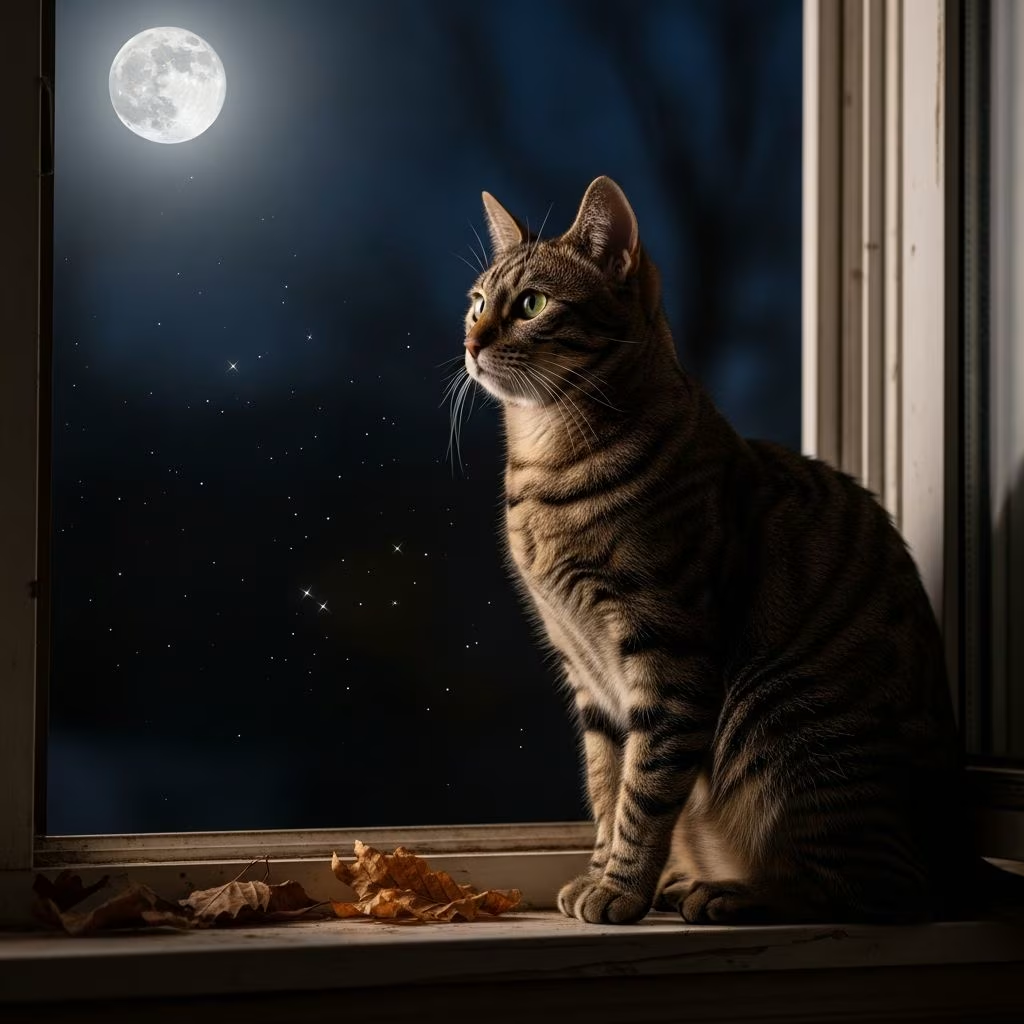
Cats often stay up all night due to their crepuscular nature, making them most active at dawn and dusk, combined with daytime boredom from sleeping while owners are away.
Table of Contents
- Why Are Cats Active at Night?
- 7 Reasons Cats Stay Up All Night
- How to Stop Your Cat from Staying Up All Night
- Understanding Your Cat’s Sleep Schedule
- Frequently Asked Questions
Why Are Cats Active at Night?
Cats are **crepuscular animals**, meaning they are naturally most active during twilight hours—dusk and dawn—rather than strictly nocturnal like owls or bats. This evolutionary trait stems from their wild ancestors who hunted small prey most effectively during low-light periods when rodents and birds were active. In the domestic setting, this instinct persists even though pet cats no longer need to hunt for survival.
During the day, many cats nap extensively because their humans are at work or school, leaving them with little stimulation. As evening falls and family returns, the cat’s internal clock kicks in, prompting bursts of energy just as owners wind down for bed. This mismatch in schedules often results in cats racing around, meowing, or knocking objects off shelves precisely when sleep is desired.
Young kittens and adolescents exhibit even more pronounced nighttime vigor due to higher energy levels and playfulness mimicking hunting practice. Senior cats, however, might show altered patterns due to age-related changes, which we’ll explore later.
7 Reasons Cats Stay Up All Night
Several factors beyond natural instincts contribute to your cat’s nocturnal escapades. Here’s a breakdown:
- Natural Crepuscular Rhythm: As noted, cats peak in activity at dawn and dusk. Domestic life doesn’t erase this biology.
- Daytime Boredom: Cats sleep 12-16 hours daily but mostly during owner absences, saving energy for evening hunts.
- Loneliness or Seeking Attention: Cats crave companionship; at night, they may vocalize, jump on beds, or paw at doors to engage sleeping owners.
- Hunger or Feeding Schedule: If dinner is early, cats may wake hungry around 4-5 AM, mistaking owner stirring for breakfast time.
- Health Issues: Hyperthyroidism, arthritis, or pain can cause restlessness. Excessive pacing or crying warrants a vet visit.
- Feline Cognitive Dysfunction (FCD): In seniors over 11, FCD disrupts sleep-wake cycles, affecting 55% of cats aged 11-15 and 80% over 16.
- Territorial or Fear Responses: New pets, noises, or anxiety may lead to nighttime patrolling for safety.
| Reason | Common Signs | Age Group Affected |
|---|---|---|
| Crepuscular Rhythm | Zoomies at dusk/dawn | All ages |
| Boredom | Day sleeping, night play | Adults |
| Health Issues | Pacing, crying | Seniors |
| FCD | Disorientation, vocalizing | 11+ years |
How to Stop Your Cat from Staying Up All Night
Realigning your cat’s schedule requires consistency, enrichment, and patience. Avoid punishment, as it fosters fear and worsens behavior—cats don’t connect scolding to actions.
1. Establish a Daytime Routine
Encourage activity matching your schedule. Studies show cats adapt sleep to human lifestyles with routine play. Provide toys, scratching posts, cat trees, and window perches during the day. Discourage long naps by interacting afternoons.
2. Evening Play Sessions
Schedule 30-60 minutes of interactive play before bed using wand toys, lasers, or balls to mimic hunting. This tires cats out, promoting sleep. Follow with a meal to reinforce ‘hunt, eat, sleep’ cycle.
3. Optimize Feeding
Feed the last meal later, near bedtime. Use puzzle feeders for mental stimulation. Avoid night feeding to prevent wakefulness.
4. Create Enriching Environment
Designate play zones away from bedrooms. Offer vertical spaces, hiding spots, and clicker training for mental engagement. A stimulated cat sleeps better.
5. Bedroom Boundaries
If needed, close the bedroom door. Provide an alternative cozy spot with bed, toys, litter, and water nearby. Use positive reinforcement for calm behavior; ignore demands.
6. Rule Out Medical Problems
Persistent issues? Vet check for pain, thyroid issues, or FCD. Early intervention restores normalcy.
7. Positive Reinforcement Only
Reward quiet nights with treats or pets. Designate bedroom as sleep-only zone—no play there.
These steps, applied consistently over 1-2 weeks, yield results. Track progress in a journal.
Understanding Your Cat’s Sleep Schedule
Cats sleep 12-18 hours daily in short bursts, unlike humans’ consolidated night sleep. Kittens and seniors need more (up to 20 hours), adults less. Factors like breed (e.g., active Bengals) and environment influence this.
To sync schedules:
- Gradually shift play/feeding earlier in evening.
- Use timed feeders for dawn meals without rising.
- Blackout curtains or white noise for seniors with disrupted cycles.
For multi-cat homes, ensure equal resources to curb competition-driven nights.
Frequently Asked Questions (FAQs)
Why is my cat suddenly active at night?
Sudden changes often signal health issues like hyperthyroidism or FCD in seniors, or stress from household changes. Consult a vet.
Do cats sleep through the night?
Not naturally—crepuscular cats rouse at dawn/dusk. With routine, they can align better to human nights.
How long does it take to change my cat’s sleep schedule?
1-4 weeks with consistent play, feeding, and ignoring night demands.
Is it okay to lock my cat out of the bedroom?
Yes, if provided alternatives. It teaches boundaries humanely.
What if my senior cat wanders at night?
Check for FCD or pain. Night lights, pheromone diffusers help.
By addressing root causes and implementing these strategies, you and your cat can enjoy synchronized, restful nights. Patience is key—your feline friend will adapt.
References
- Why Your Cat Keeps You Awake at Night — Kowaliga Veterinary Care. 2023. https://www.kowaligavet.com/paw-print/why-your-cat-keeps-you-awake-at-night
- Nocturnal Behavior (Cats) — San Francisco SPCA. 2024-01-15. https://www.sfspca.org/resource/nocturnal-behavior/
- Excessive nocturnal activity in cats — Vetwest Veterinary Clinics. 2023-05-20. https://www.vetwest.com.au/pet-library/excessive-nocturnal-activity-in-cats/
- Understanding Why Your Cat is Active at Night — Safe Haven Humane Society. 2024. https://safehavenhumane.org/understanding-why-your-cat-is-active-at-night/
- Cat keeping you awake? How to manage night activity — Animal Humane Society. 2023-11-10. https://www.animalhumanesociety.org/resource/cat-keeping-you-awake-how-manage-night-activity



