

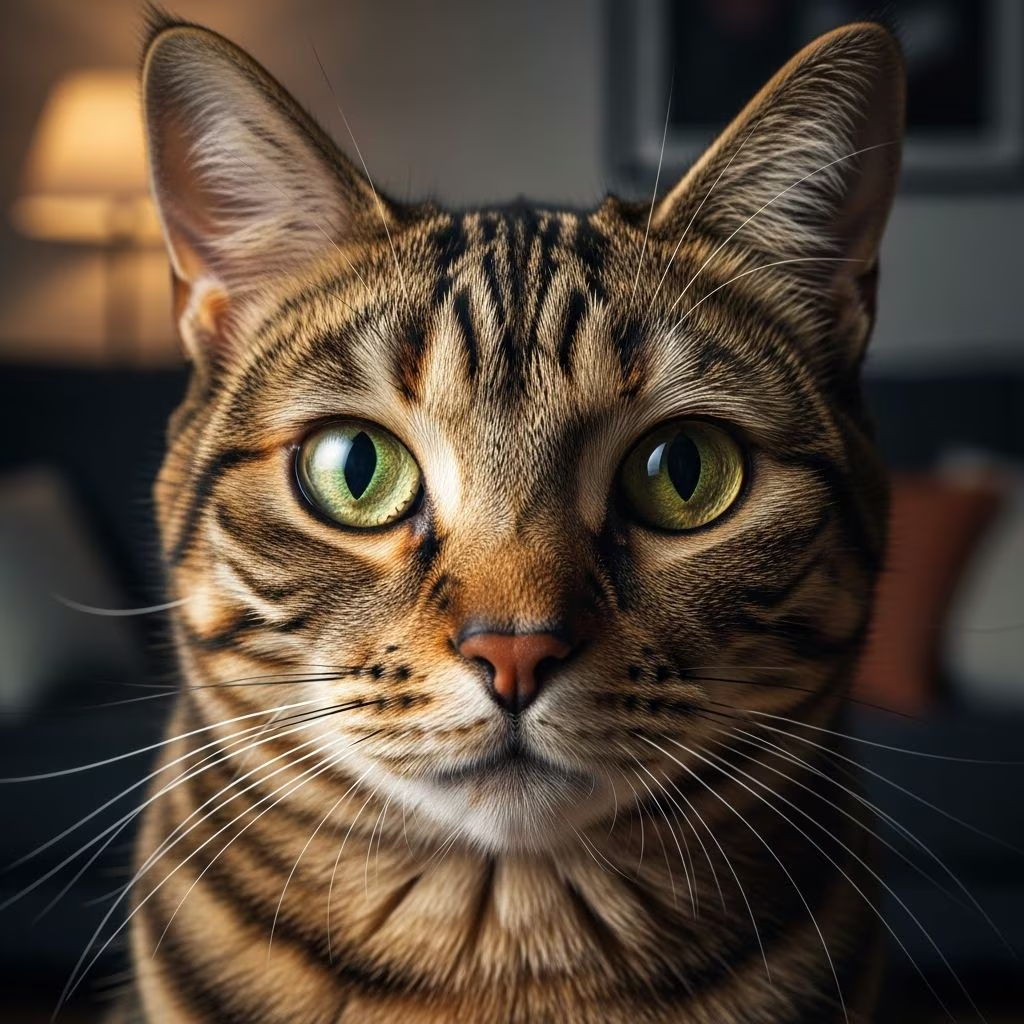
If you’ve ever caught your cat staring intensely at you, a wall, or seemingly nothing at all, you’re not alone. Cat staring is one of the most common behaviors cat owners observe, yet it remains one of the most mysterious. Cats stare for multiple reasons ranging from affection and hunting instincts to curiosity about their environment and potential health concerns. Understanding what your cat’s stare means can deepen your bond and help you recognize when veterinary attention is needed.
Why Your Cat Stares at You
When your feline companion fixes their gaze on you, they’re communicating something specific. The meaning depends largely on their body language and the context of the situation.
Signs of Affection and Bonding
One of the most heartwarming reasons cats stare is to show affection and love. When your cat looks at you with squinted eyes and performs slow blinks while maintaining a relaxed body posture, they’re communicating trust and emotional connection. Research on cat behavior confirms that slow blinks indicate positive emotional communication between cats and humans. If your cat engages in this behavior, they’re essentially giving you feline kisses. Returning the slow blink reinforces this bonding moment and strengthens your relationship.
Hunger and Want
Cats are direct communicators when it comes to their basic needs. If your cat stares at you persistently, they may simply be hungry or want something from you. This stare often occurs near mealtimes or when they desire treats, playtime, or attention. Combined with meowing or other vocalizations, this type of stare is your cat’s way of making their demands known.
Curiosity and Observation
Cats are highly observant creatures and may stare at you out of curiosity and a desire to assess their environment and the people in it. Whether you’re folding laundry, working on your computer, or talking on a video call, your cat is likely nearby silently watching with a tilted head and wide eyes. This behavior is deeply rooted in feline instinct—as natural predators and territorial animals, cats are constantly monitoring their surroundings for changes, threats, and opportunities.
Territorial Monitoring
Cats are inherently territorial animals, and once you’re considered part of their domain, they keep a close eye on you. Your cat’s stare may not just be affection or curiosity—it could be their way of keeping tabs on their territory and ensuring everything remains as it should be. This monitoring behavior is a natural part of feline psychology and helps them maintain a sense of security and control in their environment.
What Your Cat Sees: The Science of Feline Vision
Understanding why cats stare at seemingly invisible things requires knowledge of their extraordinary sensory abilities. Cats don’t see the world the way humans do, and their visual capabilities are uniquely adapted for hunting and survival.
Superior Light Sensitivity and Night Vision
Cats possess a reflective layer behind their retinas called the tapetum lucidum, which amplifies available light and gives their eyes that famous nighttime glow. This structure allows them to see in light levels six times lower than what humans need, making them exceptional hunters in low-light conditions. Additionally, their pupils dilate far more than human pupils, adjusting to even small changes in ambient light. What appears as a static environment to you can be full of subtle visual shifts to your cat.
Ultraviolet Light Perception
Cats can see ultraviolet wavelengths, a part of the light spectrum completely invisible to humans. Many materials, from certain fabrics to cleaning products, reflect UV light in patterns we cannot perceive. This makes objects, walls, or floor areas appear far more interesting and visually stimulating to your cat, explaining some of that intense staring at apparently empty spaces.
Expanded Field of Vision
A cat’s field of vision covers approximately 200 degrees, compared to a human’s 180 degrees, giving them a wider peripheral view. This expanded visual range allows them to detect movement happening far outside your focus area, such as an insect on the ceiling or a shift in light through a window. Their wider field of vision also provides better spatial awareness and early detection of movement, which is why cats often react to something before you even realize what’s happening.
Microscopic Movement Detection
Even the slightest flutter of a gnat, a speck of dust, or a shifting air current can register as something worth investigating to your cat. For cats, staring is often a form of surveillance—a way to confirm whether a movement is prey, play, or nothing at all. This hyper-focus on minute details is a direct result of their predatory nature and sensory evolution.
Why Cats Stare at Nothing (Or So It Seems)
One of the most puzzling cat behaviors is when they stare intently at a blank wall, empty floor, or corner of the room. Your cat isn’t experiencing a supernatural encounter—they’re likely detecting something you simply cannot perceive.
Light Reflections and Shadows
Even small movements of sunlight across a wall or reflective surfaces like watches, phones, or windows create patterns that appear animated from your cat’s perspective. These subtle light shifts catch their attention and trigger their hunting instincts. What seems like nothing to you is actually a dynamic, moving display to your cat.
Sounds from Walls and Floors
Cats have remarkable hearing and can pick up high-frequency sounds like rodent movements, pipes expanding, or HVAC systems humming. They may stare at a wall not because they see something, but because they hear it. This auditory sensitivity, combined with their visual acuity, makes them exceptional at detecting prey and environmental changes.
Scent Trails and Pheromones
Cats rely heavily on scent to navigate their environment. A wall, doorway, or window could carry residual scent from you, another pet, or even wildlife outside. Staring is often part of your cat processing these invisible chemical messages that tell stories about their territory and social environment.
Modern Home Sensory Triggers
Modern homes amplify subtle sensory triggers that cats detect. Hollow walls can carry distant sounds, LED lighting can create flicker invisible to humans but noticeable to cats, and certain flooring can hold scents longer, turning seemingly empty spaces into sensory hubs for your feline. Your cat’s seemingly random staring may actually be a response to these environmental factors.
Hunting Behavior and Predatory Instincts
Staring is also part of your cat’s natural hunting behavior, as they may fixate on a bug, toy, or even something you cannot see, tracking every movement with intense focus. When your cat stares at their prey, you’ll often notice they flinch with each little movement, indicating hyper-focus and predatory engagement. This behavior is hardwired into feline DNA and cannot be suppressed, regardless of how well-fed your cat is.
Warning Signs: When Cat Staring Indicates a Problem
While most staring is perfectly normal, sometimes it can signal an underlying health or behavioral issue that requires veterinary attention.
Health Conditions Associated with Staring
Vision problems such as cataracts, glaucoma, or retinal issues can cause changes in staring behavior. Look for additional signs like bumping into furniture, dilated pupils, or cloudiness in the eyes. Cognitive dysfunction in senior cats may develop similarly to dementia in humans, leading to disoriented staring, pacing, or unusual sleep patterns. If your senior cat stares more often and seems “out of it,” a veterinary visit is wise.
Neurological Concerns
Unusual or prolonged staring, especially if paired with twitching, head tilting, or balance issues, can indicate neurological problems requiring immediate veterinary attention. Additionally, excessive staring with glassy or unfocused eyes, or a lack of blinking could be linked to vision problems, seizures, or other neurological issues.
Behavioral Red Flags
If your cat is suddenly staring at walls accompanied by hiding, appetite loss, or aggression, it’s time to consult a veterinarian. Cats are notorious for hiding their pain, so subtle changes in demeanor and body language can often be the first and only clues that something is wrong. Be on the lookout for signs like dilated pupils, frequent or excessive hiding, restlessness, or unusual vocalizations, especially if they seem confused or out of character.
Eye and Vision Symptoms
If you notice tearing, discharge, watering, or redness in your cat’s eyes, take them to the veterinarian immediately. These symptoms combined with changes in staring behavior may indicate infection, injury, or other serious eye conditions.
Reading Your Cat’s Body Language
Understanding your cat’s stare requires careful observation of their entire body language, not just their eyes.
Affectionate vs. Aggressive Stares
An intense stare can be a sign of aggressive behavior in a cat, with their eyes setting in a fixed state when they’re fearful. When a cat stares with dilated pupils and stiff body language, it may indicate fear or aggression. In these cases, you’ll likely notice other signs of fear or aggression, such as an arched back, a tense posture, and hair standing up. Conversely, affectionate stares include relaxed body posture, slow blinks, and soft eye contact.
The “Back Off” Stare
If your cat is staring while exhibiting other signs of tension such as a stiffening back, flattened ears, or a flicking tail, it’s likely not in a happy mood. Your cat is likely annoyed, scared, overstimulated by loud noises, or simply asking for personal space. In these cases, the stare is more of a “back off” signal than a hint of affection. Cats often interpret direct eye contact as a sign of aggression, so owners need to learn how to read their cat’s body language to avoid conflict.
Frequently Asked Questions About Cat Staring
Q: Is it normal for cats to stare at nothing?
A: Yes, it’s completely normal. Cats have superior sensory abilities and are likely detecting light reflections, sounds, scents, or movement that you cannot perceive. However, if staring is accompanied by other behavioral changes, consult a veterinarian.
Q: What does it mean when my cat slow blinks at me?
A: Slow blinking is a sign of affection and trust. Your cat is communicating love and comfort. You can reciprocate by slow blinking back to reinforce your bond.
Q: Should I be concerned if my cat stares intensely?
A: Intense staring is often normal hunting behavior. However, if accompanied by dilated pupils, body tension, flattened ears, or other behavioral changes, your cat may be stressed, fearful, or experiencing a health issue. Monitor for additional symptoms and contact your veterinarian if concerned.
Q: Can cats see things humans cannot?
A: Yes. Cats can see ultraviolet light, have superior night vision, detect microscopic movements, and have a wider field of vision than humans. They also hear high-frequency sounds and detect scents that are invisible to people.
Q: When should I take my cat to the vet for staring behavior?
A: Seek veterinary care if staring is accompanied by vision changes, balance problems, behavioral changes, appetite loss, excessive hiding, unusual vocalizations, eye discharge, or if your senior cat seems disoriented. These may indicate health issues requiring professional evaluation.
References
- Why Do Cats Stare at Nothing and What They Actually See — The Refined Feline. 2024. https://www.therefinedfeline.com/reasons-behind-cats-staring-at-nothing-and-what-they-actually-see/
- Cat Staring: Decoding Your Cat’s Behavior | Pumpkin Pet Insurance — Pumpkin Pet Insurance. 2024. https://www.pumpkin.care/post/why-does-my-cat-stare-at-me
- Why Does My Cat Stare at Me? 7 Reasons Explained — Birdsbesafe. 2024. https://www.birdsbesafe.com/blogs/news/why-does-my-cat-stare-at-me
- Why Does My Cat Stare at Me? — Montgomery Veterinary Associates. 2024. https://mvavets.com/blog/why-does-my-cat-stare-at-me/
- Why Does My Cat Stare at Me? Is This Normal? — Chewy. 2024. https://www.chewy.com/education/cat/training-and-behavior/why-does-my-cat-stare-at-me



