

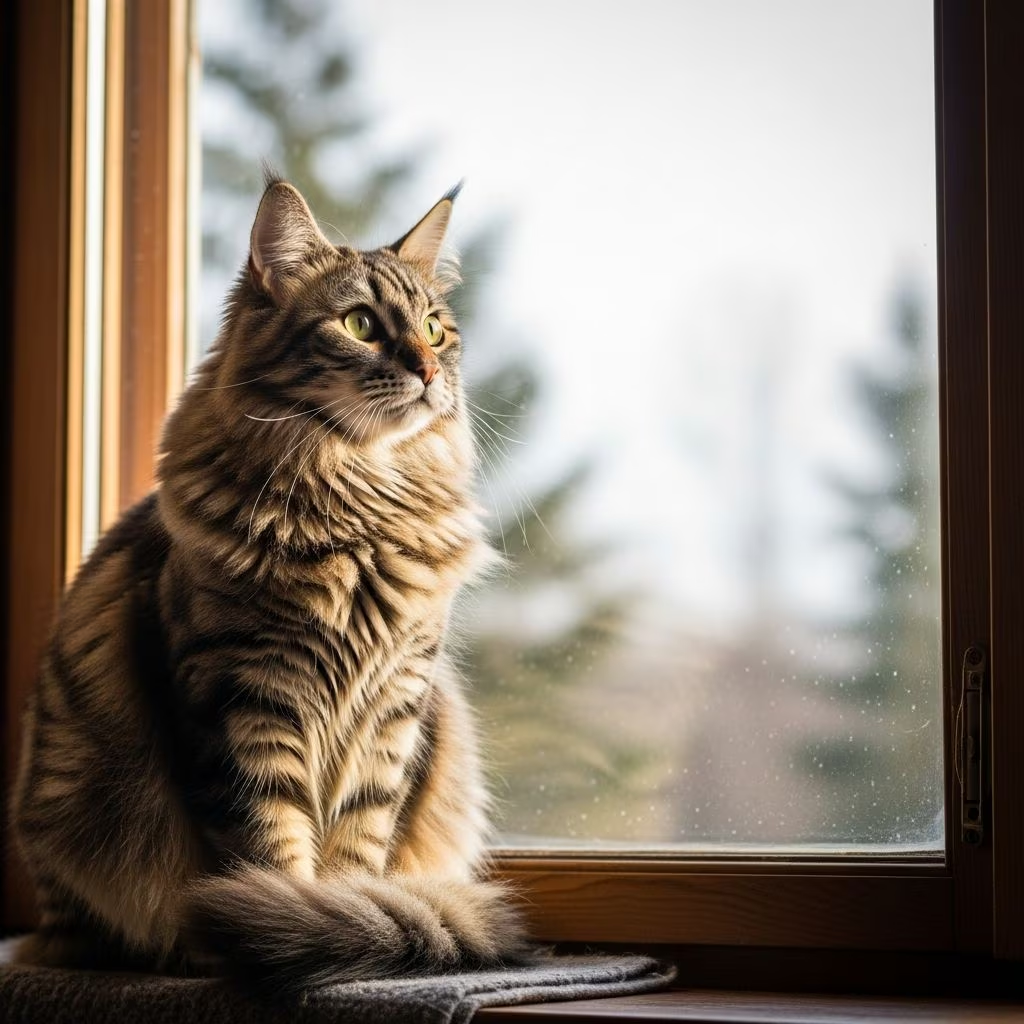
Why Do Cats Stare at Nothing? 5 Possible Reasons
If you’ve ever caught your feline companion locked in an intense, unwavering gaze at what appears to be thin air, you’re not alone. Many cat owners experience moments of bewilderment watching their pets stare blankly at walls, corners, or empty spaces. While this behavior might seem mysterious or even slightly unsettling, there are several logical explanations rooted in feline physiology, sensory capabilities, and health considerations.
1. They See, Smell, or Hear Something Nearby
The most common reason your cat stares at nothing is that they’ve detected something you simply haven’t noticed. As natural predators, cats possess extraordinarily tuned senses that far exceed human perception capabilities. What appears to be an empty space to your eyes may actually be alive with sensory information to your feline friend.
Cats possess superior visual abilities in low-light conditions, allowing them to detect movements and details that remain invisible to human eyes. Their hearing extends to frequencies up to 64 kHz, well above the human range of approximately 20 kHz. Additionally, their whiskers function as sophisticated sensory organs, detecting tiny air currents and vibrations that bounce off furniture and walls. When your cat stares intently in a seemingly random direction, they may be tracking:
- Small insects or rodents moving within walls or behind furniture
- Leaky pipes or water flowing through walls
- Faint sounds from neighbors, outdoor wildlife, or household appliances
- Subtle light changes or shadows
- Air currents carrying unfamiliar scents
A helpful observation technique involves watching your cat’s ear pinnae during these staring episodes. Cats’ ears rotate independently like tiny satellites, and they will naturally orient toward the source of interesting sounds. If your cat’s ears point in the same direction as their gaze, they have almost certainly detected an auditory stimulus requiring investigation.
2. Cognitive Dysfunction
As cats age, cognitive dysfunction becomes an increasingly common occurrence. Most cats experience some degree of cognitive decline after age 11, with abilities like memory, awareness, learning capacity, and sensory perception gradually diminishing. This age-related condition parallels dementia in humans and can manifest in various behavioral changes.
When cats experience the confusion and disorientation associated with cognitive decline, they may stare blankly at walls or gaze fixedly into space without apparent purpose. This unfocused staring differs markedly from the alert, purposeful staring associated with hunting behavior. Additional symptoms of cognitive dysfunction include:
- Aimless wandering into unfamiliar areas of the home
- Getting lost in previously familiar spaces
- Becoming stuck around furniture and household obstacles
- Inappropriate elimination outside the litter box
- Disinterest in play or social interactions
- Decreased activity levels, reduced eating, and neglected grooming
- Increased agitation and restlessness
- Excessive vocalization, particularly during nighttime hours
If you suspect your aging cat is experiencing cognitive dysfunction, veterinary evaluation is essential. Your veterinarian can rule out other underlying medical conditions and, if cognitive decline is confirmed, may recommend anti-anxiety medications and provide practical at-home accommodations to support your cat’s changing needs and slow the progression of symptoms.
3. Focal Seizures
While less common than other causes, focal seizures represent a significant medical concern that can cause cats to stare blankly at nothing. Affecting approximately 1-2% of the cat population, seizures occur when abnormal electrical activity in the brain triggers various physical manifestations. Focal seizures differ from generalized seizures in that they involve abnormal activity in a specific brain region rather than affecting both hemispheres simultaneously.
During a focal seizure, restricted or involuntary movements typically remain limited to one area of the body, such as the face. The specific visible signs depend on which brain region experiences abnormal electrical activity. Importantly, altered mentation during a focal seizure can cause cats to stare vacantly at nothing while remaining physically unresponsive. Additional signs that may accompany focal seizures include:
- Excessive salivation or repeated swallowing
- Facial twitches or spasms
- Lip smacking or mouth movements
- Dilated or constricted pupils
- Obsessive running or circular movements
- Fly-biting behavior, where cats snap at invisible insects
- Air swatting or pawing at nothing
- Sudden aggression or agitation
In rare cases, focal seizures can progress to generalized seizures affecting the entire brain. If you observe your cat exhibiting these signs, immediate veterinary attention is crucial for proper diagnosis and treatment planning.
4. Feline Hyperesthesia Syndrome
While not explicitly detailed in initial observations, feline hyperesthesia syndrome (FHS) represents another potential medical explanation for unusual staring behavior. This neurological condition causes cats to experience heightened sensory sensitivity, leading to exaggerated responses to stimuli that normally wouldn’t trigger such intense reactions. Cats with FHS may fixate on walls or empty spaces due to their perception of sensations imperceptible to humans.
5. Environmental Stress and Stimuli
Beyond predatory instinct and medical conditions, environmental stressors can capture and hold your cat’s attention. Stressful stimuli may cause your cat to stare fixedly at specific locations, particularly if they trigger anxiety or uncertainty. Identifying patterns in your cat’s staring behavior provides valuable diagnostic information. Consider whether the behavior occurs:
- Following loud noises or sudden sounds
- Exclusively during nighttime hours
- Always in the same location
- During times of household activity or change
Your cat may be reacting to outdoor movements visible through windows, sudden changes in lighting, or sharp, unexpected sounds. Sometimes simple environmental modifications, such as closing curtains or reducing ambient noise, provide sufficient relief to eliminate the staring behavior.
What To Do If Your Cat Stares at Nothing
In most situations, cats staring at seemingly invisible objects presents no cause for concern. Your cat is simply engaging their natural predatory drive or self-preservation instincts, responding to environmental stimuli you haven’t detected. The behavior becomes problematic only when it occurs frequently, persists for extended periods, or accompanies signs of underlying health conditions.
If your cat’s staring behavior is sporadic and occurs without additional concerning symptoms, no intervention is necessary. However, if the behavior causes your cat stress or coincides with signs of seizures, cognitive dysfunction, or other health problems, veterinary evaluation is warranted. Frequent staring combined with additional symptoms should always prompt a professional veterinary assessment.
To determine whether your cat’s behavior warrants concern, investigate the source of their attention. Look for visible movement, listen for sounds you might have missed, and observe whether the staring occurs in response to specific environmental changes. Documenting patterns—including time of day, location, duration, and accompanying behaviors—provides your veterinarian with valuable diagnostic information if professional evaluation becomes necessary.
If you identify an environmental stressor, work to eliminate or minimize exposure. If the staring appears linked to specific times or locations, environmental enrichment and modification may resolve the issue. Providing climbing spaces, hiding spots, and hunting-style play opportunities helps satisfy your cat’s natural instincts and may reduce obsessive staring behavior associated with insufficient mental stimulation.
Frequently Asked Questions
Q: Why does my cat stare at the wall and then suddenly run away?
A: This behavior typically reflects a burst of hunting instinct after your cat has tracked a tiny noise, detected movement, or noticed a light change. The sudden sprint, often called “zoomies,” represents your cat’s predatory response or a way to discharge built-up energy and mild stress.
Q: Could my cat be seeing ghosts when staring at nothing?
A: While ghost-seeing makes for entertaining speculation, scientific evidence does not support supernatural explanations. Your cat is almost certainly reacting to stimuli beyond human sensory perception—sounds, movements, scents, or vibrations—rather than anything paranormal.
Q: When should I worry about my cat staring into space?
A: Concern is warranted when staring becomes frequent, prolonged, and paired with additional symptoms such as confusion, bumping into furniture, dilated pupils, nighttime yowling, or significant personality changes. If your cat progresses from staring to pressing their head against walls, seek urgent veterinary care as this can indicate serious medical conditions.
Q: Can boredom make my cat stare at walls?
A: Yes, bored cats may become fixated on anything vaguely interesting, transforming normal scanning behavior into restless, obsessive watching. Providing adequate play, environmental enrichment, climbing spaces, and hunting-style interactive activities helps reduce boredom-related fixation.
Q: What’s the difference between normal staring and concerning behavior?
A: Normal staring typically lasts a few seconds to minutes, remains purposeful (ears oriented toward stimulus), and ends with your cat stretching and moving on. Concerning staring often appears disconnected from environmental stimuli, persists for extended periods, and accompanies other behavioral or physical changes.
Key Takeaways for Understanding Cat Staring Behavior
| Cause | Characteristics | When to Seek Veterinary Care |
|---|---|---|
| Superior Senses | Alert, purposeful staring; ears oriented toward stimulus; normal duration | Not necessary unless accompanied by stress or anxiety |
| Cognitive Dysfunction | Blank, unfocused staring; aimless wandering; disorientation; confusion | Promptly if frequent or accompanied by behavioral changes in aging cats |
| Focal Seizures | Vacant staring; facial twitching; salivation; possible fly-biting | Immediately upon observation of seizure symptoms |
| Environmental Stress | Staring at specific location; patterns linked to time or stimulus; anxiety signs | If persistent or causes distress; consider environmental modification first |
Conclusion
Cat staring behavior, while sometimes puzzling to humans, is rarely cause for serious concern. Most episodes reflect your cat’s remarkable sensory capabilities and natural predatory instincts. By understanding the reasons behind this common feline behavior, you can better appreciate your cat’s sophisticated perception of the world and recognize when professional veterinary evaluation becomes necessary. Careful observation of patterns, duration, and accompanying behaviors provides the key to determining whether your cat’s staring represents normal predatory behavior or signals an underlying health concern requiring medical attention.
References
- Why Do Cats Stare at Nothing? — Catster. 2024. https://www.catster.com/cat-behavior/why-do-cats-stare-at-nothing/
- Why Your Cat Stares at Walls or Empty Spaces — Madd Pets and Reptiles. 2024. https://www.maddpetsandreptiles.co.uk/why-your-cat-stares-at-walls-or-empty-spaces-and-what-it-actually-reveals-about-feline-perception/
- Why Is My Cat Staring at the Wall? — Cats.com. 2024. https://cats.com/why-is-my-cat-staring-at-the-wall
- Why Do Cats Stare at Nothing? — VCA Animal Hospitals. 2024. https://vcahospitals.com/shop/articles/why-do-cats-stare-at-nothing
- Is It Normal for Cats to Stare at Walls? — Loveland Regional Animal Hospital. 2024. https://lovelandregional.com/blog/is-it-normal-for-cats-to-stare-at-walls/



