

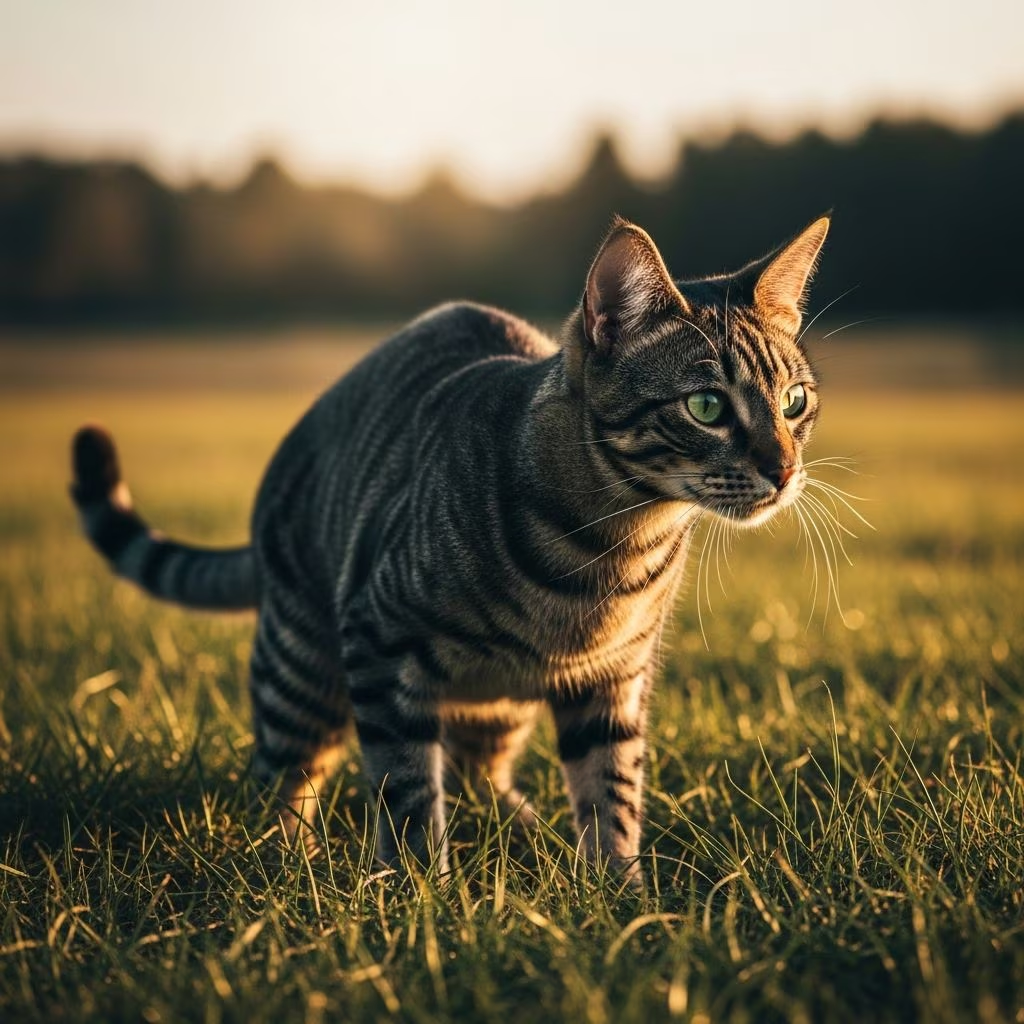
Cats are fascinating creatures with behaviors rooted deeply in their evolutionary past as skilled predators. One of the most noticeable and sometimes perplexing behaviors is stalking—whether it’s you, another pet, or a toy. This article delves into the top four vet-reviewed reasons why cats stalk, drawing from expert insights on feline instincts, psychology, and environmental factors. Understanding these motivations can help cat owners redirect this natural drive into positive outlets, reducing unwanted pouncing on ankles or ambushes in the hallway.
Stalking involves a cat crouching low, moving silently with padded paws, and fixating on a target before pouncing. It’s a hallmark of their hunting sequence, even in well-fed domestic cats. While harmless in moderation, it can become problematic if directed at family members. By addressing the root causes, you can enrich your cat’s life and foster a safer household.
Top 4 Reasons Why Cats Stalk
Your cat’s stalking isn’t random; it’s driven by a combination of biology, environment, and learned responses. Here’s a breakdown of the primary reasons, supported by veterinary and behavioral expertise.
1. Natural Instinct
The most fundamental reason cats stalk is their hardwired predatory nature. Domestic cats share approximately 95.6% of their DNA with tigers, tracing back to a common ancestor about 10.8 million years ago. This genetic legacy means even pampered house cats retain the instincts of ambush predators.
Cats’ bodies are optimized for stealth: flexible spines, sharp retractable claws, and silent paws enable them to stalk prey undetected. Their brains trigger the full predatory sequence—stalk, chase, pounce, bite—regardless of hunger. Well-fed cats still hunt for fun, practicing skills that ensured survival in the wild.
In the home, moving feet, shadows, or laser pointers mimic prey, activating this instinct. Kittens learn stalking through play with littermates or mothers, honing reflexes essential for adulthood. Without outlets, this energy redirects to humans or objects, leading to surprise attacks.
To satisfy this instinct healthily:
- Provide interactive toys like feather wands or battery-operated mice that simulate prey movement.
- Schedule 15-20 minute play sessions twice daily, mimicking hunt-chase-kill-eat by feeding after play.
- Use puzzle feeders to engage their hunting drive mentally.
Suppressing this instinct entirely is impossible and unhealthy; redirection keeps both cat and owner content.
2. Redirected Aggression
Cats may stalk due to frustration from external stressors, redirecting aggression onto safe targets like owners or other pets. This isn’t always consensus in veterinary circles, but many experts observe cats expressing agitation aggressively when unable to confront the true trigger.
Common triggers include spotting outdoor animals through windows, smelling rival scents on clothing, loud noises, or conflicts with other cats. Unable to access the source—like a squirrel outside or a stray cat’s odor—they fixate on a household member. In multi-cat homes, territorial disputes amplify this, with stalking as a dominance display.
Signs of redirected aggression: dilated pupils, twitching tail, flattened ears, followed by sudden pouncing. Unlike play, it lacks warning play bows and can escalate to scratches or bites.
| Trigger | Examples | Behavioral Signs |
|---|---|---|
| Visual Stimuli | Watching birds/squirrels outside | Staring, tail lashing |
| Olfactory | Smelling other cats on clothes | Hissing, stalking owner |
| Auditory/Environmental | Thunder, new pets/visitors | Ambushing, growling |
Mitigation strategies:
- Block window views with sheer curtains or deterrents.
- Use pheromone diffusers like Feliway to reduce stress.
- Separate conflicting pets and reintroduce slowly.
Consult a vet to rule out pain or illness, as these can mimic aggression.
3. Learned Behavior
Cats are intelligent learners, quickly associating actions with outcomes. If stalking yields attention—even negative like yelling or pushing away—it reinforces the behavior.
For example, ankle ambushes followed by chase games or treats teach cats that stalking equals rewards. Owners unwittingly train this by reacting animatedly. Punishment fails; cats don’t connect it to the behavior and it erodes trust.
Positive reinforcement shapes better habits. Ignore stalking, then reward calm sitting with treats or pets. Over time, cats prefer low-effort rewards.
Prevention tips:
- Never play rough with hands/feet; use toys only.
- Respond to stalking with calm withdrawal of attention.
- Train ‘sit’ or ‘leave it’ commands with clicker training.
4. Boredom
Indoor cats sleep 12-16 hours daily but need stimulation to avoid behavioral issues. Boredom prompts stalking as entertainment when mental/physical needs go unmet.
Symptoms: excessive stalking, vocalizing, destructive scratching. Cats crave novelty; static environments dull them. Vertical spaces, scratching posts, and solo toys help, but interactive play is key.
Enrichment ideas:
- Install cat trees, shelves for climbing.
- Rotate toys weekly to maintain interest.
- Hide treats around the home for foraging hunts.
Aim for 30-60 minutes of activity daily, split into sessions.
How to Stop Unwanted Cat Stalking
While you can’t eliminate stalking, management works wonders. Start with identifying the trigger via observation or a behavior journal.
- Enrich Environment: Offer perches, tunnels, and window seats.
- Play Therapy: Daily sessions tire them out, reducing surplus energy.
- Avoid Reinforcement: No reaction to stalking; redirect to toys.
- Health Check: Rule out hyperthyroidism or pain via vet exam.
- Professional Help: For persistent cases, consult a certified behaviorist.
Consistency is crucial; improvements take 2-4 weeks.
Frequently Asked Questions (FAQs)
Is cat stalking dangerous?
Usually playful, but can cause scratches. Redirect to prevent escalation.
Why does my cat stalk me at night?
Peak hunting hours; evening play before bed helps.
How do I train my cat not to stalk my ankles?
Ignore ambushes, play with toys instead, reward calm behavior.
Does neutering stop stalking?
It reduces territoriality but not instinctual hunting.
Is stalking a sign of aggression?
Often instinct, but watch for fear signs like ear pinning.
Final Thoughts
Cat stalking stems mainly from their predatory DNA, amplified by boredom, learning, or stress. Embrace it as normal while channeling into appropriate activities. Enriched lives mean playful kitties, not ankle attackers. With patience and the right tools, harmony awaits.
References
- Why Does My Cat Stalk Me? — Cats.com. 2023. https://cats.com/why-does-my-cat-stalk-me
- Aggression in Cats — ASPCA. 2024-01-14. https://www.aspca.org/pet-care/cat-care/common-cat-behavior-issues/aggression-cats
- Cats & Stalking: Why Do They Do It? 4 Vet-Reviewed Reasons — Catster. 2023. https://www.catster.com/cat-behavior/why-do-cats-stalk/
- Cat Aggression Toward People: Causes and Prevention — Best Friends Animal Society. 2023. https://bestfriends.org/pet-care-resources/cat-aggression-toward-people-causes-and-prevention
- Feline Stalking and Hunting — Cat Friendly Homes. 2023. https://catfriendly.com/why-does-my-cat/stalking-hunting/



