

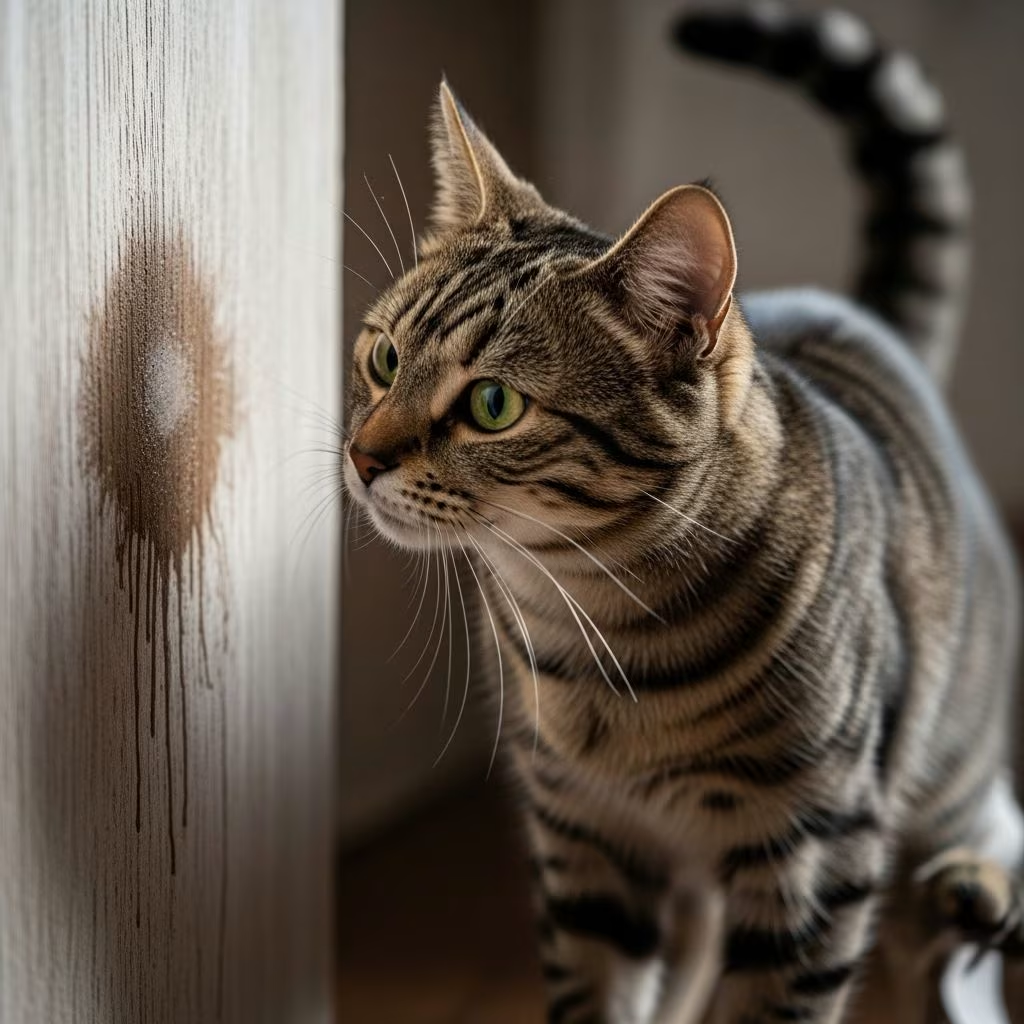
Cat spraying, also known as urine marking, is a common feline behavior where cats deposit small amounts of urine on vertical surfaces to communicate. This instinctual action often signals territorial claims, mating interests, or responses to stress, affecting both male and female cats but more frequently unneutered males.
What Is Cat Spraying?
Spraying differs markedly from typical urination. When spraying, a cat backs up to a vertical object like a wall, door, or furniture, raises its tail (often quivering), and releases a mist of urine while sometimes treading with hind feet. This contrasts with normal elimination, where the cat squats to produce a larger puddle on horizontal surfaces.
The behavior typically emerges around sexual maturity, about six months of age, driven by instincts honed in the wild for communication without direct confrontation. Both intact and neutered cats can spray, though spaying or neutering reduces incidence by up to 90% in many cases.
Why Do Cats Spray?
Cats spray for several interconnected reasons rooted in their evolutionary need to communicate via scent. Understanding these triggers is essential for effective intervention.
Marking Territory
Territorial marking is the primary motive. Cats use urine sprays to delineate boundaries, especially when sensing intruders like neighborhood cats visible through windows or new household pets. Indoor cats may spray in response to outdoor felines, perceiving them as threats to their domain.
In multi-cat homes, resource competition—over food, litter boxes, or resting spots—intensifies this. A study highlights that spraying often indicates household-wide stress, where one cat’s marking signals unmet needs for all.
Mating Behavior
Unneutered males frequently spray to advertise availability to females, a hormone-driven impulse starting at puberty. Females may spray less often but do so to signal receptivity. Neutering dramatically curbs this, as it reduces testosterone levels fueling the urge.
Stress and Anxiety
Environmental upheavals trigger anxiety-induced spraying. Common stressors include moving homes, new family members (babies or people), remodeling, routine changes, or even furniture rearrangement. Cats spray to reclaim familiarity through their scent, restoring a sense of control.
In multi-pet households, interspecies or intraspecies conflicts exacerbate anxiety, leading to spraying as a coping mechanism.
Conflict with Other Pets
Tension among cohabiting cats often manifests as spraying. If one cat feels encroached upon—lacking private access to resources—it marks to assert space. Ensuring ample, distributed resources (one litter box per cat plus one extra) mitigates this.
How to Tell If Your Cat Is Spraying or Urinating
Misidentifying spraying as spiteful urination leads to misguided responses. Key distinctions include:
- Posture: Sprayers stand upright with raised, quivering tail; urinators squat.
- Volume and Placement: Sprays are small mists on vertical surfaces; urination forms puddles on floors.
- Frequency and Odor: Sprays occur sporadically with strong, pungent scents persisting longer due to concentrated pheromones.
Observe patterns: spraying targets prominent spots like doorways, while inappropriate urination may signal medical issues like urinary tract infections.
How to Prevent Cat Spraying
Prevention combines addressing root causes, medical checks, and environmental tweaks. Start with a vet visit to rule out health problems like cystitis or kidney issues, confirmed via urinalysis and bloodwork.
Neuter or Spay Your Cat
The most effective step: neutering reduces spraying by 77-90% in males and similar rates in females, especially if done before maturity. For adults, benefits persist, though habits may linger.
Reduce Stress in the Environment
Stabilize routines and enrich the space:
- Maintain consistent feeding, play, and cleaning schedules.
- Provide vertical spaces (cat trees), hiding spots, and toys for mental stimulation.
- In multi-cat homes, distribute resources evenly to avoid competition.
Synthetic pheromones (e.g., Feliway diffusers) mimic calming facial scents, reducing anxiety in marked areas.
Clean Soiled Areas Thoroughly
Residual odors invite re-marking. Use enzymatic cleaners to break down urine proteins; avoid ammonia-based products mimicking cat pee. For outdoor triggers, citrus sprays or motion sprinklers deter strays.
Block Outside Triggers
Close blinds, apply window films, or use deterrents to obscure neighborhood cats, minimizing territorial responses.
Increase Litter Box Appeal
Follow the n+1 rule (litter boxes = cats +1). Experiment with litter types, box sizes, and unscooped locations. Clean daily to encourage use.
Address Multi-Cat Conflicts
Slow introductions for new cats, separate feeding, and monitor interactions. If needed, consult behaviorists for reintroduction protocols.
| Strategy | Effectiveness | Best For |
|---|---|---|
| Neutering | High (77-90% reduction) | Hormonal spraying |
| Enzymatic Cleaning | Medium-High | Repeat marking spots |
| Pheromone Diffusers | Medium | Stress/anxiety |
| Resource Addition | High in multi-cat homes | Territorial conflicts |
Frequently Asked Questions (FAQs)
Will neutering completely stop my cat from spraying?
Not always, especially if the habit formed pre-neutering or stems from stress. Combine with environmental changes for best results.
Is cat spraying a sign of a medical problem?
Possibly—rule out UTIs, bladder stones, or diabetes via vet exam first.
How do I clean cat spray from furniture?
Use enzymatic cleaners; blot, don’t rinse. For fabrics, test in hidden spots.
Can female cats spray?
Yes, though less commonly than males, often due to stress or heat cycles.
What if prevention strategies don’t work?
Consult a veterinary behaviorist; medication may aid alongside modifications.
Spraying challenges many owners, but patience and targeted actions restore peace. Track incidents in a log to monitor progress and adjust tactics.
References
- Why Cats Spray and How to Prevent It — Harlingen Veterinary Clinic. 2023. https://harlingenveterinaryclinic.com/blog/cat-spraying/
- Cat Spraying: Why Cats Do It and How to Stop It — PetMD. 2024-01-15. https://www.petmd.com/cat/general-health/cat-spraying-why-cats-do-it-and-how-to-stop-it
- Cat Spraying/Marking — Wisconsin Humane Society. 2023. https://www.wihumane.org/cat-spraying
- Stop your Cat Spraying or Soiling in the House — Blue Cross. 2024. https://www.bluecross.org.uk/advice/cat/behaviour-and-training/stop-your-cat-spraying-and-soiling-in-the-house
- Study Gives Clues to Causes of Spraying — Fear Free Happy Homes. 2023. https://www.fearfreehappyhomes.com/study-gives-clues-to-causes-of-spraying/
- Cat Behavior Problems – Marking and Spraying Behavior — VCA Animal Hospitals. 2024. https://vcahospitals.com/know-your-pet/cat-behavior-problems-marking-and-spraying-behavior
- Urine Marking in Cats — ASPCA. 2023. https://www.aspca.org/pet-care/cat-care/common-cat-behavior-issues/urine-marking-cats



