

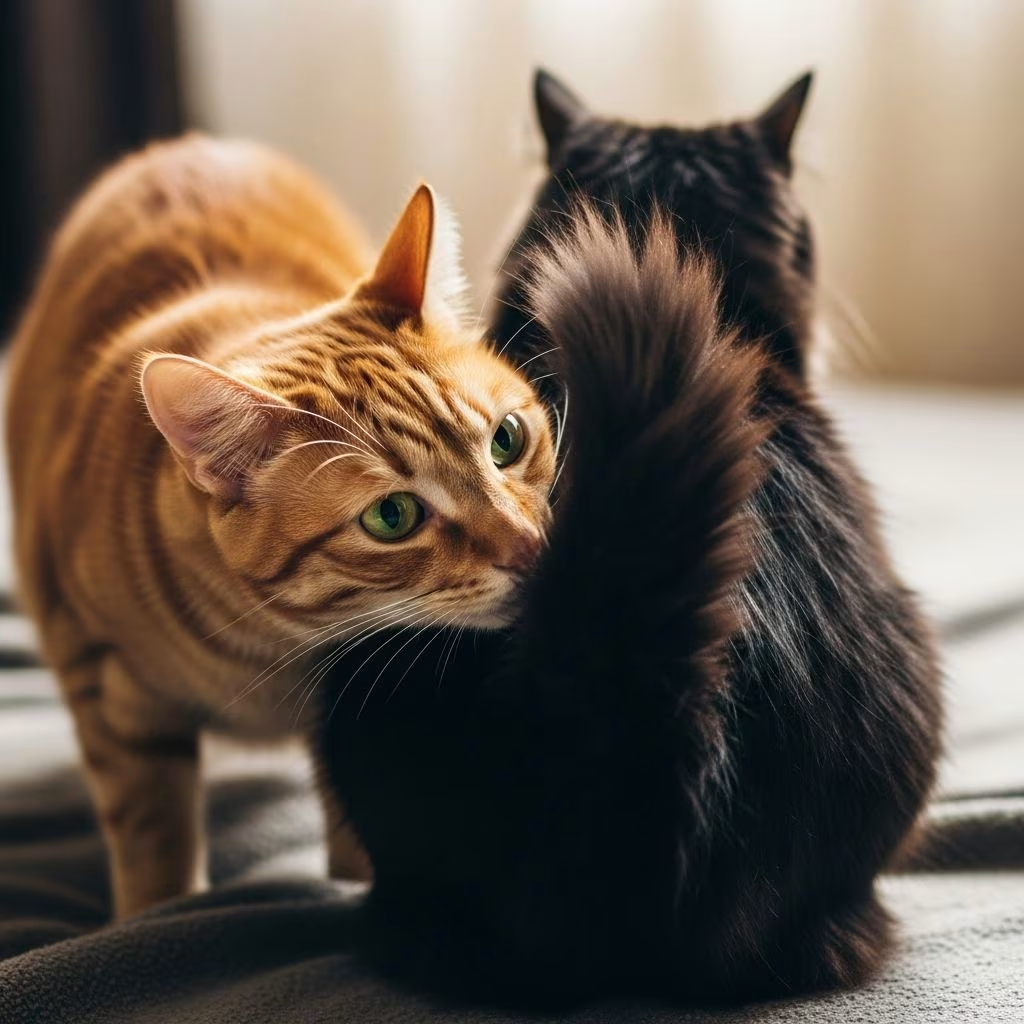
Cats sniffing each other’s butts is one of the most recognizable yet puzzling behaviors in feline social interactions. Far from being random or rude, this action serves as a vital communication tool, allowing cats to exchange detailed information about identity, health, mood, and social status through powerful scents from anal glands.
The Science Behind Cats’ Incredible Sense of Smell
Cats possess an extraordinary olfactory system, with at least 40 times more scent receptors in their noses compared to humans. This heightened sense of smell enables them to detect subtle chemical signals that convey volumes of information. Complementing this is the vomeronasal organ (VNO), or Jacobson’s organ, located in the roof of their mouth. The VNO specializes in detecting pheromones—chemical messengers that communicate everything from reproductive readiness to emotional states.
When a cat sniffs and then opens its mouth in the Flehmen response, it transfers scent molecules to the VNO for deeper analysis, often resulting in that characteristic curl-lipped grimace.
Anal Glands: The Source of Unique Scent Profiles
At the heart of butt-sniffing lies the paired anal glands, small sacs located on either side of a cat’s rectum. These glands produce a pungent, oily secretion rich in pheromones and microbiome-derived compounds, released during defecation. Each cat’s anal gland scent is uniquely individualized, functioning like a ‘personal ID card’ that remains consistent over time, allowing recognition even after long separations.
Genetic analysis reveals a distinct microbiome in feline anal glands, dominated by genera such as Corynebacterium, Bacteroides, Proteus, and Lactobacillus. These bacteria generate hundreds of organic compounds that bind to neural receptors, influencing behavior much like pheromones or hormones. Dietary influences further customize the scent, revealing recent meals and overall health.
Primary Reasons Cats Sniff Butts
Butt-sniffing fulfills multiple essential functions in cat society. Here’s a breakdown:
- Gathering Identity and Familiarity: The unique glandular scent tells cats if they’ve met before, their gender, age, and individual history. It’s akin to checking a social media profile at a glance.
- Assessing Health and Diet: Scents indicate wellness, illness, stress levels, or dietary habits. A healthy cat’s aroma differs noticeably from one that’s unwell.
- Determining Reproductive Status: Males detect if a female is in heat, while females gauge male fertility—critical for mating decisions.
- Reading Mood and Emotions: Pheromones signal aggression, fear, happiness, or relaxation, helping cats predict interactions.
Butt-Sniffing as a Greeting Ritual
In feline etiquette, butt-sniffing is the equivalent of a handshake or hello. Upon meeting, cats approach tail-high, presenting their rear for inspection. This mutual exchange establishes familiarity and sets the tone for the encounter. Even familiar cats repeat this ritual to update on recent changes, reinforcing bonds and checking ‘what’s new’.
In multi-cat households, regular sniffing maintains harmony by preventing surprises from altered scents due to diet, health shifts, or stress.
Dominance and Social Hierarchy in Butt-Sniffing
Social dynamics play a key role. The dominant cat typically sniffs first, asserting status. A hiss or growl may follow if displeased, while the submissive cat waits its turn or backs away. This hierarchy prevents conflicts; shy cats may even sit to minimize emissions.
| Dominance Indicator | Description |
|---|---|
| First to Sniff | Dominant cat initiates, controls interaction. |
| Growl/Hiss Post-Sniff | Signals disapproval or superiority. |
| Allowing Reciprocal Sniff | Submissive cat gets turn, acknowledges hierarchy. |
| Backing Away | Shy or lower-status cat avoids escalation. |
Other Scent Glands and Feline Communication
Butt-sniffing is part of broader scent-marking. Cats have multiple glands:
- Facial Glands: Cheeks, lips, forehead—used in bunting to mark safe territories and show affection.
- Paw Glands: Between toe pads—released via scratching to claim areas.
- Tail and Urinary Pheromones: Convey territory, stress, or mating signals.
These combine for a full scent profile, with anal glands providing the most concentrated personal data.
Why Do Humans Find It Gross But Cats Don’t?
To us, the strong odors seem repulsive, masked by feces during post-pooping zoomies. Cats, however, perceive a rich tapestry of information. Humans concentrate scents in armpits and groin, analogous areas cats target instinctively. Evolutionarily, this behavior persists from wild ancestors needing quick threat or ally assessments.
When Butt-Sniffing Signals Problems
Excessive sniffing or avoidance can indicate issues:
- Anal Gland Impaction: Scooting, fishy smells, or vet visits needed for expression.
- Health Changes: Altered scents prompt investigation of illness.
- Territorial Stress: New cats disrupt scents, causing tension.
Monitor for changes and consult vets if scooting or odor intensifies.
Frequently Asked Questions (FAQs)
Q: Why do cats open their mouths when sniffing butts?
A: This is the Flehmen response, where cats transfer pheromones to the vomeronasal organ via an open mouth for detailed analysis.
Q: Can cats tell individuals apart by butt scent?
A: Yes, anal gland secretions are highly individual and stable, acting as unique identifiers.
Q: Is butt-sniffing only for strangers?
A: No, familiar cats sniff regularly to check updates on health, diet, and mood.
Q: What if my cat sniffs my butt?
A: Cats treat humans as large, scent-emitting objects; it’s curiosity, not judgment. Their lower-back targeting mirrors human scent zones.
Q: Does dominance always involve butt-sniffing?
A: Often, but it’s one tool; body language like staring or swatting also asserts hierarchy.
Conclusion: Embracing Feline Quirks
Understanding butt-sniffing demystifies a core cat behavior, revealing sophisticated communication. Next time you witness it, appreciate the information exchange unfolding—your cats are just catching up!
References
- Why Cats Sniff Each Other’s Butts — DNA Science, PLOS. 2023-11-30. https://dnascience.plos.org/2023/11/30/why-cats-sniff-each-others-butts/
- Why Do Cats Smell Each Other’s Butts? 3 Common Reasons — Cats.com. N/A. https://cats.com/why-do-cats-smell-each-others-butts
- Why Cats Sniff Each Other’s Butts? Explained — Vet Today. N/A. https://vettoday.com/blog/why-do-cats-sniff-each-others-butts-a-tale-of-feline-etiquette/
- Why Cats Sniff Each Other’s Butts (It’s Not What You Think!) — YouTube (Video Transcript). N/A. https://www.youtube.com/watch?v=LX_8fxLfnAE
- Why Do Cats Smell Other Cats’ Butts? — PetPlace.com. N/A. https://www.petplace.com/article/cats/pet-behavior-training/why-do-cats-smell-other-cats-butts



