

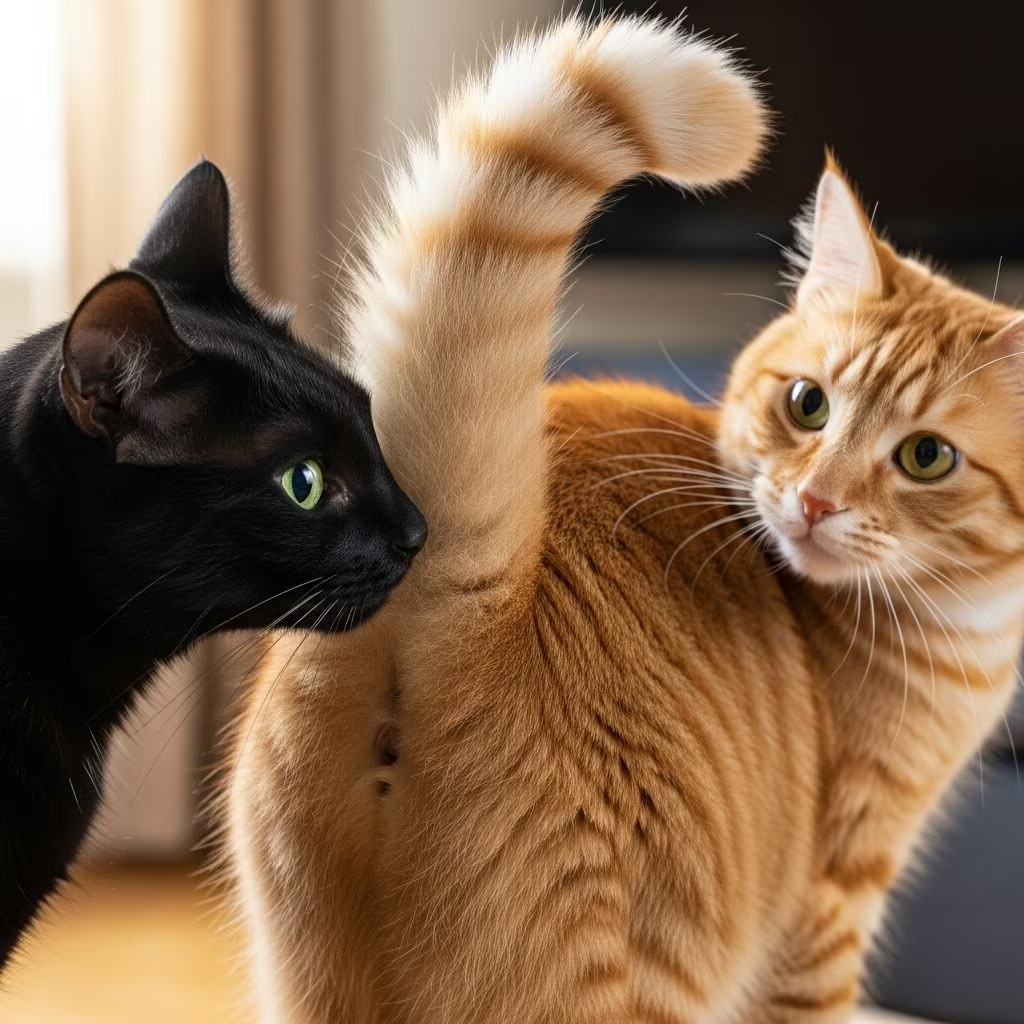
Cats sniff butts as a primary form of communication, using powerful scent glands around the anal area to gather information about other cats’ identity, health, sex, reproductive status, and emotional state. This behavior, while amusing or off-putting to humans, is an essential olfactory ritual in feline social interactions, rooted in their evolutionary reliance on pheromones over vocalizations or visuals.
The Science of Scent in Cats
Cats possess an extraordinary sense of smell, far superior to humans, with over 200 million olfactory receptors compared to our 5 million. Their vomeronasal organ (VNO), located in the roof of the mouth, detects pheromones—chemical signals released from specialized scent glands. These glands are concentrated in the face (cheeks, chin), paws, tail base, and crucially, around the anus and tail, producing unique ‘scent signatures’ that convey a cat’s age, sex, health, diet, and mood.
Butt-sniffing activates the Flehmen response, where a cat curls its upper lip, opens its mouth slightly, and ‘tastes’ the air to process pheromones via the VNO. This isn’t mere curiosity; it’s how cats ‘read’ each other without words, similar to humans shaking hands or exchanging business cards.
Why the Butt? Anatomy of Feline Scent Glands
The anal sacs, small glands flanking the anus, secrete a pungent fluid rich in pheromones. When cats back up tail-high (lordosis posture) for sniffing, they expose these glands fully. The raised tail quivers, releasing more scent, allowing the sniffer to analyze:
- Identity: Each cat’s scent is unique, like a fingerprint, helping distinguish friend from foe, family from stranger.
- Sex and Reproductive Status: Intact females in heat emit stronger estrus pheromones; males advertise fertility.
- Health and Diet: Illness alters scent; recent meals influence odor profiles.
- Territorial Claims: Overmarking familiar scents reinforces boundaries.
Other glands contribute: cheek-rubbing (bunting) deposits facial pheromones for affiliation; paw-scratching leaves both visual and scent marks; urine spraying broadcasts from afar on vertical surfaces.
Social Communication: Greeting, Bonding, and Hierarchy
In multi-cat homes or feral colonies, butt-sniffing is the standard ‘hello.’ Cats approach rear-first to minimize frontal threat, sniffing to confirm group membership. Mutual sniffing establishes rapport—recognition reduces aggression.
Bonding occurs through scent-sharing: allogrooming (licking) and rubbing mix scents into a ‘group odor.’ A cat returning from the vet smelling ‘wrong’ may face rejection until re-scented.
Dominance hierarchies emerge too: dominant cats may sniff subordinates assertively; refusal signals conflict. In households, this explains why your cat greets newcomers (or your shoes) butt-first.
Territorial Marking and Why Cats Spray
Beyond sniffing, cats mark territories proactively. Urine spraying—backing up to a wall, tail up, quivering, and squirting small amounts—isn’t bathroom elimination but communication. Spray contains pheromones signaling ownership, mating availability, or stress.
Triggers include:
- New pets, people, or objects disrupting scent equilibrium.
- Visible outdoor cats challenging territory.
- Frustration (empty food bowl, closed doors).
- Stress from changes like moves or remodeling.
Intact males spray most (pungent ‘tom cat’ odor), but 10% neutered males and 5% spayed females continue. Multi-cat homes amplify it; even solos spray if anxious.
When Butt-Sniffing Signals Problems
Normal in greetings, excessive sniffing or avoidance can indicate issues:
- Medical: Anal gland impaction (scooting, licking, fishy smell) requires vet expression/cleaning.
- Stress/Anxiety: New stressors prompt over-marking/sniffing.
- Social Tension: Bullying in multi-cat setups leads to hyper-vigilance.
Sudden spraying or litter avoidance? Rule out UTIs, diabetes, or arthritis first—vets recommend exams for adults over 1 year.
Human Reactions and Cultural Contexts
Humans cringe at butt-sniffing due to hygiene views, but it’s hygienic for cats—their fastidious grooming keeps areas clean. Culturally, it’s a meme (e.g., ‘cat butt fascination’), but understanding demystifies it. Never punish; it heightens stress, worsening marking.
Tips to Manage and Discourage Unwanted Behaviors
Redirect naturally:
| Problem | Solution |
|---|---|
| Spraying/Marking | Neutering reduces 90%; clean with enzymatic cleaners (e.g., Nature’s Miracle) to erase pheromones fully—not ammonia, mimicking urine. |
| Stress Sniffing | Synthetic pheromones like Feliway diffusers mimic facial glands, calming cats and redirecting to bunting. |
| Anal Glands | Vet check; high-fiber diet (wet food) prevents impaction. |
| Territory Boost | Provide vertical space, multiple litter boxes (n+1 rule), play outlets. |
| Reintegration | Rub returning cat with household blanket for scent-matching. |
Enrich environment: scratching posts in core paths (not periphery), per research on marking routes. Change sprayed areas’ function (e.g., food bowl there)—cats avoid marking feeding zones.
Fun Facts About Cat Scent Communication
- Cats distinguish squatted urine (elimination) from sprayed (message).
- Feces at territory edges may signal warnings or save energy.
- Scratch marks in core areas draw investigation; place posts accordingly.
- Bunting F3 pheromones in products like Feliway Optimum ease moves.
- Free-roaming toms mark hourly; indoors, triggers suffice.
Frequently Asked Questions (FAQs)
Is butt-sniffing normal for cats?
Yes, it’s a standard greeting and info-gathering method via anal pheromones.
Why does my cat sniff my butt?
Curiosity about your unique human scent; they also check shoes/clothes for other animals.
How to stop spraying?
Neutering, stress reduction (Feliway), enzymatic cleaning, vet check for health issues.
Do female cats sniff butts too?
Absolutely—both sexes mark and sniff; females spray less post-spay.
What’s the Flehmen response?
Lip-curling to process pheromones via VNO; common post-sniff.
Can cats smell emotions?
Stress alters pheromones, detectable by others, prompting investigation.
This comprehensive guide empowers cat owners to appreciate butt-sniffing as sophisticated communication, not rudeness. By respecting feline instincts and using evidence-based management, harmony prevails.
References
- Cat Behavior Problems – Marking and Spraying Behavior — VCA Animal Hospitals. 2023. https://vcahospitals.com/know-your-pet/cat-behavior-problems-marking-and-spraying-behavior
- Feline Marking Behavior — Humane Society of Missouri. 2022. https://hsmo.org/portfolio-item/feline-marking-behavior/
- Feline Scent-Marking: Cat Communication — Tufts University School of Veterinary Medicine (via TVMF). 2023. https://www.tvmf.org/articles/feline-scent-marking-cat-communication/
- The Secret Language of Cats: How Cats Use Scent to Communicate and Connect — Insightful Animals (Substack, citing peer-reviewed studies). 2024. https://insightfulanimals.substack.com/p/the-secret-language-of-cats
- Urine Marking in Cats — ASPCA. 2023. https://www.aspca.org/pet-care/cat-care/common-cat-behavior-issues/urine-marking-cats



