

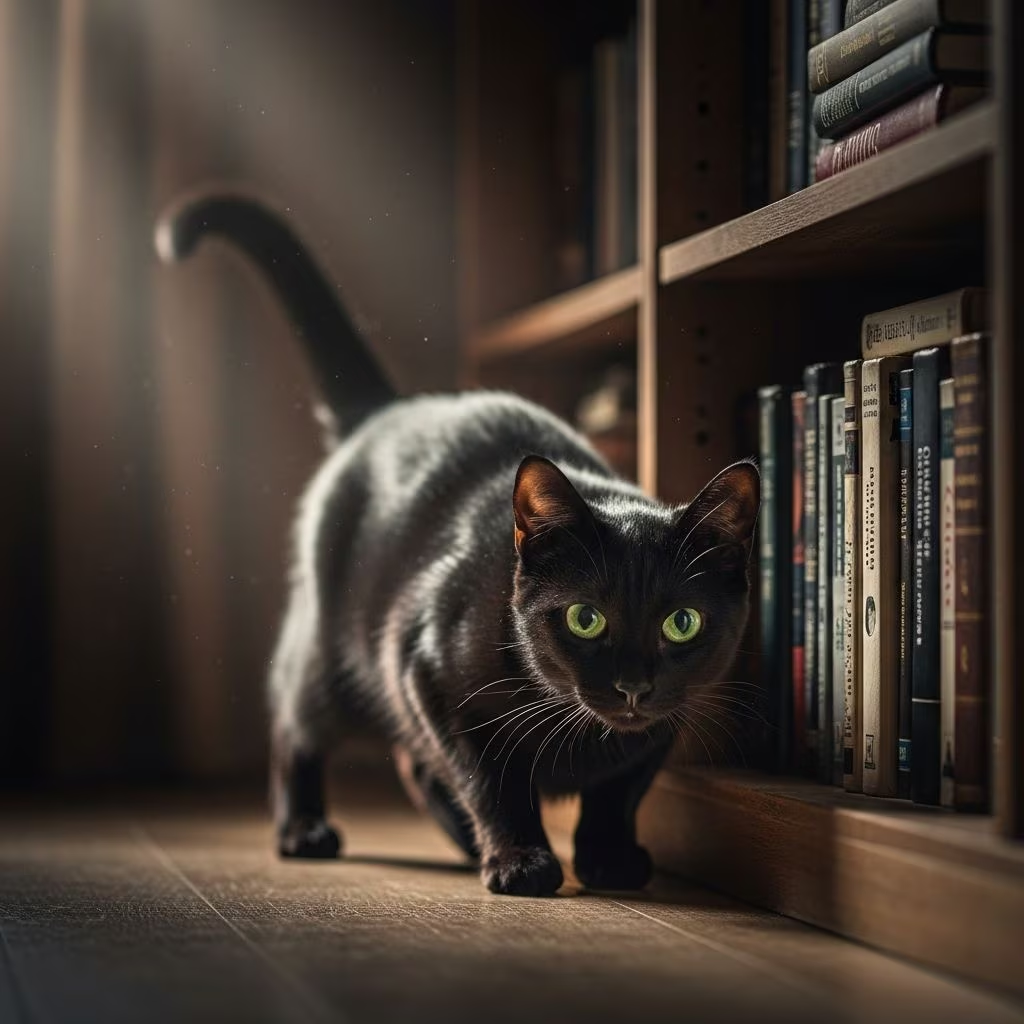
If you’ve ever noticed your cat moving silently through your home, crouching low and darting from room to room, you’re witnessing one of the most fascinating behaviors in the feline world. Cats are among the most accomplished sneaks in the animal kingdom, and their stealthy movements are the result of millions of years of evolution. But what exactly prompts your cat to engage in this secretive behavior? Understanding why cats sneak around is essential for any cat owner who wants to better comprehend their pet’s actions and ensure their wellbeing.
Sneaking is not necessarily a sign that your cat is up to no good. In fact, most cat sneaking behavior is completely normal and rooted in their natural instincts. From hunting and territorial patrols to hiding when they’re scared or unwell, cats sneak for a variety of reasons. This comprehensive guide explores the ten most common reasons why cats sneak around, helping you distinguish between playful behavior and potential health concerns.
The Evolutionary Foundation of Feline Stealth
Before diving into the specific reasons cats sneak, it’s important to understand the biological basis for this behavior. Cats’ entire physiology has been refined over millions of years to support silent, stealthy movement. Their padded paws muffle footsteps, their flexible spine enables fluid motion, and their exceptional hearing and night vision make them perfectly adapted for sneaking. These physical adaptations made their wild ancestors successful hunters and helped them avoid becoming prey themselves.
Modern domestic cats retain these evolutionary traits despite living comfortable lives in our homes. Even well-fed house cats practice stalking and pouncing behaviors, following instincts that are hardwired into their DNA. This means that when your cat sneaks around, they’re simply being true to their nature—a survival mechanism that has served their species well for millennia.
Top 10 Reasons Why Cats Sneak Around
1. Patrolling the Perimeter
Cats are inherently territorial creatures, and they become deeply attached to their homes, even if they’ve never lived outdoors. One of the primary reasons cats sneak around is to conduct stealthy patrol routines. During these patrols, your cat methodically checks all the exits to the outdoors, examines windows, and investigates tiny gaps at floor level that you might not even know exist. This behavior demonstrates that your cat considers your home to be their territory and wants to ensure that nothing unexpected happens within it. Rather than viewing this behavior negatively, you should feel flattered—it means your cat is invested in maintaining the security of their domain.
2. Hunting for Prey
The most common reason for cat stealth is hunting instinct. Cats are supreme predators with bodies and minds honed over millions of years to be nearly undefeatable hunters of small prey like birds and mice. Even in your warm, comfortable home where they don’t need to hunt for survival, your cat is driven by powerful instincts to slink, stalk, and pounce. This behavior is completely normal and represents a healthy expression of their natural abilities.
Whether your cat is stalking a toy, a shadow, or an unsuspecting family member, they’re simply engaging in the behavior their ancestors relied upon for survival. Understanding this helps cat owners appreciate that their pet isn’t being malicious—they’re following ancient biological directives.
3. Boredom and Entertainment
Bored cats can engage in surprisingly wild antics, and sometimes they decide that the best way to combat boredom is through stealth-based mock hunting. When cats sneak around the house in this context, they’re essentially entertaining themselves. Even if they’re not actually hungry, stalking and sneaking behaviors represent the height of enrichment for cats. Kittens are particularly notorious for this type of behavior, attacking nearly anything that casts a shadow or moves within their keen field of vision.
If you notice your cat engaging in frequent sneaking behavior, it may be a sign that they need more enrichment in their environment. Providing interactive toys, climbing areas, and opportunities to practice their natural hunting behaviors can help satisfy these needs.
4. Searching for Hiding Places
Cats possess an almost magical talent for discovering the tiniest nooks and crannies in your home. Don’t be surprised or concerned if your cat spends time sneaking around while searching for new hiding spots. This is completely normal behavior, even if they already have designated cat areas. Cats are naturally drawn to compact spaces for several reasons: these areas provide security, they’re comfortable for sleeping, and they offer excellent vantage points from which to observe their environment. Additionally, hiding spots may occasionally contain tasty prey.
However, it’s important to note that excessive hiding that represents a change from your cat’s normal behavior could indicate an underlying health issue. If your cat suddenly starts hiding more than usual or sneaking around appears unusual for them, schedule a veterinary check-up to rule out any medical concerns.
5. Hiding From Perceived Predators
In the wild, small cats are both predators and prey. Although your domestic cat may never encounter a coyote or fox, their instincts remain intact. If your cat’s super-sensitive nose detects even the slightest trace of a potential predator around your home, it can trigger an immediate flight response that sends them slinking into the nearest hiding spot. Your cat doesn’t necessarily understand that a wild predator isn’t actually inside your house—only that the scent indicates potential danger, so they take defensive action.
This innate reactive behavior kept their wild ancestors alive by sending signals to their body to run and hide even before their brain fully processed what was happening. It’s an example of evolution at work, ensuring survival through rapid defensive responses.
6. Illness or Injury
One of the most critical reasons to monitor your cat’s sneaking behavior is its association with illness or injury. Evolution has conditioned cats to sneak and hide when they’re sick or hurt, as this behavior protected their ancestors from predators. However, this same instinct has a problematic side effect: cats hide from their owners, the very people who want to help them recover.
If your cat is acting unusually reclusive, sneaking everywhere, and appearing to feel under the weather, it’s time for a veterinary visit. It’s vital for every cat owner to understand that their cat will hide when sick because they cannot communicate their discomfort verbally. Cats instinctively know they need to hide and rest, but they may be seriously ill. Changes in behavior, appetite, litter box habits, or energy levels warrant immediate professional evaluation.
7. Overstimulation and Stress
Cats are sensitive creatures that can become easily overstimulated when there’s excessive noise, too many people, or unfamiliar animals in their environment. When overwhelmed, cats shift into stealth mode as they search for escape routes, elevated corridors, and safe hiding spots. This behavior might be confused with other types of sneaking, but you can distinguish it by observing your cat’s body language: laid-back ears and posture indicating avoidance rather than playful intent.
It’s essential to provide at least a couple of dedicated retreat spaces in your home where your cat can escape when feeling overwhelmed. These might include quiet rooms, cat trees, or enclosed beds. Having these safe spaces available helps reduce stress and allows your cat to regulate their emotional responses to stimulating situations.
8. Curiosity and Exploration
Cats are naturally curious animals with a strong desire to explore and understand their environment. When you bring something new into your home, your cat will certainly investigate—though they may need to wait until you’re out of the room to do so. Once they’ve discovered something interesting, they’ll examine it carefully through looking, touching, sniffing, and rubbing. This exploratory behavior often appears amusing to watch, as cats employ their stealthy approach to investigate unfamiliar objects and spaces.
9. Poor Socialization
This type of sneaking behavior is more common in feral cats and kittens that were separated from their litter too early, but it can occur in any cat that wasn’t properly socialized. During the critical period between 2 and 7 weeks of age, kittens are learning how to be cats, how to interact with other felines, and how to socialize with humans and other pets.
When cats don’t receive adequate socialization during this period, it creates instilled anxious fearfulness that makes them hesitant to interact with people or other animals. Consequently, they become uncomfortable in social situations and sneak from place to place as a coping mechanism. With patience, positive experiences, and sometimes professional behavioral assistance, even poorly socialized cats can gradually become more comfortable in their environment.
10. Self-Preservation and Caution
Being naturally cautious animals, cats use sneaky behavior as a self-preservation mechanism. They often move quietly and stay hidden when feeling uncertain or when investigating new situations, allowing them to retreat quickly if needed. This defensive posture developed because in the wild, being quiet and observant could mean the difference between survival and becoming prey.
Distinguishing Normal Sneaking From Concerning Behavior
Understanding the difference between normal sneaking and behavior that indicates problems is crucial for cat owners. Playful sneaking typically involves active engagement with the environment, pouncing on toys, or interactive behavior with family members. The cat appears engaged and healthy.
In contrast, concerning sneaking is accompanied by withdrawal, increased hiding beyond normal levels, changes in eating or litter box habits, or other signs of distress. If your cat becomes unusually withdrawn or their behavior changes significantly, consult a veterinarian to rule out health issues.
How to Support Your Cat’s Natural Sneaking Behaviors
Rather than trying to eliminate your cat’s sneaking behavior, embrace it and provide appropriate outlets. Consider the following enrichment strategies:
- Hide treats around your home for your cat to discover through stalking and searching
- Provide climbing areas, perches, and elevated spaces for observation and escape
- Offer interactive toys that engage hunting instincts
- Create multiple hiding spots and safe spaces throughout your home
- Use puzzle feeders that require stalking and problem-solving behaviors
- Engage in regular play sessions that allow your cat to practice pouncing and chasing
Frequently Asked Questions About Cat Sneaking Behavior
Q: Why are cats naturally sneaky and stealthy in their behavior?
Cats are naturally sneaky due to their evolutionary history as both predators and prey. Their stealthy behavior helped their ancestors survive by allowing them to hunt effectively while avoiding larger predators. This trait remains deeply ingrained in their DNA even as house pets.
Q: What does it mean when my cat sneaks around the house or hides?
When cats sneak around the house, they’re typically practicing hunting behaviors, patrolling their territory, or satisfying their natural curiosity. This is usually normal behavior unless accompanied by other concerning changes in their routine or appearance.
Q: How can I tell if my cat’s sneaky behavior is playful or a sign of stress or illness?
Playful sneaking usually involves active engagement with the environment, pouncing on toys, or interactive behavior with family members. If your cat becomes unusually withdrawn, hides more than usual, or shows changes in eating or litter box habits, consult a veterinarian.
Q: Why do cats sneak to patrol their territory or explore off-limit areas?
Cats are naturally territorial and curious animals. They sneak to patrol their territory as a way of maintaining security and checking for changes in their environment. Exploring off-limit areas satisfies their innate curiosity and desire to understand their domain.
Q: Is it normal for my indoor cat to sneak around?
Yes, sneaking is completely normal behavior for indoor cats. Even cats that have never lived outdoors retain the instincts and behaviors of their wild ancestors. As long as your cat appears healthy and happy, sneaking around is a sign they’re being true to their nature.
Q: Should I be concerned about my cat’s sneaking behavior?
Sneaking behavior itself is not concerning, but changes in your cat’s behavior patterns may warrant attention. If your cat suddenly increases their hiding or sneaking behavior, appears ill, or shows other behavioral changes, contact your veterinarian for an evaluation.
Conclusion: Embracing Your Cat’s Natural Instincts
Cat sneaking behavior is far more than simple mischief or suspicious activity—it’s a fundamental expression of feline nature. Understanding the roots of this behavior helps cat owners appreciate their pets’ complexity and respond appropriately to their needs. Whether your cat is hunting imaginary prey, patrolling their territory, seeking entertainment, or managing stress, their sneaking behaviors serve important psychological and physical functions.
By providing appropriate enrichment, maintaining awareness of behavioral changes that might indicate health issues, and appreciating your cat’s natural instincts, you can support a happy, healthy feline companion. Remember, when your cat sneaks through your home, they’re not being deceptive—they’re simply being the remarkable predators and cautious survivors that evolution has made them.
References
- Why Do Cats Sneak Around? 10 Vet-Reviewed Reasons — Catster. 2024. https://www.catster.com/cat-behavior/why-do-cats-sneak-around/
- Are Cats Sneaky? Understanding Your Feline’s Stealthy Nature — PetsCare. 2024. https://www.petscare.com/en-au/news/post/are-cats-sneaky-feline-stealth
- Why Are Cats So Sneaky? Investigating the Behavior — Kinship. 2024. https://www.kinship.com/cat-behavior/why-are-cats-so-sneaky



