

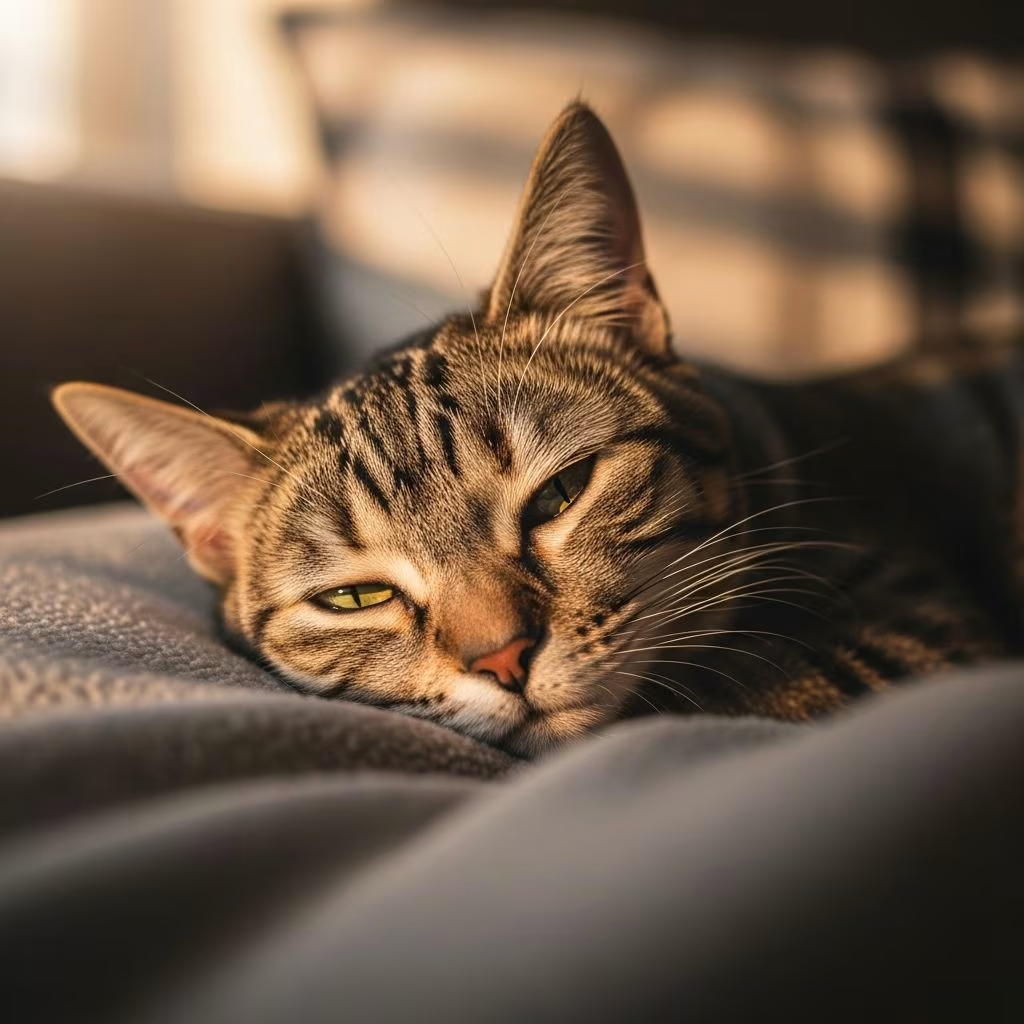
Why Do Cats Sleep with Their Eyes Open?
Have you ever caught your cat napping with their eyes partially or fully open? If so, you’re not alone in noticing this peculiar behavior. Many cat owners find themselves wondering if something is wrong with their feline companion when they spot them dozing off with their peepers unshut. The good news is that in most cases, there’s nothing to worry about. According to veterinarian and animal behaviorist Nicholas Dodman, BVMS DVA DACVAA DACVB, professor emeritus at Cummings Veterinary Medical Center at Tufts University, “Sleeping with eyes open is not a cause for concern. A lot of cats do it.” This common feline behavior is actually quite normal and has several fascinating explanations rooted in their biology and instincts.
Understanding Your Cat’s Sleep Cycles
To understand why cats sleep with their eyes open, it’s essential to first grasp how cat sleep works. Just like humans, cats experience different sleep cycles with distinct stages. These sleep stages include both REM (rapid eye movement) sleep and non-REM sleep, each serving important functions for your cat’s physical and mental restoration.
When cats first fall asleep, they enter a light, non-REM sleep stage. During this initial phase, it’s easy for them to wake up, and their bodies remain partially alert to their surroundings. As their sleep deepens, cats’ breathing relaxes, their heart rates slow down, and their bodies prepare for more restorative rest. Eventually, cats slip into REM, or deep sleep, where dreaming occurs and their brains consolidate memories.
The fascinating part is that cats are more likely to sleep with their eyes open during the lighter, non-REM sleep stage rather than during deep REM sleep. During light sleep, a cat’s body maintains awareness of its environment while their mind rests. This is why you might notice your cat’s ears twitching or their eyes seeming to track movement even as they appear to be sleeping.
The Role of the Third Eyelid
One of the most important anatomical features that allows cats to sleep with their eyes open is their third eyelid, scientifically known as the nictitating membrane. Unlike humans, who only have two eyelids, cats possess this additional transparent layer of tissue located in the inner corner of their eyes. This third eyelid is a remarkable adaptation that serves multiple protective functions.
When a cat sleeps with their eyes open, the third eyelid partially closes across the eye, which can give the appearance that the eye is wide open when, in fact, the cornea and sensitive interior of the eye are being protected. This membrane keeps the cat’s eyes moist and shields them from dust, debris, and other irritants that might otherwise cause damage during sleep. The third eyelid essentially acts as a protective barrier, allowing cats to rest while maintaining some level of environmental awareness and eye protection.
As Dr. Dodman explains, “As a cat falls asleep its eyes may be open at first as it enters a dream-like state of semi-consciousness. The aperture between the eyelids (palprebral fissure) narrows and the third eyelid (nictitating membrane) slowly moves across eye from inside (medial) to outside (lateral) like a whitish blind.” Observing this process can be quite striking, as you might see the whitish membrane gradually sweep across your cat’s eye.
Why Cats Sleep with Their Eyes Open: The Main Reasons
Instinctual Alertness and Survival
Cats are descendants of wild hunters, and their instincts for survival remain deeply ingrained despite domestication. One primary reason cats sleep with their eyes open is to maintain awareness of their surroundings even while resting. As prey animals in the wild, cats needed to protect themselves from potential threats, and this vigilance has been passed down through generations.
Sleeping with their eyes open allows cats to monitor their environment for any signs of danger or interesting activity. Even in the safety of your home, your cat’s instincts never truly take a break. This behavior helps them feel more secure and in control of their space, allowing them to rest while remaining partially alert to what’s happening around them.
Light Sleep Stages
During the light sleep phase of their sleep cycle, cats are more likely to keep their eyes open or partially open. This is a natural part of their sleep architecture. Unlike humans who typically enter deep sleep more readily, cats spend a significant portion of their rest time in these lighter stages, which allows them to respond quickly to stimuli if needed.
The extended sleep patterns of cats mean that you’ll likely see them with their eyes open fairly regularly if you observe them during their rest periods. Due to the amount of time cats spend sleeping—often between 12 to 16 hours per day—the odds of catching them napping with open eyes increases significantly.
Temperature Regulation
Another reason cats may sleep with their eyes open relates to body temperature regulation. When a cat is asleep, their body temperature naturally drops. Sleeping with their eyes slightly open may help cats regulate their body temperature by allowing cooler air to circulate around their eyes, which contain blood vessels that help dissipate heat.
Environmental Monitoring During REM Sleep
Interestingly, while most cats keep their eyes closed during deep REM sleep, some cats may still keep them partially open even during this stage. Researchers have documented cases where cats display nystagmic movements—rapid eye twitches associated with REM sleep—even when their eyes appear to be open, visible beneath the protective nictitating membrane.
Signs Your Cat Is Sleeping with Eyes Open
It can be challenging to tell if your cat is actually sleeping with their eyes open, especially if you’re unfamiliar with the specific signs to look for. Here are some indicators that your cat is truly resting rather than just staring:
- Pupils are dilated and eyes are not moving or tracking movement
- Your cat is lying very still without typical alert body tension
- Breathing is slow and steady rather than alert and shallow
- Ears may be relaxed rather than actively positioned toward sounds
- The third eyelid (whitish membrane) may be partially visible across the eye
- Overall body posture appears relaxed rather than tensed for quick movement
When to Be Concerned
Normal vs. Problematic Eye-Open Sleeping
In the vast majority of cases, your cat sleeping with their eyes open is completely normal and requires no intervention. However, there are certain situations where this behavior might warrant attention from a veterinarian.
If your cat is showing other symptoms alongside eye-open sleeping, you should schedule a veterinary appointment. These concerning symptoms include twitching, seizing, or visible eye trauma. Additionally, if you notice that your cat seems unable to close their eyes even when awake, or if there’s any discharge, redness, or visible injury around the eyes, professional evaluation is recommended.
Injury to the Third Eyelid
Beneath a cat’s two regular eyelids lies the translucent third eyelid. If this membrane becomes scratched or injured, your cat may struggle to close their eyes fully. While an injury to the nictitating membrane may not always be immediately visible, it can result in your cat being unable to properly close their eyes. In such cases, your cat might require veterinary treatment or even surgery to address the issue.
Anatomical or Neurological Issues
In some rare cases, sleeping with eyes open may be due to underlying anatomical or neurological abnormalities. These could include inadequate eyelid function or other neurological conditions. If you notice that your cat’s eye-open sleeping is a new behavior or is accompanied by other changes in their health or behavior, it’s worth having a veterinarian examine them.
Other Signs of Illness in Cats
While sleeping with eyes open is typically harmless, there are other sleeping positions and behaviors that might indicate your cat isn’t feeling well. You’ll likely become familiar with all your cat’s various sleeping positions, so you should be able to spot when a new one emerges that could suggest a problem.
When cats are sick or uncomfortable, they tend to hunch over or tense up. You might notice:
- Their head drooping in an unnatural way (different from normal sleepy drooping)
- An unusually tense or rigid body posture
- Reluctance to move or change positions frequently
- Hiding away more than usual
- Changes in appetite or water consumption
- Vocalizations or signs of pain
If you notice these signs in conjunction with other behavioral changes, contacting your veterinarian is the best course of action.
Vision While Sleeping with Eyes Open
A common question among cat owners is whether their cat can actually see while sleeping with their eyes open. The answer is somewhat complex. When a cat sleeps with their eyes open, their vision is typically somewhat impaired. The nictitating membrane, which partially covers the eye during this state, affects their visual acuity. While they may perceive movement or changes in light, they’re not seeing with the same clarity as when they’re fully awake.
How to Encourage Better Sleep
If you want to help your cat get quality rest and potentially see them sleep more deeply (and with eyes closed), consider these strategies:
- Play with your cat before bedtime to tire them out
- Provide a small meal in the evening to encourage sleepiness
- Create a quiet, comfortable sleeping area away from disturbances
- Maintain a consistent daily routine
- Provide comfortable bedding and resting spots in warm locations
- Reduce environmental stressors and loud noises during rest times
Frequently Asked Questions
Q: Is it normal for cats to sleep with their eyes open?
A: Yes, it’s completely normal. Many cats sleep with their eyes open, especially during light sleep stages. This behavior is facilitated by their third eyelid and is not a cause for concern in most cases.
Q: What is the third eyelid and why do cats have it?
A: The third eyelid, or nictitating membrane, is a transparent layer of tissue in the inner corner of a cat’s eye. Cats have it to protect their eyes from irritants and dryness, particularly during sleep. It also plays a role in predation and eye health.
Q: Can my cat see while sleeping with their eyes open?
A: Not clearly. While a cat may perceive movement or light changes, their vision is impaired when sleeping with eyes open because the third eyelid partially covers the eye.
Q: Should I be worried if my cat sleeps with their eyes open?
A: In most cases, no. It’s a normal behavior. However, if your cat shows other symptoms like twitching, seizing, eye trauma, or inability to close their eyes when awake, consult a veterinarian.
Q: Why do older cats seem to sleep with their eyes open more often?
A: The behavior does seem to happen more frequently in older age, though the exact reasons aren’t completely understood. It may relate to changes in sleep architecture and eyelid muscle tone as cats age.
Q: Is there a difference between sleeping with eyes open and eyes closed in cats?
A: Yes. Eyes open typically indicates light, non-REM sleep where the cat remains more alert. Eyes closed usually indicates deeper REM sleep where the cat is more fully resting and dreaming.
Q: What should I do if I think my cat has an injured third eyelid?
A: If you suspect an injury to the third eyelid or notice your cat cannot close their eyes when awake, schedule a veterinary appointment. Your vet can properly examine and treat any injuries.
References
- Why Do Cats Sleep with Their Eyes Open? — Chewy. https://www.chewy.com/education/cat/training-and-behavior/why-would-cats-sleep-with-their-eyes-open
- Can cats sleep with their eyes open? — Modern Vet. https://modernvet.com/can-cats-sleep-with-their-eyes-open/
- The strange reason cats sleep with their eyes open explained — PawTracks. https://www.pawtracks.com/cats/cats-sleep-eyes-open/
- Do Cats Sleep With Their Eyes Open? — IFLScience. https://www.iflscience.com/do-cats-sleep-with-their-eyes-open-67637
- Is It OK If A Cat Sleeps With Eyes Open? — RexiPets. https://rexipets.com/blogs/the-latest/is-it-ok-if-a-cat-sleeps-with-eyes-open
- 20 Cat Sleeping Positions and What They Mean — PetMD. https://www.petmd.com/cat/general-health/cat-sleeping-positions-and-what-they-mean



