

Why Do Cats Sleep So Much?
If you’ve ever owned a cat, you’ve likely noticed that your feline companion seems to spend a significant portion of their day sleeping. Unlike humans, who typically require 7 6 hours of uninterrupted sleep per night, cats have evolved a distinctly different sleep pattern. Cats sleep between 12 and 16 hours per day, with some cats sleeping even more during certain seasons or life stages. This remarkable amount of rest isn’t laziness 6it’s a sophisticated biological strategy shaped by millions of years of evolution. Understanding why cats sleep so much can help you better support your cat’s health and recognize when sleep patterns might indicate a health concern.
The Evolutionary Advantages of Feline Sleep
To understand cat sleep behavior, it’s essential to consider the evolutionary pressures that shaped it. Cats are obligate carnivores, meaning they have evolved as hunters who consume meat to survive. This predatory lifestyle requires bursts of intense physical activity followed by periods of rest. Extended sleep periods help cats conserve energy between hunts, allowing them to maintain the metabolic demands of their carnivorous diet while remaining ready to act when prey appears.
Interestingly, research reveals that sleeping position itself may offer evolutionary advantages. A recent international study analyzing hundreds of sleeping cats found that cats prefer to sleep on their left side as a survival strategy. When cats sleep on their left side and awaken, visual information about predators or prey enters through the left visual field and is processed by the right hemisphere of the brain. This hemisphere specializes in spatial awareness, threat detection, and coordinating rapid escape movements 6critical skills for surviving in the wild. This demonstrates that even how cats position themselves during sleep reflects their evolutionary heritage as vigilant predators.
Understanding Cat Sleep Cycles
Cat sleep is not uniform; rather, it consists of distinct stages with different characteristics. As cats move into deeper stages of sleep, muscle relaxation increases and body movement decreases. This progressive relaxation allows their bodies to recover while still maintaining some level of alertness.
One of the most important sleep phases for cats is REM (Rapid Eye Movement) sleep. During REM sleep, a cat’s body becomes deeply relaxed, but their brain remains highly active, processing the day’s experiences. Cats show brain activity patterns during REM sleep similar to those of humans, and researchers believe cats dream during this stage. The phasic phase of REM sleep is when twitching commonly occurs 6you might notice your cat’s paws twitching, whiskers quivering, or tail flicking as they rest. These involuntary movements are completely normal and are not causes for concern.
Age and Sleep Patterns
A cat’s sleep needs can vary significantly based on age. Young kittens have particularly active nervous systems that are still developing, and it has been theorized that a rapidly developing nervous system could make kittens twitch more than adult cats while sleeping. In many mammalian species, young animals spend proportionally more of their sleep cycle in REM sleep compared to adults, and the same pattern likely applies to kittens. This suggests that kittens may not only sleep more but also experience more movement and twitching during sleep as their brains develop and process information at accelerated rates.
Senior cats may also sleep more than middle-aged adults. As cats age, changes in cognitive function and physical comfort can influence sleep duration and quality. Understanding these age-related variations helps cat owners recognize normal development and aging processes.
Sleep Location and Safety
Where a cat sleeps is as important as how long they sleep. Cats are particularly vulnerable while sleeping and prefer elevated places where predators can only access them from below. This preference for high vantage points 6such as cat trees, shelves, windowsills, or the tops of furniture 6reflects their instinctive need for security. By sleeping in elevated locations, cats maintain a defensive advantage, allowing them to observe their surroundings and escape quickly if threatened.
Indoor cats, though removed from natural predators, have retained this instinct. Providing multiple elevated sleeping spots throughout your home supports your cat’s natural security needs and encourages healthy sleep behavior. Window perches are particularly valuable, as they combine elevation with visual stimulation and natural light.
What Cat Sleeping Positions Reveal
Beyond the preferred left-side position identified in research, cats adopt various sleeping postures that can communicate their emotional state and comfort level. The position a cat chooses often reflects their trust in their environment and their relationship with you.
- The Loaf Position: When cats tuck their paws beneath their body, resembling a loaf of bread, they are in a semi-alert state and can quickly spring into action if needed.
- The Sprawl: Cats sleeping on their backs with limbs stretched out are displaying trust and relaxation, as this position leaves them vulnerable.
- The Curl: A tight ball, with the tail wrapped around the body, indicates either cold sensitivity or a desire for security and privacy.
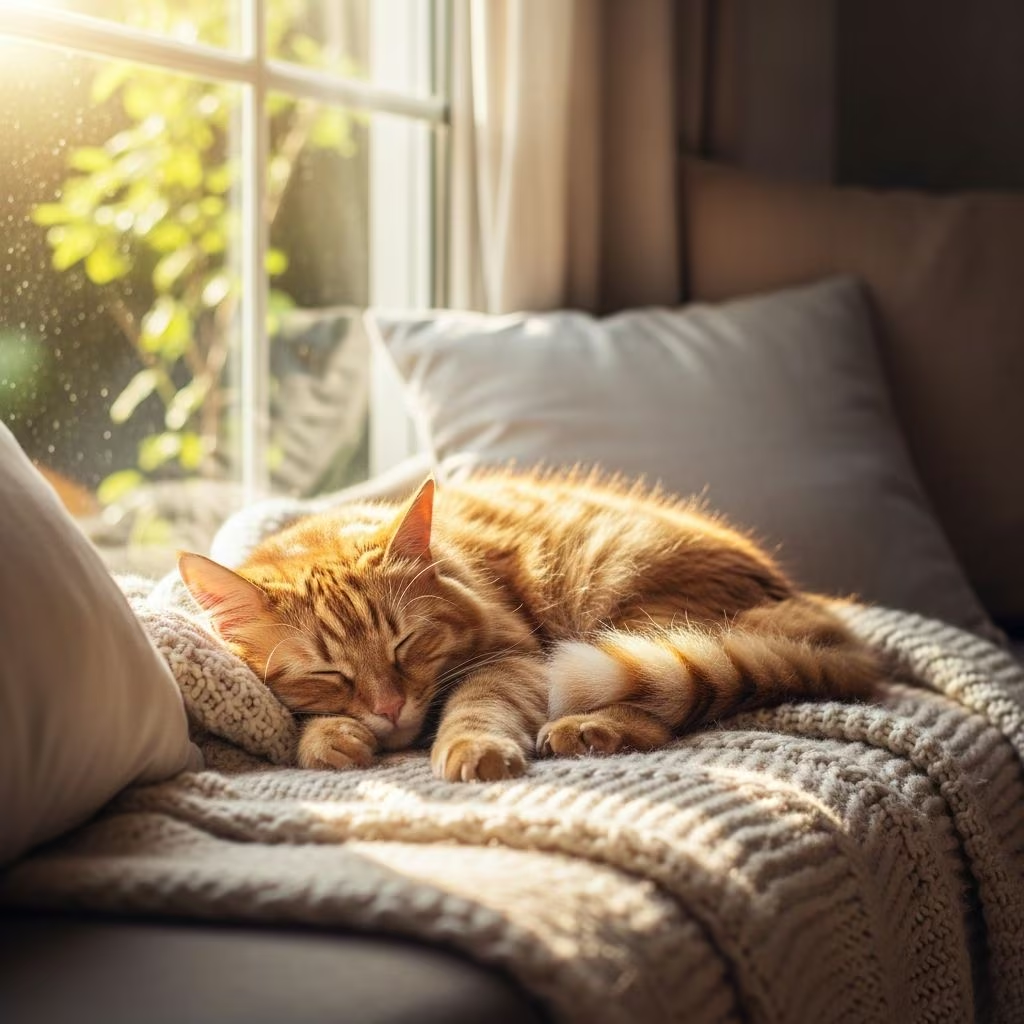
- The Sideways Stretch: Cats sleeping fully extended on their sides are showing deep relaxation and contentment in their environment.
Research into cat sleeping positions suggests that these postures communicate not just physical comfort but also psychological security. A cat that feels safe with you and trusts their environment will demonstrate more relaxed sleeping positions.
Co-Sleeping with Your Cat
Many cat owners wonder whether allowing their cats to sleep in bed with them is beneficial for both parties. Research on this topic provides nuanced findings. A study examining co-sleeping with pets found that participants who co-slept with cats reported better perceived sleep efficiency than those who did not co-sleep with cats. This suggests that the presence of a cat may provide some sleep benefits for humans, at least in terms of efficiency.
From your cat’s perspective, sleeping near you creates bonding opportunities. Cats will sleep next to their favorite people who make them feel safe and secure. By choosing to sleep near you, your cat is demonstrating trust and affection. However, individual preferences vary 6some cats prefer sleeping independently, while others actively seek the companionship and warmth of their human family members.
Health Considerations and Sleep Changes
While the 12 616 hour sleep range is normal for adult cats, significant changes in sleep patterns can sometimes indicate health issues. Cats that suddenly sleep much more than usual, or conversely, show marked decreases in sleep, may be experiencing stress, pain, or medical conditions. Hyperthyroidism, arthritis, cognitive dysfunction in senior cats, and other health conditions can all affect sleep patterns.
Additionally, occasional twitching during sleep is a normal part of the sleep cycle for most cats, but severe shaking, twitching that continues when awake, or other concerning symptoms warrant veterinary evaluation. Monitoring your cat’s sleep patterns and discussing any significant changes with your veterinarian helps ensure early detection of potential health issues.
Creating an Optimal Sleep Environment
Supporting healthy sleep in your cat involves creating an environment that aligns with their natural instincts:
- Provide multiple elevated sleeping spots throughout your home
- Ensure quiet, low-traffic areas where cats can rest undisturbed
- Maintain a comfortable room temperature, as cats are sensitive to cold
- Use soft, washable bedding in sleeping areas
- Keep litter boxes, food, and water away from sleeping areas
- Consider window perches for natural light and outdoor observation
These environmental modifications respect your cat’s natural sleep needs and security instincts.
Frequently Asked Questions
Q: Is it normal for my cat to sleep 16 hours a day?
A: Yes, sleeping 12 616 hours daily is completely normal for adult cats. Some cats, particularly seniors or those in certain seasons, may sleep even more. If your cat suddenly changes sleep patterns dramatically, consult your veterinarian to rule out health concerns.
Q: Why does my cat twitch while sleeping?
A: Twitching during sleep is a normal part of the feline sleep cycle, particularly during REM sleep when cats dream. Small muscle movements of the paws, ears, whiskers, and tail are not causes for concern. However, severe shaking or twitching while awake warrants veterinary attention.
Q: Should I let my cat sleep in my bed?
A: This is a personal choice. Research shows that cats sleeping near you may provide sleep efficiency benefits, and your cat benefits from the bonding opportunity and security. However, some people prefer separate sleeping arrangements. Choose what works best for your household.
Q: Why does my cat prefer sleeping on their left side?
A: Research suggests that sleeping on the left side provides a survival advantage. This position allows the right hemisphere of the brain 6which processes spatial awareness and threats 6to immediately receive visual information upon waking, enabling faster responses to predators or prey.
Q: What should I do if my cat’s sleep habits change suddenly?
A: Sudden changes in sleep patterns can indicate stress, pain, or medical conditions like hyperthyroidism or arthritis. Contact your veterinarian to discuss any significant changes and ensure your cat receives appropriate care.
References
- Cats Prefer to Sleep on Their Left Side 6 Ruhr University Bochum (RUB). 2025-06-24. https://news.rub.de/english/press-releases/2025-06-24-biopsychology-cats-prefer-sleep-their-left-side
- Why Is My Cat Twitching in Their Sleep? 6 Kinship. https://www.kinship.com/cat-behavior/cat-twitching-in-sleep
- Co-Sleeping with Pets, Stress, and Sleep in a Nationally Representative Sample 6 National Institutes of Health (NIH). https://pmc.ncbi.nlm.nih.gov/articles/PMC10918166/
- How Do Cats Choose Who To Sleep With? 6 Cats.com. https://cats.com/how-do-cats-choose-who-to-sleep-with



