

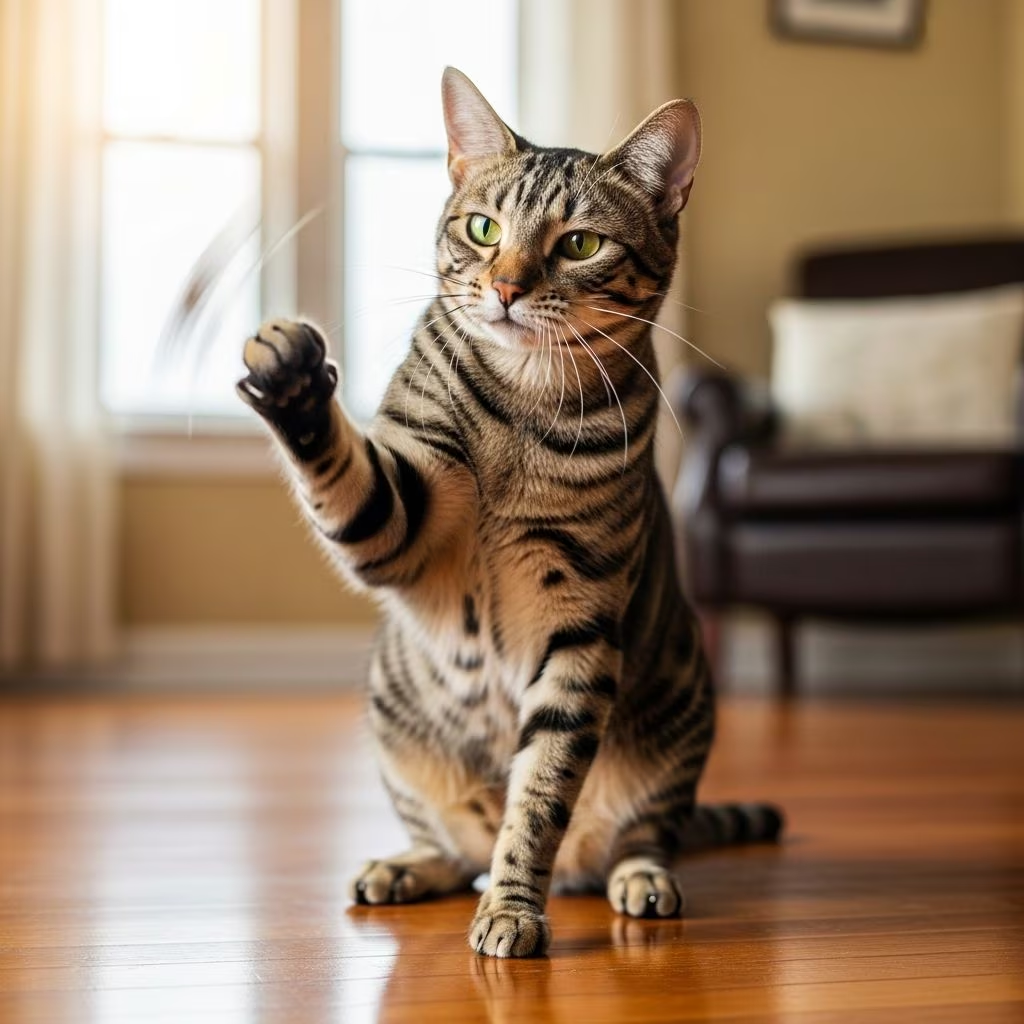
Cats are enigmatic creatures known for their graceful movements and sudden bursts of paw action. One common behavior that puzzles many cat owners is slapping or swatting. Whether your cat is bopping another feline on the head, swatting at your leg, or delivering a quick paw to a toy, this action can range from adorable to alarming. Understanding why cats slap is key to fostering a peaceful household and ensuring your pet’s well-being.
This comprehensive guide delves into the seven primary reasons cats engage in slapping behavior, drawing from veterinary expertise and behavioral studies. We’ll explore playful interactions, defensive responses, curiosity-driven swats, inter-cat aggression, health-related issues, overstimulation, and dominance displays. By recognizing the context and body language cues, you can differentiate harmless play from potential problems and take appropriate action.
1. They’re Playing
Play is one of the most frequent and benign reasons cats slap. Swatting forms a core part of kittens’ development and adult cats’ exercise routine, mimicking hunting skills. “Swatting is integral to play and hunting activities,” explains Shani Campbell, Certified Feline Training and Behavior Specialist. Cats practice predatory moves like pouncing and striking on toys, siblings, or housemates.
During play sessions with wand toys or feather teasers, you’ll see your cat unleash precise swats. Multi-cat homes often feature mutual swatting as social bonding. Signs of playful slapping include relaxed body posture, forward ears, dilated pupils, and a playful chirp or trill. The cats may take turns ‘attacking,’ with no hissing or flattened ears. Encourage this by providing interactive toys, but supervise to prevent escalation.
Play-slapping keeps cats physically fit and mentally stimulated. Indoor cats, in particular, benefit from daily sessions to burn energy and reduce boredom-related issues.
2. They Feel Defensive or Threatened
When a cat perceives a threat, slapping serves as a defensive warning to create distance. This instinctual response helps avoid full confrontations. Cats emit subtle cues like tail flicking, ear pinning, or dilated pupils before a swat. If ignored, the slap follows to say, “Back off!”.
In multi-pet homes, a new dog or cat might trigger defensive swats. Owners may experience this during startling moments, like sudden movements. Body language is crucial: arched back, hissing, and puffed fur indicate true defense, not play. Respect these signals by giving space and gradually introducing stimuli.
3. They’re Curious
Cats are natural explorers, using paws to investigate their environment. Curiosity-driven slapping extends from play, targeting moving objects like bugs, toys, or dangling strings. “Some cats take this exploratory approach with food, household objects, and even children’s toys,” notes behavior expert Cassiday.
This pawing tests textures, sounds, and reactions. A cat spotting a mouse might slap it repeatedly before eating, honing skills. Encourage safe curiosity with puzzle feeders and scratching posts, redirecting from fragile items.
4. They’re Expressing Inter-Cat Aggression
Not all swats are playful; inter-cat aggression often masquerades as such. “Body language between play and fighting can look similar,” warns Cassiday. Watch the recipient: fleeing, growling, or hissing signals intolerance.
Common triggers include:
- Resource scarcity (food bowls, litter boxes, beds)
- Poor introductions of new cats
- Insufficient enrichment
Address by providing multiples of essentials (one per cat plus one extra) and slow introductions. Persistent issues warrant a behaviorist.
5. They’re Sick or in Pain
Sudden slapping in a previously mellow cat can signal health woes. Cats mask pain, so behavioral shifts like unprovoked swats are red flags. Dr. Tracey Deiss, medical lead at Zoetis, links this to conditions like osteoarthritis (OA) or degenerative joint disease (DJD), even in young cats.
Other symptoms:
- Mobility changes (no jumping, stair struggles)
- Appetite loss
- Litter box avoidance
- Hiding
Consult a vet promptly for exams, pain management, or imaging. Early intervention improves quality of life.
6. They’re Overstimulated, Anxious, or Stressed
Overstimulation aggression, or petting-induced, occurs when affectionate petting crosses a threshold. Cats enjoy initial strokes but irritate from repetition, leading to slaps or bites. Warning signs include twitching tail, ear flattening, pupil dilation, skin rippling, and freezing.
Causes encompass sensory overload, past poor socialization, or anxiety. Some cats have sensitive skin receptors. Management strategies:
- Watch for cues and stop petting early
- Pet preferred areas (chin, cheeks) briefly
- Increase play to outlet energy
- Create calm environments
Vet checks rule out pain like arthritis.
7. They’re Asserting Dominance
Slapping establishes hierarchy in multi-cat homes. A dominant cat may swat subordinates to reinforce status during feeding or resting. This communicative act prevents fights if heeded. Monitor for balance; excessive dominance needs resource mediation.
Why Do Cats Slap Humans?
Cats slap owners for similar reasons: play invitations, overstimulation from petting, or boundary enforcement. Redirect play to toys, heed cues, and avoid hand play to prevent learned biting.
When to Worry About Cat Slapping
Benign in context, worry if:
- Sudden onset
- Escalates to bites/injuries
- Accompanies pain signs
- Alters routines
Seek vet or behaviorist for diagnostics.
How to Stop Excessive Cat Slapping
| Issue | Solutions |
|---|---|
| Play | Interactive toys, scheduled sessions |
| Aggression | Resource multiples, slow intros |
| Overstimulation | Watch cues, short pets, play outlets |
| Pain | Vet exam, pain relief |
Consistency and patience yield results.
Frequently Asked Questions (FAQs)
Why does my cat slap me when I pet her?
Overstimulation is common; stop at tail twitch or ear flick.
Is cat slapping always aggressive?
No, often play or communication.
How to introduce cats to prevent slapping?
Slow scent swapping, supervised visuals.
Can pain cause slapping?
Yes, arthritis prompts defensive swats.
Should I punish slapping?
No, ignore/withdraw attention positively.
References
- Why Do My Cats Keep Slapping Each Other? — Rover.com. 2023-05-15. https://www.rover.com/blog/why-cats-slap-each-other/
- Petting-Induced or Overstimulation Aggression in Cats — Humane Society of Huron Valley (HSHV). 2024-02-10. https://www.hshv.org/petting-induced-or-overstimulation-aggression-in-cats/
- Why do my Cats Keep Slapping Each Other? — Zoetis Petcare. 2023-06-20. https://www.zoetispetcare.com/newsroom/why-do-my-cats-keep-slapping-each-other-



