

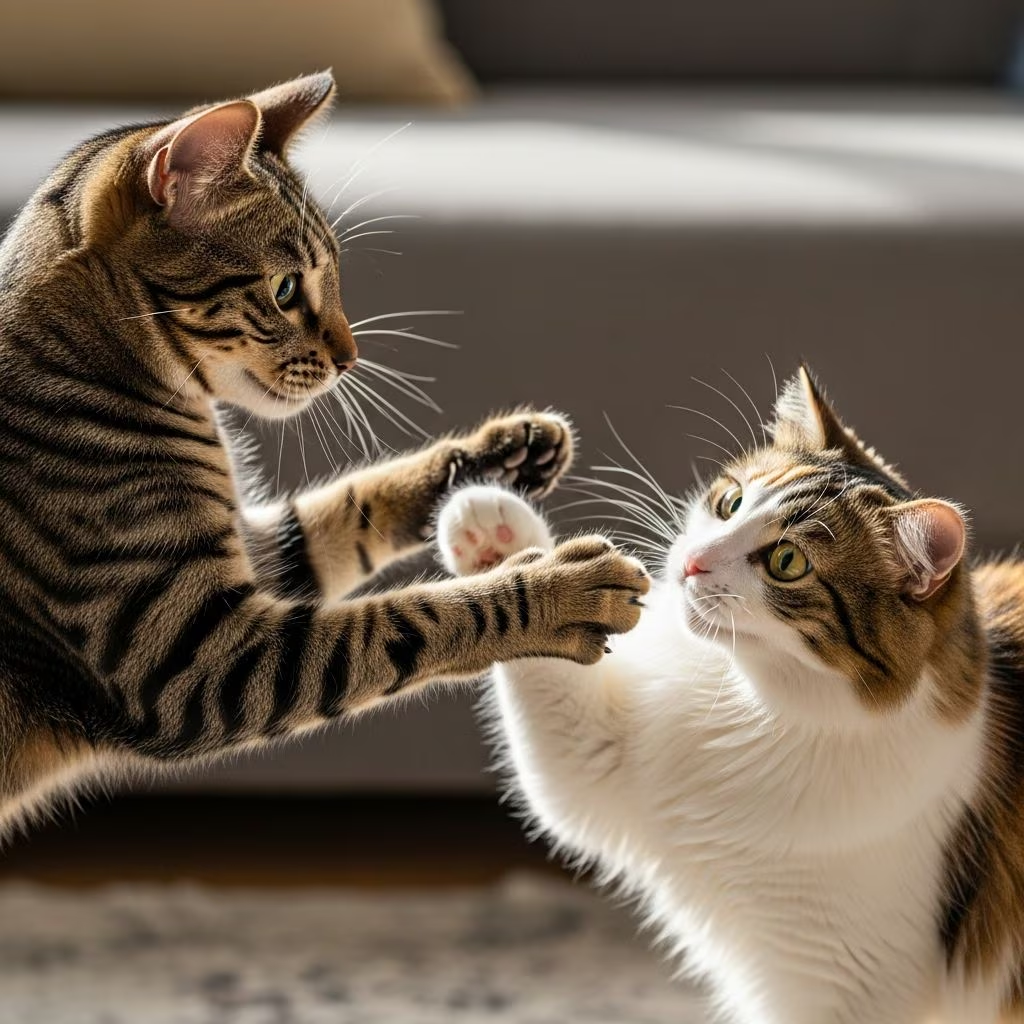
Cats are fascinating creatures with a rich repertoire of behaviors, and one of the most common yet puzzling is slapping and swatting. Whether your cat is gently tapping your hand, aggressively batting at another pet, or pawing at household objects, this action serves multiple purposes in feline communication and interaction with their environment. Far from being random, a cat’s slap or swat is often a deliberate expression of emotion, instinct, or need. Understanding these behaviors can strengthen the bond between you and your cat while preventing misunderstandings that lead to scratches or frustration.
In this comprehensive guide, we’ll dive into the nine primary reasons why cats engage in slapping and swatting, drawing from veterinary insights and behavioral expertise. We’ll also provide actionable tips to manage these behaviors, ensuring a peaceful coexistence. Cats use their paws not just for walking, climbing, and scratching but as versatile tools for survival, exploration, and social signaling. Recognizing the context behind each swat—such as body language, tail position, ear orientation, and vocalizations— is key to interpreting your cat’s intentions accurately.
1. They’re Feeling Playful
Playfulness is one of the most innocent and frequent reasons cats slap and swat. Kittens, in particular, embody this behavior as they roughhouse with littermates, practicing essential hunting skills like pouncing, chasing, and swatting. This playful swatting mimics predatory actions, helping young cats develop coordination, agility, and strength. Even as adults, cats retain this instinct, often directing playful slaps at toys, strings, or even human hands to initiate a game.
Adult cats may swat to encourage interaction, especially if they’re bored or seeking stimulation. You’ll notice dilated pupils, a twitching tail, and an arched back during these sessions—classic signs of play rather than aggression. Interactive toys like feather wands or laser pointers can channel this energy positively, reducing unwanted swats directed at furniture or people. However, distinguishing play from overstimulation is crucial; what starts as fun can escalate if ignored.
Owners often report their cats ‘boxing’ with pillows or siblings, which is healthy as long as it doesn’t involve hissing or fur flying. Regular play sessions, ideally 15-20 minutes twice daily, satisfy this need and prevent destructive behaviors.
2. They’re Trying to Get Your Attention
Cats are independent yet crave attention on their terms. A swat or slap can be a direct bid for interaction when they feel ignored. This might manifest as pawing at your leg while you’re working or knocking objects off tables—dramatic measures to capture your focus. Unlike dogs, cats rarely bark for attention; instead, they use physical nudges or slaps to communicate, “Hey, play with me!” or “Feed me now!”
This behavior stems from their evolutionary history as solitary hunters who value personal space but form bonds with reliable providers. If your cat slaps your hand during petting pauses, it could mean ‘more please,’ but watch for signs of discomfort like skin rippling or tail thrashing, which signal a desire to stop. Responding promptly to non-aggressive attention-seeking reinforces positive communication without encouraging demands.
To address this, establish routines for feeding, play, and cuddles. Ignore dramatic swats (safely) and reward calm vocalizations or sitting politely with treats, gradually reshaping their attention strategy.
3. They’re (Cautiously) Curious
Curiosity is woven into a cat’s DNA, driving them to explore their world cautiously. Slapping or swatting allows cats to test unfamiliar objects from a safe distance. Will it move? Make a sound? Counterattack? A quick paw swipe gathers sensory data via nerve receptors in their paw pads without full commitment. This is evident when cats bat at dangling keys, rustling bags, or insects before deciding to engage further.
This exploratory swat extends to food, toys, or even new people. Cats ‘play with their food’ similarly, swatting kibble or treats to assess edibility or fun factor. It’s an extension of hunting instincts, where prey is toyed with before consumption. Provide safe outlets like puzzle feeders or scattered toys to satisfy this without household chaos.
4. They’re Overstimulated
Overstimulation, or sensory overload, triggers defensive swats when a cat’s tolerance threshold is exceeded. Petting too long, especially on the belly or tail base, can lead to sudden slaps as the cat says, “Enough!” Signs include dilated pupils, flattened ears, twitching skin, and a flicking tail. Whisker fatigue from deep bowls or constant brushing exacerbates this.
Some cats have lower touch thresholds due to genetics or past experiences. Short, frequent petting sessions (5-10 strokes) followed by breaks prevent overload. Learn your cat’s signals and stop at early warnings to build trust.
5. They’re Setting Boundaries
Cats are boundary enforcers, using swats to communicate limits when subtler cues like ear flicks or growls are ignored. This applies to humans, other pets, or objects encroaching on their space. A slap means “Back off” or “Stop that.” Respecting these signals prevents escalation to bites or scratches.
Teach family members to watch for discomfort cues and withdraw hands slowly, palm up, to de-escalate. Positive reinforcement for calm interactions helps cats feel secure without needing physical reminders.
6. They’re Afraid or Stressed Out
Stress from changes like moves, new pets, or loud noises prompts defensive swats. Cats, as both predators and prey, lash out to create distance from stressors. Pheromone diffusers, hiding spots, and gradual introductions mitigate this. Monitor for chronic stress signs like hiding or appetite loss, consulting a vet if persistent.
7. They’re Warning a Perceived Threat
Swatting warns off perceived dangers, maintaining distance while assessing. This could target strangers, vacuums, or rival animals. Body language like puffed fur and low growls accompanies it. Safe desensitization through gradual exposure reduces reactivity.
8. They’re Trying to Establish Dominance
In multi-cat homes, swats assert hierarchy, especially with newcomers. Gentle taps from seniors to kittens establish order. Proper introductions prevent fights; neutering curbs hormone-driven territoriality.
9. They’re in Full-On Fighting Mode
Aggressive swatting occurs in fights for resources or territory. Unneutered males are prone due to testosterone. Illness heightens vulnerability, prompting defensive attacks. Intervene safely and seek vet care for underlying issues.
How Can You Tell If Your Cat Is Playing or Being Aggressive?
Distinguishing play from aggression is vital. Play features relaxed body, forward ears, playful chirps, no claws/hissing, and balanced participation. Aggression shows tense posture, flattened ears, growling, claws out, and one-sided attacks. Context and history guide interpretation; sudden changes warrant vet checks.
Why Do Cats Slap Each Other?
Inter-cat slaps mirror solo behaviors: play, dominance, defense, or stress. Playful siblings bop lightly; tense rivals swat hard. Monitor dynamics and provide resources to reduce conflict.
What Should You Do If Your Cat Slaps You?
Stay calm, withdraw slowly, avoid punishment (it increases fear). Redirect to toys, ensure needs are met, and consult pros for persistent issues. Never hit back.
Reader FAQ
Q1: Is it normal for my cat to slap me in the face?
A: Occasional face slaps can be playful or attention-seeking, but frequent ones signal overstimulation or stress. Observe body language and adjust interactions.
Q2: Why does my cat swat at my other cat more at night?
A: Nighttime energy peaks mimic hunting hours; ensure daytime play and separate feeding to ease tensions.
Q3: My senior cat started swatting suddenly—what does it mean?
A: Likely pain like arthritis; vet evaluation is essential for early intervention.
Q4: How do I stop my cat from swatting during petting?
A: Pet briefly, watch cues, use toys for energy release.
Q5: Does neutering reduce slapping behavior?
A: Yes, especially inter-cat aggression driven by hormones.
Tips to Manage Cat Slapping and Swatting
- Provide daily interactive play to expend energy.
- Respect boundaries and learn body language.
- Use pheromone products for stress.
- Enrich environment with scratching posts, perches.
- Vet check for pain or illness changes.
- Proper multi-cat introductions.
- Short petting sessions.
By understanding these behaviors, you foster a happier cat. Patience and observation yield rewarding relationships.
References
- Why Do My Cats Keep Slapping Each Other? — Rover.com. 2023-05-15. https://www.rover.com/blog/why-cats-slap-each-other/
- Why Do Cats Slap and Swat? 9 Vet-Reviewed Reasons & Tips — Catster. 2024-08-20. https://www.catster.com/cat-behavior/why-do-cats-slap-and-swat/
- Why Do Cats Like to Slap and Swat at Things? — Mental Floss. 2022-11-10. https://www.mentalfloss.com/article/647316/why-do-cats-slap-swat-things
- Why Does My Cat Slap Me? Find Out What This Means — Kinship. 2023-07-12. https://www.kinship.com/cat-behavior/why-do-cats-slap
- Cat – Aggression when Touched or Petted — Maddie’s Fund (.org, animal welfare nonprofit). 2023-01-01. https://www.maddiesfund.org/cat-aggression-when-touched-or-petted.htm
- Petting-Induced or Overstimulation Aggression in Cats — Humane Society of Huron Valley (.org, shelter). 2024-03-05. https://www.hshv.org/petting-induced-or-overstimulation-aggression-in-cats/



