

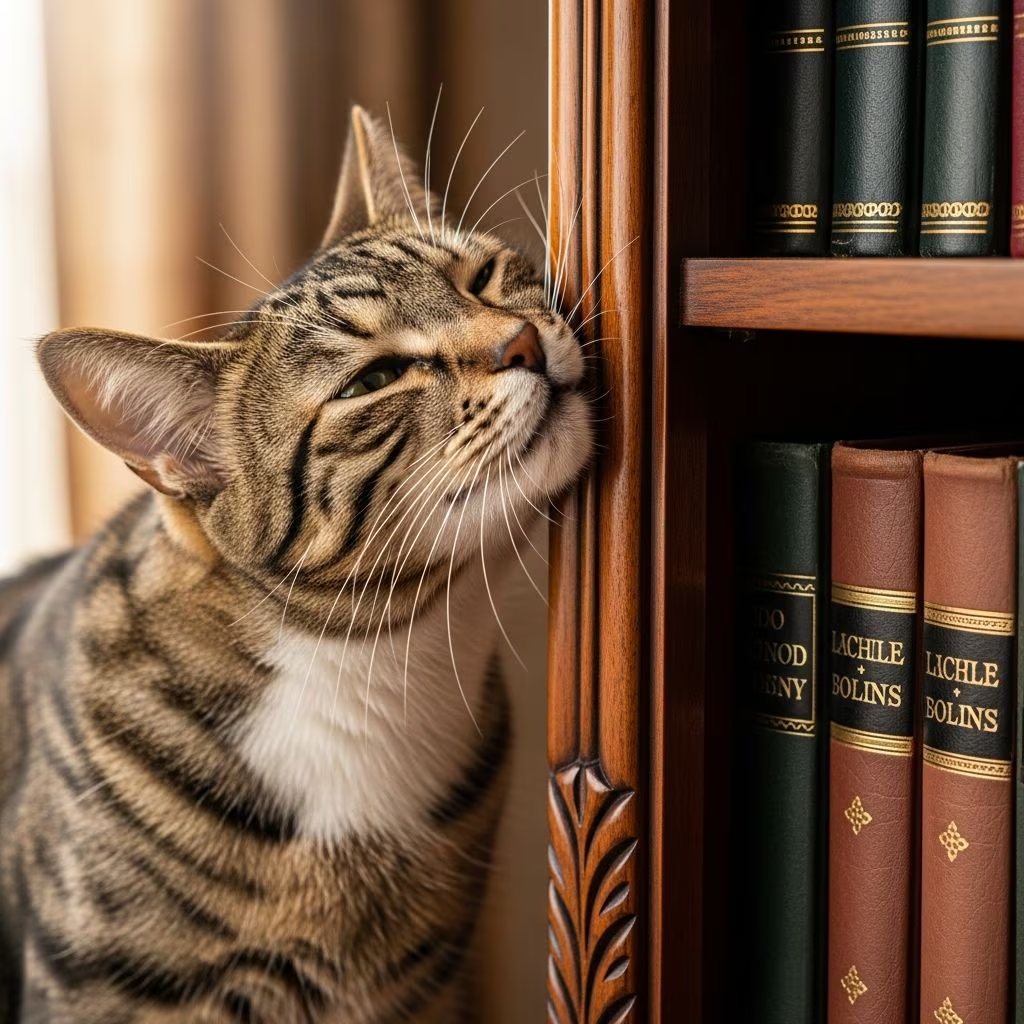
Cats frequently rub their faces against objects, furniture, walls, and even their owners. This behavior, often called “bunting,” serves multiple purposes rooted in feline instincts and communication.
Why Do Cats Rub Their Face on Things?
Cats rub their faces on things primarily to mark territory using scent glands located on their cheeks, forehead, chin, and lips. These glands release pheromones—chemical signals invisible and scentless to humans but detectable by other cats—that claim ownership of spaces and individuals. According to veterinary experts, this action also expresses affection, provides sensory pleasure, and can relieve stress.
The behavior stems from cats’ territorial nature. In the wild, felines mark boundaries to avoid conflicts. Domesticated cats adapt this to their home environment, rubbing on legs, corners, or favorite spots to create a familiar, safe zone infused with their scent.
Where Are a Cat’s Scent Glands Located?
A cat’s scent glands are strategically placed for effective marking. Key locations include:
- Cheeks and face: Primary sites for cheek-rubbing, releasing F3 pheromones that signal ownership.
- Forehead: Used in head-butting or bunting to deposit scent on high surfaces.
- Chin and lips: Active during rubbing on lower objects or people.
- Paw pads and tail base: Supplementary glands for broader marking via scratching or tail wrapping.
These glands produce unique pheromones like F3 for territorial claims, F4 for social bonding with familiar beings (including humans), and others for mating signals. Whiskers (vibrissae) around the face enhance sensory feedback, making rubbing feel pleasurable and releasing endorphins.
7 Reasons Cats Rub Their Faces on Things
Cats exhibit this behavior for several interconnected reasons. Here’s a breakdown:
- Territorial Marking: The top reason—cats deposit pheromones to claim spaces and items as theirs, deterring intruders.
- Affection and Bonding: Rubbing on owners mixes scents, signifying trust and inclusion in the cat’s social group (allorubbing).
- Sensory Exploration: Whiskers gather data on texture, temperature, and size while spreading scent for familiarity.
- Stress Relief and Comfort: Releases calming pheromones, reducing anxiety in new or overwhelming environments.
- Pleasure and Endorphins: Stimulates nerves, providing a feel-good sensation akin to self-massage.
- Oil Distribution: Spreads natural skin oils to maintain coat health.
- Mating Signals: Intact cats may rub more to release F2 pheromones indicating readiness.
Territorial Marking
By far the most common motive, cats use facial glands to leave invisible ‘sign posts.’ F3 pheromones specifically denote ‘this is mine,’ creating a scent map of their territory.
Affection
When a cat rubs on you, it’s a compliment—they’re saying you’re family. This interspecies bonding strengthens relationships and promotes household harmony.
Sensory Information
Face rubbing activates whiskers, allowing cats to ‘map’ their world tactilely while reinforcing scent profiles.
Stress Relief
In stressful situations, rubbing self-soothes via pheromone release, mimicking natural calming rituals.
It Feels Good
The physical sensation massages glands and vibrissae, triggering dopamine and endorphin release for pure enjoyment.
Why Do Cats Rub Their Face on You?
Cats target owners for rubbing to mark you as ‘safe’ and ‘theirs.’ This mixes your scent with theirs, fostering group identity. It’s a sign of love, especially if accompanied by purring or slow blinks. Strays rubbing legs may seek food or alliance, but domestics do it for emotional connection.
Experts like Dr. Tomeshia Hubbard note whiskers enhance affection displays, while Nicholas Dodman highlights endorphin release.
When Is Cat Face Rubbing a Problem?
Normal rubbing is occasional, relaxed, and purposeful. **Excessive rubbing**—frequent, intense, with distress signs like vocalizing, hair loss, or wounds—signals issues:
- Skin conditions: Allergies, fleas, or infections cause itching.
- Ear infections or dental pain: Cats rub affected sides excessively.
- Hyperesthesia or neurological issues: Leads to compulsive behavior.
- Heat cycles: Unspayed females or intact males rub more.
Monitor for redness, odor, or behavioral changes. Consult a vet if persists.
How to Tell If Your Cat Is Rubbing Too Much
| Normal Rubbing | Excessive Rubbing |
|---|---|
| Relaxed posture, purring, occasional (few times daily) | Frequent/intense, meowing, restlessness, skin damage |
| On varied objects/people, playful | Targeted to one area, frantic, bald spots |
| Part of routine greeting/exploration | Sudden onset, disrupts sleep/eating |
Use this table to assess. Normal is communicative; excessive warrants professional check.
FAQs (Frequently Asked Questions)
Why does my cat rub its face on me?
Your cat marks you with pheromones, shows affection, and bonds by mixing scents. It’s a trust signal.
Why do cats rub their face on corners?
Corners are ideal for scent deposition due to height and visibility to other cats, claiming territory effectively.
Do all cats rub their faces on things?
Yes, it’s instinctual, though frequency varies by personality, environment, and health.
Why does my cat rub its face and teeth on me?
Teeth-chattering or gentle nips combine scent marking with taste/smell exploration, often affectionate.
Is face rubbing a sign of happiness?
Typically yes—accompanied by relaxed cues, it releases happy pheromones indicating low stress.
Conclusion
Cat face-rubbing is a multifaceted behavior blending instinct, emotion, and physiology. From territory claims to loving greetings, it enriches the human-feline bond. Watch for excess to ensure health, and cherish it as a compliment from your cat. Provide enriching environments with scratchers and toys to encourage healthy expression.
References
- Why Do Cats Rub Against You? We Asked a Veterinarian — Country Living. 2024-approx. https://www.countryliving.com/life/kids-pets/a62392728/why-cats-rub-against-you-explained/
- Exploring Cats’ Rubbing Behavior: Why Do Cats Rub Against You? — Basepaws. 2024-approx. https://basepaws.com/blog/exploring-cats-rubbing-behavior-why-do-cats-rub-against-you
- Why Cats Rub Their Heads on Things — AKC Reunite. 2024-approx. https://www.akcreunite.org/why-cats-rub-their-heads-on-things/
- If Your Cat Rubs Their Face on You, They’re Saying THIS — Feline Fanatics (YouTube). 2025-05-16. https://www.youtube.com/watch?v=ntI6QMtVTxU
- Why do cats rub their cheeks on stuff? — Ask Dr. Universe, Washington State University. 2023-11-09. https://askdruniverse.wsu.edu/2023/11/09/7411/



