

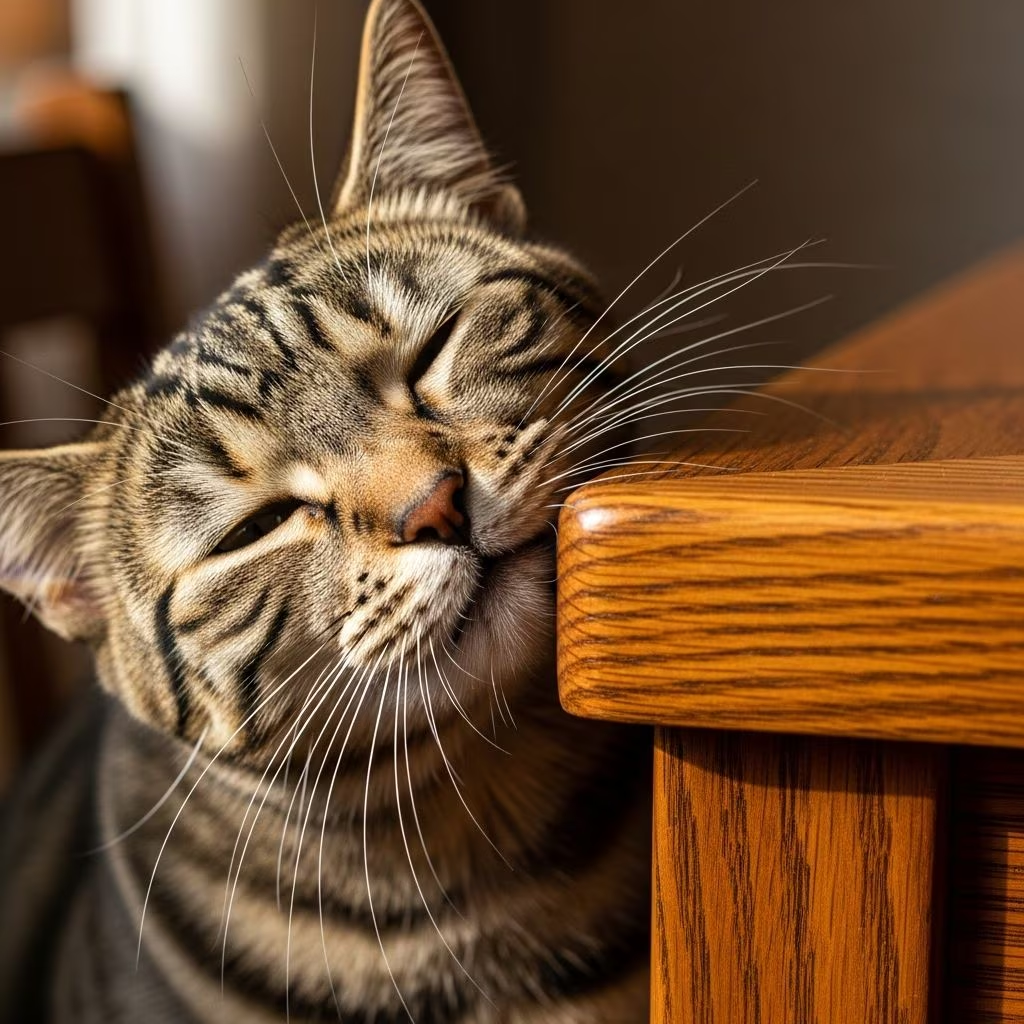
Cats frequently rub their faces on corners, furniture, and other surfaces as a natural behavior driven by instinct. This action, often called “bunting,” releases pheromones from facial scent glands to mark territory, express affection, relieve stress, and simply feel good.
Why Do Cats Rub Their Faces on Corners?
Cats possess scent glands concentrated on their forehead, cheeks, chin, and lips. When they rub these areas against corners or objects, they deposit pheromones—chemical signals invisible and scentless to humans but detectable by other cats. This primarily serves to claim ownership of their environment, signaling to other felines that the space is taken. According to veterinary experts, this behavior stems from their territorial nature, helping cats establish boundaries in both indoor and outdoor settings.
Research identifies specific pheromones involved: F3 pheromone from cheek rubbing indicates a “claim of ownership,” while F4 promotes social bonds with familiar individuals, including humans. These glands also contain vibrissae (whiskers), sensitive touch organs that make rubbing pleasurable, potentially releasing endorphins for a feel-good effect.
The Science Behind Cat Face Rubbing
Feline pheromones are key to understanding face rubbing. Cats have over 20 scent glands, with facial ones being most active during rubbing. The F3 pheromone, released from cheeks and chin, marks safe, owned spaces. F4, a social marker, is used in allorubbing—rubbing against trusted companions like owners or other pets—to foster group harmony and reduce aggression.
Whiskers on the face act as sensory tools, stimulating pleasure centers. Veterinary behaviorist Nicholas Dodman explains that massaging these glands “feels good and probably releases endorphins.” This combines biological signaling with sensory enjoyment, making corners ideal due to their vertical texture and prominence in a cat’s territory.
5 Reasons Cats Rub Their Face on Corners
- Marking Territory: Primary reason—cats deposit F3 pheromones to claim corners as their domain, deterring intruders.
- Showing Affection: Rubbing on owners mixes scents, signifying “you belong to me” and building social bonds via F4 pheromones.
- Stress Relief and Comfort: Releases calming pheromones, helping cats self-soothe in anxious environments.
- Gathering Information: Whiskers detect texture, temperature, and size, aiding navigation and familiarity.
- Pure Pleasure: Stimulates endorphins and dopamine, akin to a massage for the cat.
Normal vs. Excessive Face Rubbing in Cats
Normal rubbing occurs sporadically with relaxed signs like purring, slow blinks, or upright tail. It’s brief, targeted at familiar objects, and part of daily routines.
Excessive rubbing involves intense, frequent sessions, often with distress signals: hair loss, redness, vocalizing, restlessness, or scratching. This may indicate allergies, fleas, ear infections, dental issues, or hypersensitivity disorders. Unspayed females in heat or cats with intracranial issues (tumors, infections) may also rub compulsively. Consult a vet if behavior changes suddenly or persists.
| Aspect | Normal Rubbing | Excessive Rubbing |
|---|---|---|
| Frequency | A few times daily | Constant or intense |
| Body Language | Relaxed, purring | Distressed, meowing |
| Duration | Brief contacts | Prolonged sessions |
| Possible Causes | Affection, marking | Health issues, parasites |
Why Do Cats Rub Their Face on You?
When cats target humans, it’s often affection mixed with marking. They blend your scent with theirs via F4 pheromones, claiming you as family. This allorubbing strengthens bonds and communicates safety. It may also butter you up for food or attention, as cats are adept at training owners. Facial focus leverages dense scent glands and sensitive whiskers for maximum effect.
Why Do Cats Rub Corners Specifically?
Corners provide vertical surfaces matching a cat’s head height, ideal for gland contact. Their angular shape holds scents well, and high-traffic areas like doorways amplify territorial claims. It’s efficient for marking multiple boundaries at once, reinforcing the cat’s safe zone.
Frequently Asked Questions (FAQs)
What does it mean when a cat rubs its face on corners?
It means territorial marking via pheromones, often combined with pleasure from whisker stimulation.
Why do cats rub their face on you or furniture?
To show affection, mix scents for bonding, and claim you/objects as theirs using facial glands.
Is excessive face rubbing a sign of health problems?
Yes, it can indicate allergies, infections, parasites, or stress; vet evaluation is advised if accompanied by distress.
Do all cats rub their faces on corners?
Most do as instinctual behavior, though frequency varies by personality, environment, and spay/neuter status.
How can I encourage or discourage this behavior?
Encourage with scratching posts or F3 pheromone diffusers for safe marking; discourage excess by addressing medical causes.
Conclusion
Face rubbing on corners is a multifaceted cat behavior blending instinct, emotion, and physiology. Understanding it deepens the human-feline bond while helping spot when intervention is needed. Provide a stimulating environment with vertical spaces and pheromone aids to support natural habits.
References
- Why Do Cats Rub Against You? We Asked a Veterinarian — Country Living. 2024-10-01. https://www.countryliving.com/life/kids-pets/a62392728/why-cats-rub-against-you-explained/
- Exploring Cats’ Rubbing Behavior: Why Do Cats Rub Against You — Basepaws. 2023-01-01. https://basepaws.com/blog/exploring-cats-rubbing-behavior-why-do-cats-rub-against-you
- Why Cats Rub Their Heads on Things — AKC Reunite. 2023-01-01. https://www.akcreunite.org/why-cats-rub-their-heads-on-things/
- Why do cats rub their cheeks on stuff? — Ask Dr. Universe, Washington State University. 2023-11-09. https://askdruniverse.wsu.edu/2023/11/09/7411/



