

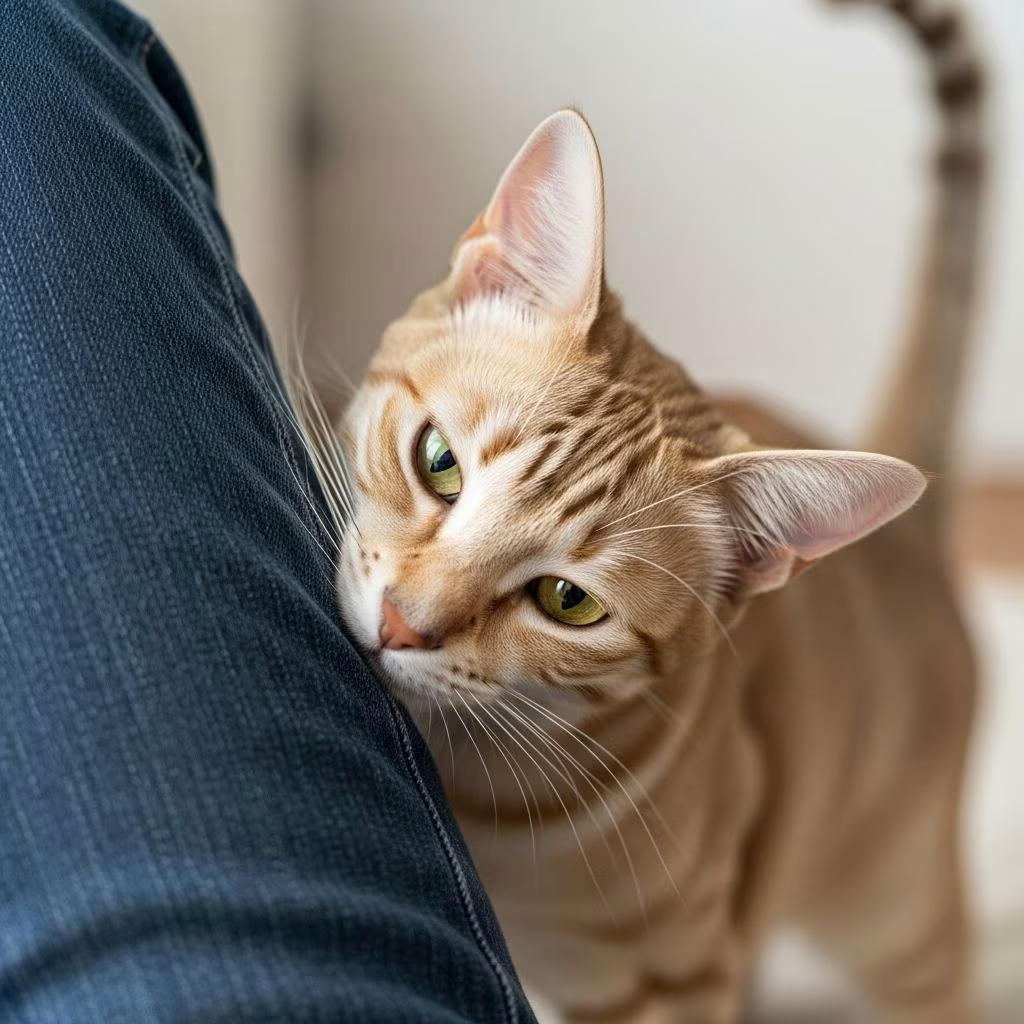
Cats rubbing against their owners is one of the most common and endearing behaviors in feline companionship. This action, often accompanied by purring and a happy tail flick, leaves many cat parents wondering about its true meaning. Is it pure love, a territorial claim, or something else entirely? In this comprehensive guide, we delve into the science and instincts behind why cats rub against you, covering everything from affectionate bunting to potential health signals. Understanding this behavior strengthens the bond between you and your cat while helping you spot when veterinary attention might be needed.
What Is Cat Rubbing Called?
When a cat presses its head, cheeks, or body against you, it’s known as **bunting** or **allorubbing**. Bunting specifically refers to head-butting with the face, while allorubbing involves the full body. These terms describe instinctual actions rooted in a cat’s wild ancestry, where scent exchange was crucial for survival in social groups.
Cats possess specialized **scent glands** in their cheeks, forehead, chin, temples, and tail base. These glands release pheromones—chemical signals unique to each cat—that are invisible to humans but speak volumes in the feline world. Rubbing transfers these pheromones onto you, effectively “painting” you with their scent profile.
Reason 1: Scent Marking and Claiming Territory
The primary biological reason cats rub against you is **scent marking**. In the wild, cats use this to delineate territory boundaries and identify allies. Domestic cats view their humans as part of their territory, so rubbing claims you as “theirs”.
Upon returning home, you carry foreign scents from the outside world—other animals, people, or environments. Your cat rubs vigorously to overwrite these with their own pheromones, restoring the familiar “group scent” or colony odor. This is especially evident in multi-cat households, where cats compete to remark shared spaces and people.
Key Scent Gland Locations:
- Cheeks and face: For close-contact bunting.
- Forehead and temples: Broad marking strokes.
- Base of tail: Often during body rubs or tail wrapping.
- Chin: Subtle rubbing on legs or furniture.
This behavior reassures the cat that their environment and social circle are safe and familiar.
Reason 2: Affection, Greetings, and Social Bonding
Rubbing is a cat’s way of saying, “I love you, welcome home!” Known as an **affectionate greeting**, it mimics how cats rub against trusted feline companions to reinforce bonds. Veterinarians like Jennifer Coates, DVM, note that head rubbing maintains positive connections within the “group,” treating you as family.
When your cat arches its back, rubs its head under your chin, or wraps its tail around your leg, it’s expressing trust and happiness. This is particularly common at reunions after you’ve been away, signaling relief and joy. Sandra Mitchell, DVM, describes it as the kitty equivalent of “Hello, I’m glad to see you—now feed me!”.
Social bonding through rubbing fosters security, especially in senior cats seeking comfort.
Reason 3: Communication of Needs and Attention-Seeking
Cats are master communicators, and rubbing often doubles as a request. If you respond with pets, play, or food, the behavior gets reinforced as a learned signal.
- Food Solicitation: Leg-rubbing at mealtime reminds you it’s dinner time.
- Attention or Play: A well-timed rub interrupts your tasks for scratches or interaction.
- Door Access: Rubbing near doors signals “Let me in/out!”
This practical use evolves from the cat’s observation that rubbing yields results, blending instinct with training.
Reason 4: Contextual Variations (Gender, Strays, and More)
Rubbing meaning can shift by context.
Unspayed Female Cats in Heat
**Why do female cats rub against you excessively?** During estrus, unspayed females rub more intensely on people, furniture, and objects, paired with loud meowing and rolling. This advertises fertility to potential mates. Spaying typically resolves this.
Stray and Random Cats
**Why do stray cats rub against you?** A street cat rubbing indicates they feel safe and are “interviewing” you as a friend. It’s information-gathering via scent, not always an invitation to pet. Approach cautiously to avoid startling them.
Tail Rubbing and Wrapping
Tail-base rubbing or wrapping around your leg is a “feline hug”—a warm, trusting gesture akin to a handshake.
Reason 5: When Rubbing Signals Health Issues
Normal rubbing is gentle and sporadic, but **excessive or aggressive rubbing** warrants concern.
| Behavior | Possible Issue | Signs to Watch |
|---|---|---|
| Head/Face Rubbing Excessively | Ear Infection or Allergies | Scratching ears, head shaking, redness. |
| Aggressive Body Rubbing | Fleas/Skin Irritation | Hair loss, itching, scabs. |
| Pressing Specific Spots | Nervous System or Hypersensitivity | Sudden onset, lethargy, balance issues. |
| Increased with Vocalizing | Heat or Pain | Loud yowling, restlessness. |
Consult a vet if rubbing is new, intense, or combined with other symptoms like lethargy or appetite loss. Early detection prevents complications.
Why Do Cats Rub Against Furniture and Objects?
**Why do cats rub against things when they see you or during petting?** This is pure scent marking. Furniture, door frames, and corners get marked to make the territory smell “homey” and owned. It’s comforting and reinforces boundaries, often intensifying around arrivals to refresh scents.
How to Respond to Your Cat’s Rubbing
Encourage healthy rubbing with these tips:
- Greet Back Gently: Offer a finger for cheek-rubbing to exchange scents reciprocally.
- Provide Enrichment: scratching posts and toys reduce stress-rubbing.
- Monitor Changes: Track frequency in a journal for vet discussions.
- Spay/Neuter: Prevents heat-related excess.
Avoid punishing rubbing—it’s natural. Instead, redirect if needed.
Frequently Asked Questions (FAQs)
What is it called when a cat rubs its head on you?
It’s called **bunting**, a sign of affection, trust, and scent marking.
Why do cats rub their tails against you?
Tail rubbing is a friendly “hug” or greeting, using tail-base glands for pheromones.
Is excessive rubbing a sign of a problem?
Yes, if new or aggressive, it may indicate allergies, infections, fleas, or heat. See a vet.
Why do stray cats rub against strangers?
They’re greeting socially and gathering scent info, showing they feel safe.
Should I worry if my cat rubs on furniture?
No, it’s normal territory marking for comfort and ownership.
References
- Why Do Cats Rub Against You? 5 Hidden Reasons — LadyNPet. 2023. https://ladynpet.com/us/blog/why-do-cats-rub-against-you/
- Why Does My Cat Rub Against Me? — The Ranch Pet Resort. 2023. https://www.theranchpetresort.com/blog/why-does-my-cat-rub-against-me/
- Why Do Cats Rub Up Against You? Is This Normal? — Chewy. 2023. https://www.chewy.com/education/cat/training-and-behavior/why-do-cats-rub-against-you
- Why does my cat rub against me? — Cats Protection. 2023. https://www.cats.org.uk/cats-blog/why-does-my-cat-rub-against-me
- Why Does My Cat Rub Against…Everything? — Catonsville Cat Clinic. 2023. https://www.catonsvillecatclinic.com/holmes-corner/why-does-my-cat-rub-againsteverything/



