

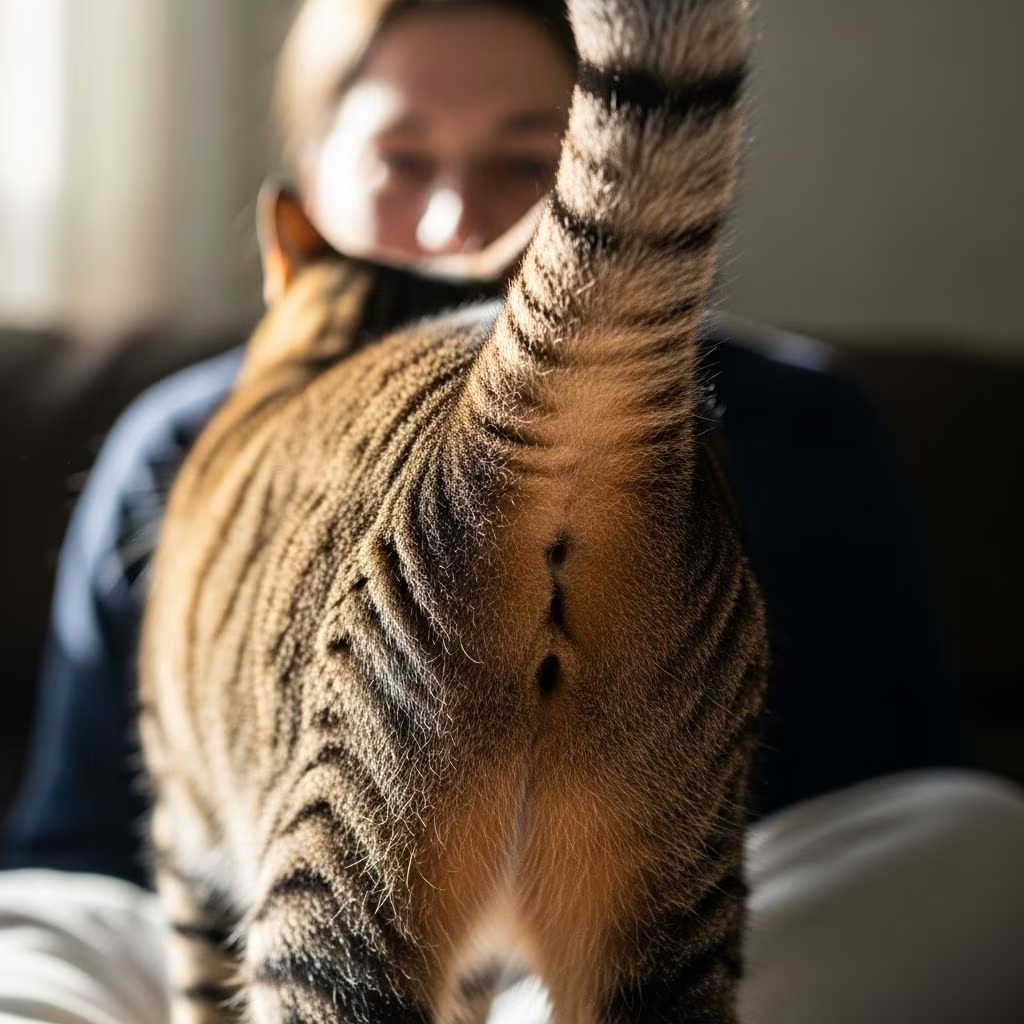
Cats frequently present their rear ends to their owners, a behavior that can surprise or amuse many pet parents. This action, often accompanied by a tail raise, is a form of scent marking and greeting deeply rooted in feline communication. Far from rudeness, it’s a sign of trust and affection, as cats expose their vulnerable anal scent glands to familiar humans.
It’s All About Scent Glands
Cats possess specialized scent glands around their anus and at the base of their tail, which produce pheromones carrying personal information like identity and health status. When a cat raises its tail and presents its butt, these glands are displayed, allowing the cat to ‘introduce’ itself or mark you as part of its social group.
Pheromones from these glands serve as chemical messages. Cats use them to communicate territory ownership, sexual availability, or group affiliation. Indoor cats, especially, mark familiar people and objects to reinforce bonds and reduce anxiety.
- Anal glands: Release pheromones signaling individual identity.
- Tail base glands: Activated during tail quivering or rubbing.
- Function: Deposit scent on you for ‘communal scenting,’ making you smell like family.
A Greeting and Sign of Trust
This butt presentation mimics how cats greet each other—by sniffing rear ends to gather information. By offering it to you, your cat shows ultimate trust, as the area is vulnerable to attack in the wild. It’s equivalent to a handshake or hug in human terms.
Domestic cats treat trusted humans as fellow cats. Bunting (cheek rubbing) uses facial glands for affection, while butt flashing uses rear glands for deeper identification. This behavior strengthens social bonds in multi-cat homes or with owners.
Territorial Marking Instinct
Wild cats mark territories along paths using scent glands. Domestic cats continue this, spraying urine or rubbing to claim spaces. Butt presentation to owners claims you as territory, especially if stressed by changes like new pets or moves.
Unneutered males mark frequently to advertise availability, but all cats do it for comfort. Frustration from empty bowls or closed doors can trigger marking near the source.
| Marking Type | Description | Purpose |
|---|---|---|
| Rubbing/Bunting | Cheeks or head against objects/people | Affection, group scenting |
| Scratching | Paws on furniture | Visual + scent mark |
| Urine Spraying | Vertical surfaces, tail quivered | Territorial claim |
| Butt Presentation | Rear to face, tail up | Trust greeting + scent exchange |
When It’s a Problem: Excessive Marking
Occasional butt flashes are normal, but frequent spraying indoors signals stress, medical issues, or unmet needs. Triggers include new pets, rearrangements, or health problems like urinary infections.
Consult a vet if marking increases suddenly. Neutering reduces spraying by 90% in males. Environmental enrichment—scratching posts, pheromone diffusers—helps.
How to Respond to Your Cat’s Butt Salute
Don’t punish; it increases stress. Instead:
- Acknowledge gently: Pet the head or back, avoiding direct butt contact to prevent overstimulation.
- Redirect: Offer toys or play after greeting.
- Use synthetics: Feliway diffusers mimic calming pheromones.
- Clean properly: Enzymatic cleaners remove scent triggers.
Responding positively reinforces trust. Some owners mimic by rubbing a cloth on their cat and then themselves for scent exchange.
Other Feline Scent-Marking Behaviors
Butt presentation is one of many:
- Cheek Bunting: ‘You’re mine’—friendly marking.
- Flank Rubbing: Sides against legs for group scent.
- Paw Scratching: Glands in pads leave stamps.
- Urine Squatting vs. Spraying: Squatting distinguishes normal elimination; spraying is territorial.
Cats distinguish these, reading social cues from scents.
Science Behind Cat Pheromones
Pheromones are species-specific chemicals influencing behavior. Feline facial pheromone (F3) calms; anal pheromones identify. Studies show cats prefer marked objects, reducing anxiety.
In multi-cat homes, over-marking occurs during disputes. Anxious cats spray over rivals’ scents.
Frequently Asked Questions (FAQs)
Is it normal for my cat to show me their butt?
Yes, it’s a normal greeting showing trust and affection through scent glands.
Why does my cat do this more around guests?
To claim territory and you amid perceived threats.
Should I pet my cat’s butt when they present it?
Avoid direct contact; pet head instead to respect boundaries.
Does neutering stop this behavior?
It reduces spraying but not friendly presentations.
What if my cat sprays urine instead?
Check for stress or health issues; vet visit recommended.
Can I train my cat to stop?
Address causes with enrichment; punishment worsens it.
Do all cats do this?
Most do, especially socialized ones; feral cats reserve for trusted few.
This behavior underscores cats’ sophisticated olfactory world. Understanding it fosters better bonds.
References
- Cat Behavior Problems – Marking and Spraying Behavior — VCA Animal Hospitals. 2023-01-15. https://vcahospitals.com/know-your-pet/cat-behavior-problems-marking-and-spraying-behavior
- Scent Marking and What It Means — Catwatch Newsletter. 2022-05-20. https://www.catwatchnewsletter.com/behavior/scent-marking-and-what-it-means/
- Feline Scent-Marking: Cat Communication — Tufts University Cummings School of Veterinary Medicine. 2024-03-10. https://www.tvmf.org/articles/feline-scent-marking-cat-communication/
- Understanding cat scent marking and spraying — Woodgreen Pets Charity. 2023-11-08. https://woodgreen.org.uk/pet-advice/cat/how-do-cats-mark-their-territory/
- Understanding Your Cat – Rubbing/Scent Marking — Brian’s Art for Animals (YouTube). 2015-08-17. https://www.youtube.com/watch?v=KZ4JJ9P1Rbw



