

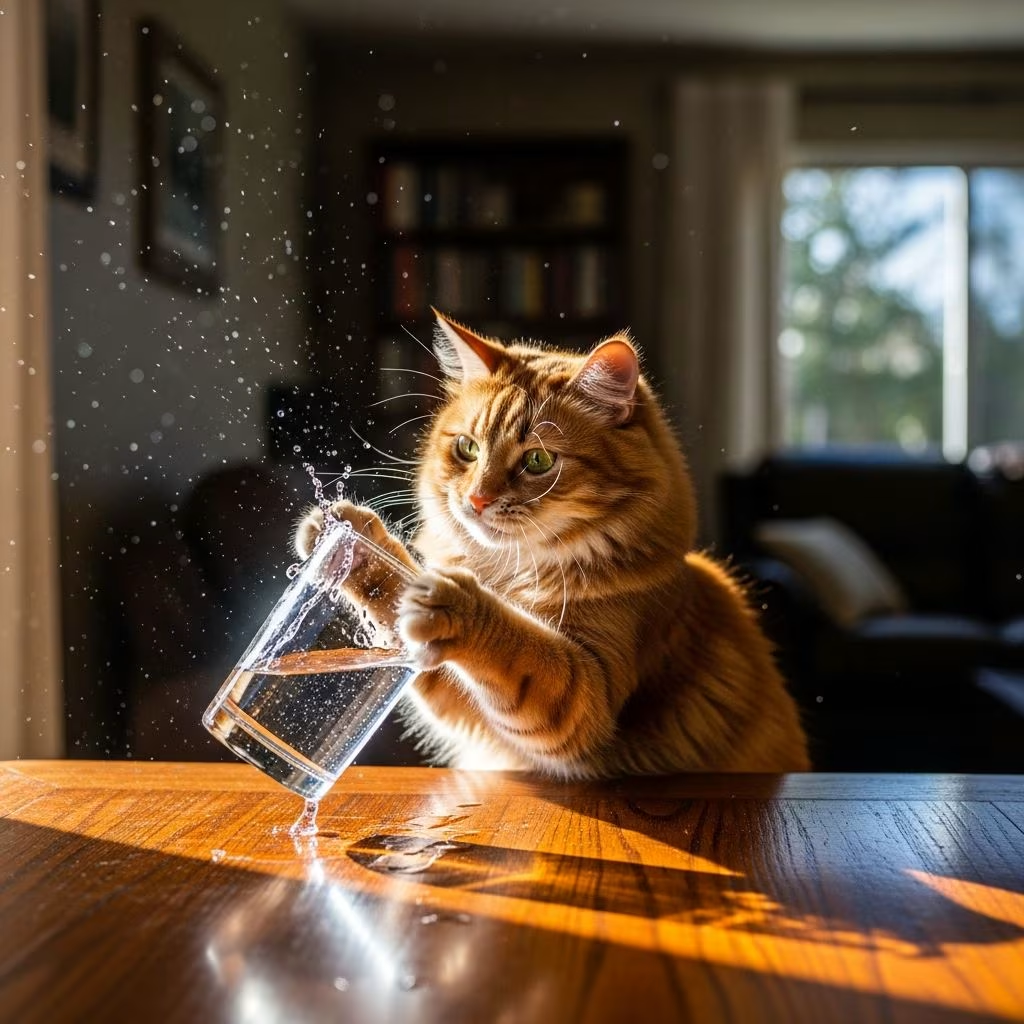
Cats have a notorious reputation for knocking objects off tables, shelves, and counters, leaving owners puzzled and frustrated. This seemingly mischievous behavior is deeply rooted in feline instincts, curiosity, and environmental interactions rather than spite or malice. Understanding the motivations behind why cats push stuff over can help you address it effectively, preventing damage while enriching your cat’s life.
From predatory drives to boredom relief, multiple factors contribute to this habit. Domestic cats retain wild ancestors’ behaviors, using paws to explore and ‘hunt’ inanimate objects that mimic prey. High-energy breeds like Bengals or Siamese may exhibit it more frequently due to heightened curiosity and prey drives. Recent behavioral studies confirm it’s not random but purposeful, often triggered by movement, sound, or human reactions.
The Hunting Instinct: Testing for Prey
At the core of this behavior lies the cat’s innate predatory drive. Cats are obligate carnivores evolved from wild hunters who used precise paw swats to test if potential prey was alive, fleeing, or vulnerable. When your cat delicately paws at a pen, glass, or remote on the edge of a table, they’re performing the ‘Is it alive?’ test.
If the object rolls, slides, or makes noise upon contact, it activates their chase response, simulating a hunt. Pushing it over the edge replicates the finale of capturing escaping prey, providing immense satisfaction. This is why cats often watch intently as items fall—observing the motion reinforces the predatory thrill. Wild cats bat small animals to assess and tire them; household objects unwittingly stand in.
Breeds with strong hunting heritage, such as Bengals, Abyssinian, or Bengal mixes, display this more intensely. Even lazy loungers on high perches engage because elevated surfaces mimic natural hunting vantage points. Sensory feedback from different textures—hard vs. soft, light vs. heavy—further engages their highly sensitive whiskers and paw pads, which contain over 100 mechanoreceptors each for detecting vibrations.
Attention-Seeking: You’ve Trained Them Well
Cats are masters of cause-and-effect learning. If rushing to clean up a fallen item, scolding, or even praising results in interaction, your cat has discovered a reliable attention button. Positive or negative responses both fulfill social needs, especially in highly social breeds like Sphynx or Abyssinians.
Many owners unknowingly reinforce it: a crash prompts immediate engagement, teaching ‘Gravity = Attention.’ Cats don’t distinguish scolding from play; to them, your reaction means success. This is particularly common when owners are busy—knocking over a coffee mug becomes a dinner bell for pets forgotten during work hours.
- Common triggers: Empty food bowls, ignored play requests, or bedtime routines where cats demand companionship.
- Solution preview: Ignore the behavior entirely and redirect with scheduled interactions.
Curiosity and Gravity Experiments
Cats are natural physicists, fascinated by cause and effect. Pushing objects tests how they fall, roll, or shatter, providing data on their world. Each item yields unique sensory input: a plastic bottle bounces differently from a ceramic mug.
This exploratory pawing helps kittens learn boundaries and adults map changes in their environment. New objects, like holiday decorations or rearranged furniture, invite investigation. It’s sophisticated environmental analysis—hard items feel solid, light ones skitter, sounds vary by material. Elevated edges amplify appeal, as falling motion captivates their motion-sensitive eyes.
Boredom exacerbates it; understimulated cats turn homes into labs. Indoor-only cats lack outdoor hunts, so household items fill the void.
Territorial Marking and Space Claims
Cats are territorial by nature, using scent glands in paw pads to release pheromones. Rubbing and pushing objects spreads their signature, claiming surfaces as ‘mine.’ This is especially evident with intruders like new furniture or visitors’ bags.
Knocking items clears space for lounging, rearranging to feline preferences. It’s quality control: unapproved additions get vetoed. Multi-cat homes see increased incidents during resource disputes.
Boredom, Stress, and Sudden Changes
A spike in knocking often signals underlying issues. Boredom from monotonous routines prompts mischief for stimulation. Stress from moves, new pets, or absences manifests as displaced energy.
Anxiety elevates cortisol, heightening reactivity; familiar objects become outlets. Watch for clusters: more knocking + hiding + appetite loss indicates vet consultation.
How to Stop Cats from Pushing Things Over
Prevention beats reaction. Secure valuables with museum putty or quake wax—clear, reusable adhesive holds items firm without residue. Place tempting objects out of reach or in closed cabinets.
Enrich the environment:
- Interactive toys: feather wands, laser pointers, puzzle feeders mimic hunts.
- Vertical space: cat trees, shelves, window perches burn energy.
- Daily play: 15-30 minutes twice daily exhausts prey drive.
- Rotation: Swap toys weekly to maintain novelty.
Ignore crashes; no reaction extinguishes attention rewards. Reward calm behavior with treats/praise. For stress, pheromone diffusers like Feliway calm nerves.
| Problem | Solution | Why It Works |
|---|---|---|
| Prey Drive | Hunting toys | Satisfies instinct safely |
| Attention | Ignore + scheduled play | Breaks reinforcement cycle |
| Boredom | Enrichment rotation | Provides mental stimulation |
| Territory | Scent familiarization | Rubs on owner items first |
Breeds Prone to Knocking Things Over
High-energy, curious breeds lead:
- Siamese: Vocal, exploratory, crave stimulation.
- Bengal: Wild ancestry fuels intense prey drive.
- Abyssinian: Active, intelligent mischief-makers.
- Sphynx: Social, demand interaction.
Mixed breeds share traits. Kittens outgrow some with training.
Frequently Asked Questions (FAQs)
Q: Is my cat knocking things over to spite me?
A: No, cats don’t hold grudges. It’s instinct, boredom, or learned attention-seeking, not revenge.
Q: Why does my cat only do it at night?
A: Peak activity aligns with crepuscular (dawn/dusk) hunting times; you’re asleep, so they entertain themselves.
Q: What if it’s sudden and excessive?
A: Check for stress, health issues (e.g., hyperthyroidism), or changes. Consult a vet if paired with other symptoms.
Q: Will my kitten grow out of it?
A: Often yes, with training and maturity, but instincts persist—proactive management helps.
Q: Best deterrents for counters?
A: Double-sided tape, aluminum foil (texture aversion), or motion-activated air puffers.
Q: How much play does my cat need?
A: 20-30 minutes twice daily, plus foraging toys for mental work.
References
- Why Do Cats Knock Things Over? How to Stop It? — Lady N Pet. 2024. https://ladynpet.com/us/blog/why-do-cats-knock-things-over/
- Why Cats Knock Things Off Tables: The Psychology Behind Feline Mischief — Asheville Cat Weirdos. 2024. https://ashevillecatweirdos.org/why-cats-knock-things-off-tables-the-psychology-behind-feline-mischief/
- Why Do Cats Knock Things Over? — Purina US. 2024. https://www.purina.com/articles/cat/behavior/understanding-cats/why-do-cats-knock-things-over
- Why do cats love to knock stuff over? — ElleVet Sciences. 2024. https://www.ellevetsciences.com/pet-care/why-do-cats-love-to-knock-stuff-over/
- Why Does Your Cat Push Things off Edges — Feline Fanatics (YouTube). 2025-05-18. https://www.youtube.com/watch?v=Y1BG2Z6uYGE



