

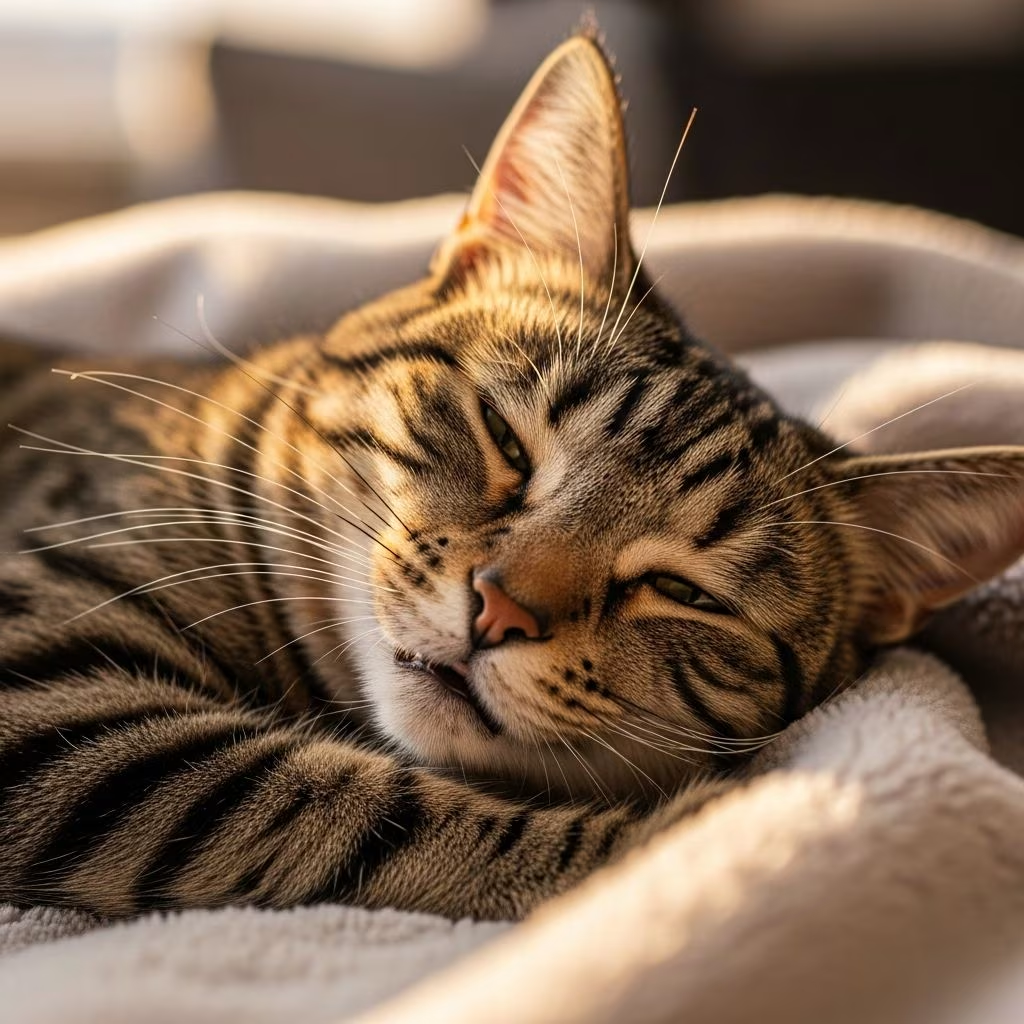
Why Do Cats Purr? Understanding Feline Behavior
One of the most delightful sounds a cat owner can experience is the gentle rumbling purr of their beloved feline companion. This soothing vocalization has captivated humans for centuries, yet the true mechanisms and motivations behind purring remained largely mysterious until recent scientific breakthroughs. Today, researchers have made significant strides in understanding both how cats produce this distinctive sound and why they engage in this behavior.
The purr has long been associated with contentment and happiness, often interpreted by cat owners as a sign that their pet is pleased and relaxed. However, the reality of cat purring is far more complex and fascinating than this simple explanation suggests. Modern scientific research reveals that cats purr for multiple reasons—some indicating comfort and affection, while others suggest self-soothing during stress or even attempts at healing from injury.
How Do Cats Purr? The Biological Mechanism
For many years, the exact biological process behind cat purring remained one of veterinary science’s greatest mysteries. Scientists once theorized that purring resulted from blood surging through the inferior vena cava, a large vein connected to the heart. However, this turbulent blood theory has been largely dismissed as research has progressed.
The Role of the Larynx
Modern research now conclusively points to the larynx, or voicebox, as the primary source of purring. When cats purr, they constrict the part of their larynx that touches their vocal cords, creating vibrations with each inhale and exhale. These vibrations are what produce the rumbling sound we recognize as a purr. Essentially, felines can control this specialized part of their anatomy to generate these distinctive low-frequency vocalizations.
The Active Muscle Contraction Hypothesis Challenged
For decades, scientists believed the active muscle contraction hypothesis—the theory that cats actively contract and relax their laryngeal muscles approximately 30 times per second to produce purring. This explanation was based on measurements of electrical activity in the laryngeal muscles of purring cats and became the widely accepted explanation in veterinary science.
However, groundbreaking research published in Current Biology has challenged this long-held assumption. Scientists conducted a remarkable experiment using larynxes from eight humanely euthanized domestic cats. Researchers isolated these larynxes and pumped warm, humidified air through them while pinching the vocal cords together. Remarkably, all eight larynxes produced purring sounds without any active muscle contractions or input from the brain.
The Passive Oscillation Model
This stunning discovery suggests that purring operates as a passive phenomenon, much like meowing and hissing. Once a cat’s brain provides the initial signal to purr, the sound produces itself automatically through a process called flow-induced self-sustained oscillation. This mechanism doesn’t require continuous neural control—the vocal cords simply vibrate on their own once activated.
The key to this passive process lies in unusual fatty tissue masses, or “pads,” embedded within cats’ vocal cords. These anatomical features appear to increase the density of the vocal cords, allowing them to vibrate more slowly and produce the distinctive low-frequency sounds characteristic of purring. This is particularly remarkable given that cats are small animals, typically weighing around 4.5 kilograms, yet can generate frequencies usually associated with much larger animals.
Frequency and Sound Characteristics
Cats typically produce purring at frequencies between 20 and 30 hertz (Hz), though some research suggests frequencies can range as high as 150Hz in certain contexts. This low-frequency vibration is produced with every breath the cat takes, creating the continuous rumbling sound familiar to most cat owners. The process operates similarly to “vocal fry” in human speech—a droning vibration sometimes added to the ends of words.
Why Do Cats Purr? Multiple Motivations and Meanings
Understanding how cats purr is only half the story. The reasons behind this behavior are equally fascinating and far more complex than simple contentment. Cats purr for several distinct purposes, each serving different biological or psychological functions.
Contentment and Bonding
The most familiar reason cats purr is to express contentment and pleasure. Many cat owners recognize purring as a sign that their feline friend is happy and relaxed, particularly during petting sessions or when the cat feels safe and secure. Mother cats purr to their suckling kittens, and the young felines learn to purr in return, establishing an important form of emotional bonding from the earliest stages of life.
Purring in these contexts serves as a communication mechanism between cats and their caregivers, strengthening the human-feline bond. Some cats become so euphoric while purring that they drool and knead their families’ laps, demonstrating the deep contentment associated with this behavior.
Self-Soothing During Stress and Anxiety
Contrary to popular belief, cats don’t exclusively purr when they’re happy. Cats also purr when experiencing stress, anxiety, or fear. In veterinary clinics or boarding situations, cats may purr continuously as a self-soothing mechanism, helping them manage the emotional distress of an unfamiliar environment. This purring appears to help calm anxious cats and provide a sense of security during challenging circumstances.
The ability to self-soothe through purring may be an evolutionary advantage, allowing cats to manage stressful situations more effectively. Research suggests that cats might purr in an attempt to self-soothe, potentially helping them feel calmer and cope with discomfort or fear.
Communication and Manipulation
Cats have evolved sophisticated ways to use purring as a communication tool, including what researchers call “solicited purrs.” These specialized purrs contain unusual high-frequency elements that resemble human baby cries. When hungry, cats may incorporate these elements into their natural purrs, effectively tapping into their owners’ nurturing instincts to request food or attention.
Submissive cats may also purr to their dominant counterparts to reduce the likelihood of aggressive confrontation. In this context, purring serves as a communication signal that conveys non-threatening intent and submission, helping maintain social hierarchies and prevent conflict within multi-cat households.
Pain Relief and Healing
One of the most intriguing discoveries about cat purring is its potential role in healing. Cats frequently purr when injured or in pain—a behavior that initially seems counterintuitive. However, research suggests that purring may serve as a natural healing mechanism.
The vibrations produced by purring, ranging from 20Hz to 150Hz, may promote bone growth and facilitate soft tissue repair. Studies published in the New Zealand Veterinary Journal indicated that purring vibrations could accelerate the healing of broken bones, strained tendons and muscles, and facilitate wound repair. These same vibrations may also reduce pain and swelling, providing cats with a built-in pain management system.
Research examining low-intensity vibrations in healing mice wounds showed promising results, with scientists noting that vibrations promoted the growth of crucial granulation tissue—the connective tissue and microscopic blood vessels necessary for proper wound healing. Although the exact mechanism behind how vibrations assist healing remains unclear, the evidence suggests a genuine therapeutic benefit.
The Neural Control of Purring
While recent research has clarified the mechanical process of purring, the neural control mechanisms remain partially mysterious. Studies have identified a unique “neural oscillator” in the cat’s brain that signals the initiation of purring. This specialized brain region appears to trigger the biological process, but precisely what activates this neural oscillator—and whether multiple triggers exist—remains an open question.
The intrinsic laryngeal muscles, controlled by this neural oscillator, are responsible for opening and closing the glottis (the space between the vocal chords). This muscular action directly results in the separation of vocal chords that produces the characteristic purr sound. Notably, cats with laryngeal paralysis cannot purr, confirming the crucial role of these muscles and neural pathways in the process.
Purring Development in Kittens
Kittens begin purring at a very young age, learning this vocalization from their mothers. The mother cat purrs to her nursing offspring, and the kittens instinctively learn to purr in response. This early vocalization serves as an important form of communication between mother and kitten, allowing kittens to signal their specific needs and desires to their mother.
As kittens grow into adulthood, purring continues to serve these multiple functions throughout their lives. The behavior becomes ingrained as an important communication tool and self-regulation mechanism, supporting the cat’s emotional and physical wellbeing.
What Purring Reveals About Your Cat
| Purring Context | What It Likely Means | Additional Indicators |
|---|---|---|
| Relaxed body, slow blinks | Contentment and affection | Kneading paws, relaxed ears |
| Tense posture, dilated pupils | Anxiety or stress management | Flattened ears, tucked tail |
| Injured or limping | Self-soothing and potential healing | Tender areas, reluctance to move |
| Food-related context | Communication and manipulation | High-frequency elements in purr |
| Nursing behavior in mothers | Bonding and comfort communication | Kittens purring in response |
Understanding Individual Differences in Purring
Not all cats purr with equal enthusiasm or frequency. Some cats are prolific purrers, rumbling contentedly at the slightest touch, while others purr rarely or almost never. These individual differences likely reflect both genetic predisposition and early socialization experiences. Cats raised with positive human interaction often purr more readily, while those with limited early exposure to humans may purr less frequently or only in specific circumstances.
The volume and intensity of purring also varies among individual cats. Some produce barely audible purrs, while others generate surprisingly loud rumbles that can be heard from several feet away. These variations don’t necessarily indicate different emotional states—they may simply reflect anatomical differences in larynx size, vocal cord structure, or the density of the fatty pads within the vocal cords.
Frequently Asked Questions About Cat Purring
Q: Is a purring cat always a happy cat?
A: No. While contentment is a common reason for purring, cats also purr when stressed, anxious, injured, or in pain. Purring serves multiple functions beyond expressing happiness, including self-soothing and communication.
Q: Can all cats purr?
A: Most domestic cats can purr, but some individual cats may purr rarely or not at all due to genetics or early experiences. Additionally, cats with laryngeal paralysis or certain medical conditions affecting the larynx cannot purr.
Q: Does purring actually help cats heal?
A: Research suggests that the vibrations produced by purring may promote bone growth, facilitate wound healing, and reduce pain and swelling. However, more research is needed to fully understand the mechanisms behind this potential healing effect.
Q: Why do cats purr when they’re hurt?
A: Cats may purr when injured for multiple reasons: to self-soothe and manage pain, to potentially activate their body’s natural healing mechanisms through vibration, and to communicate their distress to caregivers.
Q: How loud should a cat’s purr be?
A: Purr volume varies significantly among individual cats. Some produce barely audible purrs while others create loud rumbles. This variation reflects anatomical differences and doesn’t necessarily indicate different emotional states.
Q: What frequency do cats purr at?
A: Cats typically purr at frequencies between 20 and 30 hertz, though some research suggests frequencies can reach up to 150 hertz in certain contexts. These low frequencies are unusual for such small animals.
The Future of Purring Research
While recent discoveries have significantly advanced our understanding of cat purring, mysteries remain. Researchers continue investigating the exact mechanisms by which purring vibrations promote healing, the specific triggers that activate the neural oscillator controlling purring, and whether additional mechanisms beyond those currently understood might be involved.
Future research may reveal more about individual variation in purring ability and the factors that influence whether cats purr frequently or rarely. Understanding these details more fully could help veterinarians better assess feline wellbeing and potentially develop therapeutic applications of purring vibrations for other species, including humans.
References
- How do cats purr? New finding challenges long-held assumptions — Science Magazine. 2023-12-01. https://www.science.org/content/article/how-do-cats-purr-new-finding-challenges-long-held-assumptions
- Why and how do cats purr? — The Library of Congress. https://www.loc.gov/everyday-mysteries/zoology/item/why-and-how-do-cats-purr/
- Why Do Cats Purr — The Science Behind A Normal Feline Behavior — The Veterinary Medical Foundation. https://www.tvmf.org/articles/why-do-cats-purr/
- Here’s how cats use purring to manipulate humans — BBC Science Focus Magazine. https://www.sciencefocus.com/nature/why-do-cats-purr
- Why Cats Purr — The Science and Meaning Behind Purring — Pet Assure. https://www.petassure.com/new-newsletters/why-cats-purr/
- Cat purring vibrations and bone healing — New Zealand Veterinary Journal. https://www.nzvj.org.nz/



