

Why Do Cats Purr? Understanding Your Feline Friend’s Motor-Like Sound
One of the most distinctive and comforting sounds a cat can make is their signature purr. Whether you’re sitting on the couch with your feline companion curled up in your lap or petting your kitty behind the ears, that rhythmic rumbling is unmistakable. But have you ever wondered what causes this mysterious sound? Why do cats purr, and what are they trying to tell us? The answers to these questions are more fascinating and complex than you might think. Understanding cat purring not only helps you better appreciate your pet but also provides insight into their emotional and physical well-being.
How Do Cats Produce the Purring Sound?
The mechanics of cat purring have puzzled scientists for decades, leading to numerous theories and research studies. The traditional belief was that purring originated from blood flow disruptions in major blood vessels, particularly when a cat arched its back. This theory, known as the “turbulent blood theory,” suggested that blood surging through the inferior vena cava created the rumbling sound we associate with content cats. However, modern scientific research has debunked this explanation entirely.
Today, scientists have definitively determined that the purring sound originates from a cat’s larynx, or voice box. When a cat decides to purr, they constrict the part of their larynx that touches their vocal cords, causing vibrations with every breath they take. During this process, the opening of the airflow narrows, creating turbulence that produces the distinctive purring sound we hear. A purr is actually a voluntary behavior—your cat is consciously choosing to make this noise, even though their mouth remains closed.
The Role of Vocal Cord Pads
Recent groundbreaking research has revealed an anatomical feature that makes cat purring possible: special “pads” of fibrous tissue embedded within feline vocal cords. These unusual masses increase the density of the vocal cords, enabling them to vibrate more slowly than would be expected in such a small animal. This is particularly significant because domestic cats typically weigh only about 4.5 kilograms, yet they can produce low-frequency vocalizations between 20 and 30 hertz—frequencies usually only observed in much larger animals like elephants that have considerably longer vocal cords.
The mechanism works similarly to “vocal fry,” a phenomenon sometimes heard in human speech, where the voice produces a droning vibrato. Without these specialized pads, cats simply wouldn’t be able to generate the deep, resonant purrs we know and love.
Active Versus Passive Purring Mechanisms
For decades, scientists operated under what was called the “active muscle contraction hypothesis.” This theory, proposed in the 1970s, suggested that cats actively contract and relax their laryngeal muscles approximately 30 times per second to produce purring. This explanation was based on measurements of electrical activity in the laryngeal muscles of purring cats and became the widely accepted explanation for decades.
However, recent scientific evidence challenges this long-held assumption. Researchers conducted experiments using larynges removed from domestic cats, pumping warm, humidified air through the vocal cords without any muscle contractions or brain input. Remarkably, all eight larynges tested produced self-sustaining oscillations at frequencies between 25 and 30 hertz, demonstrating that purring doesn’t necessarily require active muscle contractions at all. Instead, purring appears to be a passive phenomenon similar to meowing and hissing, where the vibrations are self-sustaining once initiated by the brain’s signal to purr.
Why Do Cats Purr? Understanding the Reasons
While many people assume that purring exclusively signals contentment, the reality is far more nuanced. Cats purr for various reasons, and understanding these different contexts helps you better interpret what your feline friend is communicating. Research has identified several distinct reasons why cats engage in this behavior.
Contentment and Relaxation
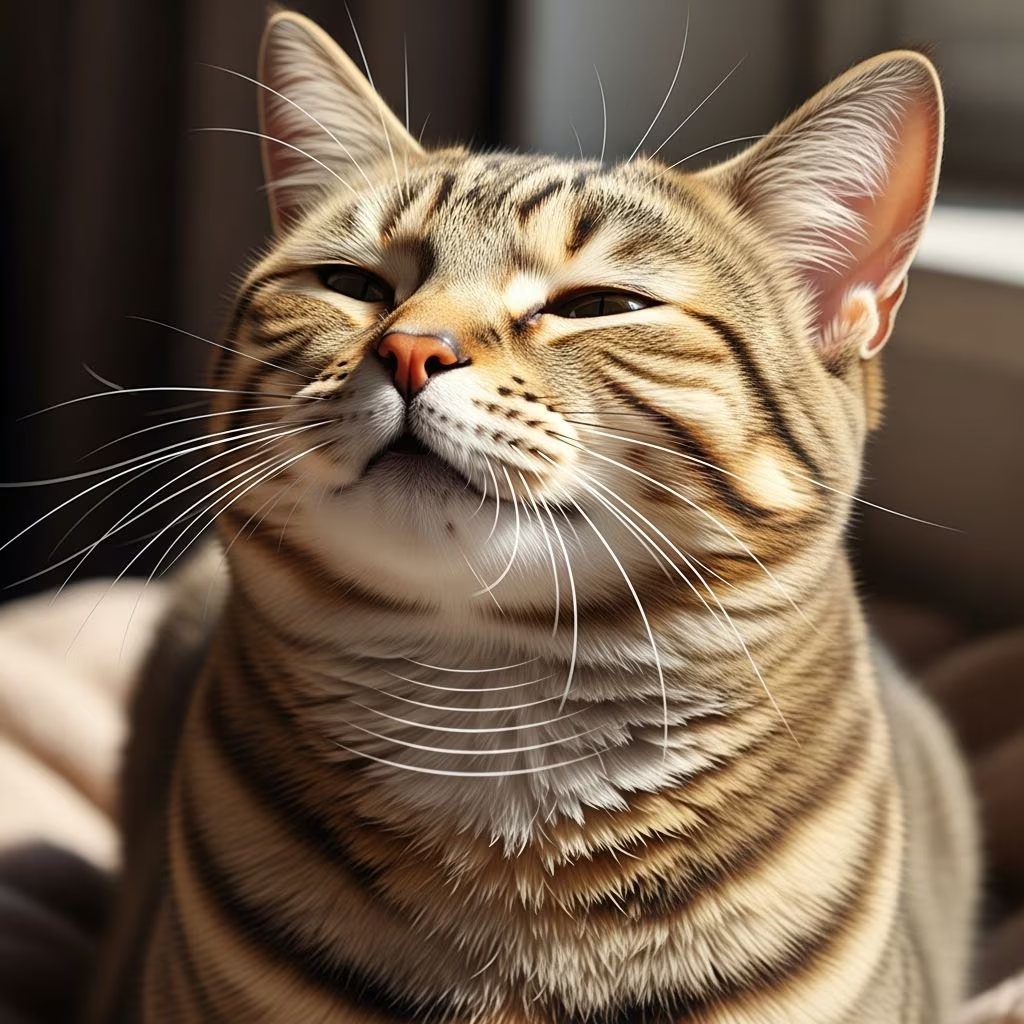
The most commonly recognized reason cats purr is to express contentment and happiness. When your cat is genuinely content, their purring is typically accompanied by relaxed body language and a calm facial expression. Cats frequently purr in situations associated with positive experiences, including:
- Sitting in their owner’s lap
- Receiving affection or gentle petting
- Resting in a warm, familiar environment
- Eating or immediately after finishing a meal
- During periods of quiet relaxation
In these contexts, purring indicates that your cat feels safe, secure, and emotionally satisfied. The consistent, rhythmic sound is essentially your cat’s way of saying they’re happy to be in your company.
Communication and Solicitation
Research from the University of Sussex has revealed that cats strategically modify their purrs to manipulate human behavior and get what they want. Dr. Lauren Finka, a feline welfare scientist at International Cat Care, explains that cats can subtly vary their purrs depending on their specific needs. The study found marked differences in the acoustic quality of purrs when cats attempted to solicit food from their owners compared to relaxed purring or purring during petting sessions.
Perhaps most intriguingly, these “food soliciting” purrs contain high-frequency voiced components similar to those produced by human infants when crying. These hunger-induced purrs are perceived as more urgent and less pleasant-sounding by humans compared to contentment purrs. By incorporating these baby-cry-like frequencies into their purrs, cats effectively tap into our nurturing instincts, compelling us to pay attention and provide meals. This is a remarkable example of how cats have evolved to communicate with humans in ways that trigger our protective responses.
Self-Soothing and Pain Management
One of the most surprising discoveries about cat purring is that cats may also purr when experiencing stress, discomfort, or pain—situations where we wouldn’t typically expect contentment. Experts theorize that in certain contexts, cats purr as a self-soothing mechanism, similar to how humans might take deep breaths or listen to calming music when anxious.
This self-soothing function may help cats feel calmer and potentially relieve pain. Cats have been observed purring when they’re likely experiencing stress or physical discomfort, suggesting that purring serves a therapeutic function for felines. This explains why you might hear your injured or anxious cat purring—they’re actively trying to comfort themselves and manage their emotional or physical distress.
The Healing Power of Purring
Beyond just communication and emotional regulation, there’s compelling evidence that cat purring actually promotes healing. Research published in the New Zealand Veterinary Journal suggests that the vibrations produced by cat purrs, which typically range from 20 hertz up to 150 hertz, could promote bone growth and facilitate the healing of soft tissue.
While these results haven’t yet been replicated specifically in cats, subsequent studies examining the effects of low-intensity vibrations on mice have shown promising results. Scientists noted that these vibrations promoted the growth of crucial granulation tissue—the connective tissue and microscopic blood vessels that form around injured areas during the healing process. Although the exact biological mechanism behind how these vibrations assist healing remains unclear, the evidence strongly suggests that your cat’s purr may be more than just a pleasant sound—it could be an active healing tool.
Additionally, research has demonstrated that the vibrations produced by a cat’s purr can decrease blood pressure, alleviate stress, and even provide therapeutic benefits to both cats and their human companions. These findings underscore the remarkable symbiotic relationship between cats and humans, where purring benefits both species.
Different Types of Purrs and What They Mean
Not all purrs are created equal. By paying close attention to the characteristics of your cat’s purring, you can gain deeper insight into their emotional and physical state.
| Purr Type | Characteristics | What It Means |
|---|---|---|
| Contentment Purr | Steady, rhythmic, low-frequency rumbling | Your cat feels happy, relaxed, and content |
| Food Solicitation Purr | Higher-pitched, more urgent-sounding, includes high-frequency elements | Your cat is hungry and wants to be fed |
| Stress or Pain Purr | May be more intense or occur in unusual situations | Your cat is attempting to self-soothe or manage discomfort |
| Healing Purr | Therapeutic frequency vibrations (20-150 Hz) | Your cat is promoting their own physical healing |
How Purring Benefits You and Your Cat
The relationship between cat and owner is strengthened through purring. When your cat purrs while sitting in your lap, they’re not only expressing their own contentment—the vibrations and sound are also providing stress relief for you. Studies have shown that listening to cats purr can lower human blood pressure and reduce anxiety, creating a mutually beneficial interaction.
For your cat, purring serves multiple functions simultaneously: it’s a form of communication, a stress management tool, a self-healing mechanism, and a way to strengthen social bonds with their human family members. This multifunctional nature of purring demonstrates the remarkable sophistication of feline behavior and communication.
Frequently Asked Questions About Cat Purring
Q: Do all cats purr?
A: While the vast majority of domestic cats purr, some individual cats may purr very quietly or rarely. Certain health conditions or individual personality differences can affect purring frequency. If your cat rarely or never purrs, it doesn’t necessarily indicate a problem, though consulting with a veterinarian is advisable if you notice significant changes in your cat’s vocalization patterns.
Q: Can you hear a cat purr from far away?
A: The volume of a cat’s purr varies by individual. Some cats have particularly loud, audible purrs that can be heard from several feet away, while other cats purr very softly. The loudness depends on factors including the cat’s size, laryngeal structure, and individual vocal characteristics.
Q: Why does my cat purr while eating?
A: Cats often purr while eating or immediately after finishing a meal as an expression of contentment and satisfaction. This is normal behavior indicating that your cat is enjoying their food and feels happy in their feeding environment.
Q: Can purring indicate that my cat is sick or injured?
A: Yes, cats may purr when experiencing pain or stress as a self-soothing mechanism. If your cat is purring in unusual situations or alongside other signs of illness, contact your veterinarian. However, purring alone doesn’t necessarily indicate illness.
Q: Why does my cat purr and then bite me?
A: This behavior, sometimes called “love biting,” indicates overstimulation. Your cat may have initially been content and purring, but excessive petting can cause them to become overstimulated. Recognize the signs and give your cat space when they display this behavior.
Q: Does a cat’s purr have any health benefits for humans?
A: Yes, research indicates that listening to and feeling a cat’s purr can lower blood pressure, reduce stress and anxiety, and promote relaxation in humans. The therapeutic effects of purring benefit both cats and their owners.
Q: How fast do cats’ vocal cords vibrate when purring?
A: Cats’ vocal cords vibrate at frequencies between 20 and 40 hertz during purring, with most purring occurring between 25 and 30 hertz. Some purrs can reach frequencies up to 150 hertz, depending on the individual cat and context.
Conclusion
The science of cat purring reveals that this seemingly simple sound is actually a remarkably complex phenomenon with multiple functions. From contentment signaling to pain management, from food solicitation to physical healing, purring demonstrates the sophistication of feline communication and biology. The specialized vocal cord pads that allow cats to generate these distinctive low-frequency vibrations, combined with the passive self-sustaining mechanism of oscillation, enable cats to produce one of nature’s most soothing sounds.
By understanding why cats purr and what different purrs mean, you deepen your connection with your feline companion and become better equipped to respond to their needs. Whether your cat is expressing contentment, asking for food, managing stress, or promoting healing, their purr is a remarkable form of communication that strengthens the bond between cats and humans. The next time your cat settles into your lap with a gentle rumble, you can appreciate not just the pleasant sound, but the fascinating biology and intentional communication happening right before you.
References
- How do cats purr? New finding challenges long-held assumptions — Science Magazine. 2021-12-07. https://www.science.org/content/article/how-do-cats-purr-new-finding-challenges-long-held-assumptions
- Here’s how cats use purring to manipulate humans — BBC Science Focus Magazine. 2020. https://www.sciencefocus.com/nature/why-do-cats-purr
- The Purring Cat — Texas Veterinary Medical Foundation. 2023. https://www.tvmf.org/articles/the-purring-cat/
- Why Do Cats Purr? 5 Meanings Behind a Purring Cat — PetMD. 2023. https://www.petmd.com/cat/behavior/why-do-cats-purr
- The Fascinating Science Behind a Cat’s Purr — El Gato Veterinary. 2023. https://elgatovet.com/blog/the-fascinating-science-behind-a-cats-purr/



