

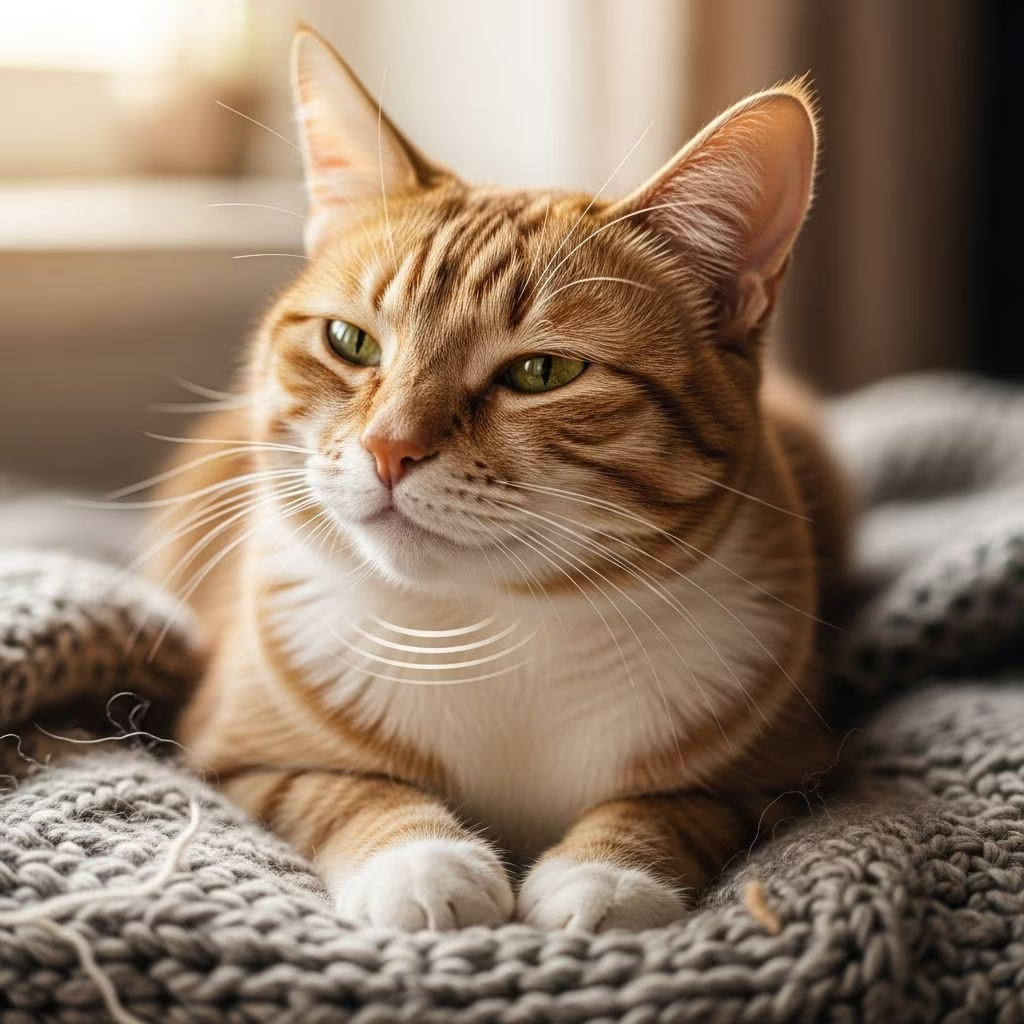
The gentle rumble of a cat’s purr is one of the most endearing sounds for any cat lover. But what does it really mean? While many associate purring solely with happiness, the reality is far more complex. Cats purr for a variety of reasons, from expressing contentment and love to self-soothing during pain, communicating with kittens, and even subtly manipulating their human companions. This article delves into the science behind purring, its multiple purposes, and how this unique vocalization works.
How Do Cats Purr?
Understanding why cats purr starts with grasping the mechanics. Recent research has revolutionized our understanding of purring production. Traditionally, the ‘active muscle contraction hypothesis’ suggested cats actively contract laryngeal muscles 25-30 times per second. However, a groundbreaking study challenges this.
Scientists isolated larynges from eight euthanized domestic cats and induced purring by pumping air through the vocal cords without brain input or muscle activity. All produced self-sustaining oscillations at 25-30 Hz, indicating purring is a passive process like meowing or hissing, initiated by a brain signal but maintained automatically.
Key to this is the discovery of ‘pads’—fibrous fatty tissue embedded in vocal cords. These increase density, allowing low-frequency vibrations (20-30 Hz) despite cats’ small size (around 4.5 kg), unlike larger animals like elephants. This mirrors human ‘vocal fry.’
Other sources confirm laryngeal muscles twitch via rhythmic neural signals from a unique ‘neural oscillator’ in the brain, opening and closing the glottis during inhalation and exhalation, producing continuous purrs at 25-150 Hz. Laryngeal paralysis prevents purring, underscoring the mechanism.
Reasons Cats Purr
Cats purr in diverse situations, revealing its multifaceted role. Frequencies (20-150 Hz) overlap with healing vibrations, suggesting evolutionary benefits.
1. Contentment and Happiness
The most recognized reason: cats purr when relaxed and happy, like during petting or cuddling. This communicates pleasure and strengthens bonds. Observational studies link it to safe, comfortable states.
2. Mother-Kitten Bonding
Kittens purr from birth (2 days old) to signal needs and location to mothers, who purr back for reassurance during nursing. This continues into adulthood for social bonding.
3. Self-Healing and Pain Relief
Surprisingly, cats purr when injured or distressed. Dr. Elizabeth von Muggenthaler proposes purring as a ‘natural healing mechanism,’ aiding bone repair, pain relief, and wound healing via low-frequency vibrations.
Studies show 20-150 Hz promotes bone growth and soft tissue repair. A New Zealand Veterinary Journal study linked it to healing, replicated in mice wound studies promoting granulation tissue. Vibrations may reduce swelling, aid breathing, and heal tendons/muscles. Cats purr post-surgery or injury for self-soothing.
4. Communication with Humans (and Manipulation)
Cats ‘solicit’ humans with purrs embedded with high-frequency cries (like baby wails) when hungry, tapping nurturing instincts. Research confirms hungry cats’ purrs contain unusual high pitches.
5. Stress and Anxiety Relief
In stressful situations (vet visits, new environments), purring acts as self-soothing, calming the cat despite appearing unhappy. It’s a coping mechanism, more common than realized.
The Science of Purring Frequencies
Purring at 25-150 Hz is key. These match therapeutic ultrasound frequencies for healing bones, muscles, tendons.
- 25-50 Hz: Bone growth, fracture healing.
- 100-150 Hz: Muscle, tendon, ligament repair; pain relief, swelling reduction.
Bone density increases 30% in response. Though feline-specific replication is pending, evidence from other mammals supports it. Evolutionary, purring may prevent osteoporosis in inactive cats.
Do All Cats Purr?
Most domestic cats purr, but cheetahs do not; bigger cats (lions, tigers) purr minimally or roar instead due to anatomy. Purring requires specific vocal cord pads absent in some.
Myths About Cat Purring
- Myth: Purring only means happiness. Reality: Also for pain, stress.
- Myth: Blood flow causes purring. Debunked; it’s laryngeal.
- Myth: Requires constant brain control. No, self-sustaining post-initiation.
How to Tell What Your Cat’s Purr Means
| Context | Purr Type | Meaning |
|---|---|---|
| Relaxed, eyes half-closed, kneading | Loud, steady | Contentment |
| Injured, hiding, quiet | Soft, intermittent | Pain relief |
| Hungry, at food bowl | With meow/cry elements | Solicitation |
| Vet visit, trembling | Low-volume | Self-soothing |
Observe body language: tail position, ears, eyes.
Frequently Asked Questions (FAQs)
What does it mean when a cat purrs?
Cats purr for contentment, bonding, healing, stress relief, or human communication—not just happiness.
Do cats purr when they are in pain?
Yes, to self-soothe and promote healing via vibrations.
Why do cats purr while kneading?
Kneading (making biscuits) with purring recalls kitten nursing, signaling ultimate comfort.
Can cats purr when they sleep?
Yes, during deep REM sleep if content.
Why don’t big cats purr?
Large felids prioritize roaring; lack full purring anatomy.
Conclusion
The cat’s purr is a versatile tool for emotion, healing, and survival. Next time you hear it, consider the context—your cat might be happy, healing, or cleverly asking for treats. Understanding this enriches the human-feline bond.
References
- How do cats purr? New finding challenges long-held assumptions — Christian Herbst et al., Science. 2023-11-16. https://www.science.org/content/article/how-do-cats-purr-new-finding-challenges-long-held-assumptions
- Why and how do cats purr? — Library of Congress. Accessed 2026. https://www.loc.gov/everyday-mysteries/zoology/item/why-and-how-do-cats-purr/
- Why Do Cats Purr? — Animal Family Veterinary Care Center. Accessed 2026. https://animalfamilyveterinarycare.com/blog/why-do-cats-purr/
- Why do cats purr? — BBC Science Focus. Accessed 2026. https://www.sciencefocus.com/nature/why-do-cats-purr
- Why Cats Purr | The Science and Meaning Behind Purring — PetAssure. Accessed 2026. https://www.petassure.com/new-newsletters/why-cats-purr/



