

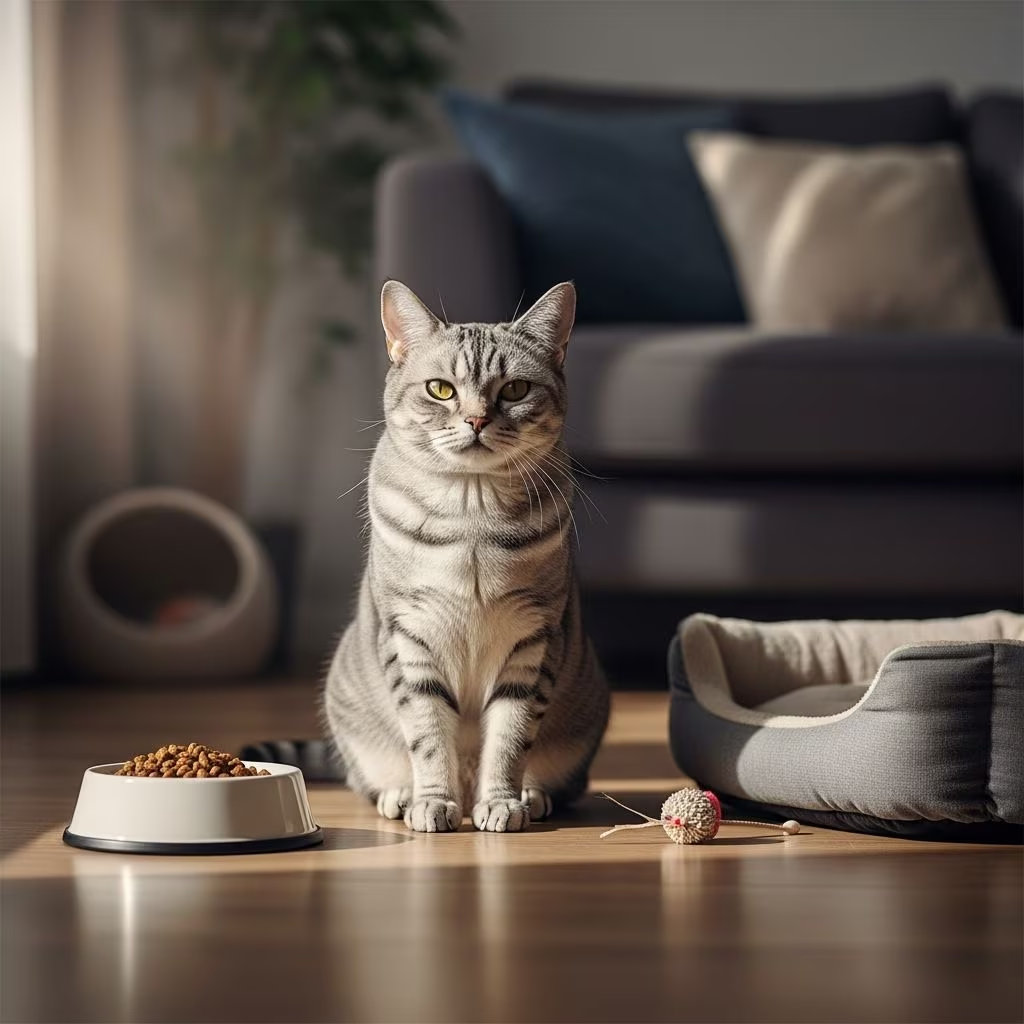
Why Do Cats Prefer a Routine? Understanding Your Feline’s Need for Predictability
Cats are creatures of habit that thrive in predictable environments. Unlike the common misconception that cats are independent and indifferent to structure, felines actually benefit tremendously from consistent daily routines. Understanding why cats prefer routines is essential for any cat owner looking to reduce stress, prevent behavioral issues, and create a harmonious household. A well-established routine provides your cat with a sense of security and control over their environment, which forms the foundation of healthy feline behavior.
The Science Behind Your Cat’s Need for Routine
Cats are naturally crepuscular animals, meaning they are most active during dawn and dusk. They spend approximately 40% of their day sleeping, 22% resting, and 15% grooming. This inherent rhythm shapes how they experience their world and respond to their environment. When cats cannot predict what happens next or feel they have no influence over their surroundings, stress levels spike significantly. A predictable routine gives your cat a sense of control, communicating to them that “my world makes sense, and I can act in it.”
From a behavioral perspective, animal behaviorists consistently identify the lack of predictable structure as a primary source of stress in indoor cats. This stress manifests in various unwanted behaviors including aggression, excessive grooming, inappropriate urination, and destructive activities. By establishing a consistent routine, you address one of your cat’s fundamental psychological needs.
How Routines Reduce Stress and Anxiety
The connection between routine and stress reduction in cats is both direct and measurable. When your cat knows what to expect at specific times of day, their nervous system remains calm and regulated. Behaviorists emphasize that a daily play-hunt at a similar time gives your cat predictability that directly translates to lower anxiety levels.
Consistency beats intensity when it comes to stress reduction. Many cat owners make the mistake of providing 30 minutes of wild play occasionally, thinking this satisfies their cat’s needs. In reality, 8-10 minutes of focused, consistent daily activity provides more benefit than sporadic, intense sessions. This is because your cat’s nervous system becomes conditioned to expect and prepare for predictable events, creating a calming effect throughout the day.
The physiological impact extends beyond just playtime. Regular feeding schedules, consistent grooming sessions, and predictable sleep times all contribute to a cat’s overall sense of security and well-being.
Understanding Your Cat’s Natural Daily Cycle
To create an effective routine, it helps to understand your cat’s natural daily cycle. Cats evolved as small carnivorous hunters with specific behavioral patterns:
- Hunt: Dawn and dusk are ideal times for cats to stalk and catch prey. During these hours, cats experience naturally high energy levels that correspond to their hunting instincts
- Eat: In the wild, cats consume multiple small meals throughout the day, typically around 13 meals based on their natural prey consumption. They evolved to eat several small meat-based meals rather than one or two large meals
- Groom: Cats perceive grooming as a social behavior and spend significant time on self-care and social grooming
- Sleep and Rest: Cats require substantial daily rest, alternating between deep sleep and lighter rest periods
This cycle repeats throughout the day. After your cat wakes from a nap, the entire activity sequence begins again. Understanding this natural progression allows you to structure your home routine to align with your cat’s instinctive behaviors.
Building an Effective Daily Routine for Your Cat
Creating a routine that works for both you and your cat requires intentional planning and consistency. The key is to pick one time of day and designate it as “hunt o’clock”—a specific slot for focused, interactive play.
Step 1: Establish a Morning Routine
Start your cat’s day with a gentle wake-up and affection. This sets a positive tone and helps your cat feel welcomed. Follow this with feeding and hydration rituals in a calm, quiet space. Providing meals at regular times helps cats feel secure and prevents anxiety-driven begging later in the day.
Step 2: Schedule Dedicated Playtime
Incorporate a short, focused hunting session at roughly the same time each day. This doesn’t need to be the exact same minute—a regular window (such as early evening) helps your cat predict the ritual and relax around it. The session should last 8-15 minutes with your phone away and 100% of your attention dedicated to play.
The sequence matters: your cat should experience search, stalk, chase, catch, eat, and sleep in progression. Many cat owners find success by incorporating playtime and a small snack right before bed, so their cats are ready to nap when the owners are.
Step 3: Integrate Feeding Patterns
Adults who work outside the home can feed their cats at least once in the morning, once immediately after work, and then a final snack before bed. This aligns with your cat’s natural preference for multiple small meals throughout the day. Using puzzle toys with small pieces of food can keep cats active during the day and provide additional mental stimulation.
Step 4: Include Grooming and Social Interaction
Gently brushing your cat is often appreciated and builds your grooming routine slowly. This social behavior reinforces bonding and helps your cat feel cared for within the predictable structure of your day.
Essential Elements of a Cat-Friendly Routine
To successfully implement a routine that your cat will thrive on, include these key elements:
| Routine Element | Purpose | Timing/Frequency |
|---|---|---|
| Dedicated Playtime | Satisfies hunting instincts and reduces stress | 8-15 minutes daily at consistent time |
| Multiple Small Meals | Aligns with natural eating patterns | At least 2-3 times daily |
| Interactive Hunting Rewards | Provides mental stimulation after play | Immediately following play sessions |
| Grooming Sessions | Builds social bonding and routine | Several times weekly |
| Rest and Sleep Time | Allows natural sleep cycles | Throughout day and evening |
Common Mistakes to Avoid
Understanding what not to do is just as important as knowing what to do. Behaviorists frequently observe these errors in cat routines:
- Going Too Intense, Too Rarely: Thirty minutes of chaotic play on Sunday does not achieve what 8-10 focused minutes each evening accomplishes
- Ending Playtime Abruptly: Stopping the game while your cat is still in hunting mode can leave them frustrated and stressed
- Relying on Puzzles Alone: Food puzzles are excellent enrichment tools, but they don’t fully trigger the stalk-and-chase behaviors your cat needs. Use puzzles alongside active play for best results
- Being Too Rigid: While consistency matters, you don’t need to play at the exact same minute every day. A regular window is sufficient for your cat to predict and relax around the ritual
- Neglecting Environmental Enrichment: Failing to provide climbing surfaces, scratching posts, window perches, and hiding spots leaves indoor cats without essential outlets for natural behaviors
Tools and Resources for Your Cat’s Routine
Setting up a successful routine doesn’t require expensive equipment. Keep these basics on hand:
- One wand toy that can be dragged and hidden
- One small bowl or puzzle feeder for post-hunt snacks
- A soft mat or rug that becomes the designated “play zone”
- A cheap backup toy (paper ball, ribbon) so you never “run out”
- A mental note of your dedicated time slot
- Cat trees or aerobic centers for climbing and hiding
- Sturdy scratching posts tall enough for full stretching
- Window perches for observation and mental stimulation
Addressing Specific Behavioral Issues Through Routine
Many unwanted cat behaviors stem directly from insufficient routine and mental stimulation. When cats aren’t able to satisfy their instinctive hunting needs, problems emerge. These include aggression, nighttime prowling and yowling, relentless craving for attention, excessive grooming, inappropriate urination, and hiding.
A well-structured daily routine addresses these issues at their root by providing appropriate outlets for natural behaviors. Your cat’s nervous system needs the opportunity to complete its ancient script: search, stalk, chase, catch, eat, and sleep. Preventing destructive behaviors is significantly easier than correcting them after they develop.
Personalizing Your Cat’s Routine
While consistency is crucial, personalization matters too. Every cat has unique preferences. Some cats prefer to snuggle with their owners during routine times, while others are content to be nearby. Observe your cat’s individual preferences and adapt your routine accordingly.
Don’t be afraid to experiment with what appeals most to your household’s needs. Working professionals can build routines around their schedule, while stay-at-home cat owners might structure activities differently. The key is maintaining consistency in whatever pattern you establish.
Benefits for Both You and Your Cat
A thoughtful cat routine benefits your feline friend and you as the pet parent. For your cat, routine provides security, reduces anxiety, and prevents destructive behaviors stemming from boredom or stress. It also deepens your connection through interactive bonding during designated playtime.
For you, a morning routine reduces chaos and allows you to enjoy mornings without being interrupted by random meows for food or unexpected bursts of energy. You gain the satisfaction of knowing you’re meeting your cat’s psychological and physical needs, strengthening your relationship.
Frequently Asked Questions About Cat Routines
Q: Why is routine so important for indoor cats?
A: Indoor cats lack the natural challenges and unpredictability of outdoor life. A structured routine provides mental stimulation, satisfies hunting instincts, and gives cats a sense of control and predictability, which directly reduces stress and anxiety.
Q: How long does it take for a cat to adjust to a new routine?
A: Cats thrive on consistency and typically adjust quickly to predictable patterns. However, allow at least 2-4 weeks of consistent behavior before expecting to see significant changes in stress levels and behavior.
Q: Do I really need to play at the exact same time every day?
A: No need to be rigid to the minute, but a regular window (for example early evening) helps your cat predict the ritual and relax around it.
Q: Can food puzzles replace the play session?
A: Food puzzles are great enrichment, yet they don’t fully trigger the stalk-and-chase part. Behaviorists see the best results when puzzles are used alongside active play.
Q: What should I do if my cat doesn’t seem interested in playtime?
A: Owners should find a number of toys that interest the cat and play with several different toys until the cat’s interest wanes. Some cats prefer certain toy types—experiment to find what appeals to your specific cat.
Q: How can I maintain a routine if I work full-time?
A: Feed your cat at least once in the morning, once immediately after work, and then a final snack before bed. Use puzzle toys with small pieces of food to keep your cat active during the day.
References
- Cat Daily Cycle — Mud Bay. Accessed January 14, 2026. https://blog.mudbay.com/cat-daily-cycle/
- This Simple Change in Your Daily Routine Can Dramatically Reduce Stress in Indoor Cats According to Animal Behaviorists — Madd Pets and Reptiles. Accessed January 14, 2026. https://www.maddpetsandreptiles.co.uk/13-163715-this-simple-change-in-your-daily-routine-can-dramatically-reduce-stress-in-indoor-cats-according-to-animal-behaviorists/
- The Morning Routine That Makes Your Cat Happier (and You Too) — PetKrwe. Accessed January 14, 2026. https://petkrewe.com/blogs/trends/the-morning-routine-that-makes-your-cat-happier-and-you-too
- Social Behavior of Cats — Merck Veterinary Manual. Accessed January 14, 2026. https://www.merckvetmanual.com/behavior/behavior-of-cats/social-behavior-of-cats
- Cat Behavior and Training – Enrichment for Indoor Cats — VCA Animal Hospitals. Accessed January 14, 2026. https://vcahospitals.com/know-your-pet/cat-behavior-and-training—enrichment-for-indoor-cats
- Understanding Your Cat’s Behaviour — RSPCA. Accessed January 14, 2026. https://www.rspca.org.uk/adviceandwelfare/pets/cats/behaviour
- Wild and Healthy: Helping Your Cat Express Natural Behaviors — Pony Express Veterinary Clinic. Accessed January 14, 2026. https://ponyexpressvet.com/wild-and-healthy-helping-your-cat-express-natural-behaviors/



