

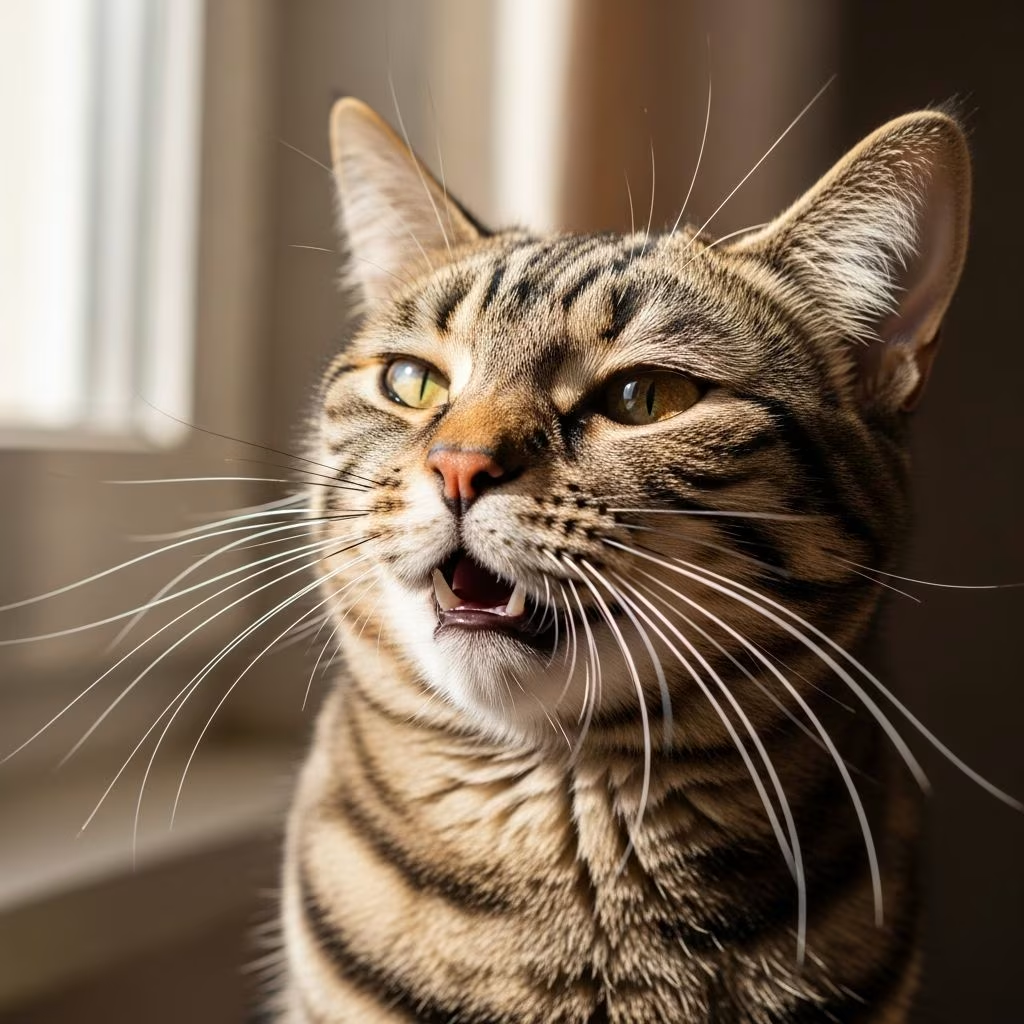
Why Do Cats Open Their Mouths When They Smell Something?
If you’ve ever noticed your cat making an adorably ridiculous face after catching a whiff of something interesting, you’ve witnessed one of the most amusing feline behaviors. The cat crouches low with their nose down, nuzzling the ground or sniffing the air, before glancing up with their mouth slightly open in what appears to be a grimace or sneer. This quirky expression might look like your cat is disgusted or confused, but in reality, it’s a perfectly normal and highly functional behavior that serves an important sensory purpose.
This odd behavior is called the flehmen response, and it’s far more than just a funny face your cat makes. In fact, it’s a sophisticated biological mechanism that allows your cat to detect and analyze scents in a way that humans cannot fully comprehend. Understanding this behavior provides valuable insight into how your feline companion perceives and interacts with their environment.
Understanding the Flehmen Response
The flehmen response is a natural and healthy biological reflex that cats use to process certain types of scents and chemical signals. When your cat exhibits this behavior, they’re engaging in a specialized form of sensory perception that goes beyond ordinary smelling through the nose.
The term “flehmen response” comes from a German word meaning “to show one’s teeth” or “to grin,” which perfectly describes the characteristic lip curl and mouth opening that accompanies this behavior. Some cat owners affectionately refer to it as the cat’s “stinky face” or “sneer face” because of the amusing facial expression it creates.
This response is not unique to domestic cats. Many other mammals exhibit the flehmen response as well, demonstrating the widespread importance of this sensory mechanism across the animal kingdom. Big cats such as lions and tigers, horses, giraffes, rhinos, llamas, and even hedgehogs all utilize this same behavior to process important chemical information about their surroundings.
How the Flehmen Response Works
To understand how your cat smells in what could be described as “high definition,” it’s essential to learn about the specialized anatomy involved in the flehmen response. The key to this behavior lies in a unique sensory organ called the vomeronasal organ, also known as the Jacobson’s organ.
The vomeronasal organ is an olfactory organ specifically located in your cat’s mouth, positioned above the hard palate between the septum and the roof of the mouth, just behind the front incisors. This specialized organ contains tiny ducts that lead up to the nose and is equipped with specialized nerve endings that connect directly to the brain.
When your cat exhibits the flehmen response, they open their mouth in a specific way that opens up two small ducts on the roof of their mouth behind the incisors. This positioning allows scent molecules to travel directly to the vomeronasal organ, where they can be analyzed with remarkable sensitivity.
The process works as follows: During the flehmen response, pheromone molecules enter your cat’s mouth either through licking or inhalation and dissolve in the cat’s saliva. The cat’s tongue then flicks these scent-laden saliva droplets up into the vomeronasal gland, which facilitates more sensitive scent analysis. The dissolved scent molecules then travel through two passages in the roof of the mouth known as the nasopalatine ducts. These ducts lead directly to the pair of fluid-filled sacs that make up the vomeronasal organ, where specialized nerves detect and process chemical information.
This process allows cats to detect chemicals through sensory pathways that are completely separate from the olfactory system (the regular nose). The vomeronasal organ can even detect odorless or otherwise undetectable scents by using nerves that lead directly to the brain. The flehmen response is essentially a combination of tasting and smelling simultaneously, providing your cat with a much more nuanced and detailed understanding of the scents around them.
The Purpose Behind the Flehmen Response
The flehmen response serves critical functions in your cat’s sensory and social life. By funneling smells toward the vomeronasal organ, your cat gains access to detailed chemical information that would otherwise be unavailable through their standard olfactory senses.
The vomeronasal organ was specifically designed to help male cats locate female cats in heat by analyzing the pheromones present in their urine. This explains why male cats are believed to be more prone to exhibiting the flehmen response, particularly in response to female sex hormones or pheromones. However, the response isn’t limited to mating-related scents.
Through the flehmen response, cats can “read” important messages that other cats have left behind. They can detect whether another cat has claimed a particular territory, identify which animals have passed through their environment, and gather social information about other felines. Even kittens use the flehmen response to absorb pheromones from their mother’s mammary glands, which helps them feel safe and calm during their earliest days of life.
Chemical cues from these scents carry detailed information about the cat’s surroundings, including messages related to mating opportunities and territorial boundaries. This sensory response is vital for cats to understand social cues and environmental changes, which can significantly influence their behavior and interactions with other animals.
What Triggers the Flehmen Response?
While cats can exhibit the flehmen response to a wide variety of scents, certain types of smells are known to trigger this behavior more frequently than others. Because cats have a much stronger sense of smell than humans, they’re capable of detecting scents that we wouldn’t even notice.
The flehmen response is especially common when cats encounter unusual or new scents. These novel odors capture your cat’s attention and prompt them to use their specialized sensory equipment to gather detailed information about what they’re smelling.
The flehmen response can be triggered by any smell that your cat finds interesting, but it’s most commonly observed when one cat detects the odor of another cat or another animal. Your cat might exhibit this behavior when they smell:
- Another cat’s urine or feces
- Pheromones from other animals
- Unfamiliar scents in their environment
- Interesting food odors
- Unusual or aromatic substances
Interpreting Your Cat’s Facial Expression
One of the most common misunderstandings about the flehmen response involves what your cat’s facial expression actually means. Many pet parents observe their cat’s funny face, lip curl, and seemingly disgusted expression and assume their feline friend dislikes what they’re smelling. However, this interpretation is typically incorrect.
The reality is quite the opposite: your cat is attracted to the smell and is going to an extra effort to get a good whiff. The distinctive look on your cat’s face isn’t an indication of displeasure or disgust. Rather, the appearance is a function of how cats must move and position their mouths to get air to flow toward the vomeronasal organ. The facial contortions are simply the physical mechanics required for the sensory process to work effectively.
It’s easy to see how the expression might be misinterpreted as menacing or negative. The curled lip, open mouth, and narrowed eyes do somewhat resemble an expression of aggression or disdain. However, this is purely a case of appearance being misleading. The flehmen response is a sign of curiosity and interest, not disgust or threat.
Distinguishing the Flehmen Response From Other Mouth-Related Behaviors
While the flehmen response is a normal and healthy behavior, it’s important to understand that not all instances of your cat having their mouth open indicate this particular response. There are several other behaviors and conditions that can cause cats to keep their mouths open, and some of them warrant veterinary attention.
Panting and Respiratory Distress
Unlike dogs, cats should not pant during normal circumstances. If you observe your cat breathing with their mouth open in a panting pattern, this could indicate that their body is attempting to increase oxygen intake. This is a sign of severe respiratory distress and requires immediate veterinary attention.
While panting and labored breathing can sometimes be caused by respiratory problems such as asthma or other lung diseases, heart problems are actually a more likely cause in cats. Any sign of respiratory distress should be treated as a potential emergency.
Dental and Gum Problems
If your cat is roaming around with their mouth open without panting, this could also indicate dental or gum problems. Cats might open their mouth to soothe pain from gingivitis or other dental issues. Signs that your cat may be experiencing dental problems include:
- Red, swollen gums
- Bad breath
- Drooling
- Bloody saliva
- Loss of appetite
- Head shaking or holding head at an unusual angle
- Difficulty chewing and swallowing
- Pawing at the mouth
- Yellow, brown, or discolored teeth
- Visibly missing or loose teeth
If you notice any of these symptoms, a veterinary visit is warranted to ensure your cat’s oral health.
Emotional Expression
Cats can also use an open mouth as a way to express emotions or communicate stress. Baring their teeth with an open mouth can be a warning sign if they’re feeling stressed or threatened. However, this is distinctly different from the flehmen response. To accurately interpret your cat’s behavior, you’ll want to observe their entire body language, not just their mouth position.
Comparing Different Cat Mouth Behaviors
| Behavior | Description | Cause | When It Occurs |
|---|---|---|---|
| Flehmen Response | Mouth slightly open, lip curled, intense sniffing expression | Interest in new or unusual scents | After catching an interesting smell, short-lived |
| Panting | Mouth open, rapid breathing | Respiratory distress, heat stress, or heart problems | During exertion or stress; abnormal for cats |
| Mouth Gaping from Pain | Mouth hanging open, appears uncomfortable | Dental disease, gingivitis, or oral pain | Persistent, often accompanied by other symptoms |
| Aggressive Display | Open mouth with bared teeth, tense body | Threat or defensive behavior | When feeling threatened or territorial |
Normal Cat Behavior to Appreciate
The flehmen response is a wonderful reminder of how sophisticated and specialized feline sensory systems truly are. Rather than something to worry about or correct, this behavior is something to appreciate as a natural part of your cat’s interaction with their environment.
When you see your cat make that hilarious face after smelling something interesting, you’re witnessing millions of years of evolutionary refinement. Your cat is utilizing a sensory mechanism that provides them with information about the world in a way that’s fundamentally different from how humans perceive their surroundings.
This behavior demonstrates the remarkable capabilities of your feline companion and underscores why cats are such effective hunters and survivors. Their ability to detect and process chemical information gives them a significant advantage in understanding and navigating their environment.
Frequently Asked Questions
Q: Is the flehmen response dangerous or a sign that something is wrong with my cat?
A: No, the flehmen response is a completely normal and healthy behavior. It’s not dangerous and doesn’t indicate any health problems. It’s simply your cat’s way of accessing enhanced sensory information through specialized anatomy.
Q: Do all cats exhibit the flehmen response?
A: Most cats can exhibit the flehmen response, though some may do so more frequently than others. Male cats tend to exhibit this behavior more often, particularly in response to female pheromones, but female cats also demonstrate this response.
Q: What’s the difference between the flehmen response and regular smelling?
A: Regular smelling uses the olfactory system in the nose to detect odors. The flehmen response directs scent molecules to the vomeronasal organ, which detects pheromones and chemical signals. It’s a more specialized and sensitive form of scent analysis.
Q: Can I encourage or discourage my cat’s flehmen response?
A: The flehmen response is an instinctive behavior that occurs automatically when your cat encounters certain scents. There’s no need to encourage or discourage it, as it’s a normal and beneficial part of your cat’s sensory experience.
Q: Should I be concerned if my cat never exhibits the flehmen response?
A: While most cats exhibit this behavior at some point, some cats may not display it frequently or noticeably. If your cat seems healthy and behaves normally, there’s no cause for concern. However, if you notice changes in your cat’s behavior or health, consult your veterinarian.
References
- Why Do Cats Open Their Mouths After Smelling Something? — Encyclopaedia Britannica. Revised and updated by Mindy Johnston. https://www.britannica.com/topic/Why-Do-Cats-Open-Their-Mouths-After-Smelling-Something
- Flehmen Response in Cats: Why They Open Their Mouths To Smell — Rover. Featuring veterinary expertise from Dr. Joanna Woodnutt and Dr. Rebecca Greenstein. https://www.rover.com/blog/cat-open-mouth-smell/
- Why do cats make a weird face after smelling something? — Live Science. Alex Taylor, Cat Wellbeing and Behavior Advisor, International Cat Care. https://www.livescience.com/animals/cats/why-do-cats-make-a-weird-face-after-smelling-something
- What Is the Flehmen Response in Cats? — PetMD. https://www.petmd.com/cat/general-health/cat-sneering-what-flehmen-response
- Flehmen Response in Cats – Why Cats Do This & How to Recognize It — Litter Robot. https://www.litter-robot.com/blog/flehmen-response-in-cats/



