

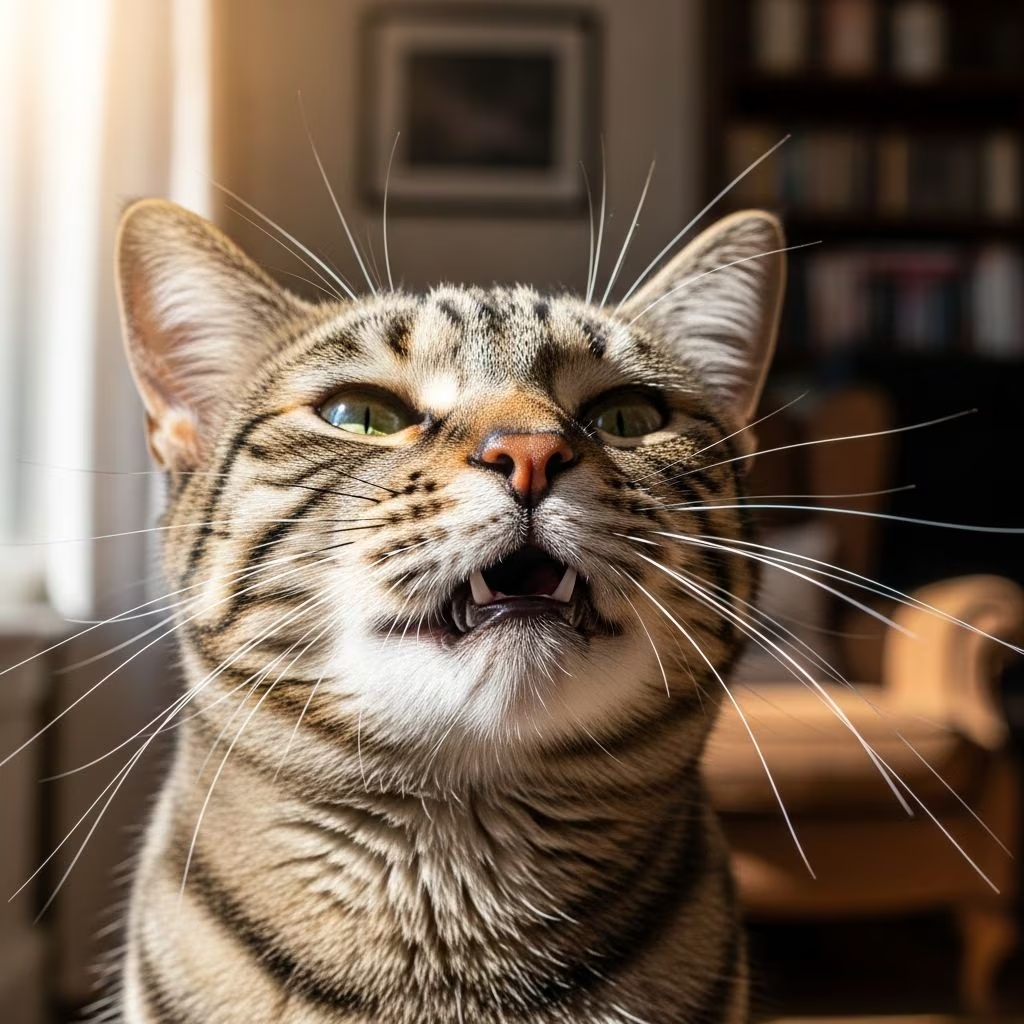
Why Do Cats Open Their Mouths When They Smell?
If you’ve ever noticed your cat opening its mouth slightly after catching a scent, complete with a wrinkled nose and curled upper lip, you’ve witnessed one of the most endearing and peculiar feline behaviors. This funny face, often called the “stink face,” isn’t a sign of disgust or discomfort—it’s actually a sophisticated sensory process known as the flehmen response. Understanding this behavior helps cat owners appreciate the complex ways their feline companions interact with and perceive their environment.
What Is the Flehmen Response?
The flehmen response is a natural and healthy reflex observed in many mammals, not just cats. When your cat opens its mouth to smell, it’s engaging in a process that’s far more complex than a simple sniff. This behavior involves drawing air into the mouth and up toward a specialized sensory organ located on the roof of the mouth.
During the flehmen response, the muscles around your cat’s mouth relax, and small ducts behind the upper incisors open up. This allows scent molecules to travel directly to the vomeronasal organ, also known as Jacobson’s organ. This specialized sensory organ is composed of two fluid-filled sacs connected to the nasal cavity and is responsible for detecting chemical signals that regular nasal olfaction cannot process as effectively.
The vomeronasal organ is remarkably sensitive and can detect odors that are so faint or chemically complex that they would be undetectable to the human nose. In fact, this organ allows your cat’s sense of smell to be approximately 14 times more intense than a human’s. The signals from this organ travel directly to the brain through specialized nerves, providing cats with incredibly detailed chemical information about their surroundings.
How the Flehmen Response Works
The mechanics of the flehmen response are elegantly designed for chemical communication. When your cat encounters an interesting or unfamiliar scent, it doesn’t simply sniff through its nose as humans do. Instead, the cat opens its mouth slightly, often with its upper lip curled back, creating a grimace-like expression.
This facial positioning is intentional and functional. By opening the mouth and curling the lip, your cat creates an optimal pathway for scent molecules to reach the vomeronasal organ. The process is best described as a cross between tasting and smelling—the sensory information gathered through the flehmen response combines chemical detection with gustatory feedback, creating a multisensory experience that gives cats profound insight into their environment.
The information processed by the vomeronasal organ is particularly rich in pheromonal content. Pheromones are chemical signals produced by animals that communicate important information such as reproductive status, territorial boundaries, emotional states, and social relationships. For cats, decoding these pheromonal messages is crucial for understanding their social world and responding appropriately to the felines and other animals around them.
Why Cats Use the Flehmen Response
Cats rely heavily on chemical communication to navigate their social and physical environments. The flehmen response serves several important functions in a cat’s daily life:
- Pheromone Detection: Cats use the flehmen response primarily to detect pheromones from other cats and animals. Male cats often use this behavior to identify females in heat, while mother cats use it to keep track of and bond with their kittens.
- Territorial Assessment: By detecting pheromones left by other cats through urine marking or facial rubbing, your cat can determine which areas are territory and identify which cats have been in their space.
- Environmental Analysis: The flehmen response helps cats gather detailed information about their surroundings, including the presence of other animals, potential threats, and safe zones.
- Social Communication: Kittens even display the flehmen response from birth, using it to absorb pheromones from their mother’s mammary glands, which helps them feel safe and calm.
Common Triggers for the Flehmen Response
Your cat is most likely to display the flehmen response when it encounters specific types of scents. Understanding these triggers can help you recognize the behavior and understand what your cat is investigating:
| Scent Type | Why Cats Investigate |
|---|---|
| Urine or feces from other cats | These contain rich pheromonal information about the other cat’s identity, reproductive status, and emotional state |
| Furniture and walls | Cats may detect pheromones from other animals or from their own previous facial rubbings |
| Your clothing or skin | Scents lingering on you from other cats or animals you’ve encountered |
| Anal gland secretions | These contain powerful pheromonal signals about identity and social status |
| Facial pheromones | Pheromones that cats have rubbed onto objects to mark them as familiar and safe |
Is the Flehmen Response a Sign of Aggression?
Many cat owners worry that their cat’s flehmen response—with its wrinkled nose, curled lip, and somewhat menacing expression—indicates anger or aggression. Rest assured, this interpretation is incorrect. The flehmen response alone is not a sign of aggression or negative emotion. The “stink face” appearance is simply the natural physical expression that accompanies this sensory process.
However, it’s important to consider your cat’s overall body language when interpreting its behavior. A cat displaying the flehmen response while its body is relaxed, ears are in a normal position, and tail is calm is simply analyzing a smell. If, by contrast, your cat combines an open mouth with bared teeth, flattened ears, hissing, or a puffed tail, these signs indicate stress or aggression—not the benign flehmen response.
When Open Mouths Can Signal Problems
While the flehmen response is perfectly normal and harmless, there are other instances where an open mouth in cats can indicate health concerns. It’s crucial for cat owners to distinguish between the brief, purposeful flehmen response and other open-mouth behaviors that warrant veterinary attention.
Respiratory Distress
If your cat is breathing with its mouth open, particularly if it’s panting or showing labored breathing, this is a serious concern. Unlike dogs, cats should not pant under normal circumstances. Open-mouth breathing in cats is their body’s attempt to increase oxygen intake and signals severe respiratory distress. This can indicate asthma, lung disease, or heart problems, all of which require immediate veterinary attention.
Signs of respiratory distress include a breathing rate consistently over 50 breaths per minute, persistent panting, and obvious difficulty breathing.
Dental Problems
Cats may also open their mouths when experiencing dental or gum pain. If your cat is roaming around with its mouth hanging open but isn’t panting, this could indicate dental disease or gingivitis. Watch for accompanying symptoms such as:
- Red or swollen gums
- Bad breath
- Drooling or bloody saliva
- Loss of appetite
- Head shaking or holding head at an unusual angle
- Difficulty chewing or swallowing
- Pawing at the mouth
- Yellow, brown, or discolored teeth
- Visibly missing or loose teeth
If you notice any of these signs, schedule a veterinary appointment promptly to address potential dental disease.
Flehmen Response and Urine Marking
If you notice your cat frequently displaying the flehmen response around your home, it might be investigating urine marking behavior. Urine contains particularly rich pheromonal information, so the flehmen response is especially common when cats encounter urine from other cats.
Urine marking is a normal territorial behavior, especially in unneutered male cats who mark to indicate their presence and availability to potential mates. However, excessive urine marking can also indicate stress or anxiety. Recent household changes—such as rearranging furniture, moving to a new home, or introducing a new family member—can prompt cats to increase their marking behavior as a way to reassert familiarity and security.
If you suspect urine marking is occurring frequently in your home, consult with your veterinarian to rule out urinary tract infections or other medical causes of inappropriate elimination. Your vet can also discuss behavioral strategies and potential treatments to reduce stress-related marking.
Understanding Your Cat’s Scent Communication
Cats are constantly communicating through scent in ways that humans, with our limited olfactory abilities, can barely perceive. Your cat rubs its face on furniture, other animals, and sometimes you because it’s marking these things with pheromones from facial glands. These pheromones signal calm, familiarity, and safety—the cat is essentially claiming areas and individuals as part of its secure territory.
When your cat encounters pheromones from these familiar sources through the flehmen response, it reinforces this sense of security. Conversely, when your cat detects unfamiliar pheromones—from a visiting cat, a new animal in the neighborhood, or even from you after you’ve been around another pet—the flehmen response allows your cat to process this information and adjust its behavior accordingly.
How to Respond When Your Cat Uses the Flehmen Response
When you observe your cat engaging in the flehmen response, you can simply allow it to investigate in peace. This is a normal and healthy behavior that requires no intervention. Your cat is gathering important information about its environment, and interrupting this process isn’t necessary.
If the flehmen response is triggered by urine marking in your home, you might consider cleaning the marked areas thoroughly with enzymatic cleaners designed to eliminate odors that trigger marking behavior. You can also provide additional environmental enrichment and consider using feline pheromone diffusers (such as Feliway) to help reduce stress-related marking.
Most importantly, if your cat displays the flehmen response alongside other concerning symptoms—such as respiratory distress, dental disease signs, or behavioral changes—consult with your veterinarian promptly.
Frequently Asked Questions
Q: Is the flehmen response dangerous to my cat?
A: No, the flehmen response is a completely safe and natural behavior. It’s a healthy sensory process that helps your cat understand its environment and communicate with other cats.
Q: Do all cats display the flehmen response?
A: Yes, all cats have the vomeronasal organ and are capable of the flehmen response. Even kittens display this behavior from birth as they interact with their mother.
Q: What’s the difference between the flehmen response and panting?
A: The flehmen response is a brief, purposeful behavior triggered by smelling something specific, characterized by a slightly open mouth and curled lip. Panting involves rapid, open-mouth breathing and can indicate stress, heat, or overexertion. Panting in cats can also signal serious health concerns.
Q: Why does my cat sometimes stare blankly after the flehmen response?
A: Your cat may appear to go into a light trance while processing the chemical information gathered through the flehmen response. This is normal and indicates that your cat is deeply analyzing the scent.
Q: Can the flehmen response help me understand my cat’s emotions?
A: The flehmen response alone doesn’t indicate a specific emotional state. You need to observe your cat’s overall body language—ear position, tail posture, and general demeanor—to accurately interpret its emotional state.
Q: Should I be concerned if my cat frequently uses the flehmen response?
A: Frequent flehmen responses are normal and nothing to worry about. However, if frequent flehmen responses are accompanied by excessive urine marking or stress behaviors, consult your veterinarian to assess your cat’s overall well-being.
References
- Why Do Cats Open Their Mouths After Smelling Something? — Encyclopaedia Britannica. https://www.britannica.com/topic/Why-Do-Cats-Open-Their-Mouths-After-Smelling-Something
- Why Does Your Cat Leave Its Mouth Open While Sniffing? — Pet Wellbeing. https://petwellbeing.com/blogs/news/why-does-your-cat-leave-its-mouth-open-while-sniffing
- Flehmen Response in Cats: Why They Open Their Mouths To Smell — Rover. https://www.rover.com/blog/cat-open-mouth-smell/
- Flehmen Response in Cats – Why Cats Do This & How to Recognize It — Litter-Robot. https://www.litter-robot.com/blog/flehmen-response-in-cats/



