

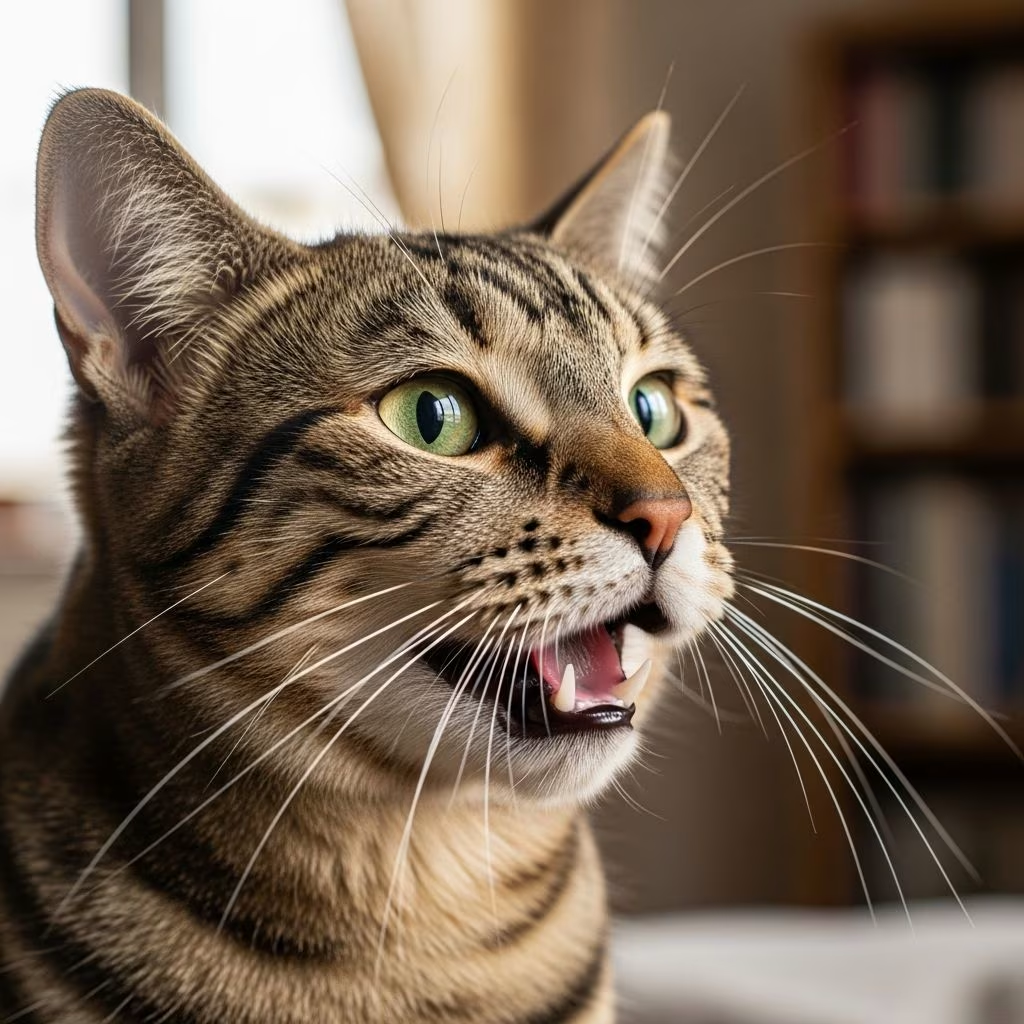
Why Do Cats Meow? Understanding Your Feline’s Language
Cats are known for their distinctive meowing sounds, but have you ever wondered why they meow? Unlike their wild ancestors, domestic cats developed meowing as a specialized form of communication primarily directed at humans. Understanding why cats meow can help you better interpret your pet’s needs and strengthen the bond you share with them. This comprehensive guide explores the fascinating world of cat vocalizations and the reasons behind this uniquely domestic behavior.
The Evolutionary Origins of Cat Meowing
To understand why cats meow, we must first look at their evolutionary history. Domestic cats descended from wild ancestors, specifically North African wildcats, approximately 10,000 to 35,000 years ago. These ancestral cats were primarily solitary hunters and communicators, relying heavily on non-vocal methods to interact with each other. Instead of using their voices, wild cats communicated through their highly developed sense of smell, by rubbing against objects, or through other scent-marking behaviors. This communication strategy made sense for solitary animals that actively avoided face-to-face encounters with other members of their species.
However, something remarkable happened during the domestication process. As cats began living in closer proximity to humans, their communication methods evolved dramatically. Cats quickly learned that their sense of smell—so effective for communicating with other cats—was essentially useless for connecting with humans. This evolutionary pressure led to the development of meowing as a specialized tool specifically designed to capture human attention and manipulate human behavior.
Meowing: A Learned Behavior Directed at Humans
One of the most fascinating discoveries about cat meowing is that it represents a learned behavior rather than an innate feline characteristic. All kittens meow to communicate with their mothers when they are hurt, cold, hungry, or in distress. However, what makes domestic cats unique is that they carry this maternal communication behavior into adulthood, while feral cats largely outgrow it.
Research published in the journal Behavioral Processes provides compelling evidence for this distinction. The study found that feral cats—domesticated cats without owners living outdoors—were significantly more likely to growl or hiss than domesticated cats with owners. When feral cats did meow, their vocalizations were indiscriminate, directed at humans, dolls, and dogs alike with no particular preference. In contrast, house cats meowed much more frequently and almost exclusively at humans, suggesting they had developed meowing as a specialized language specifically for their owners.
This evidence strongly suggests that your cat meows at you because she learned early in life that meowing reliably captured your attention and resulted in the outcomes she desired. In essence, cats have trained themselves to communicate with us in the way most likely to achieve their goals.
The Science Behind Why Cats Meow
Manipulation and Communication Strategy
Experts studying animal behavior describe cat meowing as a form of manipulation—though not in a negative sense. Instead, it represents an evolutionary adaptation where cats have learned to use vocalization as a tool to get what they want from humans. Since humans possess a relatively poor sense of smell compared to cats, vocal communication becomes the most effective way for cats to convey their needs to us.
As animal behavior expert John Wright from Mercer University explains, cats recognize that vocalization is far more effective at capturing human attention than the scent-marking and rubbing behaviors that work so well for communicating with other cats. This realization drives cats to develop increasingly sophisticated meowing techniques to communicate their various needs and emotions to their human companions.
The Domestication Effect on Meow Characteristics
During the domestication process, cats didn’t just develop meowing as a communication tool—they also evolved the characteristics of their meows to be more appealing to human ears. Research comparing the vocalizations of wild cats with those of domestic cats reveals striking differences. Wild cat meows sound much more urgent and demanding, while domestic cat meows are higher-pitched and more pleasant to human ears. This evolutionary adaptation suggests that during domestication, cats literally modified the acoustic properties of their meows to manipulate human responses more effectively.
Similarly, the purring behavior of cats has also evolved distinctly. While all small wild cat species purr, domestic cats have developed two distinct types of purrs: a “contentment” purr and a “solicitation” purr. The solicitation purr reaches higher pitches that are strikingly similar to the cry of a human baby—a frequency that triggers instinctive nurturing responses in humans. This convergent evolution demonstrates how profoundly domestication has shaped feline communication.
The Diverse Meanings Behind Different Meows
Cats don’t simply meow once and expect results. Instead, many cats develop an entire repertoire of meows to express different needs and feelings or to elicit different responses from their humans. Understanding these various vocalizations can provide valuable insight into your cat’s emotional state and current needs.
Common Types of Cat Meows
- Greeting Trills: A rolling, chirping sound cats use to greet familiar people or other animals, often indicating friendliness and recognition
- Food Request Meows: Typically loud and demanding meows produced when your cat is anticipating mealtime or asking for a snack
- Isolation Meows: More anxious-sounding vocalizations produced when cats are separated from their owners or feel lonely
- Friendly Squeaks: Soft, high-pitched vocalizations that might accompany a request to go outside or engage in playtime
- Demanding Meows: Persistent, louder meows that indicate your cat wants something from you immediately
What Research Reveals About Cat Meow Meanings
Early research by biologist Mildred Moelk suggested that cats use different forms of meows to convey specific emotions and states. Moelk used a phonetic alphabet to transcribe and categorize feline vocalizations, proposing that cats used six different forms of meows to represent friendliness, confidence, dissatisfaction, anger, fear, and pain.
More recent scientific studies have expanded our understanding of cat meowing complexity. Research at the National Institute of Health investigated human classification of cat meows across different contexts, including waiting for food, isolation, and being brushed. The studies revealed that meows produced in different contexts vary significantly in their pitch, duration, and melody, allowing cats to communicate nuanced information about their emotional states and immediate needs.
Meows emitted during isolation were perceived by human listeners as more negative, with cats sounding nervous, frightened, agitated, anxious, frustrated, or suffering. In contrast, meows produced during pleasant experiences like brushing and, to a lesser extent, waiting for food were perceived as more positive, suggesting contentment, playfulness, friendliness, and curiosity. This research demonstrates that cats truly do modulate their vocalizations to match their emotional states and the context of their communication.
How Cats Produce Their Meows
Understanding the mechanics of cat meowing reveals the sophistication of feline vocal production. Research from the University of Vienna on cat vocalizations found that the larynx produces purring sounds when air passes through it, and this occurs without requiring muscle contraction. Instead, the sounds result from connective tissue embedded in the vocal folds that lowers the frequency of sounds produced.
Scientists propose that cats produce meows through rapid alternating dilation and constriction of the glottis, causing air vibrations during both inhalation and exhalation. This complex mechanism allows cats to produce a remarkable range of vocalizations, each precisely calibrated to capture human attention and elicit specific responses. When you hear your cat meow, you’re witnessing the product of millions of years of evolution and thousands of years of domestication working in concert.
The Kitten Foundation: Where Meowing Begins
Understanding why adult cats meow requires looking back at their earliest experiences. Kittens naturally meow from their first week of life as a mechanism to call their mothers’ attention. This instinctive vocalization serves crucial survival functions: signaling hunger, pain, cold, or distress to the mother cat who can provide food, warmth, and protection.
During the critical early weeks of life, kittens rely almost entirely on their meowing to communicate with their mothers. The meow functions as a literal lifeline, alerting the mother cat to any problems the kitten is experiencing. This early conditioning creates a powerful association between meowing and receiving help or comfort. When kittens are adopted into human homes, they naturally extend this learned behavior to their human caregivers, treating meowing as the primary mechanism for getting their needs met.
Why Your Cat Meows at You Specifically
One of the most interesting aspects of cat meowing is that it appears to be largely human-directed. Your cat meows at you for several compelling reasons based on learned associations and evolved communication strategies:
- Learned Effectiveness: Your cat has learned through repeated experience that meowing consistently results in desired outcomes—food, attention, playtime, or access to desired locations
- Early Conditioning: The association between meowing and receiving maternal care during kittenhood creates a lasting neural pathway that persists into adulthood
- Evolutionary Adaptation: Your cat recognizes that you lack the sophisticated olfactory abilities that other cats possess, making vocalization the most effective communication tool available
- Specialized Language Development: Individual cats develop personalized meow patterns customized to their specific owners and households, essentially creating a unique “dialect” of meowing
Understanding Context in Cat Meowing
The context in which your cat meows provides crucial information about their emotional state and immediate needs. Cats waiting for food display meowing accompanied by yawning, lip licking, swallowing, and salivation—behaviors related to stress and frustration from the anticipation of food rather than an immediate request. This contextual information helps humans more accurately interpret what their cats are communicating.
Frequently Asked Questions About Cat Meowing
Q: Is it normal for cats to meow a lot?
A: Yes, meowing frequency varies by individual cat, breed, and situation. Some cats are naturally more vocal than others. However, a sudden increase in meowing could indicate stress, medical issues, or unmet needs that warrant investigation.
Q: Why does my cat meow at night?
A: Nighttime meowing often indicates your cat is seeking attention, stimulation, or companionship. It could also signal a medical issue or the cat’s natural instincts for nocturnal hunting and activity. Providing evening enrichment and playtime can help reduce nighttime vocalizations.
Q: Can cats meow for reasons other than getting attention?
A: Absolutely. While much of cat meowing is attention-seeking, cats also meow to express pain, illness, stress, fear, sexual behavior, and various emotional states. Understanding your individual cat’s meowing patterns helps you identify their specific needs.
Q: Do all cats meow the same way?
A: No. Individual cats develop unique meowing patterns and “dialects” customized to their specific households. Some cats are naturally more vocal while others are relatively quiet. Your cat’s meowing style reflects her personality, breed tendencies, and learned communication strategies.
Q: What does a silent meow mean?
A: Sometimes cats produce a meow with little to no sound, often called a “silent meow.” This usually indicates extreme affection or greeting and often appears when cats are very comfortable with their humans. Some cats simply have naturally quieter vocalizations.
Building a Stronger Bond Through Meow Understanding
By understanding why your cat meows and what different vocalizations mean, you can significantly deepen your relationship with your feline companion. Recognizing that meowing represents a specialized form of communication specifically evolved and learned for human interaction highlights the remarkable adaptability of cats. Your cat has literally developed a unique language to interact with you.
Paying attention to your cat’s meowing patterns, the contexts in which they occur, and the responses that satisfy your cat helps you become fluent in your cat’s personal language. This understanding transforms meowing from simply annoying noise into meaningful communication that reveals your cat’s personality, preferences, and emotional needs.
Conclusion
Cats meow because they have evolved, adapted, and learned that vocalization is the most effective way to communicate with humans. Unlike their wild ancestors who relied on scent marking and avoidance, domestic cats recognized that meowing could capture human attention and influence human behavior. From the first week of a kitten’s life through adulthood, cats develop and refine their meowing repertoire to maximize effectiveness in getting what they want from their human companions. Understanding this fascinating behavior enriches your appreciation for your feline friend and strengthens the unique bond you share. The next time your cat meows at you, remember that she’s speaking a language she developed specifically for you—a remarkable testament to the power of domestication and feline intelligence.
References
- Why do cats meow? — Live Science. Accessed 2025-11-28. https://www.livescience.com/why-cats-meow.html
- So why does Mr. Whiskers meow? — Harvard Gazette. 2024-09. https://news.harvard.edu/gazette/story/2024/09/so-why-does-mr-whiskers-meow/
- Cat communication — Wikipedia. Accessed 2025-11-28. https://en.wikipedia.org/wiki/Cat_communication
- What’s in a Meow? A Study on Human Classification and Cat Meows — National Center for Biotechnology Information (NIH). 2020. https://pmc.ncbi.nlm.nih.gov/articles/PMC7765146/
- Why Do Cats Miaow? — BBC Earth. Accessed 2025-11-28. https://www.youtube.com/watch?v=qeUM1WDoOGY



