

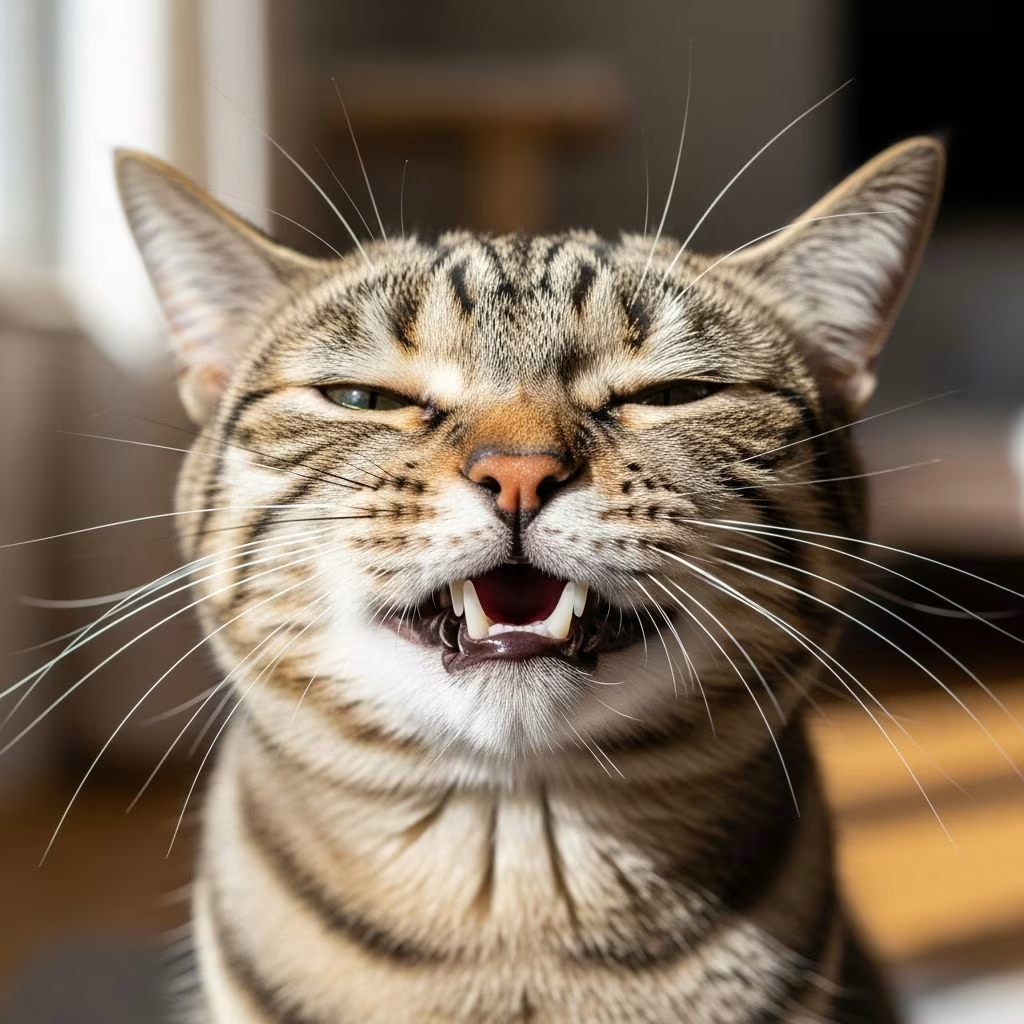
The Flehmen Response: Why Does My Cat Make Stink Face?
If you’ve ever noticed your cat making a bizarre facial expression that looks like they’ve smelled something absolutely revolting, you’ve witnessed what many pet parents affectionately call “stink face.” However, this seemingly funny expression is far more than just a reaction to unpleasant odors. In fact, the stink face your cat makes is a sophisticated biological process called the Flehmen response, a term derived from the German word “flemmen,” which means “to curl the upper lip.” This natural behavior is one of the most fascinating aspects of feline communication and sensory perception.
Interestingly, the Flehmen response isn’t unique to domestic cats. This behavior is also performed by other animals, including ungulates such as horses, sheep, and deer, as well as wild cats and other mammals. When your cat makes this distinctive face, they’re actually gathering critical information about their environment and the world around them through an incredibly sophisticated sensory system that most pet owners never fully understand.
Understanding the Flehmen Response
The Flehmen response is a voluntary behavioral reaction that cats employ when they encounter interesting or novel scents. When your cat displays this response, they’re not expressing disgust or offense—rather, they’re engaging in a highly specialized form of sensory analysis. During the Flehmen response, cats curl back their upper lips, open their mouths slightly, and inhale through their noses while keeping their mouths ajar.
This distinctive posture might make your cat appear like they’re sneering, grimacing, or making a disgusted face, but this appearance is entirely misleading. As veterinary experts explain, “Although the classic Flehmen response ‘stink face’ looks a little menacing, it’s not meant to be. It’s like tasting and sniffing a scent simultaneously.” Understanding this distinction is crucial for cat owners who might otherwise misinterpret their pet’s behavior.
What Triggers the Stink Face?
Your cat may make the Flehmen response in a variety of situations, many of which might surprise you. While you might expect them to make this face when they smell pee, dirty laundry, or another cat’s anal-gland secretions, stink face can also occur whenever they encounter something new or exciting. This means your cat might display the behavior when you introduce a new romantic partner into your home, when they smell a new food, or when they detect any novel scent in their environment.
Possible triggers for the Flehmen response include:
- Pheromone detection: The primary trigger is encountering pheromones from other cats or animals
- Sensory overload: Overwhelming scents that are intriguing, puzzling, or potentially offensive
- New scents: Any novel odor in the environment that captures your cat’s attention
- Taste sensations: Unusual or unfamiliar flavors
- Social communication: In multi-pet households, the response can signal a message to other animals
The Biological Process Behind the Flehmen Response
The Vomeronasal Organ: Jacobson’s Organ
The secret to understanding the Flehmen response lies in a specialized organ located on the roof of your cat’s mouth called the vomeronasal organ, also known as Jacobson’s organ. This remarkable sensory organ is fundamentally different from the olfactory system (the nose), which detects ordinary odors. The vomeronasal organ is specifically designed to detect and process pheromones—invisible chemical signals that animals use to communicate with members of their own species.
The vomeronasal organ is located between the roof of the mouth and the palate, and it’s connected to the brain through specialized nerves. When your cat engages in the Flehmen response and inhales through their mouth, pheromone molecules are drawn in and make contact with the roof of the mouth, allowing them to reach this specialized organ for processing.
How Pheromones Are Captured and Processed
During the Flehmen response, pheromone molecules enter your cat’s mouth through either licking or inhalation and dissolve in saliva. These molecules then travel through two passages in the roof of the mouth known as the nasopalatine ducts, which lead to the pair of fluid-filled sacs that comprise the vomeronasal organ. This elegant system allows cats to gather and analyze chemical information with remarkable precision.
Once pheromone molecules reach the vomeronasal organ, they trigger nerve signals that travel to specific areas of the brain, particularly the amygdala region of the hypothalamus and regions that control sexual, feeding, and social behaviors. In this way, the chemical cues detected by the vomeronasal organ directly influence your cat’s behavior and responses.
Detecting Pheromones: The Purpose of Stink Face
Cats deposit pheromones from specific scent glands located throughout their bodies, including areas near the genitals, cheeks, paws, chin, the space between eyes and ears, the edges of the lips, the base of the tail, and between the teats. These pheromones are constantly being released into the environment, creating an invisible chemical landscape that other cats can interpret.
The Flehmen response is fundamentally an information-gathering behavior. As cat behaviorists explain, “The flehmen response is information gathering—it’s just like looking at something. Their body’s just saying, ‘Hey, there’s pheromones here. Let’s check this out,’ and then it’s processing the information.” When your cat engages in this behavior, they’re essentially reading chemical messages left by other cats, gathering crucial data about their environment, potential mates, and territory markers.
How Cats Use the Flehmen Response
Territory Marking and Communication
When cats rub their faces on furniture, scratch surfaces, spray urine, or defecate, they leave behind chemical messages specifically designed for other cats to read. These pheromone markers serve multiple communicative purposes, allowing cats to establish territory without engaging in physical conflict and to strengthen social bonds within cat communities.
Mate Selection and Reproductive Assessment
One of the most important uses of the Flehmen response is in mate selection and reproductive assessment. Male cats commonly assess a female’s urine when they’re trying to determine if she’s ready to mate. By analyzing the pheromones present in urine, male cats can gather precise information about a female’s reproductive status and readiness for breeding.
Maternal Bonding
Even kittens employ the Flehmen response. They use it to absorb pheromones from their mother’s mammary glands, which helps them feel safe and calm during their early development. This behavior is essential for proper mother-kitten bonding and early socialization.
Visual Signs of the Flehmen Response
When your cat is engaged in the Flehmen response, you’ll notice several distinctive physical characteristics that combine to create the characteristic “stink face” expression.
Key Physical Indicators:
- Reared head: Your cat may raise their head as if they’re on alert, creating the impression they’ve spotted something important
- Curled upper lip: The most recognizable feature is the curling of the upper lip, which can make them appear to be sneering or expressing disgust
- Slightly opened mouth: The mouth opens just enough to allow air and pheromone-laden scent to enter
- Focused expression: Despite the humorous appearance, your cat’s expression demonstrates intense concentration and focus
- Audible inhalation: You may hear your cat take a big, noticeable inhale during this response, making them appear like “full-on mouth-breathers”
Understanding Pheromone Communication in Cats
Instinctive vs. Learned Responses
An important distinction between pheromones and ordinary odors is that responses to pheromones are instinctive rather than learned. Unlike odors, where meaning is learned and can change with new experiences, pheromones trigger hardwired, instinctive responses. Your cat doesn’t need to “learn” what a pheromone means—this knowledge is fundamentally encoded into their biology through evolutionary processes.
However, while responses to pheromones are automatic, they can still be influenced by factors such as a cat’s development, surroundings, past experiences, and internal state like hormone levels. This means that while the basic response mechanism is instinctive, individual cats may display variations in how intensely or frequently they engage in the Flehmen response based on their unique circumstances.
The Messages Pheromones Convey
Cats use pheromones to communicate a variety of important messages to their feline neighbors and companions. These chemical signals can serve multiple functions:
- Territory marking: Establishing boundaries without engaging in fighting or confrontation
- Social bonding: Strengthening the bond between mothers and kittens
- Sexual status: Indicating when a cat is in heat, conveying reproductive readiness
- Individual identification: Allowing cats to identify one another through unique chemical signatures
- Threat assessment: Helping cats evaluate potential dangers in their environment
Is the Flehmen Response Normal and Healthy?
Pet owners frequently ask whether the stink face their cats make is cause for concern. The good news is that the Flehmen response is a completely normal, healthy, and natural part of cat behavior. “Rest assured, this stinkface is a totally normal part of cat health and behavior, and it’s usually not cause for worry,” according to veterinary experts.
Because the expression looks like a sneer or grimace, many cat owners worry that it indicates aggression or distress. However, this interpretation is incorrect. The Flehmen response is not a sign of displeasure or aggression—it’s simply your cat engaging in sophisticated sensory analysis. Your cat isn’t offended or upset; they’re simply using their specialized sensory system to gather information about their world.
Frequently Asked Questions About Stink Face
Q: Why does my cat make a stink face when they smell something new?
A: Your cat is using their vomeronasal organ to analyze pheromones and gather information about the new scent. This is completely normal curiosity and sensory exploration.
Q: Is the Flehmen response the same in all cats?
A: While all cats have the ability to perform the Flehmen response, individual cats may display varying intensity and frequency based on their age, personality, hormonal state, and past experiences.
Q: Can I train my cat to stop making stink face?
A: No, and you wouldn’t want to. The Flehmen response is an essential biological behavior that allows your cat to communicate and understand their environment. It’s not something that should be discouraged.
Q: Do all animals display the Flehmen response?
A: No, the Flehmen response is found in many animals including cats, horses, sheep, deer, goats, and tigers, but not all animals possess the vomeronasal organ necessary for this behavior.
Q: Does the Flehmen response indicate my cat dislikes a scent?
A: Not necessarily. While your cat might make the face when encountering unpleasant odors, they also display the response when encountering exciting or intriguing scents. It’s simply information gathering, not necessarily a negative reaction.
Q: When do kittens first develop the Flehmen response?
A: Kittens display the Flehmen response from early in their lives, using it to absorb pheromones from their mother’s mammary glands to feel safe and calm during development.
Conclusion
The next time your cat makes that adorable and funny “stink face,” remember that you’re witnessing a remarkable display of biological sophistication. The Flehmen response represents millions of years of evolutionary development, allowing cats to communicate with precision and gather vital information about their environment through an invisible chemical language that humans can barely perceive.
Your cat’s stink face is not a sign of disgust or displeasure but rather evidence of their incredible sensory capabilities and their active engagement with their world. By understanding what’s really happening during this behavior, you gain deeper insight into your feline companion’s complex behavioral and sensory systems, ultimately strengthening your relationship and appreciation for these remarkable animals.
References
- Why do cats make a weird face after smelling something? — Live Science. 2024. https://www.livescience.com/animals/cats/why-do-cats-make-a-weird-face-after-smelling-something
- The Flehmen Response: Why Does My Cat Make Stink Face? — Kinship. https://www.kinship.com/cat-behavior/why-do-cats-make-stink-face
- Decoding “Stink Face” — Seattle Area Feline Rescue. https://www.seattleareafelinerescue.org/decoding-stink-face/
- Flehmen Response in Cats: Why They Open Their Mouths To Smell — Rover. https://www.rover.com/blog/cat-open-mouth-smell/
- What Is the Flehmen Response in Cats? — PetMD. https://www.petmd.com/cat/general-health/cat-sneering-what-flehmen-response
- Cat with a “Stinky Face”: what to do about it — Modkat. https://modkat.com/blogs/modkat-purrr/cat-with-a-stinky-face-what-to-do-about-it
- Why Do Cats Open Their Mouths When They Smell Something? — Chewy. https://www.chewy.com/education/cat/training-and-behavior/why-do-cats-open-their-mouths-when-they-smell-something-is-this-normal



