

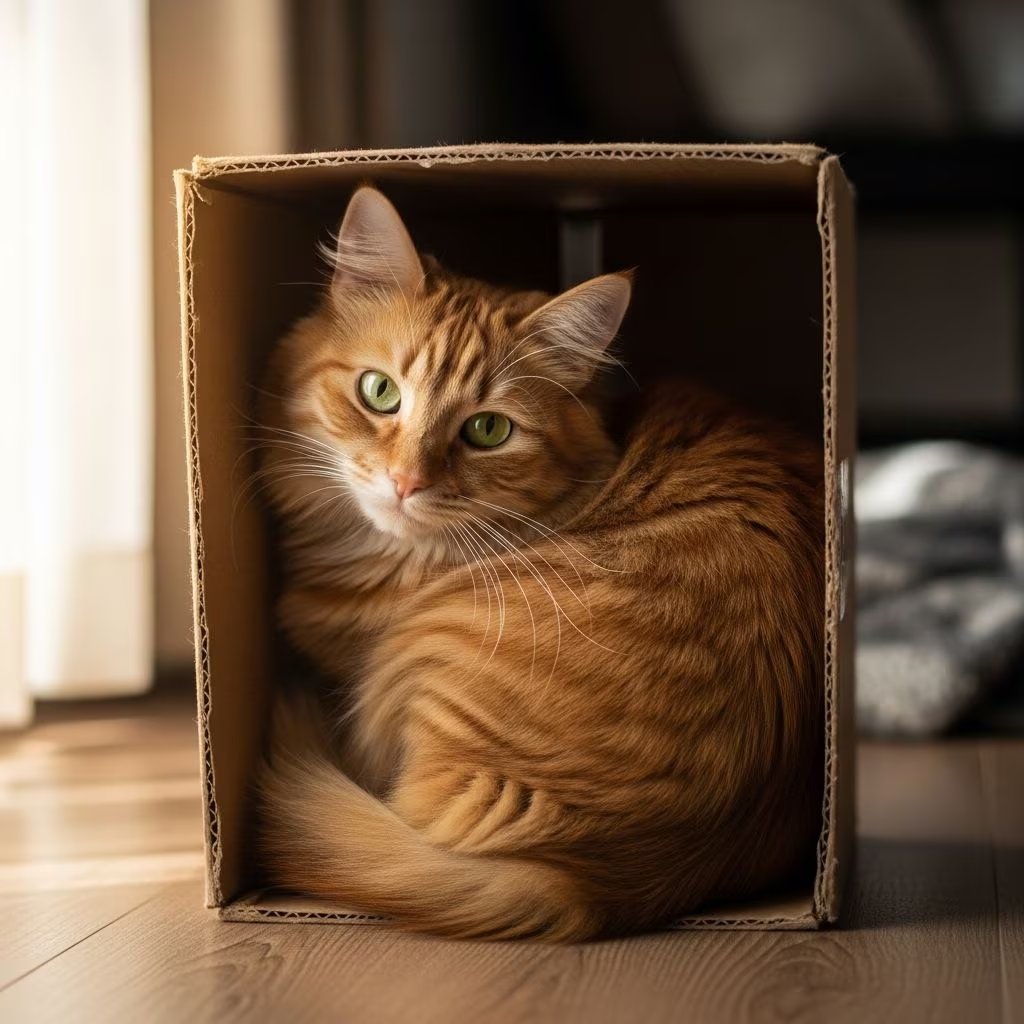
Cats exhibit a variety of peculiar behaviors, from kneading with their paws to chattering at birds, but few are as captivating as their insistence on squeezing into impossibly tight spaces. Whether it’s a shoebox, a narrow shelf, or the gap behind the refrigerator, cats seem determined to contort themselves into spots that defy logic. This article delves into the seven primary reasons behind this behavior, drawing from veterinary insights and scientific observations. We’ll also address safety concerns, prevention strategies, and answer common questions to help cat owners better understand and accommodate their feline friends.
The 7 Reasons Why Cats Like Small Spaces
Cats’ affinity for confined areas is deeply rooted in their evolutionary history and physiology. Far from mere whimsy, this habit serves practical purposes that enhance their well-being. Below, we explore the seven key reasons, supported by expert analysis.
1. They Are Hunters
At their core, cats are obligate carnivores and natural-born hunters, a trait inherited from their wild ancestors like the African wildcat. In the wild, stealth is paramount; small crevices and burrows provided ideal ambush points for stalking prey such as rodents or birds. Domestic cats retain this instinct, using tight spaces to “hide” during play or when observing potential “prey” like toys or moving objects. This behavior simulates the pounce-and-capture sequence, keeping their predatory skills sharp even in a home environment.
2. They Are Safe and Secure
Tight spaces offer cats a profound sense of security, mimicking the protective dens their wild counterparts seek to evade predators. With walls pressing against their bodies, cats experience reduced vulnerability—no attacks can come from behind or above. This is especially appealing during stressful situations, such as thunderstorms, visitors, or introductions to new pets. Veterinary behaviorists note that this “hug-like” enclosure triggers a calming response, lowering heart rates and promoting relaxation.
3. They Are Getting Warm
Cats have a higher metabolic rate than many mammals, generating significant body heat—typically maintaining a core temperature of 100.5–102.5°F (38–39.1°C). Enclosed spaces trap this warmth, creating a toasty microclimate ideal for lounging, particularly in cooler seasons. Cardboard boxes or appliance nooks become natural radiators, preventing heat loss through a smaller surface area. This thermoregulatory behavior explains why cats often shun spacious beds for compact alternatives.
4. Marking Their Territory
Territorial instincts drive cats to claim spaces through scent marking. As solitary hunters by nature, they rub cheek glands or leave subtle pheromones in confined areas, declaring ownership. Squeezing into tight spots amplifies this, as the close contact ensures thorough scent distribution. Over time, these “owned” hideouts become comfort zones, reinforcing the cat’s environmental mastery and reducing anxiety in multi-cat households.
5. They Are Curious and Playful
Curiosity is a hallmark of feline personality, often encapsulated in the adage “curiosity killed the cat.” Adventurous cats view tight spaces as playgrounds for exploration, squeezing through to investigate novel scents or sounds. This activity provides mental stimulation and physical exercise, preventing boredom-related issues like destructive scratching. Playful contortions also mimic hunting maneuvers, blending fun with fitness.
6. They Are Stretching
Surprisingly, wedging into small spaces aids musculoskeletal health. The compressive posture stretches spinal muscles, promotes joint flexibility, and enhances circulation—benefits akin to yoga for humans. Cats’ 30+ vertebrae and loose ligaments allow extreme flexion without strain, making this a low-effort way to maintain athleticism. Vets recommend observing for limber movements as a sign of good orthopedic health.
7. Psychological Well-Being
Deep pressure therapy, well-documented in humans and dogs via weighted blankets or ThunderShirts, likely applies to cats. Compression stimulates endorphin release, reducing cortisol and alleviating anxiety. Studies on anxiety garments for dogs show measurable calming effects, and feline behaviorists extrapolate similar benefits from self-induced squeezes. This natural “hug” fosters emotional balance, especially for rescue cats with trauma histories.
How Cats Physically Squeeze into Tight Spaces
Beyond motivation lies remarkable anatomy. Cats lack a functional collarbone, enabling their shoulder blades to rotate independently, allowing passage through openings as small as their skull width—the widest rigid part of their body. Their flexible spine, with extra vertebrae, permits liquid-like flowing. Whiskers act as tactile rulers, measuring gaps with nerve-rich follicles to prevent stuck mishaps. A 2014 study even humorously probed if cats qualify as liquids due to this adaptability.
Recent research from Eötvös Loránd University (2023) suggests cats possess body awareness, hesitating at low-height openings to avoid injury but boldly tackling narrow widths via trial-and-error—strategies honed by evolution for safe navigation.
Is It Dangerous for Cats to Squeeze into Tight Spaces?
Generally harmless, this behavior leverages cats’ resilience. However, risks include getting stuck in wiring-heavy appliances, overheating in non-ventilated spots, or injury from sharp edges. Monitor for distress signs like prolonged yowling or labored breathing. Obese cats face amplified dangers due to reduced flexibility.
| Risk | Description | Prevention |
|---|---|---|
| Stuck in Appliances | Behind fridges or washers with cords | Block access with barriers |
| Overheating | Trapped heat in sealed boxes | Provide ventilated alternatives |
| Injury | Sharp objects or falls | Secure hazards |
How Can I Prevent My Cat from Squeezing into Tight Spaces?
Suppression is impractical—embrace and redirect instead. Provide cat condos, tunnel toys, window perches, and paper bags as safe proxies. Place them near problem areas, using treats and praise for adoption. Gradually relocate favorites. Block dangers with foam blockers or furniture rearrangement. Enrich the environment with scratching posts and puzzles to curb boredom-driven escapades.
- Invest in multi-level cat trees with enclosed cubbies.
- Use pheromone diffusers to reduce stress-induced hiding.
- Rotate toys to sustain interest.
- Consult vets for persistent anxiety.
Frequently Asked Questions (FAQs)
Why do cats like boxes so much?
Boxes epitomize ideal tight spaces: secure, warm, and scent-absorbent. They fulfill multiple needs—security, warmth, territory—simultaneously.
Do all cats squeeze into small spaces?
Most do, varying by personality. Shy or anxious cats prefer it more; confident ones may lounge openly.
Is it bad if my cat hides a lot?
Occasional hiding is normal; excessive may signal illness, stress, or pain. Monitor eating, litter habits; vet if concerned.
Can kittens get stuck squeezing into spaces?
Less likely due to flexibility, but supervise to avoid hazards. Teach boundaries early.
How small a space can a cat fit into?
Limited by skull size; body compresses remarkably. Whiskers gauge safely.
Conclusion
Cats’ love for tight spaces weaves instinct, physiology, and psychology into a survival tapestry. From hunter’s lairs to cozy retreats, these quirks affirm their wild heritage. By offering safe outlets, owners nurture happiness and health, turning potential woes into bonding joys. Embrace the squeeze—it’s feline felicity at its finest.
References
- Why Do Cats Like Squeezing into Tight Spaces? 7 Vet-Reviewed Reasons — Catster. 2023-10-15. https://www.catster.com/cat-behavior/why-do-cats-like-squeezing-into-tight-spaces/
- How do cats squeeze through small spaces? — Live Science. 2023-08-22. https://www.livescience.com/how-cats-squeeze-through-small-spaces
- Cats May Be Aware of Their Body Size, Suggests Study — Smithsonian Magazine. 2023-11-10. https://www.smithsonianmag.com/smart-news/cats-may-be-aware-of-their-body-size-suggests-study-of-their-famously-liquid-behavior-180985282/
- Shoulder Girdle Anatomy in Cats — National Center for Biotechnology Information (NCBI). 2022-05-01. https://www.ncbi.nlm.nih.gov/books/NBK557855/
- Feline Behavior and Enclosure Preferences — International Cat Care. 2024-03-12. https://icatcare.org/advice/why-do-cats-like-boxes/



