

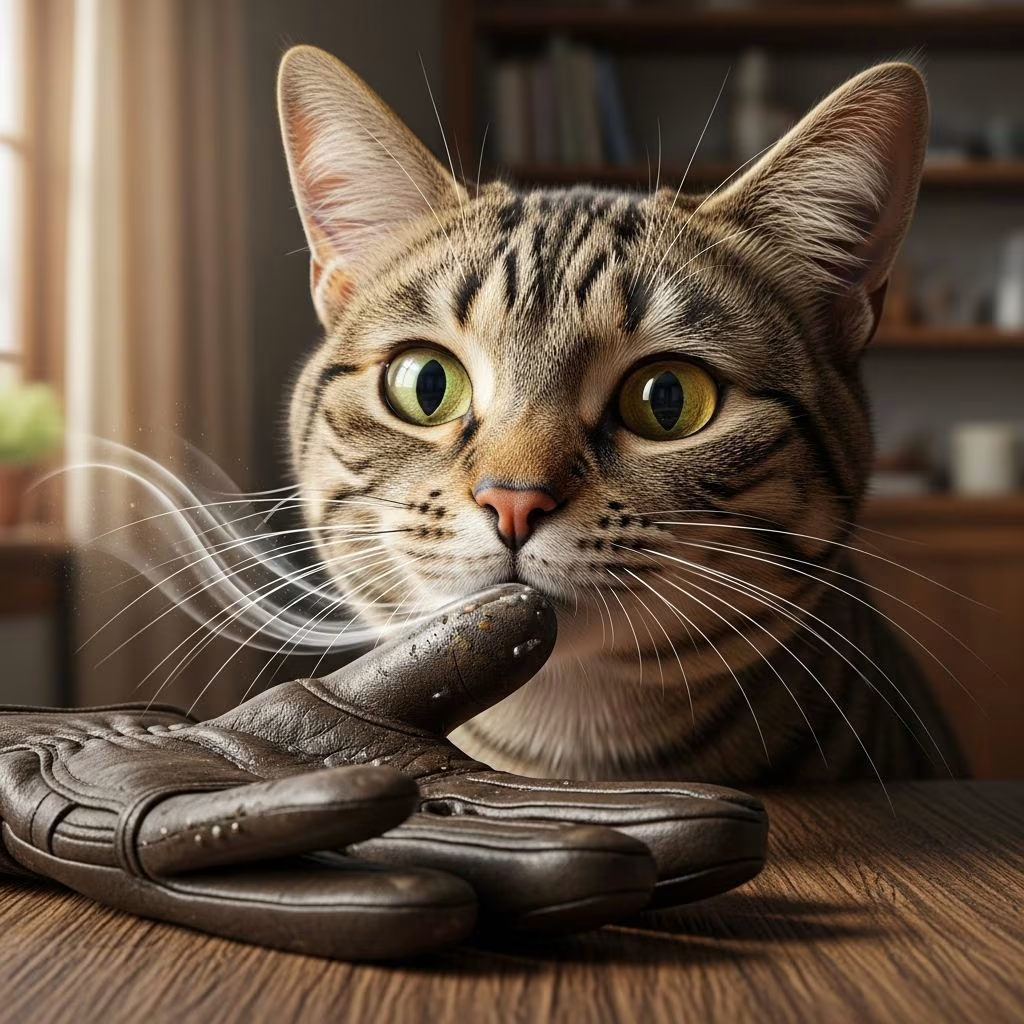
Cats have an extraordinary affinity for strong, pungent odors that often perplex their human companions. Whether it’s sniffing your worn socks, rolling in fishy smells, or investigating dirty laundry, this behavior stems from their highly developed sense of smell, which is 14 times stronger than humans’. This olfactory prowess allows cats to gather vital information about their environment, territory, and social connections. Understanding these instincts reveals why **cats like smelly stuff** so much—it’s not quirkiness but a survival mechanism rooted in communication, navigation, and emotional regulation.
How Cats’ Sense of Smell Works
Cats possess around 200 million olfactory receptors compared to humans’ mere 5 million, enabling them to detect scents at concentrations 40 times lower than we can. This superior olfaction is supported by the **vomeronasal organ (VNO)**, or Jacobson’s organ, located in the roof of their mouth. When a cat encounters an intriguing smell, it performs the **Flehmen response**: curling its lips, opening its mouth slightly, and inhaling to draw pheromones into the VNO for analysis. This is crucial for detecting social and reproductive cues.
Unlike dogs, which excel in long-range tracking with up to 300 million receptors, cats are selective close-range detectors optimized for territorial and social purposes. Their nasal structure includes a branched pathway: one for breathing and one dedicated to smell, enhancing efficiency.
- Olfactory Epithelium: A vast surface area lined with receptor cells that bind odor molecules.
- Main Olfactory System: Handles everyday scents like food and danger.
- Accessory Olfactory System (VNO): Specializes in pheromones for mating and social signals.
Reasons Cats Are Attracted to Smelly Things
Cats’ love for smelly stuff boils down to several instinctual drives. Here’s a breakdown:
1. Scent Marking and Territory
Cats have scent glands on their cheeks, forehead, paws, flanks, and tail base, producing unique pheromones. They rub against objects—or you—to deposit these scents, claiming territory and creating a familiar “scent map.” Smelly items like shoes intrigue them because they carry novel human odors that cats investigate before marking to integrate into their world.
A Tokyo University study found cats sniff unfamiliar human odors 2–3 times longer (30–40 seconds vs. 10–15 seconds for owners’), often followed by face-rubbing, suggesting they mark unknowns to familiarize them.
2. Social Communication and Recognition
Odors convey identity, health, sex, and emotional states. Cats distinguish familiar from unfamiliar humans and conspecifics via smell, spending more time on novel scents. They exchange scents through allorubbing and recognize maternal odors long-term.
Feces and urine carry signals about age, sex, and status; cats investigate strangers’ more thoroughly. Mother cats’ nest scents calm kittens, highlighting smell’s role in bonding.
3. Hunting Instincts and Prey Simulation
Strong smells mimic prey like fish or rodents, triggering predatory play. Cats roll in or “bunch” pungent items, simulating capture and evisceration—a harmless outlet for hunting drives in domestic settings.
4. Comfort and Stress Relief
Familiar scents, like an owner’s clothing, provide security via the Secure Base Effect. However, studies show cats prefer live owners over scented items for comfort in novel environments, though they may still sniff for reassurance.
Synthetic pheromones like Feliway mimic facial gland scents, reducing anxiety during moves or vet visits.
5. Personality and Lateralization
Personality influences responses: impulsive cats sniff more repetitively, while agreeable ones are calmer. Cats show nostril lateralization—right for novel scents, left for familiar—linked to brain hemispheres.
Common Smelly Things Cats Love (And Why)
| Smelly Item | Why Cats Like It | Behavior Observed |
|---|---|---|
| Dirty Socks/Shoes | Human pheromones + sweat = novel social cues | Sniffing, rubbing, sometimes carrying away |
| Fish or Fishy Smells | Mimics prey; high protein allure | Rolling, bunching, intense sniffing |
| Dirty Laundry | Familiar scents for comfort + new odors | Nesting, kneading, marking |
| Other Cats’ Items | Conspecific info (sex, health, status) | Extended investigation, possible aggression |
| Spices/Herbs (e.g., Catnip) | Pheromone-like volatiles trigger euphoria | |
Health Considerations: When Smelly Obsessions Go Too Far
Occasional sniffing is normal, but excessive focus on feces, vomit, or their own rear may signal health issues like dental disease, parasites, or anal gland problems. Hyperosmia (heightened smell sensitivity) can occur in pregnancy or illness. Consult a vet if behaviors change suddenly.
- Normal: Brief investigations of novel smells.
- Concerning: Obsessive eating of foul items, weight loss, or lethargy.
How to Manage Your Cat’s Love for Smelly Stuff
Channel instincts positively:
- Provide scent toys, catnip, or silvervine.
- Use pheromone diffusers for stress.
- Rotate toys to refresh scents.
- Secure laundry to prevent ingestion hazards.
- Enrich environment with scratching posts for marking.
Frequently Asked Questions (FAQs)
Do all cats like smelly things?
Most do due to innate olfaction, but personality and experiences vary responses. Shy cats may be more cautious.
Why does my cat sniff my shoes obsessively?
Shoes carry potent foot pheromones and outdoor scents, prompting investigation and marking.
Is the Flehmen response a sign of disgust?
No—it’s analysis via the VNO, often for intriguing pheromones.
Can cats smell emotions?
Yes, stress or illness alters human odors, and cats adjust behavior accordingly.
Why do cats rub on me after sniffing something smelly?
They’re mixing scents, bonding you into their group via allorubbing.
Conclusion: Embracing Your Cat’s Scent World
Your cat’s passion for smelly stuff is a window into their rich olfactory life. By appreciating this, you strengthen your bond and meet their needs. Next time Fluffy dives into your gym bag, remember: it’s not gross—it’s genius feline communication.
References
- Behavioral responses of domestic cats to human odor — PLOS One. 2024-10-15. https://journals.plos.org/plosone/article?id=10.1371/journal.pone.0324016
- How Cats Use Scent to Communicate and Connect — Insightful Animals (Substack). 2023-05-20. https://insightfulanimals.substack.com/p/the-secret-language-of-cats
- Cat’s Sense Of Smell — AskAnimalweb. 2024-08-10. https://askanimalweb.com/cats-sense-of-smell/
- Does your cat find your scent comforting? — AVSAB. 2023-11-05. https://avsab.org/does-your-cat-find-your-scent-comforting/
- Your cat probably knows your smell — Popular Science. 2025-03-12. https://www.popsci.com/environment/cat-knows-your-smell/
- Why your cat does these 6 things (according to science) — University of California. 2024-07-18. https://www.universityofcalifornia.edu/news/why-your-cat-does-these-6-things-according-science



