

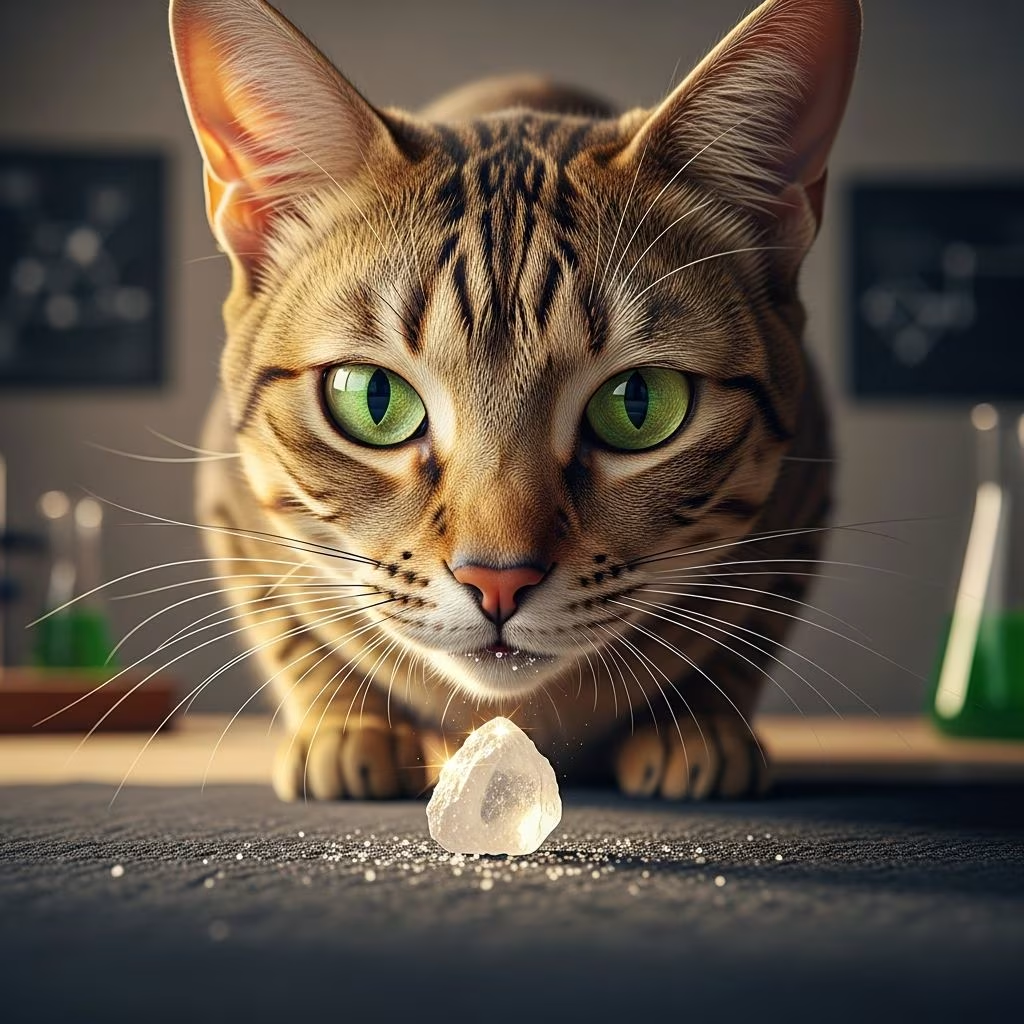
Why Do Cats Like Salt? Understanding Your Feline’s Salty Obsession
If you’ve ever noticed your cat enthusiastically licking your feet, hands, or face after a workout, you may have wondered what drives this behavior. One of the primary culprits is salt. Cats possess a sophisticated sensory system that makes them naturally attracted to the salty taste found on human skin. Understanding this attraction reveals much about feline biology, behavior, and the unique ways cats interact with their environment and the humans they live with.
The Science Behind Salt Attraction in Cats
Cats are carnivorous animals with taste receptors specifically adapted for detecting savory and meaty flavors. Unlike humans, who have taste receptors for sweetness, cats lack the ability to taste sugar effectively. Instead, their palate is finely tuned to umami and salty tastes—flavors that signal the presence of proteins and minerals essential for their diet.
The human body, particularly the feet, is a natural source of salt. Human feet contain approximately 250,000 sweat glands, making them one of the most perspiration-rich areas of the body. Even when you don’t feel visibly sweaty, your skin continuously secretes a thin layer of salt, minerals, and proteins. For a cat with heightened taste sensitivity, your feet essentially become a delicious, easily accessible snack—a natural salt lick that requires minimal effort to enjoy.
The Salt Lick Theory: Why Cats Crave Your Perspiration
Your cat isn’t attempting to clean you when they lick your feet or other areas of your body covered in sweat. Rather, they are engaging in what researchers and behaviorists call the “salt lick” behavior—a pleasurable sensory experience. Cats are drawn to the specific combination of salt and minerals present in human perspiration, which appeals to their carnivorous instincts and biological need for sodium.
This behavior is particularly pronounced after you’ve been exercising, spending time outdoors, or during warmer months when perspiration is more abundant. Your cat may lick your feet intensively as they’re essentially enjoying a post-workout snack enriched with the electrolytes and minerals their bodies find appealing.
Beyond Taste: The Information-Gathering Function
While the salt content certainly plays a role in why cats lick your feet, there’s more to this behavior than simple taste preference. Your feet serve as an information highway for your cat, conveying crucial data about your activities and environment.
Your feet are at ground level—the exact same level at which your cat naturally operates. As you walk throughout your day, your feet pick up a complex array of scents from your environment:
- Pollen and soil particles
- Food crumbs and organic matter
- Pheromones and scents from other animals
- Environmental chemicals and outdoor odors
- Distinctive scents from places you’ve visited
By licking your feet, your cat is essentially “reading the news”—analyzing the chemical data to understand precisely where you’ve been and what you’ve encountered. This behavior demonstrates the remarkable olfactory abilities of cats, which far exceed human perception. If your cat detects the scent of another cat on your shoes or clothing, they may lick your feet more intensively as a way to overwrite that foreign smell with their own scent, effectively claiming you as part of their territory.
Instinctual Behaviors: Comfort, Security, and Bonding
Beyond taste and information gathering, foot-licking behavior can also be rooted in deeper instinctual and emotional needs. For some cats, particularly those weaned too early from their mothers, the shape and texture of a human toe can trigger nursing memories and behaviors.
These cats may treat your toe like a nursing teat, suckling or gently licking it as a self-soothing mechanism. This behavior releases calming endorphins in the cat’s brain, reducing anxiety and promoting feelings of security and comfort. In essence, your feet become a source of emotional comfort that helps your cat manage stress and anxiety.
Additionally, licking behavior is a form of bonding in the feline world. When cats lick each other, it strengthens social bonds and communicates affection. When your cat licks your feet or other body parts, they are extending this bonding behavior to you, indicating that they consider you part of their social group and feel comfortable and connected with you.
The Role of Scent Communication in Cat Behavior
Cats rely heavily on scent for communication and navigation. They possess scent glands distributed throughout their bodies—from their chin and cheeks to their toes and tail—that produce distinctive chemical signals called pheromones. These scent markers serve multiple critical functions in feline behavior:
- Navigating and understanding their environment
- Identifying familiar versus unfamiliar individuals
- Engaging in social bonding with other cats and humans
- Establishing and maintaining territory
- Communicating emotional and reproductive status
When your cat licks your feet and then rubs their face or body against you, they are depositing their scent on you while simultaneously gathering information about your scent profile. This dual action reinforces the bond between you and your cat while also marking you as part of their trusted inner circle.
Individual Variations in Salt Attraction
Not all cats display the same level of interest in salt or foot-licking behavior. Individual cats show significant variation in their sensory preferences and behavioral responses, influenced by both genetic factors and early life experiences.
Some cats may be intensely attracted to the salt on your skin, while others show minimal interest. This variation reflects differences in:
- Genetic variation in olfactory receptors
- Individual taste preferences and sensitivities
- Early weaning and socialization experiences
- Personality traits and behavioral temperament
- Overall health status and nutritional needs
Understanding that cats are individuals with unique preferences helps explain why your cat’s behavior may differ significantly from other cats in your household or among your friends’ pets.
When Salt Licking Becomes a Concern
While occasional salt licking is a normal and harmless behavior, excessive licking can sometimes indicate underlying health or behavioral issues. If your cat is obsessively licking your feet or other areas of your body, it may signal:
- Nutritional deficiencies or mineral imbalances
- Skin allergies or irritation
- Anxiety, stress, or behavioral disorders
- Underlying medical conditions
- Compulsive behavioral tendencies
If you notice a sudden increase in licking behavior or if your cat appears distressed or obsessive about this activity, consult with your veterinarian to rule out any underlying health issues.
How to Manage Your Cat’s Salt-Seeking Behavior
If you find your cat’s enthusiastic foot-licking behavior uncomfortable or unpleasant, there are several strategies you can employ:
- Maintain good hygiene: Wash your feet regularly, especially after exercise or outdoor activities, to reduce the salt content and scent attractiveness.
- Use deterrent sprays: Apply cat-safe deterrent sprays to your feet or use protective barriers like socks or blankets.
- Provide alternative salt sources: Offer approved salt-containing treats or supplements that satisfy your cat’s mineral cravings in a controlled manner.
- Redirect behavior: When your cat begins licking your feet, gently redirect their attention to toys or other approved activities.
- Establish boundaries: Consistently discourage the behavior by moving away or providing a gentle deterrent when licking begins.
- Increase enrichment: Provide more interactive play and mental stimulation to redirect your cat’s attention and energy.
Understanding Your Cat’s Sensory World
Your cat’s attraction to salt is ultimately a window into their remarkable sensory abilities and complex behavioral systems. Cats experience the world through senses far more acute than our own, particularly in smell, taste, and touch. What appears to us as simple foot-licking is actually a sophisticated behavior that serves multiple purposes: satisfying taste preferences, gathering environmental information, bonding with you, and managing emotions.
By understanding the reasons behind this behavior, you gain deeper insight into your feline companion’s needs, preferences, and personality. This knowledge strengthens the bond you share and helps you provide better care tailored to your individual cat’s unique characteristics.
Frequently Asked Questions (FAQs)
Q: Is it safe for cats to consume salt?
A: While cats are attracted to salt and can safely consume small amounts found naturally on skin, excessive salt intake can be harmful. Cats require minimal sodium, and too much salt can lead to dehydration, kidney disease, and electrolyte imbalances. Never intentionally provide your cat with salty foods or supplements without veterinary guidance.
Q: Why does my cat only lick my feet and not other family members?
A: Cats often develop strong preferences for specific individuals based on scent, interaction style, and bonding experiences. Your cat may lick your feet preferentially if you spend more time with them, have a scent they find particularly appealing, or if they’ve established a stronger emotional bond with you.
Q: Can excessive foot-licking indicate a medical problem?
A: Yes, sudden changes in licking behavior or obsessive foot-licking can signal nutritional deficiencies, skin conditions, allergies, anxiety, or other health issues. If your cat’s behavior changes dramatically, consult your veterinarian for a thorough evaluation.
Q: How can I stop my cat from licking my feet?
A: Maintain good foot hygiene, wear socks, use cat-safe deterrent sprays, redirect their attention to toys, and provide additional environmental enrichment and play opportunities. Consistency is key to modifying this behavior.
Q: Do all cats like salt equally?
A: No, cats show individual variation in their attraction to salt and foot-licking behavior based on genetics, personality, early experiences, and health status. Some cats are enthusiastic salt-seekers while others show minimal interest.
References
- 4 Reasons Why Cats Lick Your Feet & Toes — Lady N Pet. Accessed January 2026. https://ladynpet.com/us/blog/why-does-my-cat-lick-my-feet/
- Behavioral differences among domestic cats in the response to cat-attracting plants — National Institute of Health (NIH), PMC9414117. 2022. https://pmc.ncbi.nlm.nih.gov/articles/PMC9414117/
- Science Proves Cats Really Love Us – But For a Surprising Reason — YouTube. Accessed January 2026. https://www.youtube.com/watch?v=fEPMRSvROW0
- How Cats Use Scent to Communicate and Connect — Insightful Animals. Accessed January 2026. https://insightfulanimals.substack.com/p/the-secret-language-of-cats



