

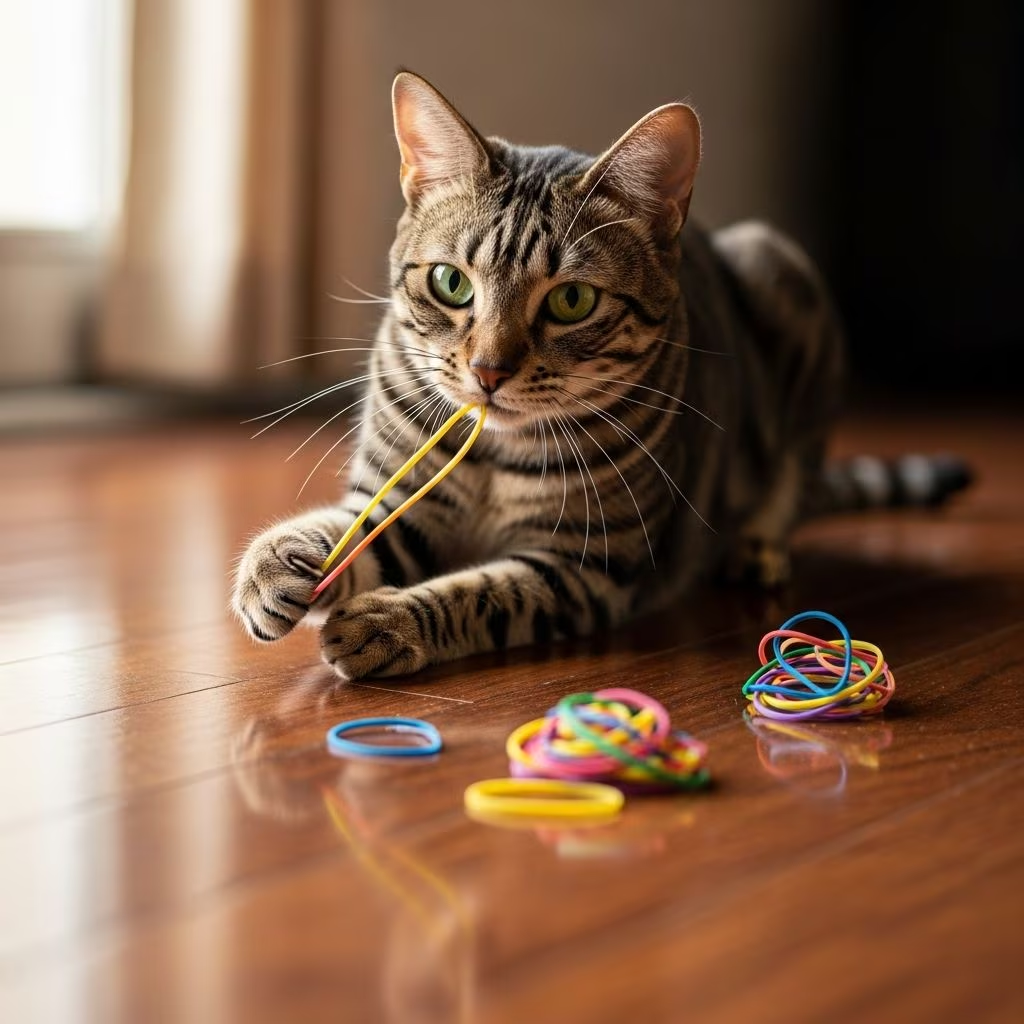
Cats are inexplicably drawn to rubber bands because their elasticity, unpredictable bounce, and texture mimic prey, triggering innate hunting instincts while providing sensory stimulation through touch and sound.
This fascination stems from domestic cats’ evolutionary wiring as predators, where even household items like rubber bands activate stalking, pouncing, and chewing behaviors essential for mental and physical health. However, this play poses severe risks, including choking, intestinal blockages, and life-threatening complications if swallowed, necessitating safer alternatives.
Why Are Cats Obsessed With Rubber Bands?
The obsession begins with a cat’s natural curiosity toward small, dynamic objects scattered around homes. Rubber bands, often left on floors or tables, become instant toys due to their responsive nature. Cats bat them, watch them skitter away, and pounce repeatedly, finding endless entertainment in this simple item.
Unlike static toys, rubber bands deliver novelty with every interaction—their stretch-and-snap action creates surprise, keeping cats engaged far longer than predictable objects. This behavior is universal among felines, from kittens teething to adults seeking stimulation, highlighting how everyday items fulfill deep-seated predatory drives.
The Science Behind Feline Fascination
Domestic cats retain wild ancestors’ traits, where play replicates hunting sequences: stalk, chase, pounce, bite, and kill. Rubber bands excel here, offering erratic movement that simulates fleeing mice or insects, prompting full predatory responses even without real prey.
Sensorily, cats thrive on multisensory input. The rubber band’s smooth, yielding texture provides satisfying ‘mouth feel’ when chewed, ideal for oral exploration without damaging teeth. Stretching produces a sharp snap—auditory feedback that reinforces play, as cats’ sensitive ears detect these high-pitched sounds.
Play isn’t frivolous; it’s vital for development. It hones motor skills, maintains muscle tone, reduces stress, and prevents boredom-induced issues like destructive scratching. Rubber bands’ portability allows solo play, carrying them like conquered prey.
Hunting Instincts: Why Rubber Bands Mimic Prey
Cats’ brains are hardwired for hunting, with 60% of their day potentially spent in predatory mimicry if unstimulated. Rubber bands’ small size (prey-like), elasticity (evading capture), and bounce (unpredictable escape) perfectly emulate rodents or birds, eliciting intense focus and repeated ‘attacks’.
- Stalk Phase: Cats creep toward the band, eyes locked.
- Chase Phase: Batting sends it flying erratically.
- Pounce & Capture: Forepaws pin it; jaws deliver the ‘kill bite.’
- Carry & Stash: Victors are often hidden for later.
This sequence satisfies evolutionary needs, explaining why cats ignore expensive toys for free rubber bands.
Sensory Appeal: Texture, Sound, and Movement
Tactilely, the band’s flexible resistance yields to bites without rigidity, appealing during teething or stress-chewing phases. Unlike plastic or fabric, it rebounds, extending play sessions.
Auditorily, the ‘twang’ of release captivates, akin to prey squeaks. Visually, its quick zips trigger motion-detection neurons hyper-tuned in felines.
Combined, these create a sensory cocktail irresistible to cats, whose whiskers and paw pads amplify feedback from such items.
Are Rubber Bands Dangerous for Cats?
Despite appeal, rubber bands are hazardous toys. Swallowing risks severe issues: they’re indigestible, non-degradable, and can coil in intestines.
Vets warn against play with bands, hair ties, or strings— all mimic prey but lead to emergencies. Supervision fails if owners step away; bands vanish into mouths swiftly.
What Happens If a Cat Swallows a Rubber Band?
If ingested, rubber passes undigested but risks lodgment. Small bands (<1 inch) may exit via feces; monitor stools closely. Larger (>1.5 inches) demand vet contact immediately, even sans symptoms.
Complications timeline: hours for choking; days for blockages. Non-passage signals obstruction—urgent surgery may follow.
| Risk | Symptoms | Action |
|---|---|---|
| Choking | Gagging, pawing mouth | Don’t pull; vet NOW |
| Blockage | Vomiting, no appetite, lethargy | X-rays, possible surgery |
| Intussusception | Diarrhea, belly pain | Emergency intervention |
Symptoms of Rubber Band Ingestion
- Vomiting undigested food repeatedly.
- Loss of appetite or refusal to eat.
- Abnormal feces: diarrhea, constipation, blood.
- Lethargy, hiding, reduced playfulness.
- Abdominal tenderness when touched.
- Weight loss over days.
Irritability or pica (chewing odd items) may signal underlying issues like anxiety or illness.
What To Do If Your Cat Ate a Rubber Band
Stay calm; assess size and symptoms. Tiny bands? Watch poop 2-3 days. Symptoms? Vet stat—mention ingestion for diagnostics.
Visible in mouth? Never yank—could tangle tongue or tear esophagus. Withhold food/water; seek pro help.
Stuck in anus during defecation? Gentle pull if easy; resistance means vet.
How To Stop Your Cat From Playing With Rubber Bands
Prevention trumps cure: store bands in sealed containers. Clean floors daily; use scent deterrents like citrus sprays.
Enrich environment: daily 15-20 min interactive play bonds you while tiring them. Rotate toys to mimic novelty.
Safe Alternatives To Rubber Bands for Cats
Opt for durable, non-ingestible toys channeling instincts safely.
| Toy Type | Why It Works | Play Value | Cost |
|---|---|---|---|
| Wand Toys (feather/chaser) | Mimics flying prey; interactive | High | Low-Med |
| Bounce Balls | Unpredictable roll/bounce | High | Low |
| Chew Toys (rubber dental) | Satisfies oral fixation safely | Med | Low |
| Tunnel/Balls Track | Solo hunting simulation | High | Med |
| DIY Sock Prey | Stuff with catnip; supervised | High | Free |
Supervise dangly toys; discard frayed ones. Catnip or silvervine enhances appeal.
Benefits of Proper Play for Cats
Structured play prevents obesity, curbs aggression, and fosters confidence. It mirrors 8-12 hunts/day of feral cats, promoting 7-9 hours sleep post-session.
Frequently Asked Questions (FAQs)
Is it okay for cats to play with rubber bands?
No—while fun, ingestion risks blockages or choking. Use vet-approved toys instead.
What if I see my cat chewing a rubber band?
Remove safely if possible; monitor or vet if swallowed. Chewing signals pica—check health.
Can a cat pass a rubber band naturally?
Small ones yes, via poop. Large? Risky—consult vet; symptoms warrant urgency.
Why do some cats chew rubber bands obsessively?
Hunting simulation, boredom, anxiety, or illness. Provide alternatives and enrich environment.
What are the best safe toys for rubber band-loving cats?
Wands, bouncy balls, dental chews—offer movement and texture without dangers.
Conclusion
Cats adore rubber bands for their prey-mimicking qualities fueling vital instincts, but dangers outweigh thrills. Proactive owners swap risks for safe toys, ensuring playful, healthy lives. Vigilance and engagement safeguard your feline’s well-being.
References
- Why Do Cats Love Rubber Bands? Swallowing Risks and Alternatives — Alibaba Cat Lovers. 2023. https://catlovers.alibaba.com/why-cats-love/why-do-cats-love-rubber-bands-swallowing-risks-and-alternatives
- My Cat Ate a Rubber Band: Here’s What to Do (Vet Answer) — Catster. 2023-10-15. https://www.catster.com/ask-the-vet/cat-ate-rubber-band/
- 14 Weird Cat Behaviors Explained — ASPCA Pet Insurance. 2024. https://www.aspcapetinsurance.com/resources/14-weird-cat-behaviors-explained/
- Why does my cat keep chewing on rubber bands? — Dial a Vet. 2023. https://www.dialavet.com/vet-answers/post/cat-chewing-rubber-bands-50038



