

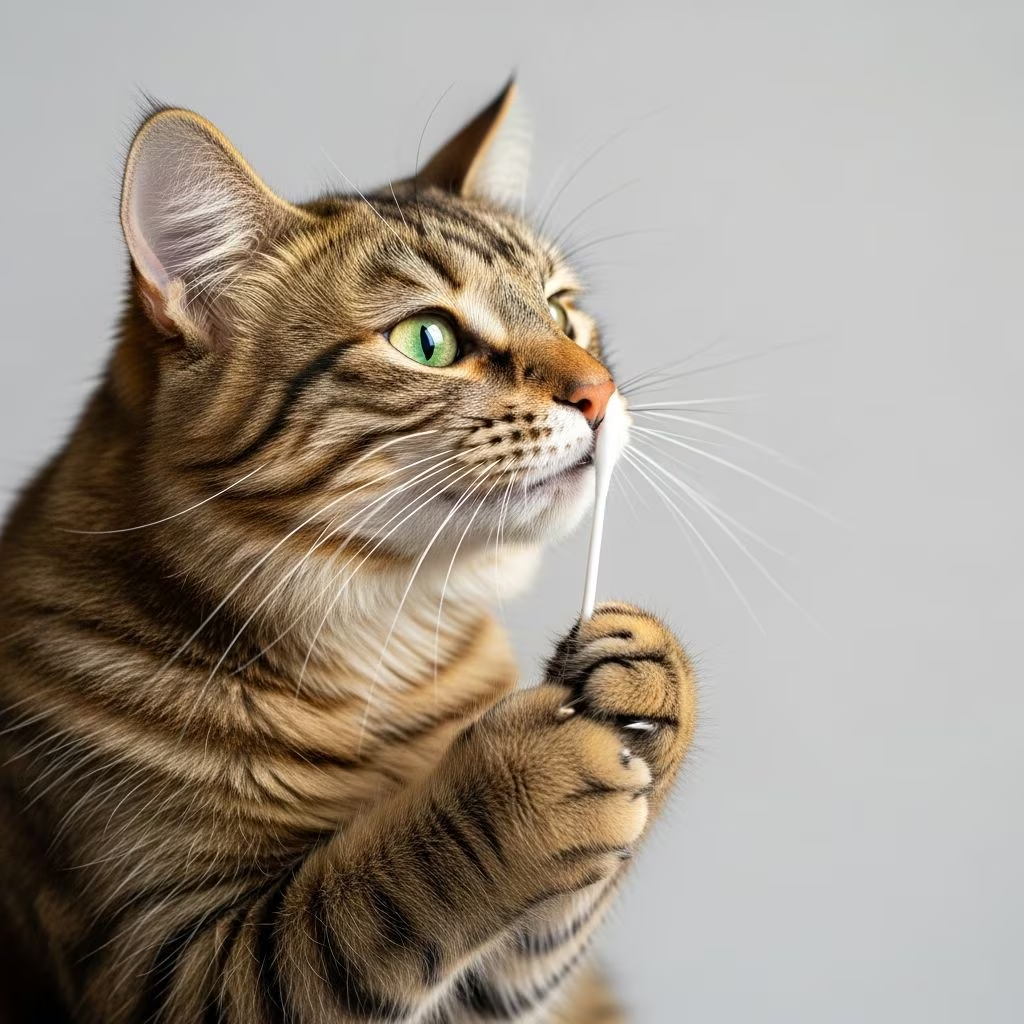
Why Do Cats Like Q-Tips? Understanding Your Cat’s Quirky Obsession
If you’ve ever noticed your cat chasing, batting, or attempting to chew on Q-tips, you’re not alone. Many cat owners find themselves puzzled by their feline companions’ inexplicable attraction to these seemingly ordinary cotton swabs. While we may never fully understand the feline mind, there are several logical explanations for why cats find Q-tips so entertaining. Understanding these reasons can help you better comprehend your cat’s behavior and take appropriate safety measures to protect them from potential harm.
The Three Possible Reasons Why Cats Love Q-Tips
1. They Are Fun to Play With
The primary reason your cat may be obsessed with Q-tips is their natural playful instinct that seeks entertainment in virtually any object. Cats are incredibly curious beings with an innate drive to explore strange and unfamiliar things. Their inquisitive nature means they’re constantly searching for new sources of mental stimulation and physical engagement.
In your cat’s mind, Q-tips are uniquely shaped flexible sticks with soft, fuzzy endings that provide endless entertainment possibilities. Some cats become fascinated with throwing them around, watching them tumble across the floor, and pouncing on them as they move. Others may prefer simply pushing them with their paws or nose to observe how they respond to contact. This playful behavior mirrors their natural hunting instincts, where they practice stalking and batting at potential prey.
Even though Q-tips are designed for human use, they possess qualities that appeal directly to feline entertainment preferences. Their irregular shape makes them unpredictable when thrown or batted, which creates excitement. The fact that they’re not heavy also means your cat can easily manipulate them without requiring significant strength, making them an accessible toy for cats of all ages and sizes.
2. Some Cats Love Q-Tip Texture
The unique texture of Q-tips—firm yet bendable with soft cotton ends—appeals to many cats’ sensory preferences. While cats are not prolific chewers like dogs, they do enjoy brief interactions with textured items, particularly soft and fuzzy materials that might remind them of their natural prey.
It’s important to understand that cats don’t chew food the way humans or dogs do. Instead, they’re designed to tear pieces of meat from their prey and shred them using their teeth and claws. While they may crunch kibble occasionally, they typically swallow it whole. Despite this biological reality, many cats still enjoy taking exploratory bites at toys and other objects to test their texture and composition.
When cats encounter Q-tips, they may bite at them out of curiosity rather than genuine chewing behavior. The soft cotton exterior provides tactile stimulation that some cats find particularly satisfying. However, there’s a critical concern with this behavior: cats may tear the cotton off the swab, creating a serious ingestion risk. This is why supervision becomes essential whenever your cat has access to Q-tips.
3. It’s Fun to Roll Them Around Due to Their Light Weight
Another compelling reason cats adore Q-tips is their minimal weight combined with their irregular shape. These characteristics make them ideal playthings in a cat’s perspective. Q-tips are light enough that a cat can effortlessly throw them into the air, catch them, and chase them as they tumble unpredictably across the ground.
The fact that Q-tips are so easy to manipulate gives cats a sense of control and mastery. They can pick them up with their teeth or claws without exerting significant effort, and watching them fly through the air provides visual stimulation that captures their attention. This behavior also connects to cats’ natural instinct to play with their food and prey, which is why even items that have no nutritional value can trigger hunting and play responses.
When your cat throws a Q-tip and watches it fall, they’re essentially engaging in the same type of play behavior they would demonstrate with a mouse or small bird in the wild. This instinctual play serves important functions including physical exercise, mental enrichment, and the refinement of hunting skills that, while unnecessary for domestic cats, remain deeply ingrained in their genetic programming.
Important Safety Considerations
While it may be amusing to watch your cat play with Q-tips, it’s crucial to understand the serious health risks associated with this behavior. Ingesting even small pieces of Q-tips can lead to gastrointestinal blockages, a potentially life-threatening condition that often requires emergency veterinary surgery. This makes safety management absolutely essential for any cat owner whose pet is attracted to these items.
Keep Q-Tips in a Sealed Container
The first and most important safety rule is to always store Q-tips in a sealed container that your cat cannot access. Many cat owners make the mistake of leaving Q-tips in bathroom drawers or on countertops, not realizing that curious cats can often find ways to reach these items. By keeping your Q-tips securely stored in a closed, preferably opaque container, you eliminate the temptation and opportunity for your cat to access them when you’re not home.
Consider storing Q-tips in a cabinet with a latch or lock if your cat is particularly resourceful. Some cats are surprisingly adept at opening drawers or pushing things around, so a container alone may not be sufficient for all felines. The goal is to make Q-tips completely inaccessible so your cat cannot accidentally swallow pieces while satisfying their curiosity.
Monitor Your Cat’s Playtime
If you choose to allow your cat to play with Q-tips, you must remain present and vigilant throughout the entire play session. Close supervision allows you to immediately intervene if your cat begins attempting to eat the Q-tips rather than simply playing with them. Watch for signs that they’re trying to tear off cotton fibers or ingest pieces of the swab.
During supervised playtime, your cat will typically throw the Q-tip in the air, briefly bite at it, and roll it around on the ground. This type of play is generally safe when you’re watching. However, the moment your cat starts trying to chew more aggressively or tear the cotton apart, it’s time to remove the Q-tip and redirect their attention to safer toys.
Recognize Warning Signs of Ingestion
It’s essential to know what to do if you suspect your cat has ingested a Q-tip or piece of one. Contact your veterinarian immediately if you witness your cat swallowing a Q-tip or if you observe suspicious behavior that suggests ingestion may have occurred. Early intervention can prevent the development of dangerous blockages that might otherwise require surgery.
Signs that your cat may have ingested a foreign object include loss of appetite, vomiting, lethargy, constipation, abdominal pain or distension, and inability to defecate normally. If you notice any of these symptoms, seek veterinary care without delay.
Safer Alternatives to Q-Tips for Play
Rather than allowing your cat access to Q-tips, consider providing safer toys that offer similar entertainment value. Feather wands, small balls, toy mice, and other cat-specific toys are designed with feline safety in mind and provide appropriate outlets for play behavior. Many of these alternatives offer the same irregular shapes, light weights, and interactive potential that make Q-tips appealing, without the ingestion risks.
Look for toys with secure construction where no small pieces can be easily torn off or swallowed. Interactive toys that require your participation, such as wand toys, also provide the added benefit of bonding time and more controlled play sessions.
Understanding Your Cat’s Behavior
Learning why your cat is attracted to Q-tips provides valuable insight into feline psychology and natural instincts. Cats are not being mischievous or stubborn when they seek out Q-tips; they’re simply responding to legitimate play drives and sensory preferences. By understanding these motivations, you can develop a more compassionate approach to managing your cat’s behavior while still prioritizing their safety.
Rather than simply scolding your cat for showing interest in Q-tips, consider redirecting that interest toward appropriate toys. This positive approach helps your cat understand what they can play with while maintaining your relationship and respecting their need for mental and physical stimulation.
Frequently Asked Questions About Cats and Q-Tips
Q: Why do cats like Q-tips more than regular toys?
A: Q-tips appeal to cats because of their unique texture, light weight, and irregular shape. They’re also readily available in most homes, making them easily accessible compared to toys that must be purchased. The novelty factor plays a role too—cats often find ordinary household items more interesting than store-bought toys.
Q: Is it safe to let my cat play with Q-tips?
A: Only under close supervision. While brief, supervised play may be acceptable, the risks of ingestion make it preferable to provide safer alternatives. The moment your cat attempts to chew or tear the cotton, playtime should end immediately.
Q: What should I do if my cat swallowed a Q-tip?
A: Contact your veterinarian immediately. Do not wait for symptoms to develop. Early intervention is critical to prevent potentially life-threatening blockages. Your vet may recommend X-rays or other diagnostics to assess the situation.
Q: Are there Q-tip alternatives specifically designed for cats?
A: While there aren’t Q-tip equivalents made for cats, many toys offer similar appeal. Look for small, lightweight toys with interesting textures, such as feather toys, crinkle balls, or fuzzy mice. Wand toys with feathers or strings also provide interactive play opportunities.
Q: Why is my cat suddenly obsessed with Q-tips?
A: Cats often become fascinated with items they’ve discovered or that are new to their environment. A sudden obsession might indicate your cat needs more mental and physical stimulation. Providing appropriate toys and interactive play sessions can help redirect this interest.
Q: Can Q-tip ingestion cause serious health problems?
A: Yes, absolutely. Ingested Q-tips can create gastrointestinal blockages that restrict normal digestive function. These blockages often require emergency surgery to resolve and can be life-threatening if left untreated.
References
- Why Do Cats Like Q Tips? 3 Possible Reasons & Vet-Reviewed Information — Catster. https://www.catster.com/cat-health-care/why-do-cats-like-q-tips/
- Does Your Cat Get Q-tips Out of the Trash with Ear Wax on Them? — Trumann Animal Clinic. https://trumannanimalclinic.com/2020/04/06/does-your-cat-get-q-tips-out-of-the-trash-with-ear-wax-on-them/
- My Cats are Obsessed with Q-Tips! — Cole and Marmalade, YouTube. 2016. https://www.youtube.com/watch?v=ZIgfblPadJk



