

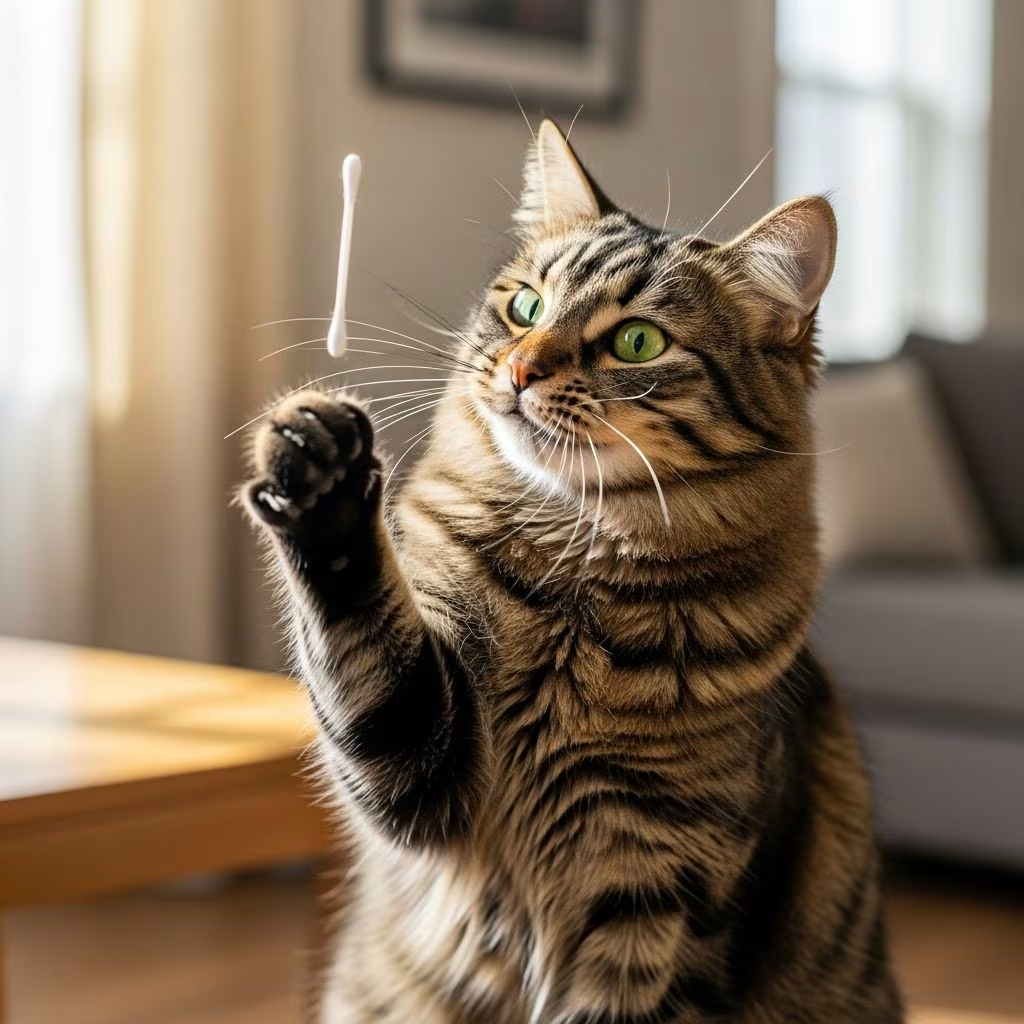
Cats have an uncanny ability to turn everyday household items into their favorite toys, and Q-tips—those simple cotton swabs—are no exception. Many cat owners report finding their felines batting around, chewing on, or even stealing used Q-tips from the trash. This quirky behavior raises questions: what draws cats to these unassuming sticks, and more importantly, is it safe? This article delves into the four primary reasons behind cats’ fascination with Q-tips, examines the significant health risks involved, and provides practical advice on managing this obsession while prioritizing your cat’s safety.
The 4 Reasons Why Cats Like Q-Tips
Cats’ attraction to Q-tips isn’t random. These lightweight cotton-tipped sticks fulfill several instinctual needs, making them irresistible despite the availability of commercial cat toys. Here’s a breakdown of the key factors driving this behavior.
1. They’re Fun to Play With
Q-tips excel as impromptu toys due to their lightweight and slender design. A cat can easily flick one across the room with a single paw swipe, sending it tumbling in unpredictable paths that mimic the erratic movements of prey. This taps directly into a cat’s innate hunting instincts, turning a simple swab into an engaging chase game.
Observe how your cat might leap, pounce, and bat at a Q-tip—its thin profile allows for high bounces off walls or floors, extending play sessions. Unlike bulkier toys, Q-tips are effortless to manipulate, even for kittens or smaller cats, providing endless entertainment without much effort from you.
2. They’re Soft to Chew
For cats that enjoy chewing, the fluffy cotton ends of Q-tips offer a satisfying texture. The softness and flexibility provide a gentle give under teeth, similar to feathers or other natural prey items cats instinctively gnaw on. This oral stimulation can soothe teething kittens or simply appeal to adult cats with a penchant for mouthing objects.
Cats often gravitate toward plush materials, and the Q-tip’s cotton mimics this preference. Some owners note their cats gently nibbling the tips, deriving pleasure from the plush sensation without aggressive destruction—at least initially.
3. They Have Your Scent
Used Q-tips, fresh from your ears, carry your personal scent profile, which is highly appealing to cats. Felines rely heavily on pheromones and familiar odors for comfort and bonding. When you’re away, a Q-tip infused with your smell serves as a surrogate source of reassurance, helping your cat feel connected.
Beyond your scent, used Q-tips often retain traces of earwax, a substance rich in proteins like dead skin cells, fatty acids, and cholesterol. Cats’ acute sense of smell—far superior to humans’—detects these animal proteins, drawing them to lick or chew the swabs as a subconscious nutritional cue. This explains why cats might target trash bins specifically for soiled Q-tips.
In multi-cat households, similar grooming behaviors occur, where one cat licks another’s ears to spread communal scents and reinforce social bonds. Your Q-tip essentially extends this instinct to human owners.
4. They’re Always Around
Accessibility plays a huge role. Q-tips are household staples, often stored in open boxes on bathroom counters or vanities. A bored cat on the prowl for diversion can easily nose one out, turning a mundane item into instant fun. Their ubiquity ensures a steady supply, unlike limited-edition catnip mice.
This convenience factor amplifies the appeal: no digging required, just pluck and play. Over time, cats learn that bathrooms equal Q-tip jackpots, perpetuating the cycle.
Are Q-Tips Safe for Cats to Play With?
While the sight of your cat joyfully tossing a Q-tip is endearing, these swabs pose substantial dangers. Far from harmless fun, they can lead to life-threatening issues.
The primary risks stem from the cotton heads and thin sticks. Cats frequently chew off the cotton, creating choking hazards or intestinal blockages if swallowed. A lodged swab can require emergency surgery, as the material doesn’t digest easily.
The plastic or paper stick is equally perilous. Its flexibility allows it to bend during rough play, but if ingested, it can puncture the digestive tract or cause obstructions. Videos of cats obsessively playing with Q-tips highlight how quickly play escalates to mouthing and swallowing.
| Risk Factor | Description | Potential Consequence |
|---|---|---|
| Cotton Ends | Chewed or scratched off easily | Choking, blockages, surgery |
| Stick | Flexible and swallowable | Intestinal puncture, obstruction |
| Used Q-Tips | Earwax or bacteria | Minor digestive upset or infection |
Ingestion isn’t the only worry; unsupervised play can lead to Q-tips vanishing under furniture, only to be rediscovered later in a hazardous state.
Should I Take Q-Tips Away From My Cat?
Absolutely—prevention is key. Ideally, eliminate access entirely to avoid risks altogether. Here’s how to safeguard your home:
- Secure Storage: Store unused Q-tips in closed drawers or cabinets beyond paw reach.
- Trash Management: Use lidded bins your cat can’t open. Dispose of used Q-tips immediately in outdoor garbage if possible.
- Supervised Play Only: If allowing occasional interaction, watch closely. Confiscate immediately after play and discard securely.
- Discourage Habits: Permitting play reinforces the behavior; consistency breaks the cycle.
Transitioning away from Q-tips reduces accident risks and prevents your cat from viewing trash as a toy trove.
5 Safer Alternatives to Q-Tips for Cats
Toys designed for cats offer comparable fun without dangers. Select based on your cat’s preferences—chasing, chewing, or scent play.
- Wand Toys: Feathers on strings replicate erratic prey motion.
- Soft Chew Toys: Durable rubber or fabric chew sticks satisfy oral needs safely.
- Scented Toys: Catnip-infused plush mimics owner scents.
- Lightweight Toss Toys: Small pom-poms or foil balls for batting.
- Interactive Lasers: Endless chase without ingestion risk.
Rotate toys to maintain interest, ensuring your cat forgets Q-tips quickly.
Understanding Cat Behavior and Instincts
Q-tip obsession reflects broader feline traits: curiosity, hunting prowess, and scent sensitivity. Cats’ 200 million olfactory receptors (vs. humans’ 5 million) make subtle odors compelling. Grooming and scent-marking reinforce bonds, explaining earwax appeal.
Monitor for excessive fixation, which might signal boredom or nutritional gaps—consult a vet if concerned.
Frequently Asked Questions (FAQs)
What if my cat swallows a Q-tip?
Monitor for vomiting, lethargy, or appetite loss. Seek immediate vet care—surgery may be needed for blockages.
Why do cats like earwax specifically?
Earwax contains proteins cats detect via superior smell, akin to grooming instincts.
Are all cotton swabs equally risky?
Yes; avoid all, including natural fiber ones, due to similar choking/blockage risks.
How do I stop my cat from trash raiding?
Use secure lids, elevate bins, and provide engaging toys.
Closing Thoughts
Your cat’s Q-tip fixation is common and instinct-driven, but safety must prevail. By securing swabs and offering superior alternatives, you ensure playful, hazard-free bonding. Thousands of owners share this experience—join forums for tips, but prioritize vet-approved play.
References
- Why Do Cats Like Q-Tips? 4 Likely Reasons — Hepper Pet Resources. 2023. https://articles.hepper.com/why-do-cats-like-q-tips/
- Does your Cat Get Q-tips out of the Trash with Ear Wax on Them? — Trumann Animal Clinic. 2020-04-06. https://trumannanimalclinic.com/2020/04/06/does-your-cat-get-q-tips-out-of-the-trash-with-ear-wax-on-them/
- My Cats are Obsessed with Q-Tips! — Cole and Marmalade (YouTube). 2016-01-05. https://www.youtube.com/watch?v=ZIgfblPadJk



