

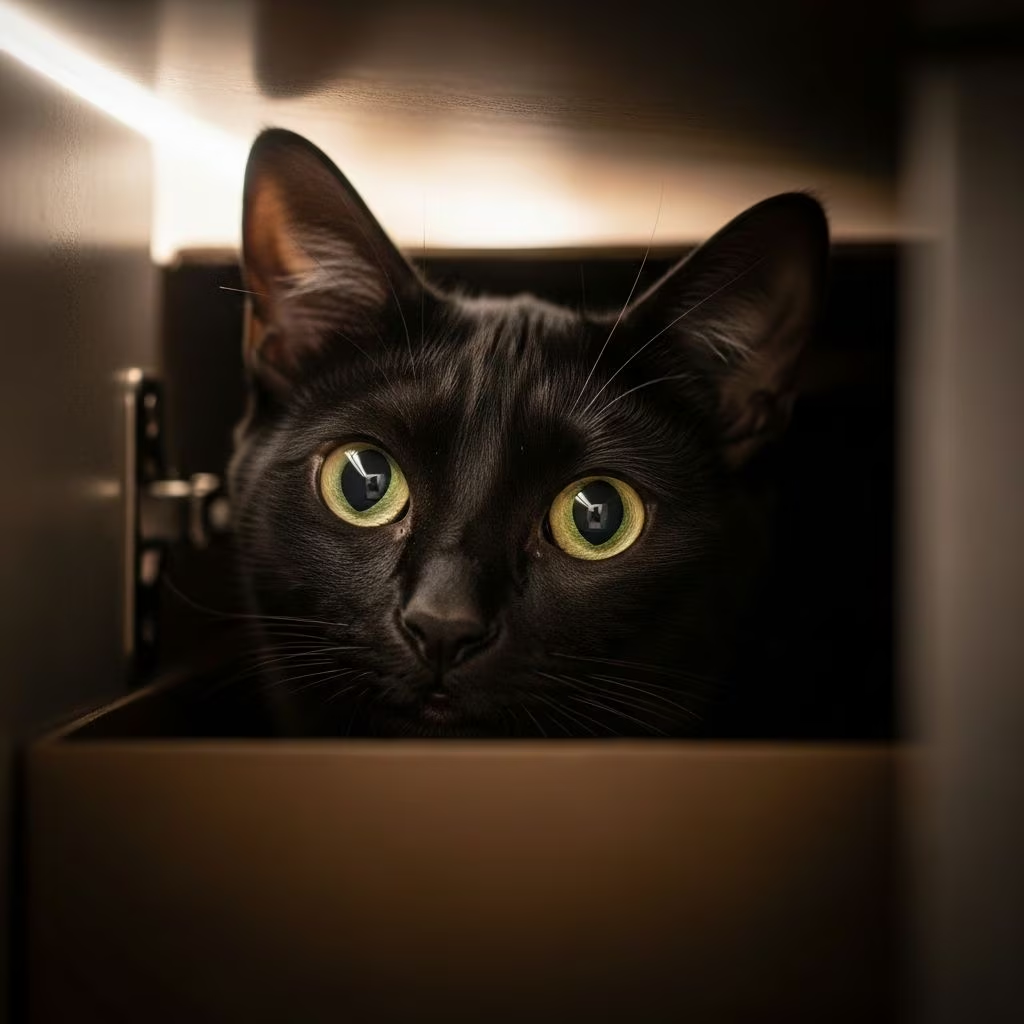
Hiding in dark places is a common and often normal behavior for cats. They frequently tuck themselves behind furniture, inside boxes, or under beds, displaying remarkable stealth that might leave owners wondering if their pet is still home. This article delves into the five primary reasons behind this feline habit, drawing from veterinary insights and behavioral science to explain why your cat might be a master of hide-and-seek.
The 5 Reasons Why Cats Like to Hide in Dark Places
Cats’ affinity for dark, enclosed spaces stems from a combination of evolutionary traits, physiological adaptations, and environmental responses. Understanding these motivations helps owners distinguish between harmless quirks and potential issues.
1. Your Cat’s Natural Instincts
Cats are descended from wild ancestors like the African wildcat, which were solitary hunters relying on ambush tactics. Hiding in dark spots allows them to observe prey undetected before pouncing—a skill honed over thousands of years. Even domesticated cats retain this instinct, using shadowy corners to stalk toys, dust motes, or moving feet.
In the wild, such behavior maximized hunting success by providing cover from both prey and competitors. Domestic cats channel this into play, turning ordinary household items into hunting grounds. Providing toys that mimic prey movement can satisfy this drive without excessive hiding.
This instinct also ties into their crepuscular nature, being most active at dawn and dusk, when low light enhances their advantage.
2. It’s Not “Dark” for Them
Human perception of darkness differs vastly from a cat’s. Feline eyes boast a higher density of rod cells in the retina, specialized for detecting light, motion, and shapes in low-light conditions. Additionally, the tapetum lucidum—a reflective layer behind the retina—amplifies available light, much like a camera flash reflector.
While cats cannot see in absolute pitch black—they require some ambient light—these adaptations make dimly lit areas appear brighter and more navigable to them than to humans. A cupboard or under-bed space might seem cozy and well-lit to your cat, ideal for monitoring surroundings without exposure.
Studies on feline vision confirm cats have about six to eight times more rods than cones compared to humans, prioritizing low-light sensitivity over color discrimination. This explains their prowess in twilight hunts.
3. They Want to Sleep
Cats are polyphasic sleepers, napping up to 16 hours daily in short bursts. They prefer dark, enclosed spots for these rests, mimicking secure dens that block light and disturbances. Just as humans dim lights for better sleep, cats seek natural darkness to promote melatonin production and deeper slumber.
Enclosed spaces provide warmth retention and a sense of enclosure, enhancing comfort. Popular spots include boxes, laundry baskets, or wardrobe corners, where they can curl up undisturbed. Owners often notice this during daytime hours when cats retreat from activity.
To accommodate this, offering purpose-built cat caves or blanket forts encourages healthy rest without invading personal spaces.
4. Your Cat Is Unwell
Sudden or excessive hiding, especially if paired with abandoning favorite spots, can signal illness. Cats instinctively conceal weakness to avoid predators, a survival trait from their wild heritage. Signs include lethargy, appetite loss, vomiting, or changes in litter habits.
Veterinarians note that conditions like pain from dental issues, urinary tract infections, or hyperthyroidism often prompt isolation. If hiding persists beyond a day or two alongside other symptoms, a vet visit is crucial for early diagnosis.
- Monitor for: Reduced eating/drinking
- Unusual vocalization or aggression
- Excessive grooming or fur loss
- Litter box avoidance
Early intervention improves outcomes, as cats mask symptoms until advanced stages.
5. Safety Is Key
Hiding ensures protection from perceived threats. In the wild, cats evaded foxes, birds of prey, and rival felines by concealing themselves. Domesticated cats apply this to stressors like loud noises, new pets, guests, or household changes.
Enclosed dark areas feel secure, reducing vulnerability. Stress-induced hiding activates the fight-or-flight response, with hiding as the preferred ‘flight’ for cats. Moving homes, routine shifts, or conflicts trigger this.
Some cats hide playfully, enjoying the game aspect. Personality varies—bold cats hide less, while shy ones seek sanctuary routinely.
Popular Hiding Spots and Why Cats Love Them
Cats gravitate to specific locations for predictable reasons. Here’s a breakdown:
| Hiding Spot | Why Cats Love It |
|---|---|
| Under the Bed | Dark, quiet, human-proof enclosure; smells like owner for comfort. |
| Inside Boxes/Closets | Enclosed warmth, scent-rich fabrics, elevated views from shelves. |
| Behind Furniture | Low profile for ambush play; undisturbed privacy. |
| Laundry Baskets | Soft, warm textiles mimicking a den. |
Avoid dangers like recliners or appliances where cats might get trapped.
When to Worry About Cat Hiding
Occasional hiding is normal, but excessive or sudden changes warrant attention:
- New hiding after routine stability
- Combined with appetite loss or lethargy
- Hiding from familiar people/food
- Post-stress events without recovery
Give space initially, then tempt with treats. If no improvement in 24-48 hours, consult a vet.
How to Encourage Safe Hiding
Channel instincts positively:
- Provide cat tunnels, caves, and cardboard houses
- Create vertical spaces like shelves
- Use pheromone diffusers for stress relief
- Maintain stable routines
These enrich environments, reducing unwanted hiding.
Frequently Asked Questions (FAQs)
Is it normal for my cat to hide in dark places?
Yes, it’s typically normal due to instincts, vision, sleep needs, or safety. Monitor for excess.
Why does my cat suddenly hide more?
Possible stress, illness, or changes. Check for symptoms and vet if persistent.
Can I stop my cat from hiding?
Not entirely—it’s innate. Offer safe alternatives instead.
What if my cat hides and won’t come out?
Ensure food/water access. Use treats/laser pointers. Vet check if prolonged.
Do all cats hide in dark places?
Most do occasionally; shy or stressed cats more frequently.
Conclusion
Cats’ love for dark hiding spots reflects their complex instincts and adaptations. From hunting prowess to self-preservation, these behaviors enhance well-being. Worry only with anomalies signaling health issues. Embrace your cat’s hide-and-seek nature with safe spaces for a happier feline.
References
- Why Do Cats Like Hiding in Dark Places? 5 Vet-Reviewed Reasons — Catster. 2023. https://www.catster.com/cat-behavior/why-do-cats-like-hiding-in-dark-places/
- Pet Care: Why Do Some Cats Love Dark, Enclosed Spaces? — Furrbby. 2024. https://www.furrbby.com/blogs/blogs/pet-care-why-cats-love-dark
- Why Cats Hide | Vancouver Cat Behavior Explained — Country Grove Veterinary Hospital. 2025-10-07. https://countrygrovevet.ca/2025/10/07/why-cats-hide-behavior/
- Hide and Seek: Is Your Cat Hiding from You? — Hill’s Pet Nutrition. 2024. https://www.hillspet.com/cat-care/behavior-appearance/cat-likes-hiding-in-small-dark-spaces
- Why Is My Cat Hiding? Is This Normal? — Chewy. 2024. https://www.chewy.com/education/cat/training-and-behavior/why-is-my-cat-hiding
- Hiding Behavior in Cats — Feline Behavior Solutions. 2023. https://felinebehaviorsolutions.com/hiding-behavior-in-cats/



