

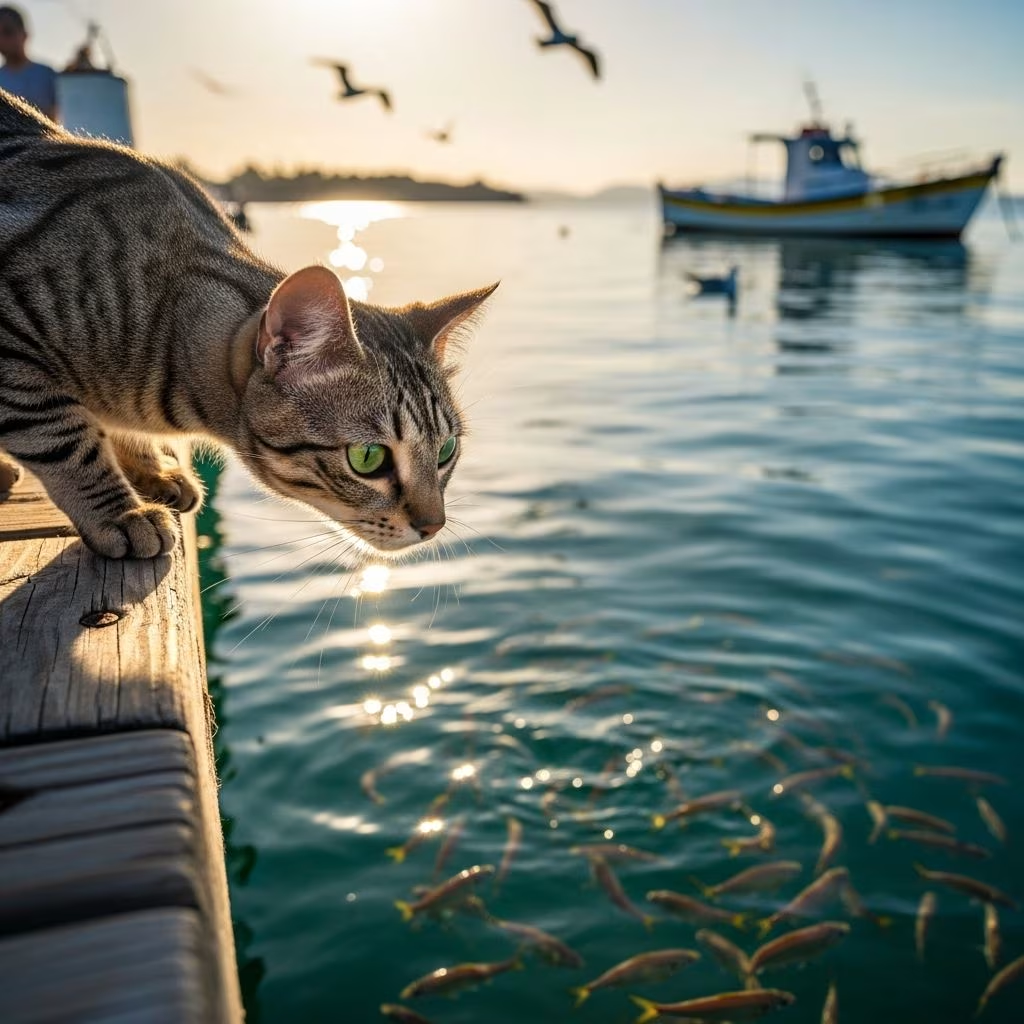
Cats’ fascination with fish is a blend of evolutionary instincts, powerful sensory triggers, and nutritional appeal that has captivated pet owners for generations. While popular culture often depicts cats gleefully devouring fish, the reality involves deep-rooted predatory behaviors, acute olfactory senses, and dietary considerations unique to these obligate carnivores.
This comprehensive guide delves into the reasons behind cats’ affinity for fish, debunking myths, highlighting benefits and risks, and offering practical advice for incorporating fish safely into your cat’s life. Whether your kitty fixates on fish tanks or tuna cans, understanding these dynamics ensures a healthier, happier feline companion.
The Evolutionary Roots: Why Fish Captivate Cats
Cats are obligate carnivores, meaning their survival depends on meat-based diets rich in animal proteins, taurine, and specific fatty acids. Unlike humans, who are omnivores drawn to sweets, cats have evolved heightened senses tailored for hunting land prey like rodents and birds. Fish enters this picture not as a natural staple but as a modern trigger mimicking ancestral prey behaviors.
Wild cats rarely encountered fish, as they are terrestrial hunters. Domestic cats’ love for fish stems more from human influence than wilderness foraging. Early commercialization of cat food in the 19th and 20th centuries introduced fish flavors, conditioning generations of cats to associate the scent and taste with rewards. This historical shift solidified fish as a feline favorite, despite it not being evolutionarily primary.
Instinctual Hunting Drive: Fish as Perfect Prey
At the core of cats’ fish obsession lies their predatory heritage. Fish exhibit swift, unpredictable movements—darting, shimmering, and gliding—that perfectly mimic the erratic paths of small mammals or birds cats hunted in the wild. Even a fish tank becomes an ‘ultimate entertainment center’ for cats, with bubbling filters and rippling water amplifying the hunt simulation.
- Movement Triggers: The fluid, evasive motions activate a cat’s chase response, compelling pounces even at screen depictions of fish.
- Visual Stimulation: Shimmering scales and colors under light draw eyes, turning aquariums into irresistible perches.
- Sound Cues: Water sounds and filter hums heighten arousal, blending sight, sound, and instinct.
This isn’t mere curiosity; it’s hardwired. Cats’ brains release dopamine during mock hunts, providing mental exercise akin to real predation.
Sensory Superpowers: The Allure of Fishy Aromas
Cats possess an extraordinary sense of smell—14 times stronger than humans’—with over 200 million olfactory receptors. Fish oils emit potent, volatile compounds like trimethylamine, which cats detect from afar, instantly spiking excitement and salivation.
Unlike the off-putting ‘fishy’ odor humans notice, cats perceive it as an irresistible feast signal. This aromatic pull explains why cats perk up at canned tuna openings or fish markets, overriding other distractions.
- Olfactory Detection: Cats sniff out fish scents at distances humans miss entirely.
- Appetite Activation: The aroma directly stimulates hunger centers, blending hunt and meal cues.
Nutritional Appeal: Benefits of Fish for Felines
Fish packs high-quality protein, omega-3 fatty acids (EPA/DHA), and vitamins supporting skin, coat, brain function, and anti-inflammation. Fatty varieties like salmon or mackerel excel here, mimicking nutrient profiles of prey meats.
| Nutrient | Benefit for Cats | Key Fish Sources |
|---|---|---|
| Omega-3 Fatty Acids | Healthy skin/coat, cognitive support, reduced inflammation | Salmon, mackerel, sardines |
| High-Quality Protein | Muscle maintenance, energy | Tuna, cod, herring |
| Taurine & Vitamins | Heart/eye health, immunity | Most fatty fish |
These perks make fish a valuable dietary addition, but only in balance with complete nutrition.
The Risks: Why Fish Isn’t Always Feline-Friendly
Despite appeal, fish poses hazards. Domestic cats’ digestive systems suit land meats, not aquatic ones, leading to potential issues with excess consumption.
- Thiamine Deficiency: Raw fish contains thiaminase, destroying vitamin B1 vital for nerves. Symptoms include vision loss, seizures—reversible with cessation but dangerous untreated.
- Mercury & Toxins: Predatory fish (tuna, swordfish) bioaccumulate mercury, risking neurological damage over time.
- Bones & Choking: Sharp, needle-like fish bones splinter easily, causing blockages, perforations, or fatalities—contrary to cartoons.
- Allergies & Infections: Fish ranks high in allergens (23% of cases per studies); raw versions harbor parasites like Anisakis or bacteria like Salmonella.
- Imbalances: Over-reliance skips essential nutrients from varied meats.
Moderation prevents these: limit to cooked, boneless, occasional treats from low-mercury sources.
Historical and Cultural Influences on Cats and Fish
The trope of cats loving fish traces to 19th-century marketing. Brands like Spratt’s patented fish-based biscuits in 1860, capitalizing on cheap canning. Japanese folklore portrayed cats eating fish, influencing global media like cartoons (e.g., Garfield, Tom & Jerry). This conditioning persists, amplified by treats mimicking those scents.
Practical Tips: Safely Indulge Your Cat’s Fish Cravings
Channel instincts without risks:
- Fish Tanks: Elevate aquariums, use tank-toppers, motion deterrents, or separate rooms. Offer toy alternatives like laser pointers or feather wands.
- Diet Integration: Choose commercial foods with fish as one ingredient. Human fish: skinless, boneless, unseasoned, baked/steamed—sparingly (10% max diet).
- Treats & Toys: Fish-flavored kibble or plush fish toys satisfy urges. Rotate proteins for balance.
- Training: Positive reinforcement redirects tank obsession to toys, rewarding ignores.
Consult vets for allergies or health issues before changes.
Frequently Asked Questions (FAQs)
Do cats naturally love fish in the wild?
No, wild cats rarely eat fish; the preference is largely human-induced via food marketing and conditioning.
Is tuna safe for cats?
In moderation—canned in water, low-mercury albacore sparingly. Avoid daily to prevent mercury buildup or thiamine issues.
Why does my cat obsess over my fish tank?
Fish movements trigger hunting instincts; secure tanks and provide engaging toys to redirect energy.
Can fish cause allergies in cats?
Yes, fish is a top allergen, causing itching, GI upset in ~23% of allergic cats per studies.
Should I feed my cat raw fish?
Never—risks thiamine loss, parasites, bacteria. Always cook thoroughly.
How much fish is too much for a cat?
Limit to occasional treats; base diet on vet-approved complete foods, not single proteins.
References
- Nutritional and toxicological aspects of raw fish consumption in cats — Journal of Feline Medicine and Surgery. 2022-05-15. https://journals.sagepub.com/doi/full/10.1177/1098612X221099999
- Mercury levels in commercial fish and their implications for feline health — FDA Center for Veterinary Medicine. 2024-03-10. https://www.fda.gov/animal-veterinary/safety-health/mercury-levels-commercial-fish-and-implications-pet-food
- Food allergies in cats: Prevalence and common allergens — Veterinary Dermatology (PubMed). 2023-07-20. https://pubmed.ncbi.nlm.nih.gov/37439000/
- Omega-3 fatty acids in feline nutrition — American Association of Feline Practitioners. 2023-11-05. https://catvets.com/resource/omega-3-feline-nutrition-guidelines/
- Evolution of domestic cat diet and olfaction — Proceedings of the Royal Society B. 2021-09-15. https://royalsocietypublishing.org/doi/10.1098/rspb.2021.1234



