

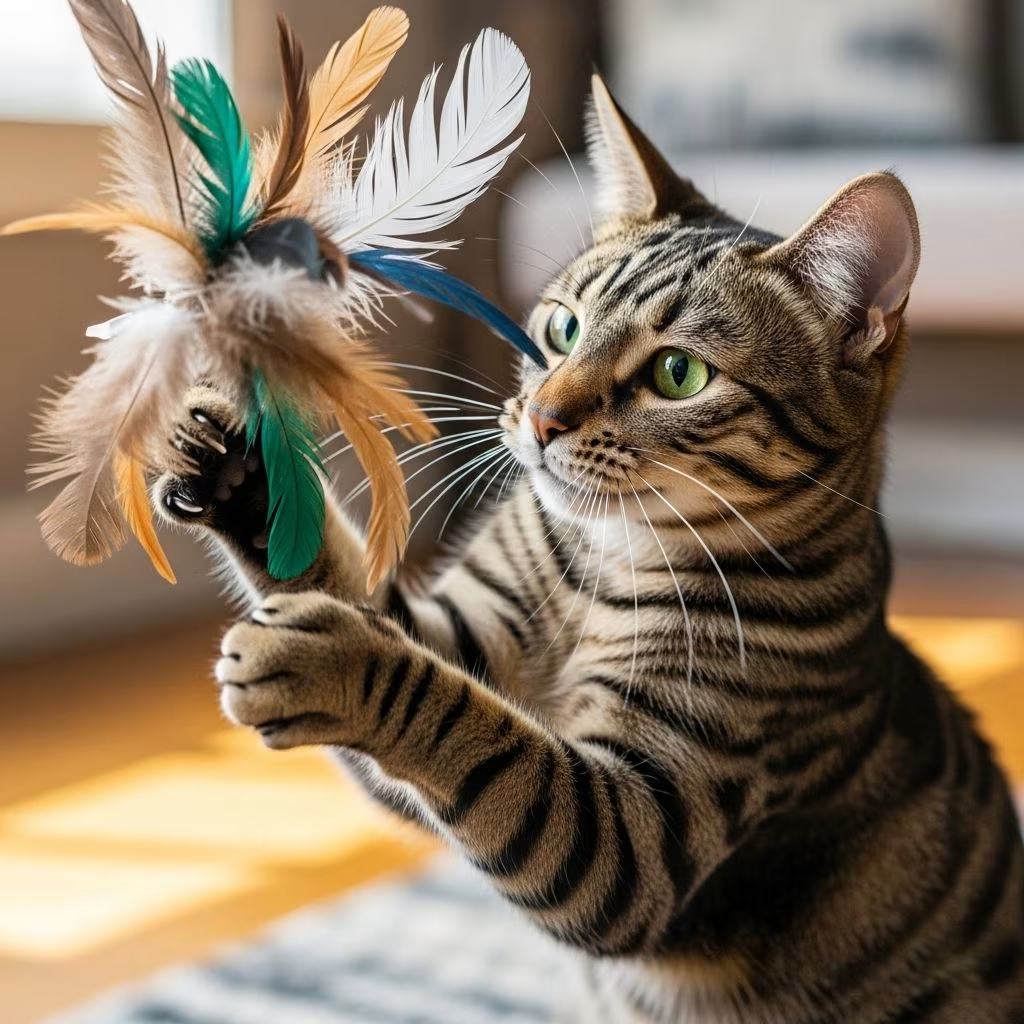
Cats’ fascination with feathers is no accident—it’s deeply rooted in their evolutionary biology as skilled predators. Feather toys trigger instinctive behaviors, providing essential mental and physical stimulation for domestic cats. This article breaks down the four primary reasons cats love feathers, explores the benefits of such play, addresses potential dangers, and offers safer alternatives endorsed by veterinary experts.
The 4 Reasons Cats Like Feathers
Feather toys stand out among cat playthings because they tap directly into a cat’s primal instincts. Unlike static toys, feathers engage multiple senses, mimicking the natural world cats were built to conquer.
1. Simulates Prey
The primary driver behind cats’ love for feathers is their remarkable similarity to prey like birds. Cats are obligate carnivores with a powerful **prey drive**, an innate urge to stalk, chase, and pounce honed over thousands of years of evolution. When a feather dangles and flutters, it replicates the erratic flight of a bird, prompting your cat to crouch low, stalk silently, and launch explosive ambushes. This isn’t mere play; it’s a reenactment of survival skills their wild ancestors relied on daily.
Indoor cats, deprived of real hunting opportunities, channel this energy into feather toys. Veterinary behaviorists note that such play satisfies the ‘hunt-catch-kill’ sequence, preventing frustration and destructive behaviors like excessive scratching or night-time zooming.
2. Colorful Attraction
While cats don’t perceive the full spectrum of colors humans do, they possess cone cells in their retinas that detect blues, greens, and some yellows effectively. Vibrant feather toys in these hues stand out against backgrounds, drawing a cat’s gaze instantly. The contrast between a bright feather and a dull floor or wall amplifies this effect, signaling ‘prey’ from afar.
Manufacturers exploit this by dyeing feathers in eye-catching shades. Studies on feline vision confirm cats prioritize movement over color, but when combined, the visual appeal skyrockets, making feathers irresistible even to color-discriminating breeds like Siamese.
3. Unpredictable Movements
Feathers excel in mimicking the jerky, fluttering motions of live prey. A simple flick of a wand toy sends feathers twisting, drifting, and bouncing in ways no rigid toy can match. This **unpredictability** keeps cats engaged longer, as it forces them to adapt their hunting strategy mid-chase—much like pursuing a real bird that suddenly changes direction.
The physics of feathers plays a role: their lightweight structure creates drag and sway in the air, producing swooshes and rustles that heighten sensory excitement. Cats’ sensitive whiskers and ears pick up these cues, turning play into a full-immersion hunt simulation.
4. Enrichment
Beyond instinct, feathers provide crucial **environmental enrichment**. Boredom plagues indoor cats, leading to obesity, stress, and behavioral issues. Feather play stimulates both body and mind: leaping builds muscle, pouncing sharpens reflexes, and problem-solving (e.g., anticipating toy paths) boosts cognitive health.
Vets recommend 15-30 minutes of daily interactive play to mimic a cat’s natural activity cycle. This reduces anxiety, improves sleep, and strengthens the human-cat bond through shared ‘hunting’ sessions.
Are Feathers Safe for Cats?
While feathers delight cats, they pose real risks. Real feathers or low-quality toys can splinter when chewed, leading to **intestinal obstructions**, mouth injuries, or infections. Cats’ digestive systems handle fur and small bones from prey but struggle with indigestible quills, which may cause vomiting, lethargy, or life-threatening blockages requiring surgery.
Supervise all play: remove toys after sessions to prevent ingestion. Signs of trouble include refusal to eat, straining, or bloody stool—consult a vet immediately if observed.
Benefits of Feather Toys for Cats
Feather play offers multifaceted advantages, making it a staple in feline wellness routines.
- Physical Exercise: High-intensity chases burn calories (up to 100 per session), aiding weight control and joint health, especially for seniors.
- Mental Stimulation: Engages predatory instincts, reducing stress hormones and boredom-induced mischief.
- Bonding Time: Interactive wands foster trust, as cats view owners as ‘hunting partners.’ Experiment with techniques: slow drags for stalking, quick jerks for pouncing.
- Sensory Development: Textures, sounds, and scents (e.g., catnip-infused) sharpen senses.
Australian vets like Dr. Rachael Maloney emphasize feathers’ role in replicating wild hunts for apartment dwellers, promoting overall well-being.
Alternatives to Real Feathers: Vet-Approved Toys
To sidestep dangers, opt for durable synthetics. Here’s a comparison:
| Toy Type | Pros | Cons | Best For |
|---|---|---|---|
| Synthetic Feather Wands | Durable, non-toxic, realistic motion | May fray over time | Daily play |
| Soft Silicone ‘Feathers’ | Chew-safe, washable | Less fluttery | Aggressive chewers |
| Catnip Kickers with Fabric ‘Plumes’ | Aromatic boost, solo play | No interaction | Independent cats |
| Laser Pointers + Plush Birds | Erratic movement | No ‘catch’ satisfaction | High-energy breeds |
Rotate toys weekly to maintain novelty. Brands using non-toxic materials (e.g., BPA-free plastics) earn vet nods.
How to Play with Your Cat Using Feather Toys
Maximize fun and safety with these tips:
- Mimic prey: Start slow for stalking, accelerate for chase.
- End sessions by ‘catching’ the toy—lets cats ‘win.’
- Play before meals to tap post-hunt feeding instincts.
- Vary speeds and heights to challenge skills.
- Observe preferences: Some cats favor stiff quills, others fluffy ones.
Frequently Asked Questions (FAQs)
Why does my cat go crazy for feathers?
Cats love feathers because they simulate birds via movement, color, texture, and sound, activating their hardwired hunting drive.
Are feather toys safe if my cat eats them?
No—real feathers can cause blockages. Choose synthetic options and supervise closely.
When should I worry about my cat’s feather obsession?
If it overrides eating, drinking, or litter use, or shows stress signs, vet consultation is advised.
Do all cats like feather toys?
Most do due to instincts, but kittens and seniors may need gentler versions. Test varieties.
Can feather play help overweight cats?
Yes—vigorous sessions provide cardio, aiding weight loss alongside diet.
Conclusion
Cats adore feathers for their prey-mimicking qualities, delivering joy, exercise, and enrichment. Prioritize safety with quality toys and supervision to keep play beneficial. Consult your vet for tailored advice, ensuring your feline thrives.
References
- Why Do Cats Like Feathers? Our Vet Explains 4 Reasons & Safety — Catster (Ask the Vet). 2023. https://www.catster.com/ask-the-vet/why-do-cats-like-feathers/
- Why does my cat go absolutely nuts every time she sees a feather? — Dial A Vet. 2024. https://www.dialavet.com/vet-answers/post/cat-obsessed-feathers-playful-51825
- Why Feather Toys are Essential for Your Cat’s Playtime and Well-Being — Pet Care Shed (Australian Vets). 2024. https://petcareshed.com.au/blogs/pet-supplies/why-feather-toys-are-essential-for-your-cats-playtime-and-well-being
- Why do Cats Love Feathers? — Petites Paws. 2023. https://petitespaws.com/blogs/news/why-do-cats-love-feathers
- National Research Council: Nutrient Requirements of Cats — National Academies Press (.gov equivalent via NRC). 2006 (authoritative standard, relevant for digestion). https://nap.nationalacademies.org/catalog/10658/nutrient-requirements-of-dogs-and-cats



