

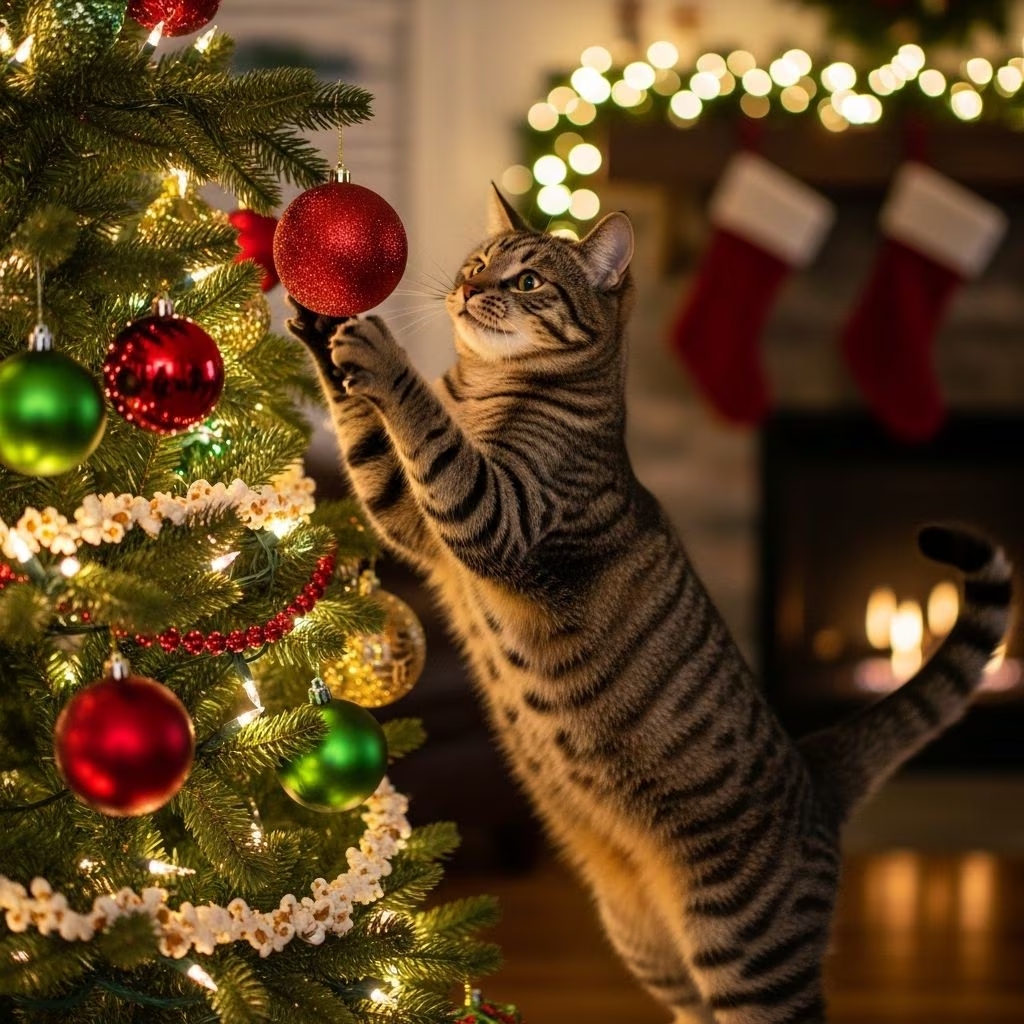
Christmas trees captivate cats due to their innate predatory instincts, curiosity, and the tree’s resemblance to natural hunting grounds filled with movement, scents, and climbable structures. This fascination turns holiday decorations into irresistible playgrounds, but it also poses risks that cat owners must address.
The Natural Instincts of Cats
Cats are obligate predators with instincts shaped by thousands of years of survival as both hunters and prey. In the wild, trees served critical roles: elevated perches for spotting prey, escape routes from predators, and vantage points for territory surveillance. A Christmas tree replicates this perfectly, offering branches to climb, hide in, and conquer.
Domestic cats retain these behaviors despite indoor living. The tree’s vertical structure triggers their need for ‘vertical territory,’ providing a sense of security and control. As noted by animal behavior experts, cats who feel elevated and in command are generally happier and less stressed. This explains why even well-adjusted house cats obsess over the tree the moment it’s erected.
- Climbing Drive: Branches mimic natural perches, inviting ascent for play-hunting simulations.
- Hiding Instinct: Dense foliage offers concealment, echoing wild tree hideouts.
- Territorial Survey: Top branches allow oversight of the room, fulfilling oversight needs.
Attraction to Movement and Shiny Objects
Twinkling lights, dangling ornaments, and swaying branches mimic prey in motion—rustling leaves, fluttering birds, or scampering rodents. Cats’ eyes are wired for detecting subtle movements, a hyper-sensitive trait from their predatory ancestry.
Shiny baubles reflect light erratically, resembling eyes or scales of small animals. This visual stimulation sparks the hunting response: stalk, pounce, bat. Even artificial trees with metallic accents or glitter exacerbate this allure. Studies on feline vision confirm cats perceive high-contrast, flickering stimuli as potential threats or meals, making holiday lights a hypnotic lure.
Ornaments that jingle or swing amplify the effect, turning passive decoration into interactive ‘toys.’ Cats don’t distinguish between intentional playthings and tree trinkets; to them, all are fair game.
Your Cat’s Attraction to Scents and Sounds
Cats possess over 200 million olfactory receptors—14 times more than humans—making scent their primary environmental navigator. Real Christmas trees emit pine sap, resin, and fresh evergreen aromas that are novel and intriguing, prompting investigation via rubbing, sniffing, and climbing.
Artificial trees aren’t exempt; they carry storage odors like mothballs, dust, or absorbed household scents. Tree water, often stagnant and chemical-laden (from preservatives or fertilizers), adds a risky allure—cats may lap it up out of curiosity, leading to gastrointestinal upset.
How Scents Affect Cats
Unfamiliar scents overload a cat’s Jacobson’s organ (vomeronasal organ), used for pheromonal analysis. The tree’s bouquet signals ‘new territory,’ spurring exploration. Holiday additions like cinnamon ornaments or spiced garlands intensify this.
Sounds compound the draw: rustling needles, tinkling bells, crinkling gift wrap under the tree. These auditory cues mimic prey distress calls or environmental shifts, heightening arousal. Low rustles trigger the orienting reflex, drawing cats nearer.
The Role of Play and Exploration
A Christmas tree is an enrichment jackpot: novel textures (needles, tinsel), interactive elements (lights, balls), and spatial challenges. Bored indoor cats view it as a giant cat tree, ideal for batting, scratching, and leaping.
Human attention amplifies appeal—trees often occupy central, social living rooms, associating them with family gatherings. Cats seeking interaction join the fray, batting ornaments for attention.
Keeping Your Cat Engaged
Redirect energy with alternatives:
- Interactive wand toys mimicking tree ‘prey.’
- Puzzle feeders for mental stimulation.
- Scratching posts near (but not at) the tree.
- Cardboard scratchers or tunnels for hiding.
Daily 15-20 minute play sessions reduce tree fixation by tiring them out.
Are Christmas Trees Safe for Cats?
No tree is entirely safe. Real trees’ needles are sharp, indigestible, and puncture-prone; ingestion causes vomiting, diarrhea, or blockages. Stagnant stand water harbors bacteria like Staphylococcus and mold, risking severe illness.
| Tree Type | Risks | Safety Level |
|---|---|---|
| Real | Needles, sap, toxic water | Low |
| Artificial (unflocked) | Climbing falls, ornaments | Moderate |
| Artificial (flocked) | Toxic fake snow coating | Low |
Falls from climbing threaten injury; chewed cords risk electrocution.
Creating a Cat-Safe Holiday Environment
Proactive measures minimize mishaps:
- Secure the Tree: Use heavy stands; anchor to walls with fishing line or tension wires.
- Ornament Choices: Opt for plastic/wooden, non-shiny; place glass high up.
- No Tinsel/Ribbon: Linear ingestion causes deadly intestinal obstruction.
- Cover Base: Tree skirts hide toxic water; check daily.
- Light Safety: Unplug when unsupervised; tape cords.
Deterrents That Work
Repel without harm:
- Citrus peels or sprays (cats detest the scent).
- Aluminum foil wrapping trunk/base.
- Bitter Apple spray on branches/needles.
- Noise deterrents: Coin cans or SSCAT motion sprays.
- ScatMat around base for static aversion.
Say Yes to the Catmas Tree
Provide a dedicated ‘cat tree’: inexpensive artificial sapling decorated with toys, catnip, treats. Place nearby; reward interaction. This satisfies instincts, diverting from yours—positive reinforcement trumps punishment. Daily ‘advent’ swaps keep it novel.
Vertical Alternatives
Cat trees, shelves, or blanket-topped furniture offer perches, reducing tree appeal.
Frequently Asked Questions (FAQs)
What should I do if my cat knocks over the Christmas tree?
Check for injuries first. Re-secure tree, remove cat temporarily, then redirect to their own tree or toys. Use anchors preventatively.
Are fake Christmas trees safer for cats?
Generally yes, minus flocking. Still risks falls/ornaments; no water toxicity.
How do I stop my cat from chewing tree lights?
Tape/bury cords, unplug unsupervised, use deterrents like foil or sprays.
Is tinsel dangerous for cats?
Extremely—swallowing causes fatal blockages. Avoid entirely.
Why does my cat drink the tree water?
It smells intriguing; it’s toxic. Cover stand, refresh daily if real tree.
References
- Why Do Cats Like Christmas Trees? — CVHCP. 2023-12-01. https://cvhcp.com/blog/why-do-cats-like-christmas-trees/
- Why cats love Christmas trees and how to keep them safe — Best Friends Animal Society. 2023-11-15. https://bestfriends.org/stories/features/why-cats-love-christmas-trees-and-how-keep-them-safe
- The Ugly Truth About Cats and Christmas Trees Plus More Holiday Tips — Jackson Galaxy. 2023-12-05. https://www.jacksongalaxy.com/blogs/news/the-ugly-truth-about-cats-and-christmas-trees-plus-more-holiday-tips
- Cats and Christmas Trees: How to End the Love Affair — Soft Paws. 2023-11-20. https://www.softpaws.com/cats-and-christmas-trees-how-to-end-the-love-affair/



