

Why Do Cats Lick Themselves: Understanding Your Feline’s Grooming Habits
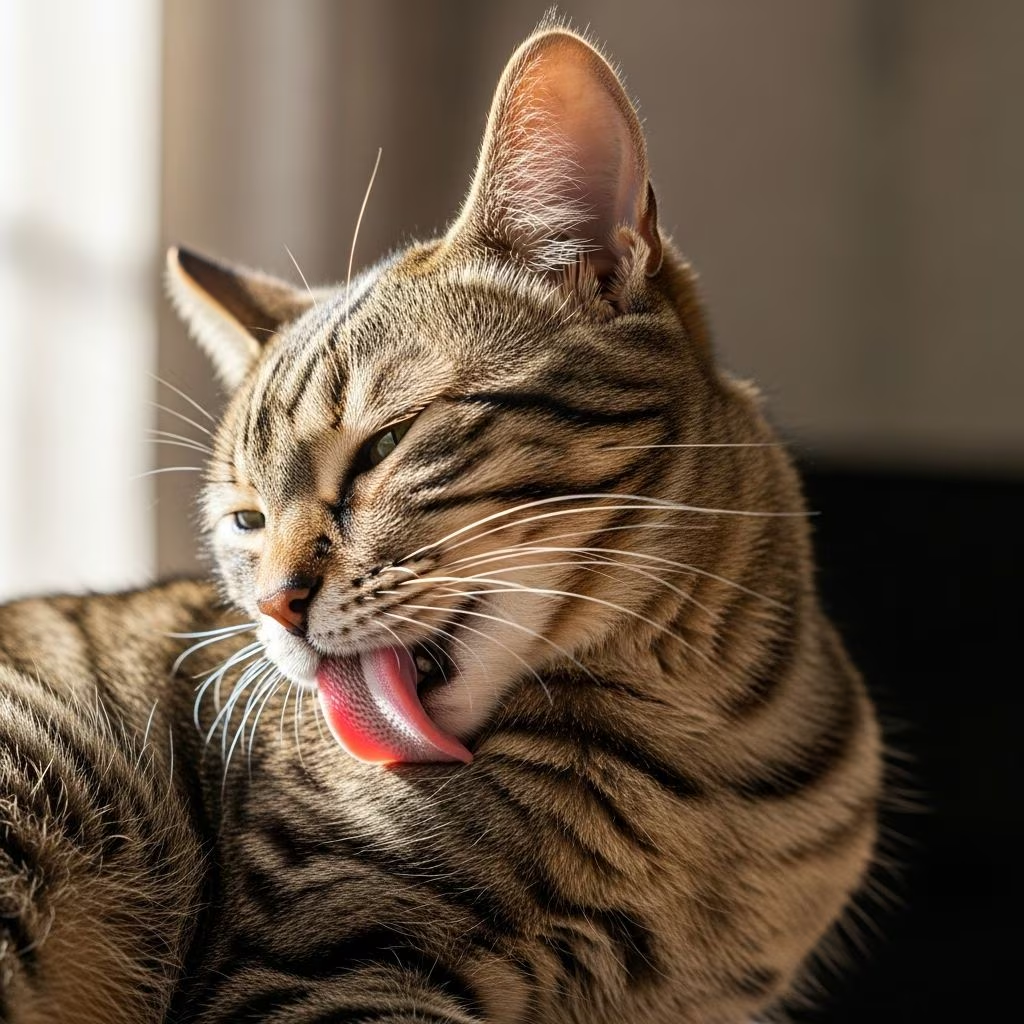
If you’ve ever watched your cat spend hours meticulously grooming themselves, you might wonder what drives this behavior. Cats lick themselves for numerous reasons, ranging from basic hygiene to emotional regulation and health concerns. Understanding why your feline friend engages in constant licking can help you distinguish between normal grooming and potential warning signs of underlying issues.
Grooming, or licking, can take up several hours of a cat’s day, with cats spending nearly 25% of their waking time on this essential activity. While it’s normal for cats to lick themselves as part of their grooming routine, it’s also possible for cats to overgroom or undergroom, and either condition warrants a vet visit. Licking goes beyond grooming, though: It can be a way for cats to self-soothe, regulate their body temperature, or signal pain.
Why Do Cats Lick Themselves To Keep Clean?
The most obvious reason cats lick themselves is to maintain their cleanliness and coat health. You could bathe your cat, but most don’t need regular baths like dogs do. This is because of their unique physical adaptations designed specifically for self-grooming.
Unlike a dog’s smooth tongue, a cat’s rough tongue is built for the grooming job. The tiny barbs on their tongue act like a natural comb and brush, allowing them to remove dirt, debris, and loose hair from their fur. Additionally, cats use grooming to move protective oils around their skin, which keeps their coat healthy and water-resistant.
When it comes to drying off after getting wet, a cat’s fur tends to soak up water rather than repelling it, leaving them soggy, weighed down, and—understandably—not thrilled about getting wet in the first place. This is why cats are naturally averse to baths and prefer to handle their own grooming. Unless your cat has a specific reason for a bath, like getting unexpectedly dirty or dealing with a skin condition, it’s usually best to let them handle grooming on their own.
Grooming also helps cats shed loose hair, get rid of odors, and maintain the overall health and appearance of their coat.
Self-Soothing and Stress Relief
Beyond physical cleanliness, cats use licking as a powerful self-soothing mechanism. Cats can get stressed for all sorts of reasons, from a recent move to the arrival of a new family member, or even an isolated event like Fourth of July fireworks.
When cats are anxious, grooming can become more than just a cleaning routine—it’s a way for cats to relieve stress and find comfort. “Grooming releases endorphins in the brain, which feels good,” says Stephen Quandt, a certified cat behavior consultant at Feline Behavior Associates in New York City. This neurochemical response explains why licking has such a calming effect on cats, similar to how a pacifier soothes a baby.
It’s important to recognize when your cat’s grooming habits change due to stress. Stress-related licking often exceeds the normal 30% to 50% of daily grooming and may be focused on specific areas like the legs, belly, or tail. Pet parents might notice the change when their cat wakes them up in the middle of the night with loud grooming or seems uninterested in playtime or meals because they’re too busy licking.
Cats may also lick themselves when something hasn’t turned out the way they planned—like failing to land a jump they attempted. This licking can indicate they’re worried or confused about what just happened and need a moment to regroup.
Temperature Regulation
Another critical function of self-licking is thermoregulation. Cats have sweat glands on their paw pads, chin, and lips, but they don’t rely on sweat alone to cool down. Grooming helps trigger evaporative cooling, which is essential for maintaining healthy body temperature in warm environments.
So, if your cat’s licking more than usual on a warm day, it could be their way of trying to stay cool. The moisture from their saliva applied to their fur helps regulate body temperature as it evaporates. Licking adds moisture to their fur, and as the moisture evaporates, cats feel cooler.
During hot weather, make sure your cat has a cooling bed to rest on and access to fresh water to help prevent overheating, which can become an emergency.
Social Bonding Through Grooming
Cats don’t only groom themselves—they also groom each other and their human companions. When cats lick each other, it’s called allogrooming, or social grooming. Cats tend to lick each other on the cheeks, forehead, and chin—places where scent glands release pheromones, the chemical signals used for communication, bonding, and marking territory.
Cats enjoy grooming each other to establish a group scent, which helps them recognize members of their pack. Additionally, cats lick each other to clean areas of their bodies they can’t reach themselves.
When your cat licks you, they’re extending this social bonding behavior to you, treating you as part of their family group.
Licking After Being Petted
Have you noticed your cat licking themselves immediately after you pet them? This behavior has a specific purpose. “Our cats will often lick themselves after being petted to redistribute scent,” explains a feline behavior expert. It’s their way of re-establishing their own smell after the human scent has been transferred to them through petting.
However, sometimes this behavior can also be a sign of overstimulation, especially if you are petting a sensitive area. In that case, give them some space and allow them to reset.
Pain or Irritation: When Licking Signals a Problem
While self-licking is normal, excessive licking can indicate that something is wrong with your cat. Sometimes cats lick themselves a lot because they’re in pain or discomfort. For example, a cat with arthritis might lick their legs more than usual, or one with allergies or fleas might overgroom to soothe an itch.
Your cat’s licking may signal various medical problems, such as an oral or digestive disorder or even nausea. Skin conditions causing itchiness, such as allergies to fleas, food, or environmental factors, can also lead to excessive licking. Additionally, cats may experience pain from conditions like anal sac impaction, a swelling or infection of their anal glands.
Parasites, such as fleas, ticks, mites, and ringworm, can also prompt excessive scratching, licking, or chewing. If you notice your cat licking their lower back obsessively, with or without scabs on the neck, it is a sign that fleas might be causing the problem.
Signs of Pain in Cats
When evaluating whether your cat’s licking indicates pain, watch for these warning signs:
- Hiding more than usual
- Changes in appetite
- Reluctance to jump or move
- Increased vocalization
- Other changes in behavior
Overgrooming: When Licking Becomes Excessive
Overgrooming, also known as psychogenic alopecia, occurs when cats lick themselves so much that they develop bald spots or skin damage. This condition can result from various causes, including medical issues, allergies, parasites, stress, and boredom.
If you notice that your pet starts licking so much they develop bald spots, it may be time to give your veterinarian a call to address any underlying issues. The key is identifying the root cause of the excessive licking.
Common Causes of Overgrooming
| Cause Category | Specific Conditions | Signs to Watch For |
|---|---|---|
| Medical Issues | Allergies, parasites, ringworm, arthritis, pain | Bald spots, scabs, changes in behavior |
| Behavioral Issues | Stress, anxiety, boredom, compulsive disorder | Excessive licking in response to environmental changes |
| Environmental Changes | New pet, new baby, move to new location | Sudden increase in grooming behavior |
Compulsive cat licking behaviors often develop in cats who are bored, stressed, or anxious. These mental disorders are more likely to occur in indoor cats, which may be due to the fact that they receive less exercise and excitement than outdoor cats. Compulsive disorders often begin when there are changes in a cat’s environment, including a new animal or baby in the house or a move to a new location.
In some cases, licking can become an obsessive behavior that continues even after the stressors are gone.
Undergrooming: The Opposite Problem
While overgrooming is a common concern, some cats actually stop grooming as much as they should—a condition known as undergrooming. Cats are usually great at keeping themselves clean, but sometimes, they stop grooming as much as they should.
A sudden decline in grooming can point to stress, illness, or pain, and should always be discussed with your vet. Senior cats with arthritis may find it hard to reach certain areas, and even if they can, aging can dull the tiny barbs on their tongues. Overweight cats often struggle to clean hard-to-reach areas too.
If your cat stops grooming altogether, that’s another reason to head to the vet.
When to Seek Veterinary Care
Understanding when licking warrants a vet visit is crucial for your cat’s health. You should contact your veterinarian if:
- Your cat develops bald spots from excessive grooming
- Your cat stops grooming altogether
- Grooming patterns change suddenly
- You notice signs of pain or discomfort
- Your cat shows signs of stress or anxiety
- Your cat has visible parasites or skin conditions
It’s important to have any underlying issues evaluated and treated by a professional to ensure your cat’s wellbeing.
Frequently Asked Questions
Q: What does it mean when cats lick each other?
A: When cats lick each other, it’s called allogrooming, or social grooming. Cats tend to lick each other on the cheeks, forehead, and chin—places where scent glands release pheromones, the chemical signals used for communication, bonding, and marking territory. This behavior helps establish a group scent that allows them to recognize members of their pack.
Q: Why do cats lick themselves when you pet them?
A: Our cats will often lick themselves after being petted to redistribute scent. It’s their way of re-establishing their own smell. But sometimes, it can also be a sign of overstimulation, especially if you are petting a sensitive area. In that case, give them some space.
Q: How much time do cats spend grooming?
A: Cats spend nearly 25% of their waking time grooming themselves. This extensive grooming time is essential for maintaining their coat health, removing loose hair, and managing their body temperature.
Q: Is it normal for my cat to overgroom?
A: Overgrooming is not normal and can indicate medical or behavioral issues. Stress-related licking often exceeds the normal 30% to 50% of daily grooming. If your cat is developing bald spots or showing other signs of excessive licking, consult your veterinarian.
Q: What should I do if my cat is licking excessively?
A: First, monitor your cat for signs of medical issues, parasites, or skin conditions. If you notice bald spots, scabs, or behavioral changes, contact your veterinarian. The cause could be anything from allergies to stress, and a professional evaluation is necessary to determine the appropriate treatment.
Q: Can stress cause excessive licking in cats?
A: Yes, stress and anxiety can cause cats to overgroom. Licking releases endorphins that have a calming effect, similar to how a pacifier soothes a baby. However, excessive stress-related licking can lead to bald spots and skin damage if left unaddressed.
References
- Why Do Cats Lick Themselves? — Chewy Education. 2025. https://www.chewy.com/education/cat/training-and-behavior/why-do-cats-lick-themselves
- Why Do Cats Lick Themselves, and When Is It a Problem? — GoodRx Pet Health. 2025. https://www.goodrx.com/pet-health/cat/why-do-cats-lick-so-much
- Cats and Compulsive Scratching, Licking, and Chewing — WebMD Pets. 2025. https://www.webmd.com/pets/cats/features/cats-and-compulsive-scratching-licking-and-chewing
- Cats that Lick Too Much — Cornell University College of Veterinary Medicine. 2025. https://www.vet.cornell.edu/departments-centers-and-institutes/cornell-feline-health-center/health-information/feline-health-topics/cats-lick-too-much



