Why Do Cats Lick Their Privates in Public?
Understanding feline grooming behavior: when it's normal and when to see a vet.
Understanding Your Cat’s Grooming Habits
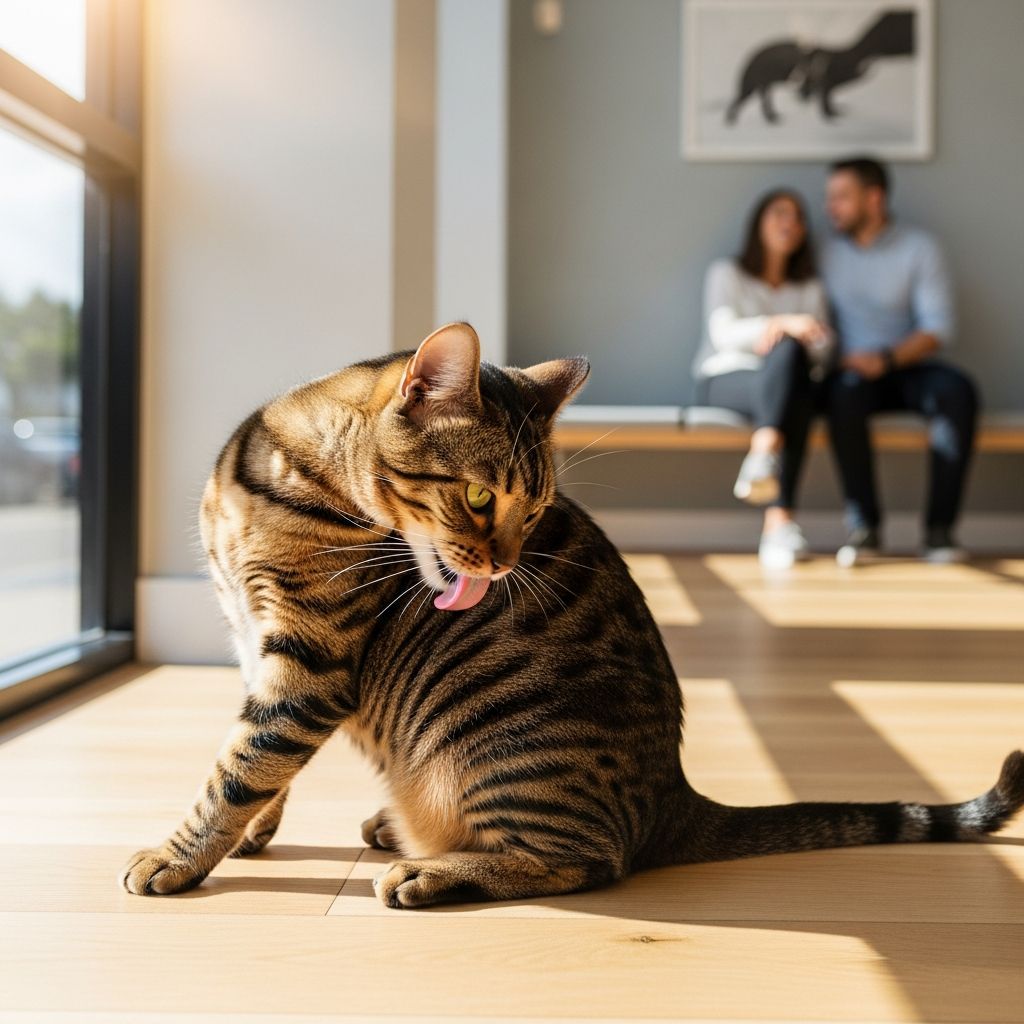
Cats are renowned for their fastidious nature and spend a considerable portion of their day engaged in personal hygiene maintenance. According to Dr. Nicholas Dodman, a behaviorist at the Cummings School of Veterinary Medicine at Tufts University, cats dedicate approximately 8 to 15% of their waking time to grooming themselves. This essential maintenance behavior serves as an important indicator of a cat’s overall well-being and health status. When your cat licks their genital area, especially in public, this is typically part of their normal self-grooming routine rather than cause for immediate concern.
Normal Grooming Behavior in Cats
Cats groom their entire bodies, including their genital and anal areas, to maintain cleanliness and remove dirt, discharge, and debris. This behavior is completely normal and natural for felines. Just as humans bathe to maintain hygiene, cats use their tongues to clean themselves throughout the day. The genital area requires regular cleaning to prevent the buildup of bacteria and maintain urinary and reproductive health.
The frequency of genital grooming varies from cat to cat. Some cats may groom this area multiple times daily, while others do so less frequently. The amount of time your cat spends grooming depends on their individual personality, age, and overall health status. A cat that appears comfortable and shows no signs of distress while grooming is typically exhibiting normal, healthy behavior.
When Normal Grooming Becomes a Concern
While some licking is normal, excessive licking in the genital area may indicate an underlying medical or behavioral problem that requires veterinary attention. The challenge for cat owners is determining whether the frequency and intensity of licking represents normal grooming or suggests a health issue. Several factors can help you make this distinction and decide whether to consult your veterinarian.
Excessive licking often becomes noticeable when your cat engages in the behavior more frequently than usual, spends extended periods licking the area, or causes visible irritation or hair loss. Additionally, if your cat exhibits accompanying symptoms such as discharge, swelling, or changes in litter box habits, these signs suggest that excessive licking may be a symptom of an underlying condition.
Common Medical Causes of Excessive Genital Licking
Several health conditions can trigger excessive licking of the genital area in cats. Understanding these potential causes can help you recognize when your cat needs professional veterinary care.
Urinary Tract Infections and Related Conditions
Urinary tract infections, also known as cystitis, represent one of the most common causes of excessive genital licking in cats. These infections cause inflammation, discharge, and discomfort, prompting cats to lick the area excessively. Feline lower urinary tract disease (FLUTD) encompasses several conditions affecting the bladder and urethra, including sterile cystitis, which can occur without bacterial infection.
Bladder stones, medically known as urolithiasis, can develop anywhere in the urinary tract including the kidneys, ureters, or bladder. When these stones become lodged as they attempt to exit the urinary tract, they cause significant pain and pressure, leading to excessive licking. Urinary tract tumors can also develop in the urinary tract, urethra, or bladder, causing symptoms including recurrent urinary tract infections, blood in the urine, straining to urinate, and frequent urination.
Reproductive and Genital Disorders
In female cats, reproductive conditions can cause excessive licking. Pyometra, a serious infection of the uterus, causes pain and may result in pus draining from the vagina. This condition is potentially life-threatening and requires surgical removal of the uterus. Vaginitis, or inflammation of the vagina, is sometimes observed in cats less than one year of age and may resolve after the first heat cycle.
Retained placenta, though fairly uncommon in cats, can occur when the organ uniting the fetus with the uterine lining is not completely expelled after birth. This can eventually cause pain, discomfort, and discharge leading to excessive licking.
In male cats, disorders affecting the prepuce—the fold of skin covering the penis—can trigger excessive licking. These disorders include neoplasia (cancer), trauma, foreign bodies, or balanoposthitis, which is inflammation of the penis and prepuce. Abnormal preputial discharge consisting of blood, urine, or pus can cause excessive licking, though a small amount of whitish-yellow smegma around the preputial opening is normal.
Skin Conditions and Parasitic Infections
Dermatitis, whether inflammatory or infectious in nature, can cause lesions anywhere on the body, including near the genital area, leading to excessive licking. Parasitic infections, particularly fleas and ticks, commonly cause genital area irritation and subsequent licking. These parasites can cause allergic reactions and skin infections that further increase licking behavior.
Urinary Incontinence
Urinary incontinence, the inability to hold urine, can occur secondary to an ectopic ureter (an abnormally placed ureter) or problems with the urinary sphincter—the tissue that controls the release of urine. Excessive discharge resulting from incontinence can lead to increased licking as cats attempt to maintain cleanliness.
Recognizing Warning Signs
Cat owners should watch for several abnormal signs that indicate excessive licking may reflect an underlying health problem. Being aware of your cat’s baseline behavior is crucial for recognizing changes that warrant veterinary attention.
Observable Symptoms
Key warning signs include excessive licking that represents a change from your cat’s normal behavior, spotting on bedding, carpet, or other surfaces, visible discharge emanating from the genital area, and swelling of the genital region. You may also notice scooting behavior, where your cat drags their bottom across the floor, or abnormal urinary behaviors such as straining in the litter box, small and frequent urinations, or urinating outside the litter box.
Physical indicators of concern include swelling or inflammation associated with the prepuce, penis, or vulva. Systemic signs suggesting a more serious problem include lethargy, fever, lack of appetite, vomiting, or diarrhea. Any combination of these symptoms warrants a prompt veterinary visit.
Genital Discharge: What It Means
The presence of genital discharge most often suggests an underlying problem, ranging from mild and relatively benign disorders to severe, potentially life-threatening diseases. Discharge can manifest differently in male and female cats.
In female cats, vaginal discharge is any substance emanating from the vulvar labia. While some vaginal discharge is normal during the postpartum period and can persist for 6 to 8 weeks after birth, abnormal discharge warrants investigation. In male cats, a normal cat should have no preputial discharge, though a small amount of whitish-yellow smegma can accumulate around the preputial opening without clinical significance.
Why Cats Lick in Public
Many cat owners feel embarrassed when their cats groom their genital areas in public settings, wondering why cats seem oblivious to their human companions’ discomfort with this natural behavior. From a feline perspective, grooming is a necessary hygiene task that requires no privacy or consideration for human sensibilities. Cats do not experience shame or embarrassment about bodily functions and grooming.
Your cat may lick their genital area in public simply because they notice an itch, discharge, or discomfort and address it immediately, regardless of who is watching. This behavior reflects your cat’s prioritization of comfort and cleanliness over social conventions. In multi-cat households, cats may also groom in public as part of normal social behavior and hierarchy dynamics.
When to Contact Your Veterinarian
You should contact your veterinarian if you observe any significant changes in your cat’s grooming behavior, particularly if licking becomes excessive, accompanies other symptoms, or causes visible irritation. Trust your instincts about your pet’s health—you know your cat’s normal behavior better than anyone else. If something seems off or unusual, a veterinary examination can quickly determine whether your cat’s licking represents normal grooming or signals an underlying health condition.
Your veterinarian can perform a thorough physical examination, including checking the bladder to rule out urinary tract diseases, and recommend appropriate diagnostic tests if necessary. Early detection and treatment of underlying conditions can prevent complications and keep your cat comfortable and healthy.
Frequently Asked Questions
Q: Is it normal for cats to lick their genitals?
A: Yes, cats regularly lick their genital areas as part of normal grooming behavior. However, if this behavior becomes excessive or is accompanied by other symptoms, it may indicate a health problem requiring veterinary attention.
Q: How much genital licking is considered excessive?
A: Excessive licking is typically characterized by a noticeable increase in frequency compared to your cat’s baseline behavior, extended licking sessions, or visible irritation and hair loss in the area. Every cat is different, so knowing your individual cat’s normal grooming patterns is helpful.
Q: What should I do if my cat is licking excessively?
A: Schedule a veterinary examination. Your veterinarian can determine whether the behavior reflects normal grooming or indicates an underlying condition such as urinary tract disease, parasites, or reproductive issues.
Q: Can stress or anxiety cause excessive genital licking?
A: While stress and anxiety can trigger excessive grooming behaviors in cats, genital licking specifically is more likely related to physical discomfort or medical conditions. However, a veterinarian should evaluate any significant behavior change.
Q: Is genital discharge always a sign of infection?
A: Not necessarily. Some vaginal discharge is normal in female cats during the postpartum period. However, abnormal discharge warrants investigation by a veterinarian to rule out infections or other conditions.
Q: What tests might my vet perform if my cat is licking excessively?
A: Your veterinarian may perform a physical examination, urinalysis, urine culture, bloodwork, ultrasound, or radiographs depending on the suspected cause. These tests help identify urinary tract disease, infections, stones, or other underlying conditions.
Q: Can I prevent excessive genital licking?
A: Prevention focuses on maintaining your cat’s overall health through regular veterinary care, parasite prevention, proper nutrition, and stress reduction. Early detection of urinary tract issues and reproductive problems can prevent excessive licking from developing.
References
- Licking of Genital Area in Cats — PetPlace. Accessed 2025-11-28. https://www.petplace.com/article/cats/pet-health/licking-of-genital-area-in-cats
- Feline Urethral Obstruction: Why is My Cat Licking Down There? — PetHealthNetwork. Accessed 2025-11-28. https://www.pethealthnetwork.com/cat-health/cat-diseases-conditions-a-z/feline-urethral-obstruction-why-my-cat-licking-down-there
- Why Do Cats Lick & Groom Each Other? 6 Reasons Allogrooming — AmeriVet Veterinary Partners. Accessed 2025-11-28. https://amerivet.com/blog/why-do-cats-lick-groom-each-other/
Similar Articles








Read full bio of medha deb