

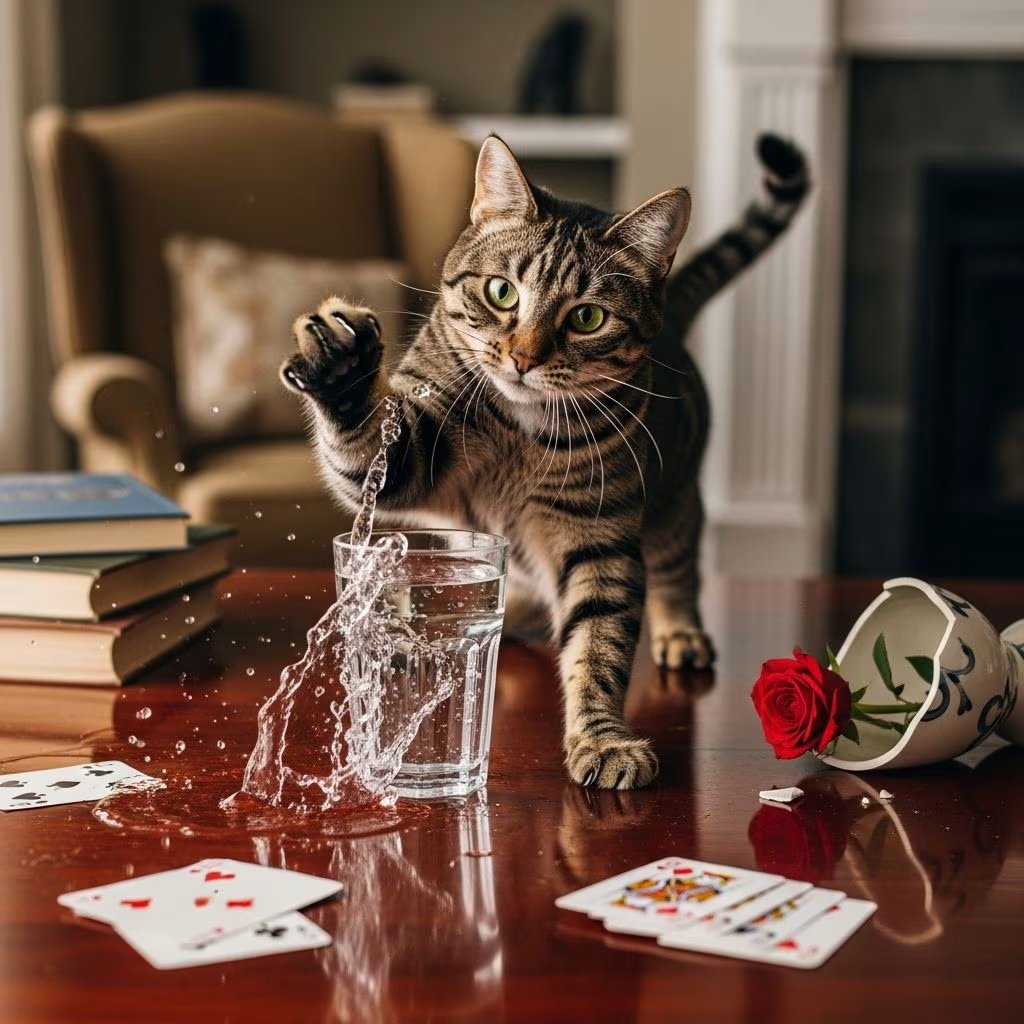
Why Do Cats Knock Things Over? Is This Normal?
If you’re a cat owner, you’ve likely experienced the frustration of watching your feline friend deliberately knock items off counters, tables, and shelves. From water glasses to pens, toilet paper rolls to your grandmother’s favorite knickknacks—nothing seems safe from a determined cat on a mission. But here’s the good news: yes, it’s completely normal for cats to knock things over. This behavior is part of their playful and mischievous nature, rooted in their instincts, curiosity, and need for stimulation.
The question isn’t whether your cat will knock things over, but rather understanding why they do it and how you can manage this common feline behavior. Cats knock things over for several reasons, ranging from instincts and curiosity to attention-seeking and boredom. Understanding these motivations is the first step toward addressing the behavior and protecting your home from unexpected disasters.
Why Do Cats Knock Things Over?
Generally, cats knock things over because they want something—whether it be to entertain themselves, get your attention, or find out what those clear doohickeys are that you drink your water out of. Here are the most common reasons cats knock things over, according to experts in feline behavior.
Curiosity
Curiosity is deeply embedded in cats’ DNA. In addition to their exploratory nature, cats are also incredibly observant creatures. When they see us going about our day and picking up certain objects, this can contribute to why they focus on specific things, like water glasses left on the counter or pens sitting on desks. Cats want to understand their environment and test how objects behave. They’re essentially conducting scientific experiments with household items.
When a cat encounters something new or interesting, their natural instinct is to investigate with a tentative push of the paw. The moment an object moves or rolls, it triggers their curiosity even further. They may bat at it repeatedly, trying to understand its properties—does it break? Does it contain something inside? Will it move again? This investigative behavior is perfectly normal and reflects your cat’s intelligent, analytical nature.
Hunting Instincts
Interestingly, knocking things over is instinctive for cats and can be directly connected to predation. Motion triggers a cat’s predatory instincts, so setting something in motion can appeal to their predatory nature in ways we might not immediately recognize. When your feline friend bats a water glass off the counter or swats at a pen, they’re not being destructive for the sake of destruction—they’re practicing their hunting skills.
In this scenario, that glass of water becomes prey. Your cat sees the movement as it falls and is compelled to chase it, pounce on it, and capture it. The movement stimulates the same neurological responses that would activate during an actual hunt. If your cat has an affinity for knocking items off counters, it’s because of the excitement and rush associated with the movement of potential prey. It’s much like they would bat a stuffed mouse toy across the floor during playtime, but with far more dramatic consequences for your household items.
Attention-Seeking
While our kitties can seem unapologetically independent and aloof at times, they do love us and yearn for our attention—on their terms, of course. One of the ways they ask for—or command—that attention is by engaging in certain behaviors, such as knocking objects off surfaces, rubbing against your leg, and staring intently at you.
Cats are quick learners, and they’ve likely discovered that knocking things over elicits a response from you. Most cat owners jump into action when they hear something crash—we try to catch a water glass falling off the table before it hits the floor, and we get up from our comfy chair to investigate when something hits the ground. Your cat has learned that this behavior guarantees your immediate attention and reaction, making it an effective strategy for getting what they want.
If your cat seems to knock things over more frequently when you’re busy or ignoring them, this is a clear sign they’re seeking your attention. The solution is to spend more quality time bonding with your cat and shower them with affection when they’re engaging in positive behaviors, rather than waiting for the crash to occur.
Boredom
Cats are bright, inquisitive, and athletic creatures. If they find their environment too mundane or they don’t have enough enrichment opportunities, this could result in boredom, prompting them to find ways to keep themselves entertained. Knocking things over becomes a type of play-based behavior when cats lack adequate stimulation.
Indoor cats, in particular, need plenty of mental and physical enrichment to stay happy and healthy. Without appropriate outlets for their energy and curiosity, they’ll create their own entertainment—and your household items become fair game. A bored cat might view your collection of decorative objects as the only available toys in their environment.
Hunger
Another reason cats could knock things over is out of hunger. Some cats develop a habit of knocking things over as a way to communicate their hunger or to investigate containers that might contain food. If you notice that your cat always seems to be hungry despite being fed appropriate portion sizes, it’s best to consult your veterinarian to find out what the underlying cause may be. There could be health issues or metabolic factors at play.
If you have a hard time keeping your cat on a regular feeding schedule, consider an automatic cat feeder that dispenses pre-portioned meals at scheduled times. This can help ensure your cat receives consistent nutrition and may reduce hunger-related knocking behaviors.
Excess Energy
Daily exercise is essential for a healthy, happy cat. A cat who has excess energy might resort to zoomies, tipping over random objects, and getting into mischief as a way to put that energy to use. Young cats, in particular, need plenty of physical activity to burn calories and stay mentally stimulated.
If your cat seems to be on a rampage through your home, knocking things over as they go, they probably need more playtime and exercise. Fortunately, there are plenty of activities and games you can play with your cat to help them stay physically and mentally active—without the unexpected destruction. Interactive toys, laser pointers, feather wands, and puzzle feeders can all help channel your cat’s energy in positive directions.
How to Prevent Cats from Knocking Things Over
Now that you understand why your cat knocks things over, let’s explore practical strategies to manage this behavior and protect your valuables.
Remove Temptation
The simplest solution is to remove items that are likely to be knocked over. Keep breakable items, water glasses, and other items of value off counters and tables where your cat has easy access. Store these items in cabinets or high shelves that your cat cannot reach. The fewer tempting objects available, the fewer opportunities your cat will have to engage in this behavior.
Create a Cat-Friendly Environment
If cats have designated spaces where they can safely explore and play, they might be less inclined to find stimulation elsewhere. Create vertical spaces in your home, such as cat trees, wall-mounted shelves, and window perches. These give your cat appropriate places to climb, explore, and observe their territory. An entertained cat is less likely to act out by knocking things over.
Provide Plenty of Enrichment and Mental Stimulation
Invest in interactive toys, puzzle feeders, and games that challenge your cat’s mind and body. Rotate toys regularly to keep things fresh and interesting. Consider setting aside dedicated playtime each day—even 10-15 minutes of interactive play can make a significant difference in your cat’s behavior and overall well-being.
Address Attention-Seeking Behavior
If your cat knocks things over to get your attention, make sure you’re providing enough positive attention throughout the day. Pet your cat, play with them, and spend quality time together when they’re not engaging in destructive behavior. This reinforces positive interactions and reduces the need for them to resort to attention-seeking through destructive means.
Use Deterrents
Double-sided tape, aluminum foil, and motion-activated air sprays can deter cats from certain surfaces. Many cats dislike the texture of double-sided tape on their paws or the sound of a motion-activated spray. These tools can help train your cat to avoid specific areas where you keep breakable items.
Understanding Breed-Specific Tendencies
It’s worth noting that certain cat breeds may be more prone to knocking things over than others. High-energy breeds like the Siamese, Abyssinian, and Bengal cats have more acute curiosity and hunting instincts. Maine Coons and Savannahs are known for needing significant mental stimulation. If you own one of these breeds, you may need to be extra vigilant about providing enrichment and managing their environment. Additionally, cat breeds with long or fluffy tails, like Norwegian Forest Cats, might accidentally knock things over simply by moving their tails across surfaces.
When Knocking Things Over Isn’t Just Play
In some cases, a cat might accidentally knock something over. It might not be intentional at all, especially if your cat is simply moving through a space and their tail sweeps across an item. However, if the behavior seems deliberate and frequent, it’s almost certainly one of the reasons outlined above.
Frequently Asked Questions (FAQs)
Q: Is it normal for cats to knock things over?
A: Yes, it’s completely normal. Cats knock things over due to curiosity, hunting instincts, attention-seeking, boredom, hunger, or excess energy. It’s a natural part of feline behavior.
Q: Why does my cat knock things over more at night?
A: Cats are naturally more active during dawn and dusk hours. If your cat seems more destructive at night, they likely have excess energy and need more daytime playtime to tire them out.
Q: How can I stop my cat from knocking things off the counter?
A: Remove tempting items from counters, provide adequate enrichment and playtime, use deterrents like double-sided tape, and ensure your cat isn’t seeking attention or experiencing hunger or boredom.
Q: Should I punish my cat for knocking things over?
A: No. Punishment is ineffective and can damage your relationship with your cat. Instead, focus on prevention, providing appropriate outlets for their behavior, and positive reinforcement.
Q: Do certain cat breeds knock things over more?
A: Yes, high-energy and highly curious breeds like Siamese, Abyssinian, Bengal, Maine Coons, and Savannahs may be more prone to knocking things over due to their nature.
Q: Can I train my cat not to knock things over?
A: While you can’t eliminate the behavior entirely, you can manage it through environmental modifications, adequate enrichment, attention, and deterrents. Training your cat to redirect this energy toward appropriate toys is also helpful.
References
- Why Do Cats Knock Things Over? — Chewy Education. 2024. https://www.chewy.com/education/cat/training-and-behavior/is-this-normal-why-do-cats-just-love-to-knock-things-over
- Why Do Cats Knock Things Over? — Zoetis Petcare. https://www.zoetispetcare.com/blog/article/why-cats-knock-things-over
- Why Do Cats Knock Things Over? — Purina US. https://www.purina.com/articles/cat/behavior/understanding-cats/why-do-cats-knock-things-over
- Why Does My Cat Knock Things Off The Table? — VHA Vets. https://vhavets.com/blog/why-does-my-cat-knock-things-off-the-table/



