

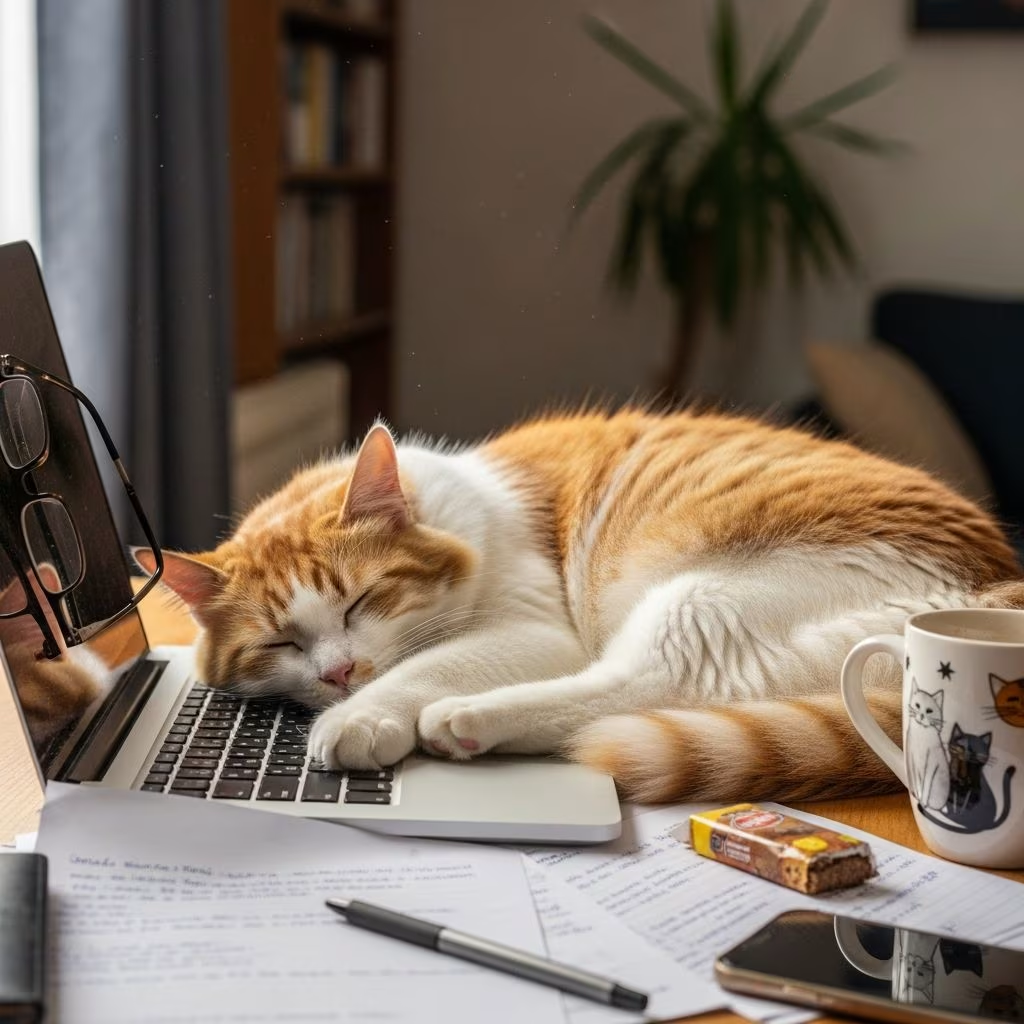
Cats are notorious for their independent nature, yet many owners experience the opposite: felines that insist on squeezing into laps, keyboards, or even dinner plates. This behavior, often labeled as invading personal space, stems from deep-rooted instincts, strong emotional bonds, and a unique feline perception of territory. Unlike dogs, which are pack animals with more fluid social boundaries, cats are solitary hunters by ancestry, making their space invasions particularly intriguing. Understanding these actions can transform frustration into appreciation, revealing a cat’s way of expressing love and security.
In this comprehensive guide, we delve into the primary reasons cats encroach on human space, backed by animal behavior insights. We’ll cover affection-driven closeness, territorial marking, warmth-seeking tendencies, and more, while offering practical tips to balance your needs with theirs. Whether your cat perches on your shoulder during work calls or curls up on your pillow at night, these habits signal trust—but knowing how to respond ensures a healthier coexistence.
1. Your Cat Loves and Trusts You
The most heartwarming reason cats invade personal space is pure affection. When a cat chooses to be near you—whether lounging on your chest or wedging between you and your book—it demonstrates profound trust and bonding. Cats view trusted humans as family members, akin to a safe companion in the wild where proximity meant alliance against threats.
Behavior experts note that a strong bond prompts cats to follow owners everywhere, seeking attention, pets, and reassurance. This isn’t random; it’s selective. A cat that ignores others but clings to you has chosen you as their ‘chosen one,’ prioritizing your presence over solitude. Signs include purring, kneading, and slow blinks, all reinforcing emotional security.
- Purring proximity: Cats purr at 25-150 Hz frequencies, promoting healing and calm for both cat and human.
- Following behavior: Tails up, they trail owners room-to-room, signaling contentment.
- Lap claiming: Post-meal or play, they settle in laps to recharge in safety.
However, respect their cues. Overstimulation can flip affection to aggression, with signs like tail thrashing or ear flattening indicating a need for space.
2. Cats Don’t Understand Human Personal Space Boundaries
Cats lack the human concept of ‘personal space.’ To them, any surface—your lap, bed, or keyboard—is communal territory. They perceive spaces through scent and utility, not invisible bubbles around individuals. This mismatch leads to hilarious (or annoying) moments, like a cat plopping on your laptop mid-email.
Animal behaviorists explain that cats’ personal space envelopes are larger among their kind due to solitary origins, yet they freely enter human zones because we provide food, shelter, and play. Unlike multi-cat households where space invasions spark fights, humans are tolerated—or preferred—companions.
Key factors influencing this:
- Solitary heritage: Wild cats maintain larger buffers than social dogs.
- No spatial etiquette: Cats see your space as extension of theirs.
- Selective tolerance: They invade trusted humans but swat strangers.
3. Scent Marking and Territory Claiming
Cats are scent-driven territorialists. Invading your space allows them to rub cheeks, flanks, or tails against you, depositing pheromones from glands. This ‘bunting’ behavior marks you as part of their territory, creating a familiar, stress-reducing scent map.
In multi-cat homes or with visitors, intensified marking prevents intruders from claiming you. It’s not possessive aggression but instinctual security—your scent-mingled body becomes a safe anchor. Paws and tails also leave subtle marks during kneading or wrapping.
| Body Part | Scent Gland Location | Marking Behavior |
|---|---|---|
| Cheeks | Facial glands | Rubbing head-butts |
| Flanks/Tail | Side glands | Body weaving |
| Paws | Pad glands | Kneading fabrics/you |
Disruptions like new furniture trigger re-marking on owners for stability.
4. Seeking Warmth and Comfort
Cats’ body temperature runs 100.5–102.5°F, craving warmth. Human bodies (98.6°F) plus electronics like laptops emit irresistible heat. Blankets, laps, and beds amplify this appeal.
Elevated spots aid circulation and oversight, mimicking wild perches for predator-prey vigilance. Vertical space reduces conflicts in homes by allowing escape.
- Boxes/perches for security.
- Laptop fans for toasty naps.
- Your feet under covers at night.
5. Maternal Instincts and Kitten-Like Behavior
Adult cats retain kitten traits, seeking humans as ‘mother figures’ for grooming and nursing simulations. Nursing posture (suckling blankets while invading laps) comforts via endorphins, though frustrating for owners.
This persists lifelong in some, especially hand-raised cats, blending dependency with affection.
6. Attention-Seeking and Play Initiation
Bored or playful cats invade to solicit interaction. Walking on keyboards or blocking views demands engagement. Respond with toys over punishment to channel energy.
7. Stress or Medical Reasons Behind Space Invasion
Sudden increases may signal anxiety (changes, illness) or pain prompting clinginess. Watch for redirected aggression from unseen stressors like window cats. Vertical spaces mitigate multi-cat stress. Consult vets for persistent shifts.
How to Manage Cats Invading Your Personal Space
Balance boundaries with bonding:
- Provide alternatives: Heated beds, cat trees.
- Scheduled play: Tire them out pre-invasion.
- Gentle redirection: Move without scolding.
- Enrich environment: Vertical space, puzzles.
- Read cues: Avoid petting agitated cats.
Training via positive reinforcement works; ignore demands, reward distance.
Frequently Asked Questions (FAQs)
Q: Is it bad if my cat invades my space constantly?
A: No, it’s typically a sign of love and trust. Monitor for stress indicators like aggression.
Q: Why does my cat invade space but attack others?
A: Selective bonding; you’re safe, others invade their envelope.
Q: How do I stop laptop invasions?
A: Use lap desks, provide warm alternatives.
Q: Does invading mean dominance?
A: Rarely; more affection than status.
Q: What if space invasion leads to scratches?
A: Check for overstimulation; shorten sessions.
By embracing these quirks, owners deepen bonds. Cats invade because you’re home—cherish it.
References
- Cats and Personal Space — Animal Behavior Associates. Accessed 2026. https://animalbehaviorassociates.com/cats-personal-space/
- Why Do Cats Invade Your Personal Space? — Senior Cat Wellness (YouTube Transcript). 2022-08-13. https://www.youtube.com/watch?v=TEU0xjfhTEo
- Feline Behavior Problems: Aggression — Cornell University College of Veterinary Medicine. Accessed 2026. https://www.vet.cornell.edu/departments-centers-and-institutes/cornell-feline-health-center/health-information/feline-health-topics/feline-behavior-problems-aggression
- Why Does Your Cat Crave Their Own Space? — Felix Cat Insurance. Accessed 2026. https://www.felixcatinsurance.com/blog/cats-crave-shelter-indoors/
- Understanding Cat Behavior: Getting Visitors to Respect Your Cat’s Space — PetMD. Accessed 2026. https://www.petmd.com/cat/behavior/understanding-cat-behavior-getting-visitors-respect-your-cats-space



